How can a thoughtfully planned outdoor yoga space design transform everyday wellness routines, and why are outdoor yoga spaces becoming essential features of modern homes? In 2026, homeowners are prioritizing outdoor yoga space at home concepts that combine serenity, practicality, and style, especially in outdoor yoga space backyards, terraces, and patios. This guide explores professional outdoor yoga space ideas, materials, layouts, and outdoor yoga space architecture solutions that help anyone start creating a peaceful retreat using smart Plan, Sketch, and modern Design ideas.
1. Designing A Peaceful At-Home Sanctuary
I begin every project by evaluating how an outdoor yoga space aesthetic should connect with the surrounding Garden or Backyard retreat, ensuring visual calm and functional comfort. Whether the area is fully outdoor or Semi-Indoor, the goal is to position the platform where natural light, airflow, and privacy work together. I often recommend starting with a Simple wooden deck framed by low greenery to visually separate the meditation zone from the rest of the yard.
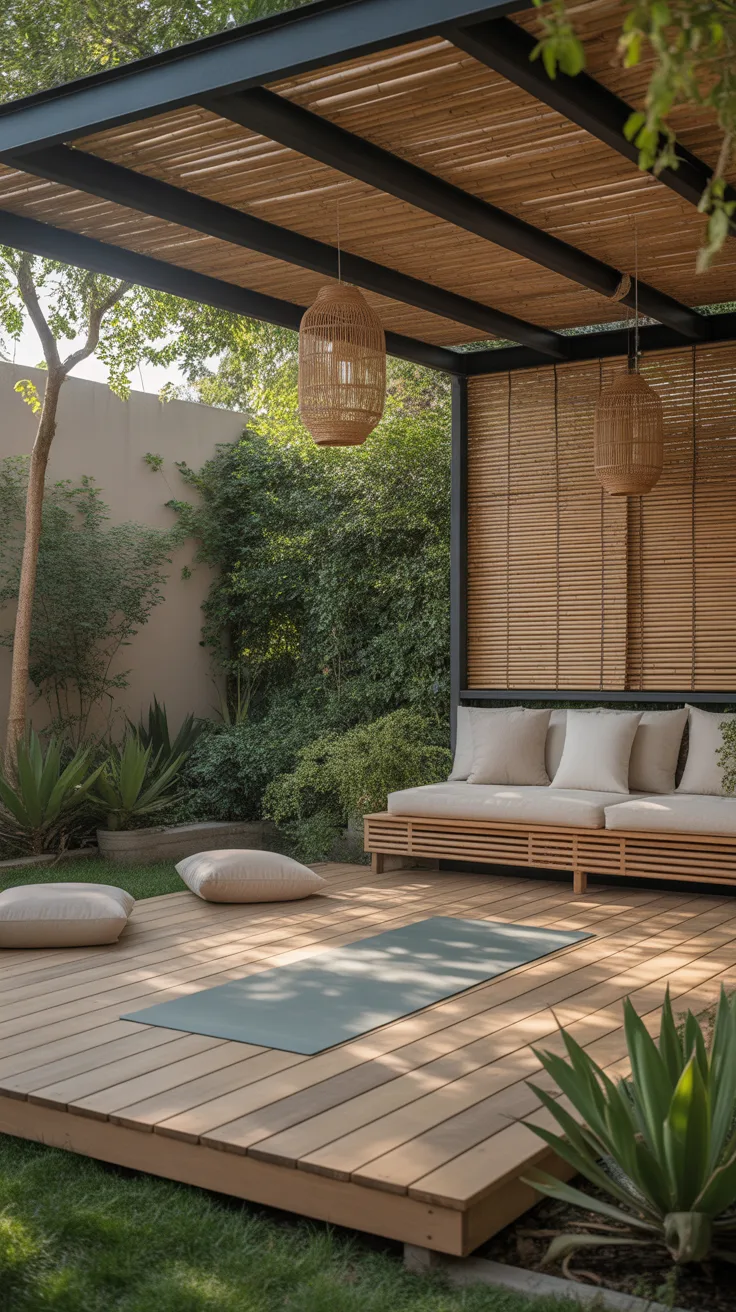
In my experience, foundational furniture should remain minimal: a weather-resistant mat platform, hidden storage bench, and low lantern lighting. Natural materials such as teak, bamboo, and stone reinforce the meditative tone while helping the Architecture feel grounded in nature. Adding neutral outdoor cushions creates a welcoming area for stretching, breathing, and reflection.
Personally, I follow guidance frequently highlighted in wellness design features by Architectural Digest, which emphasizes decluttered surroundings and tactile natural finishes. I always remind clients that calm environments are not accidental; they are carefully layered compositions of light, texture, and proportion.
2. Outdoor Yoga Space Design Trends For Modern Backyards
In modern outdoor yoga space backyards, I notice a clear movement toward modular layouts that adapt throughout the year. Flexible pergolas, sliding privacy panels, and adaptable flooring systems allow homeowners to shift between open-air and Covered practice areas without permanent construction. This approach keeps the space usable across changing weather conditions.
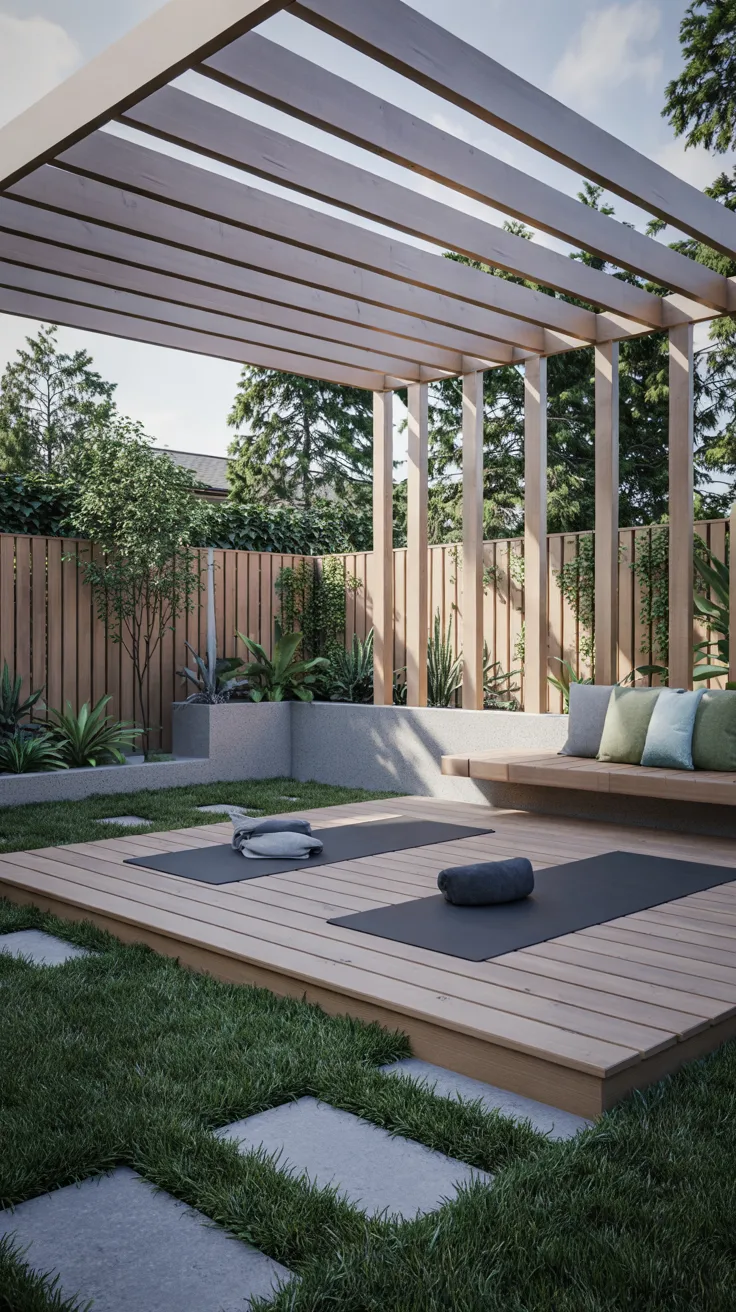
I typically recommend sectional deck tiles, adjustable pergola roofs, and integrated planters because they allow easy upgrades without full renovation. These structural elements create layered zoning, separating the yoga area from entertainment spaces while maintaining visual harmony across the landscape.
From my professional viewpoint, trends are increasingly influenced by wellness resorts, where adaptability is considered as important as visual beauty. Clients appreciate that a flexible design prolongs usability and reduces long-term renovation costs.
3. Outdoor Yoga Space Ideas For Creating A Private Backyard Retreat
When designing a Private retreat, I prioritize enclosure techniques that preserve openness without blocking natural airflow. Vertical gardens, bamboo screens, and staggered hedges form living boundaries that subtly define the yoga zone while maintaining a connection to nature. This approach works particularly well for Backyards diy transformations where budget efficiency is important.
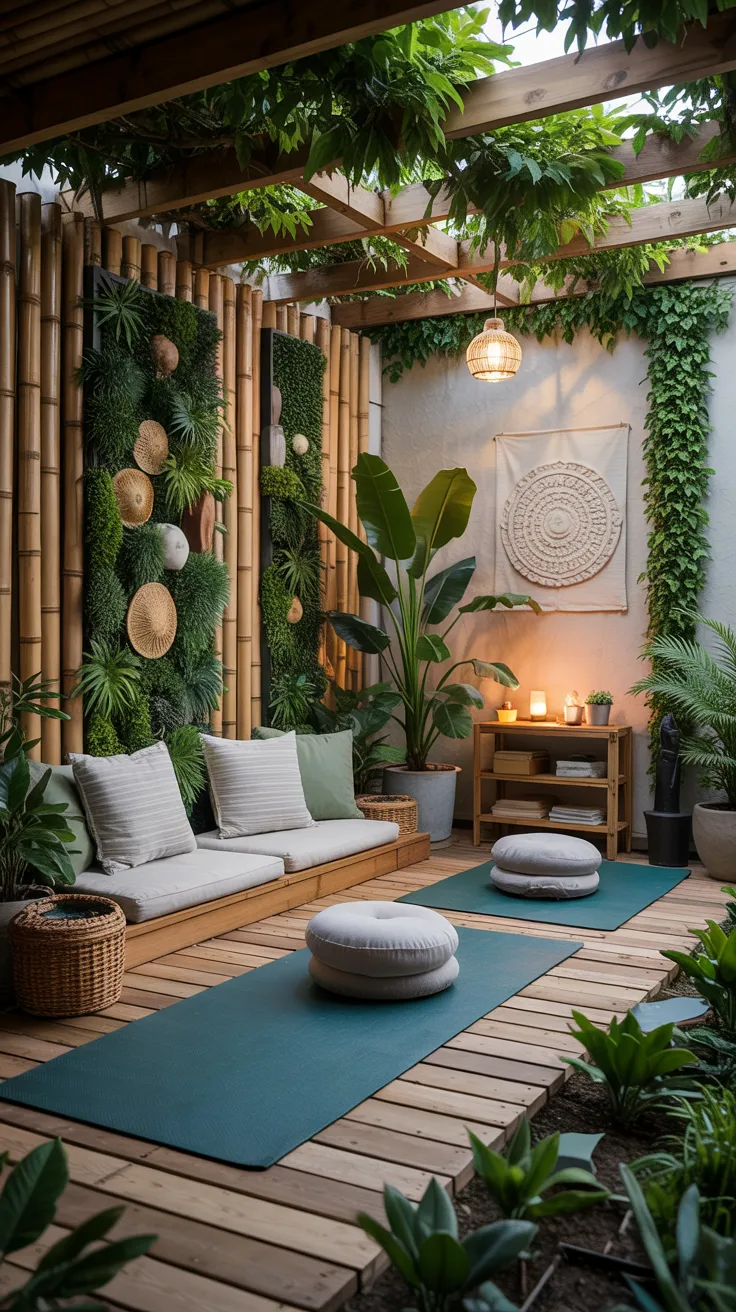
Essential furnishings include foldable meditation stools, hidden blanket storage, and a narrow console for incense or candles. Each piece must be weather-resistant and lightweight to support easy rearrangement depending on the practice style.
In my projects, I often reference landscape strategies used in wellness retreats across the Uk, where compact residential yards still achieve strong privacy through layered greenery rather than solid walls.
4. Outdoor Yoga Space Architecture Concepts For Harmonious Living
Thoughtful outdoor yoga space architecture transforms a simple platform into a cohesive lifestyle feature. I focus on structural balance, ensuring that rooflines, columns, and flooring patterns visually align with the home’s existing design language. Even a small pavilion can dramatically elevate the sense of intentionality in the space.
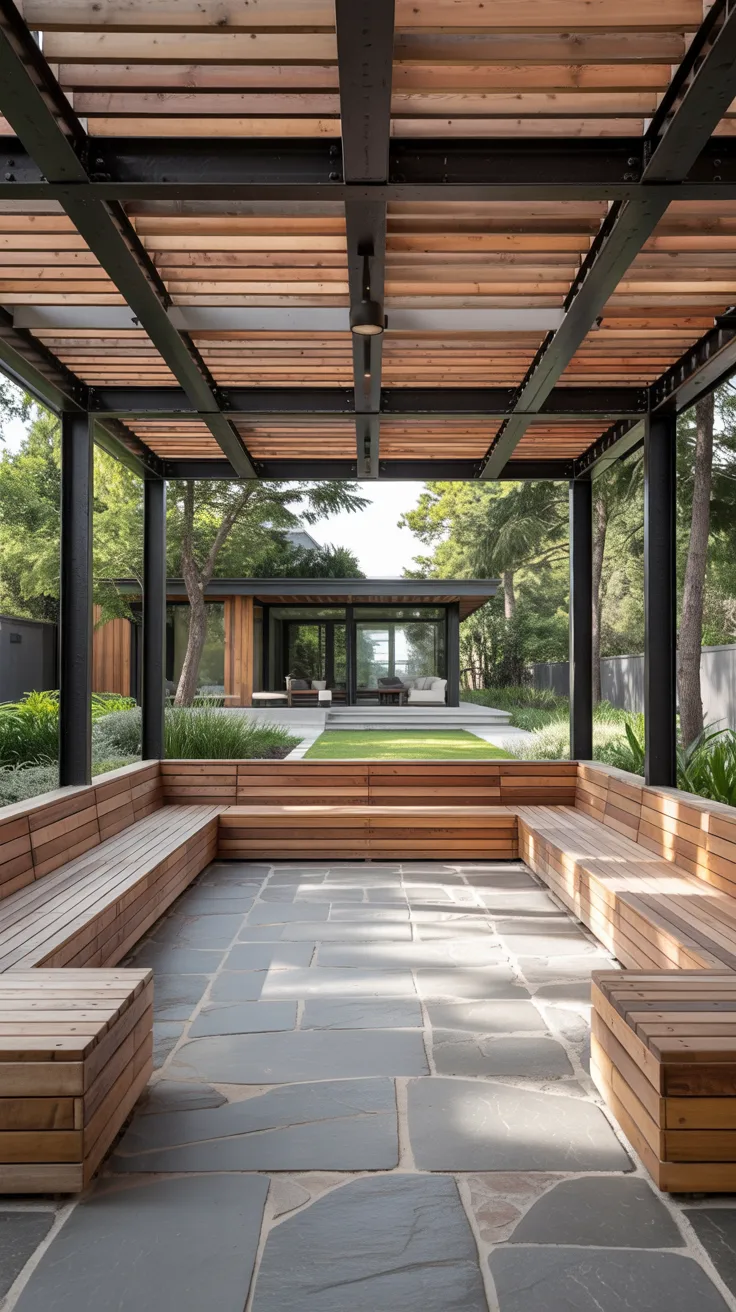
I often specify lightweight steel frames combined with timber ceilings or slatted shade roofs, creating an elegant but breathable enclosure. Architectural symmetry helps anchor the yoga zone, while integrated benches along the perimeter maximize functionality without overcrowding the floor.
From my experience, architectural harmony increases perceived property value because buyers increasingly view wellness areas as long-term lifestyle investments.
5. Outdoor Yoga Space Aesthetic Principles For Calm And Balance
Achieving a cohesive outdoor yoga space aesthetic begins with limiting the palette to earthy tones and tactile finishes. I typically design spaces that blend stone, linen, and natural wood to create visual softness that reduces distraction during meditation.
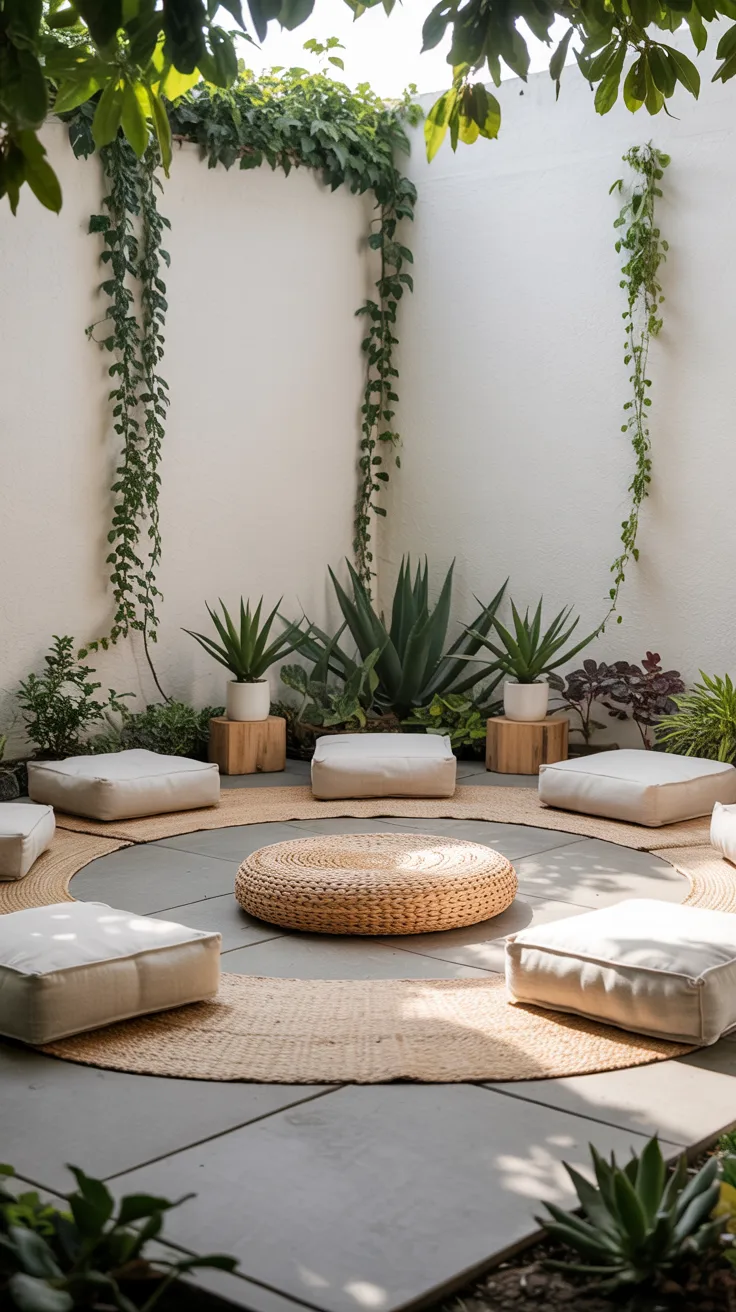
Furniture should remain low-profile and visually light. I recommend woven floor cushions, minimalist plant stands, and neutral textiles that reinforce the calming tone without overpowering the surroundings. Strategic placement of greenery enhances depth while keeping the area visually uncluttered.
Personally, I find that clients respond strongly to aesthetic restraint; when fewer elements compete for attention, the environment naturally supports mindfulness and focus.
6. Outdoor Yoga Space At Home: Planning A Dedicated Wellness Corner
When planning an outdoor yoga space at home, I begin by mapping sunlight patterns and daily movement flows. Even small unused corners can become highly functional wellness zones if positioned strategically near the Terrace or garden edge.
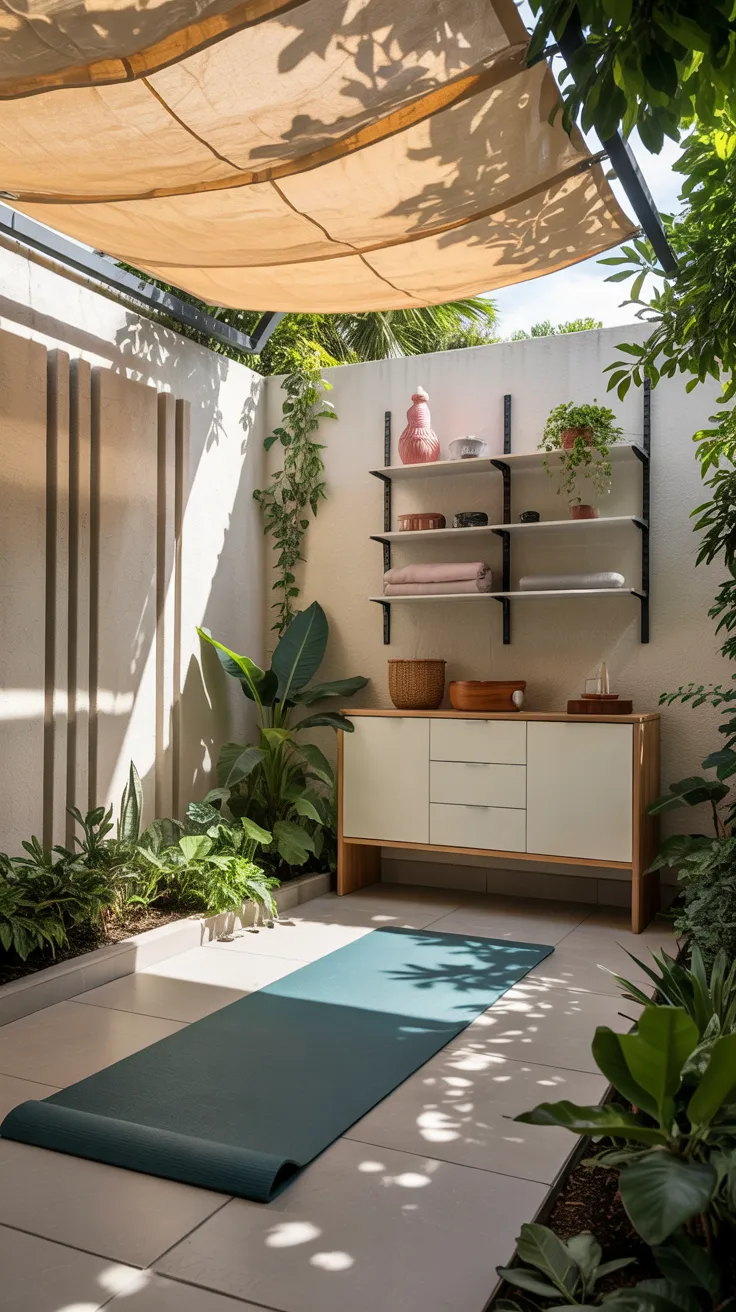
I suggest installing compact storage cabinets, weatherproof flooring, and vertical shelving for props. This ensures the area remains organized while maintaining enough open floor space for movement sequences. Adding retractable shade systems helps maintain comfort across seasons.
In my work, I consistently observe that homeowners who designate a fixed practice corner are far more likely to maintain consistent wellness routines.
7. Outdoor Yoga Space Patio Layouts For Everyday Practice
A well-designed outdoor yoga space patio offers exceptional practicality because it already includes level flooring and proximity to the home. I often design Patio layouts that divide relaxation seating and yoga areas using subtle floor material transitions rather than physical barriers.
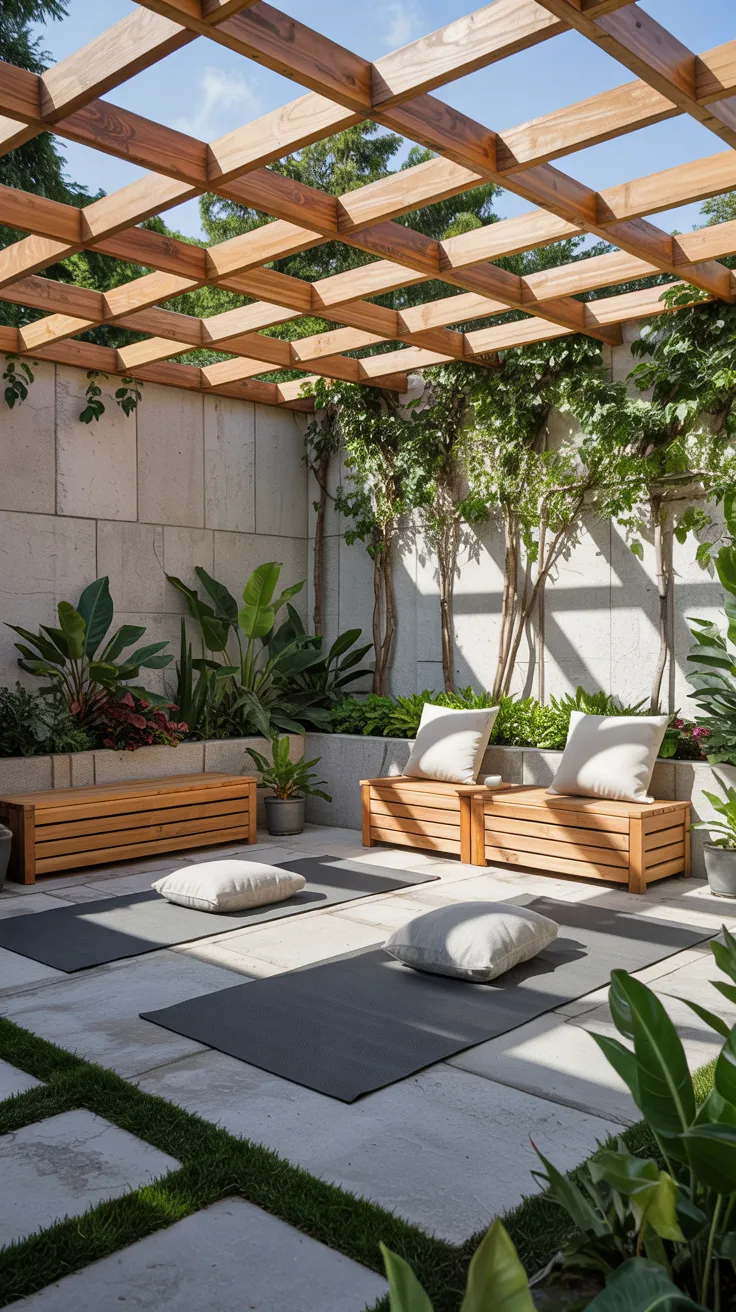
Key furniture elements include teak loungers for post-practice rest, modular benches with hidden storage, and compact pergolas for optional shade. I also recommend integrating non-slip stone or composite decking to ensure safety during dynamic flows.
From my perspective, patios offer the most accessible starting point for homeowners exploring their first outdoor wellness installation because they require minimal structural modification.
8. Outdoor Yoga Space Balcony Inspirations For Urban Living
I often design compact wellness zones for apartments where an outdoor yoga space balcony becomes a daily retreat. Even a narrow Balcony can support a functional outdoor yoga space design if the layout emphasizes vertical storage and uncluttered flooring. I typically begin with a Plan that maximizes daylight exposure while ensuring railings, planters, and seating remain safely positioned to keep the center area open for practice.
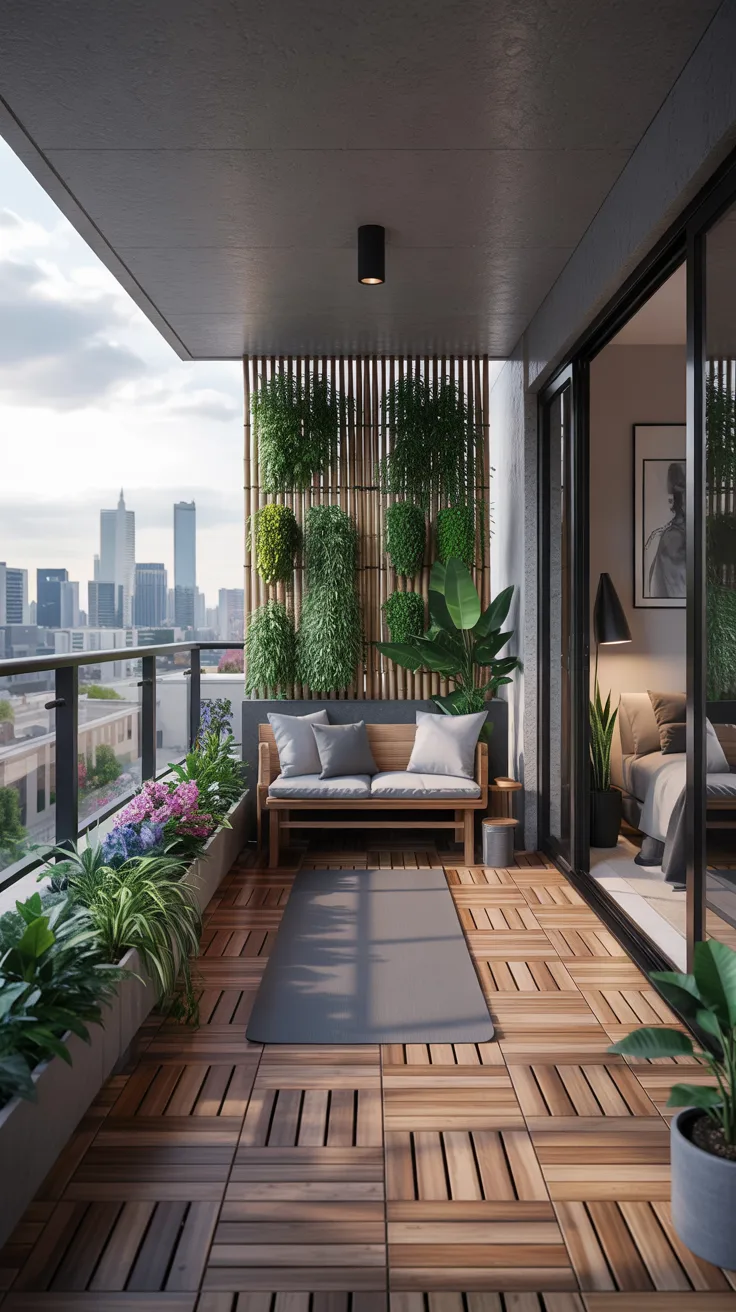
For furniture, I recommend foldable yoga benches, slim wall-mounted shelves for mats, and weather-resistant floor decking tiles that soften the surface. Compact bamboo screens can create a subtle Private enclosure while still allowing airflow. Adding small vertical planters helps transform the balcony into a calming micro Garden, reinforcing the Aesthetic connection to nature even in dense city environments.
From my experience, clients practicing daily yoga in urban homes consistently prefer minimalist balcony arrangements because they reduce visual distraction and make the space feel larger. Design publications such as Dwell frequently highlight how small-space outdoor wellness corners improve both mood and productivity.
9. Outdoor Yoga Space Porch Transformations For Relaxation
An outdoor yoga space porch offers one of the most adaptable wellness areas because it naturally combines Indoor and outdoor qualities. I often treat the Porch as a Semi-open studio where structural overhead cover already provides shade, allowing homeowners to practice comfortably across seasons.
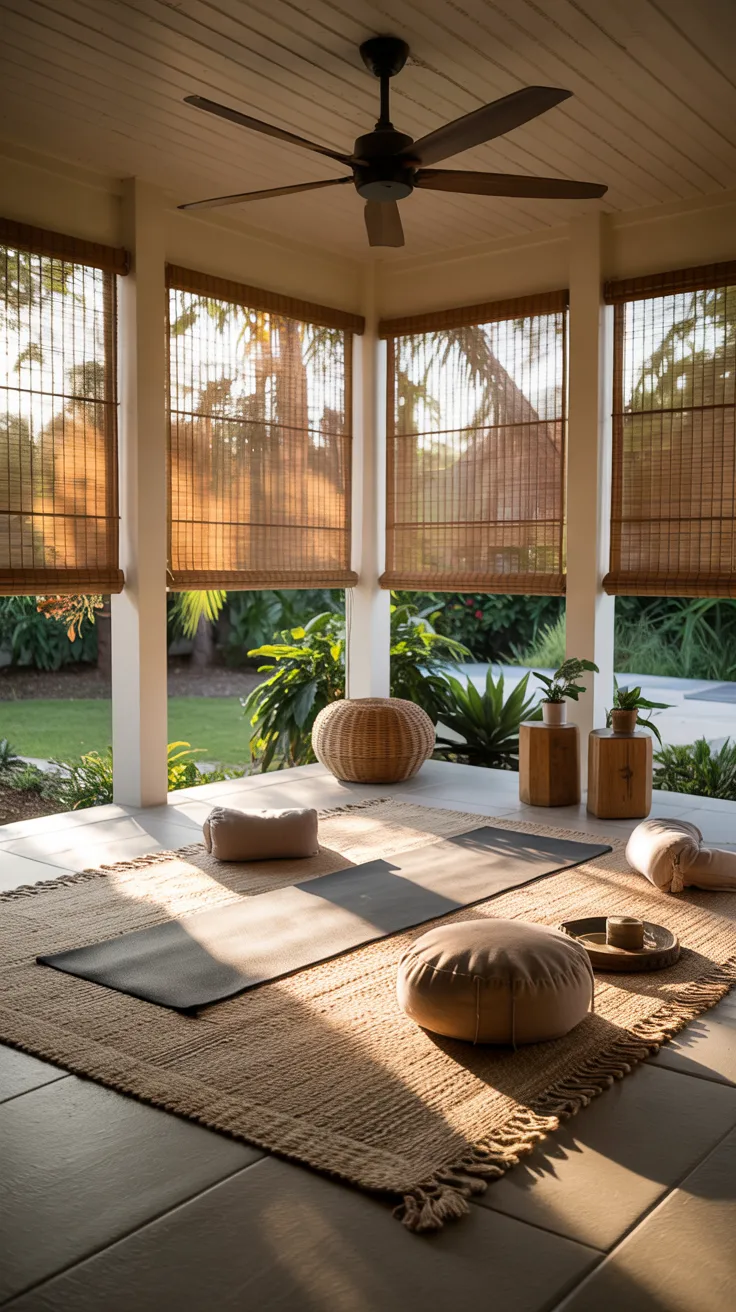
I usually incorporate layered outdoor rugs, woven meditation cushions, and low wooden side tables for candles or herbal tea. Ceiling-mounted fans help regulate airflow, while adjustable bamboo shades allow the level of enclosure to be controlled throughout the day. These elements create a welcoming environment that encourages longer, more consistent practice sessions.
Personally, I find that porches create an emotional bridge between the home and nature, making wellness routines easier to maintain. Many wellness-focused architectural projects in the Uk demonstrate how verandas and covered porches successfully serve as outdoor relaxation studios even in cooler climates.
10. Outdoor Yoga Spaces In Gardens: Integrating Nature And Mindfulness
When designing outdoor yoga spaces within a Garden, I prioritize spatial harmony with surrounding landscaping. The yoga platform should feel like a natural extension of the terrain rather than a separate installation. I typically place the deck slightly elevated to improve drainage and give practitioners a gentle visual focus toward greenery.
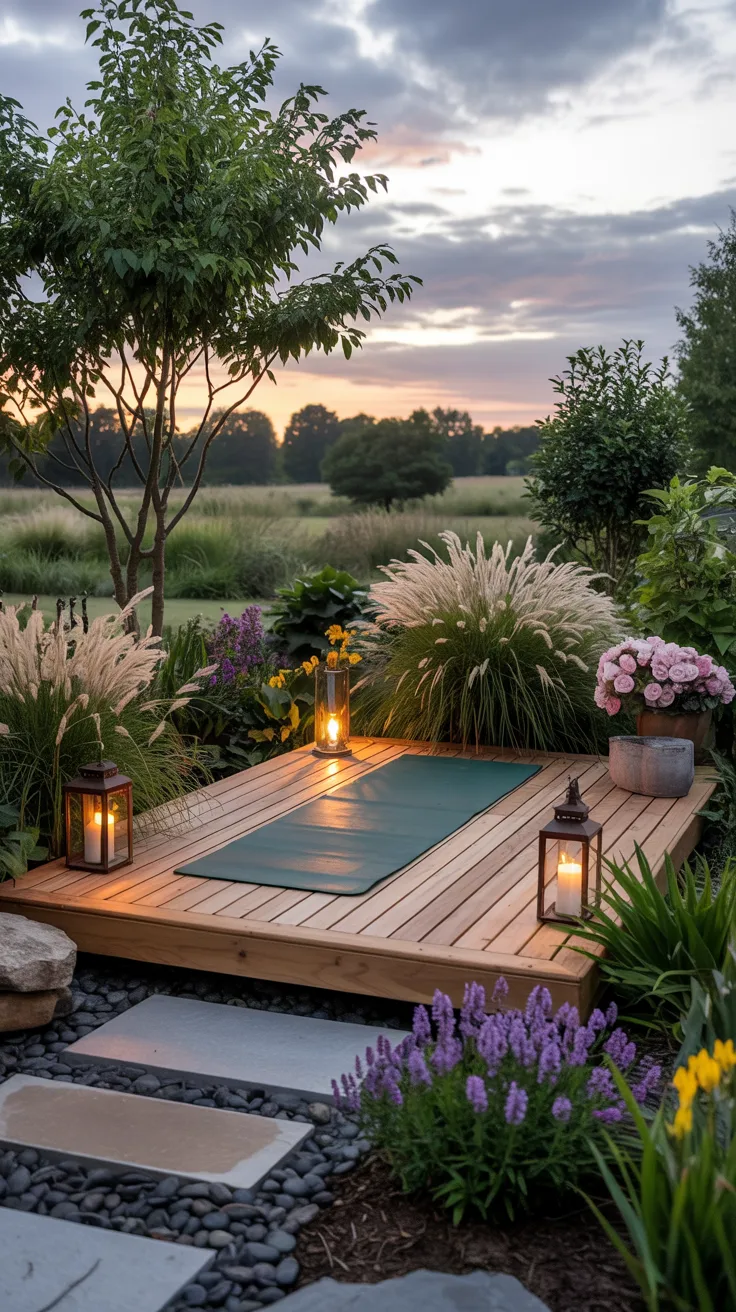
Furniture choices remain intentionally minimal: a teak mat platform, low lantern lighting, and stone seating elements that blend with garden textures. Surrounding the area with ornamental grasses or flowering plants helps create a soft enclosure while maintaining open views that support mindful breathing exercises.
In my projects, I often reference wellness garden layouts recommended by landscape designers featured in Better Homes and Gardens, which emphasize layered vegetation to naturally guide movement and create peaceful sensory experiences.
11. Simple Outdoor Yoga Space Designs For Small Areas
A Simple layout often produces the most effective results, especially for small homes or Terrace installations. I design compact platforms that require minimal structural work yet still provide a dedicated wellness environment. The key is to maintain clean geometry and avoid excessive decorative features that consume valuable space.
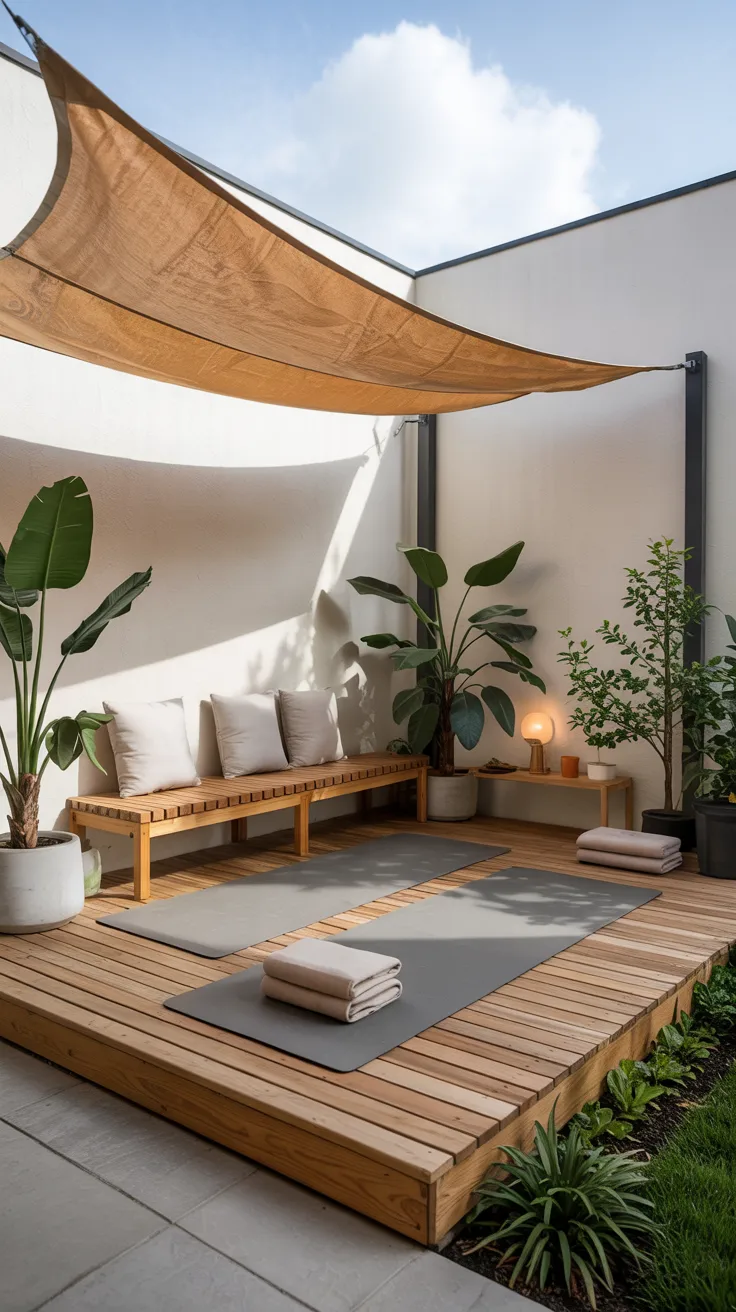
I recommend modular deck squares, foldable seating, and a slim storage bench that doubles as a resting surface after practice. Neutral outdoor fabrics and light-toned wood finishes visually expand the area, making even small corners feel more spacious and inviting.
In my experience, simplicity also reduces maintenance, which is a significant advantage for busy homeowners who want a practical long-term solution rather than a decorative installation requiring constant upkeep.
12. Covered Outdoor Yoga Space Solutions For All-Weather Practice
A Covered yoga zone ensures year-round usability, making it a valuable feature for climates with frequent rain or intense sun. I typically design pergola-based structures with adjustable louvers that allow homeowners to control light and ventilation while protecting flooring and equipment.
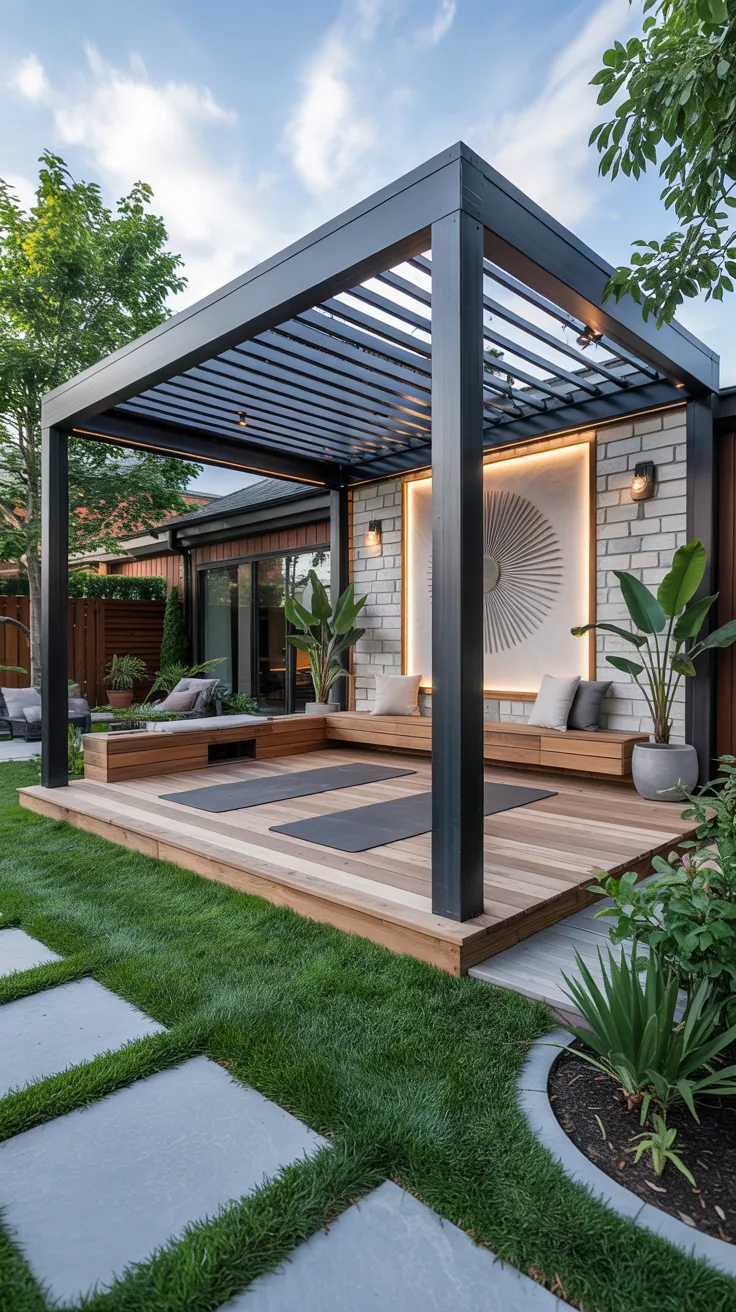
Essential furnishings include weather-resistant seating, integrated storage benches, and non-slip composite decking. I also recommend installing discreet overhead lighting so the area remains functional during early morning or evening sessions without compromising the calming atmosphere.
Personally, I often encourage homeowners to view covered structures as long-term wellness investments because they significantly increase the consistency of outdoor practice routines.
13. Private Outdoor Yoga Space Planning For Quiet Meditation
A Private yoga area begins with thoughtful placement, ideally positioned away from main walkways or entertainment zones. I often use layered greenery walls, wood slat panels, or stone partitions to create soft boundaries that reduce visual distractions while preserving openness.
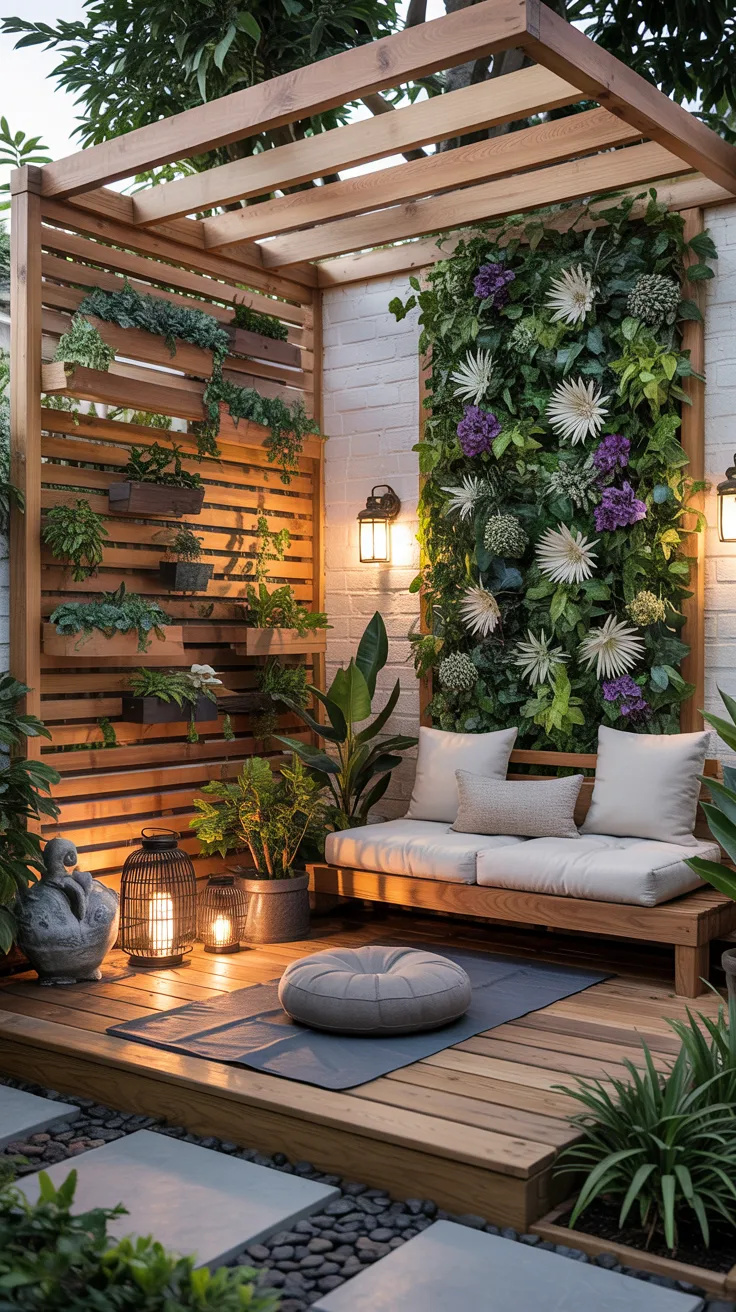
Furniture should remain low and discreet, including meditation cushions, floor lanterns, and concealed storage for blankets. Adding a small water feature enhances acoustic privacy by masking surrounding noise, creating a deeper sense of tranquility during practice.
From my experience, clients consistently report improved meditation focus when their yoga space includes both visual and sound buffering elements, reinforcing the psychological benefits of intentional spatial design.
14. Backyard DIY Outdoor Yoga Space Projects For 2026
Many homeowners are now embracing Backyards diy approaches to create affordable wellness zones that still reflect professional Design ideas. I usually begin with a Sketch outlining the platform size, circulation space, and nearby landscaping to ensure the installation feels cohesive within the yard.
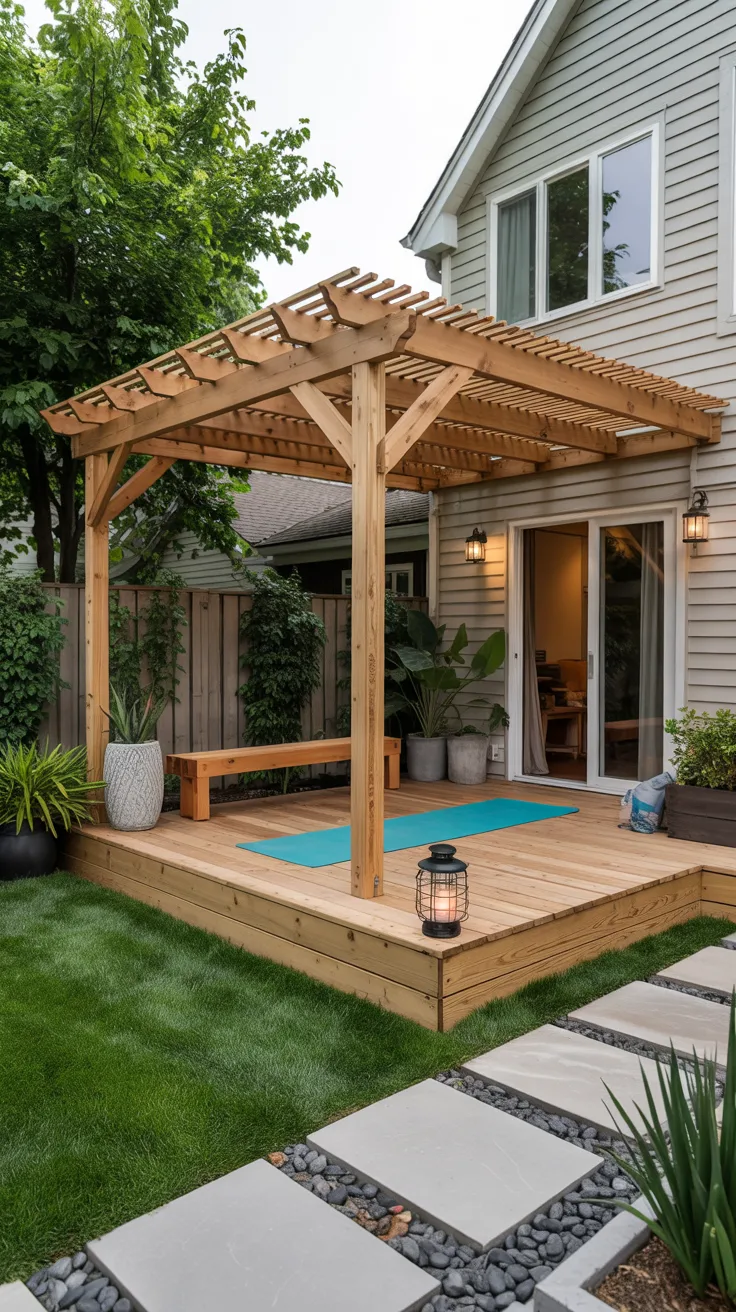
For materials, I recommend pre-cut deck panels, simple pergola kits, and modular planters that can be assembled without specialized tools. Adding solar-powered lanterns and recycled wood benches keeps the project environmentally friendly while maintaining a polished visual appearance.
In my own experience, DIY projects often strengthen the emotional connection to the space because homeowners actively participate in shaping their personal Backyard retreat.
15. Rooftop Outdoor Yoga Space Concepts For Elevated Wellness
I often design Rooftop wellness zones where urban homeowners want a secluded Backyard retreat above the city. A well-planned rooftop outdoor yoga space design begins with structural evaluation, ensuring the flooring system supports both decking and lightweight pergola installations. Positioning the platform toward sunrise views enhances the emotional impact of daily practice while reinforcing the sense of elevation and calm.
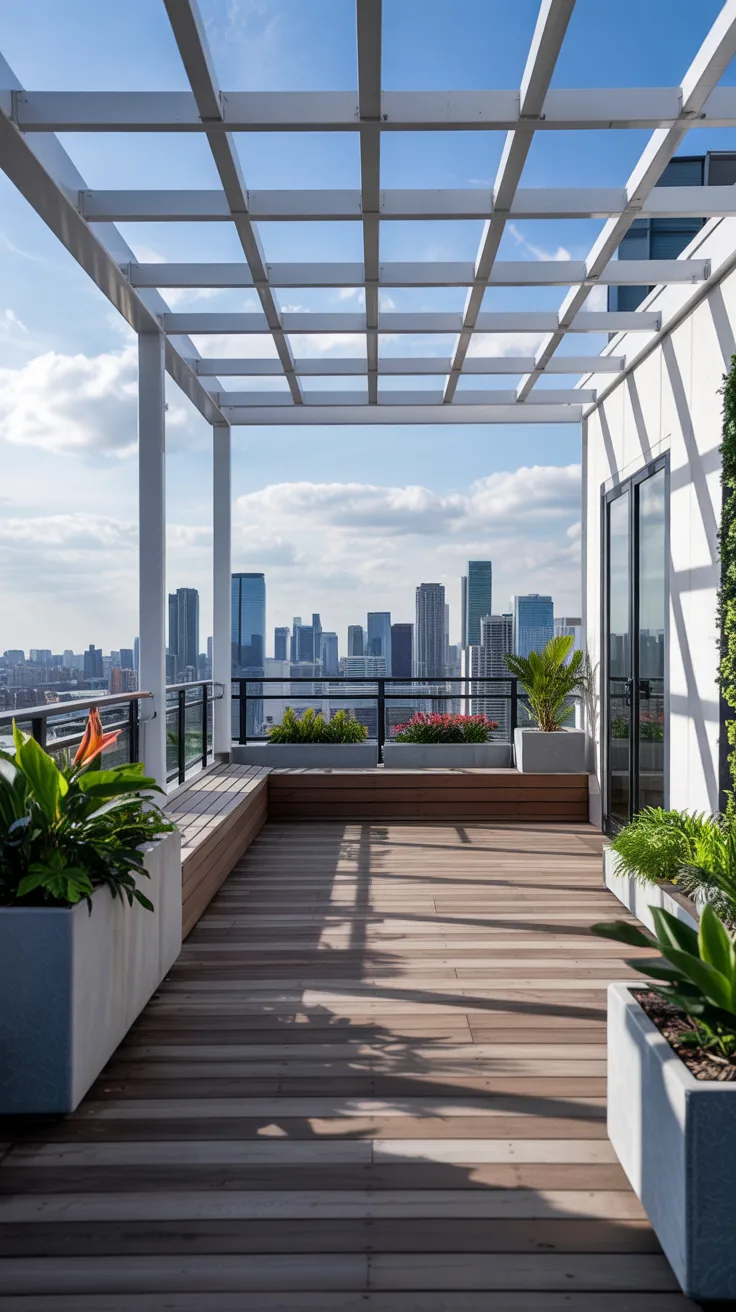
I usually recommend composite deck flooring, wind-resistant planters, and built-in seating that doubles as storage. Lightweight pergolas or tensile shade structures help create a Covered environment without overwhelming the rooftop visually. Neutral outdoor textiles and stone accents strengthen the outdoor yoga space aesthetic while keeping maintenance minimal.
From my experience, rooftop yoga areas become some of the most valued features in dense residential environments because they combine privacy, light exposure, and panoramic scenery. Many contemporary Architecture projects now integrate rooftop wellness terraces as standard lifestyle amenities.
16. Boho Outdoor Yoga Space Styles For Creative Expression
A Boho-inspired yoga zone emphasizes layered textures, relaxed forms, and natural materials that support expressive wellness environments. I approach this style by blending organic surfaces with handcrafted elements to create visually warm outdoor yoga space ideas that feel inviting and personal.
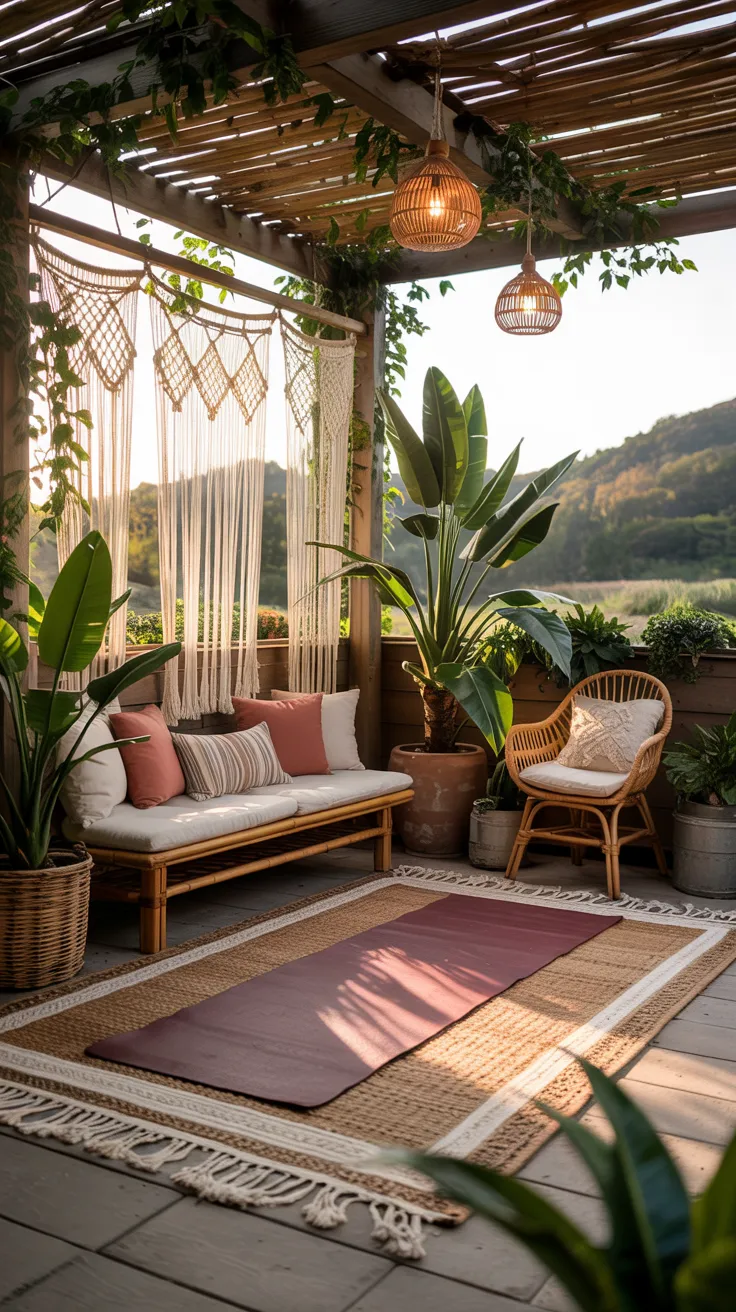
Key furnishings include woven rugs, macramé shade panels, rattan meditation chairs, and terracotta planters filled with trailing greenery. These decorative layers soften architectural lines while maintaining functionality for stretching and meditation. Earth-toned cushions and patterned textiles strengthen the relaxed visual rhythm typical of bohemian outdoor settings.
Personally, I find that boho styling works particularly well for clients seeking emotional comfort and creative expression rather than minimalism. Designers frequently highlight that tactile variety encourages deeper sensory engagement, which supports mindfulness practices.
17. Terrace Outdoor Yoga Space Arrangements For Scenic Practice
A Terrace installation offers an excellent balance between accessibility and scenic openness. When planning terrace outdoor yoga spaces, I begin by aligning the practice area with the best available views while maintaining circulation space for daily household movement.
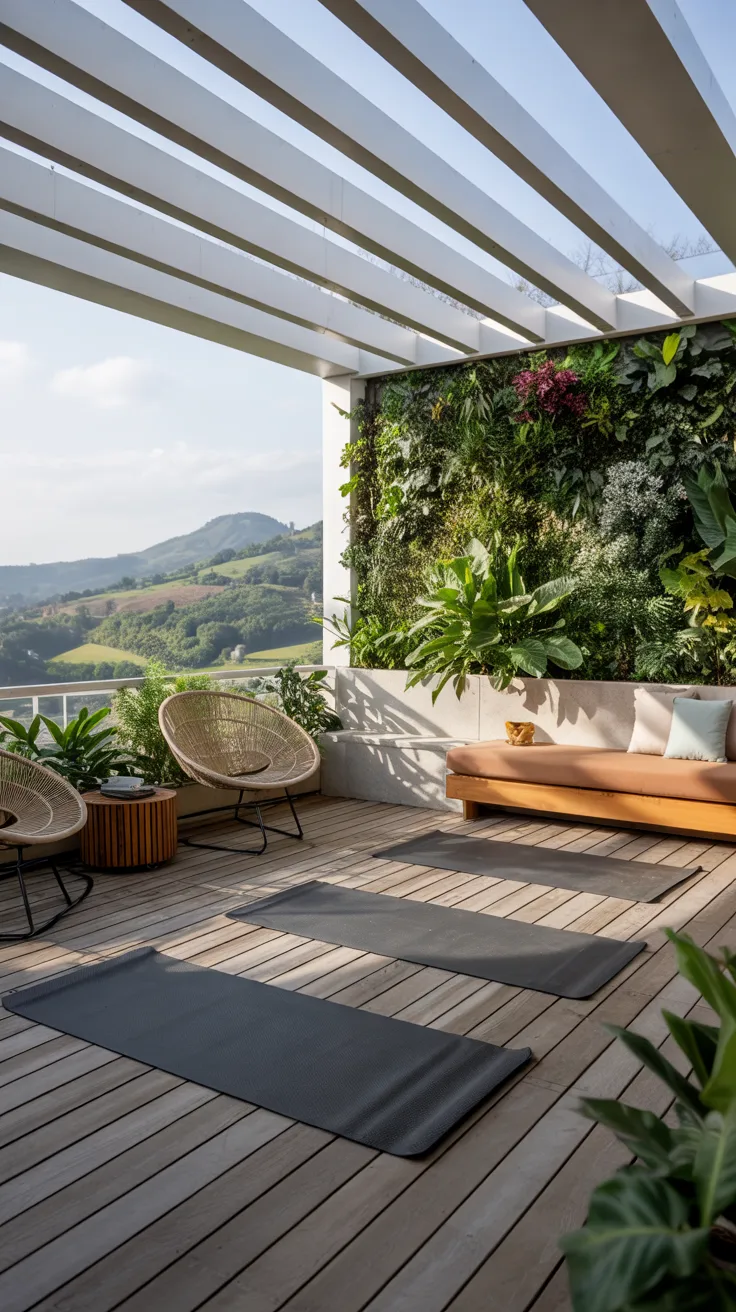
Furniture selection typically includes weatherproof loungers, modular yoga platforms, and low storage cabinets designed to withstand outdoor conditions. Adding vertical greenery walls helps create a subtle enclosure while preserving panoramic visibility, improving both comfort and visual framing.
In my professional experience, terraces naturally encourage consistent yoga routines because they provide immediate access without requiring travel across the yard. Many contemporary residential developments now integrate wellness terraces specifically for this reason.
18. Semi-Indoor Outdoor Yoga Space Designs For Flexible Use
A Semi-open yoga studio bridges Indoor comfort and outdoor freshness, making it ideal for year-round flexibility. I usually design transitional spaces with sliding glass walls or folding partitions that allow homeowners to shift between enclosed and open configurations depending on weather conditions.
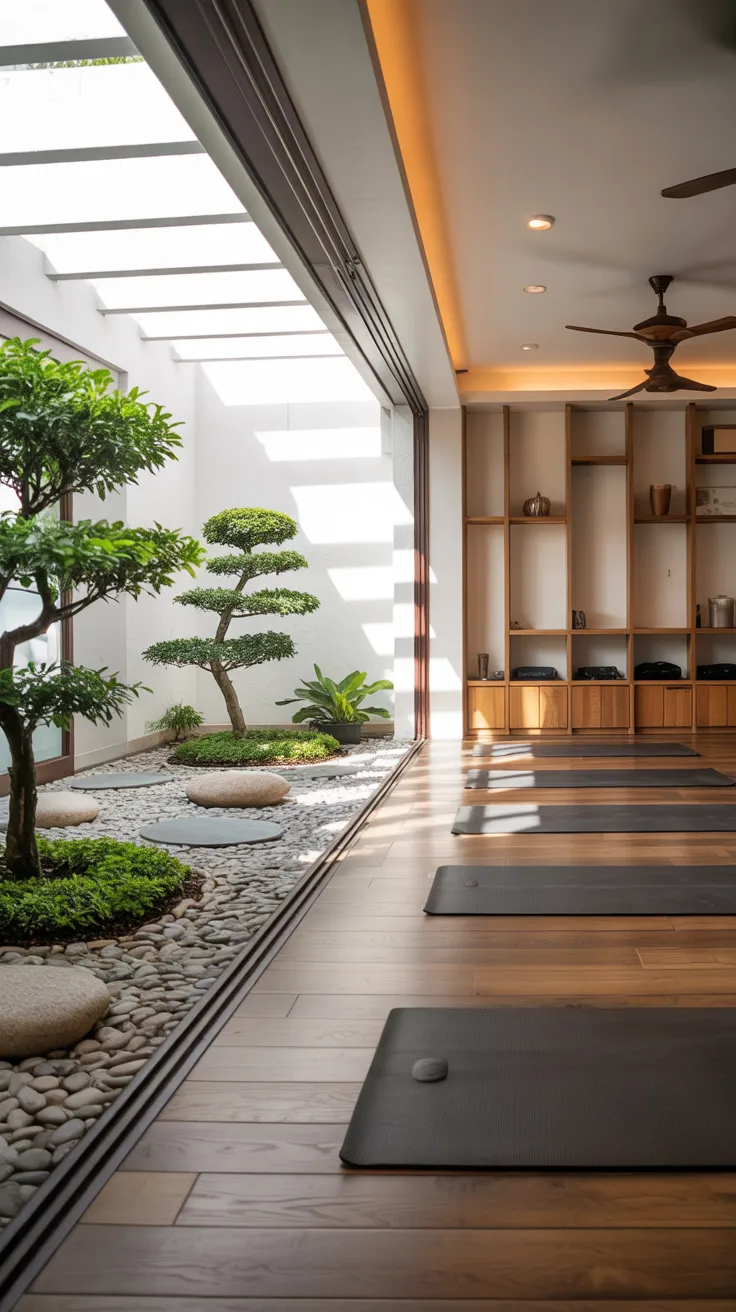
I recommend installing wood or stone flooring that visually connects interior finishes to exterior landscaping, creating a seamless design transition. Ceiling fans, retractable shades, and concealed storage systems help maintain comfort while preserving a minimalist visual environment.
From my experience, transitional wellness rooms dramatically increase usability because they eliminate seasonal limitations that often affect fully outdoor setups.
19. Outdoor Yoga Space UK Design Considerations And Climate Adaptation
Designing for the Uk requires special attention to rainfall, wind, and fluctuating temperatures. I typically recommend Covered pergolas with retractable roofs, ensuring that outdoor yoga spaces remain usable even during unpredictable weather conditions.
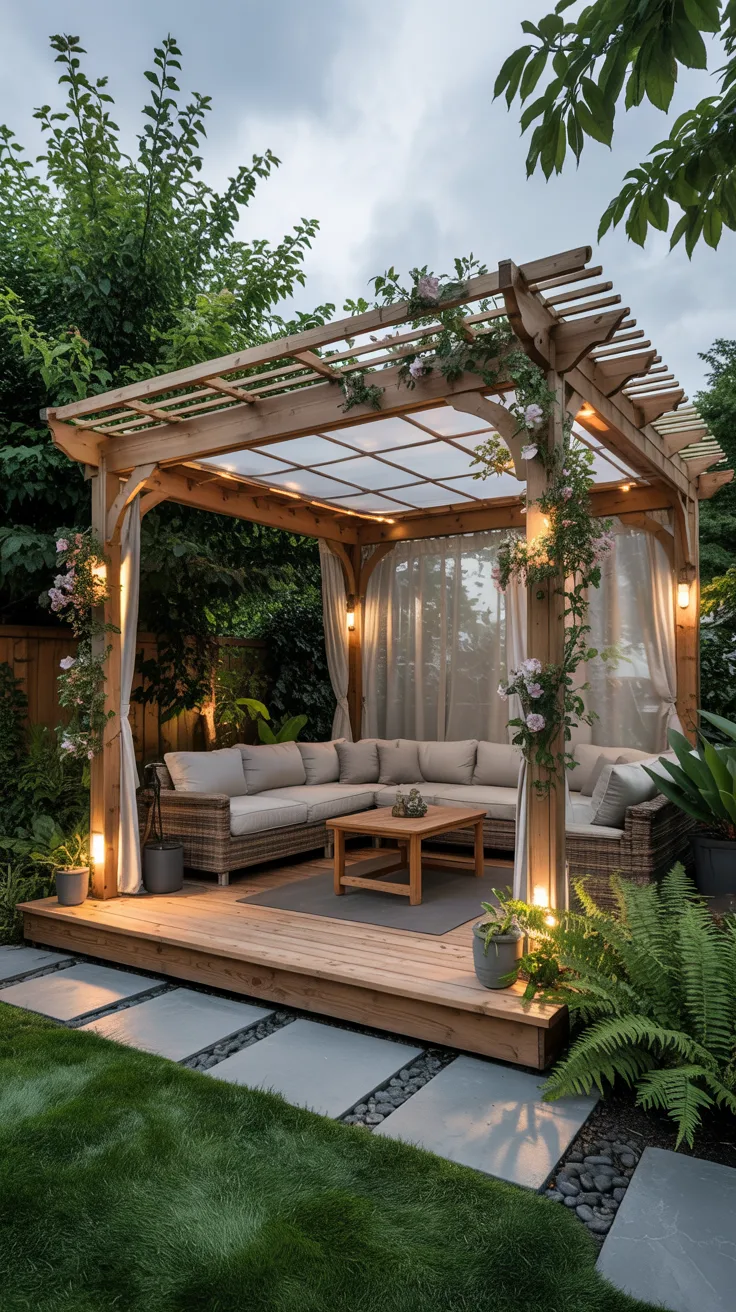
Furniture should be constructed from treated hardwood, powder-coated aluminum, or weatherproof composites that resist moisture. Raised decking platforms improve drainage, while integrated storage compartments keep mats dry and protected. Neutral-toned cushions designed for outdoor durability maintain the visual Aesthetic without compromising practicality.
In my projects, climate-adaptive designs consistently outperform purely decorative installations because they maintain long-term usability regardless of seasonal shifts.
20. Creating A Peaceful Outdoor Yoga Space Plan From Sketch To Reality
Every successful wellness installation begins with a thoughtful Sketch and structured Plan that maps circulation, sunlight exposure, and furniture placement. I always advise homeowners to visualize how the yoga platform connects with surrounding landscaping before beginning construction.
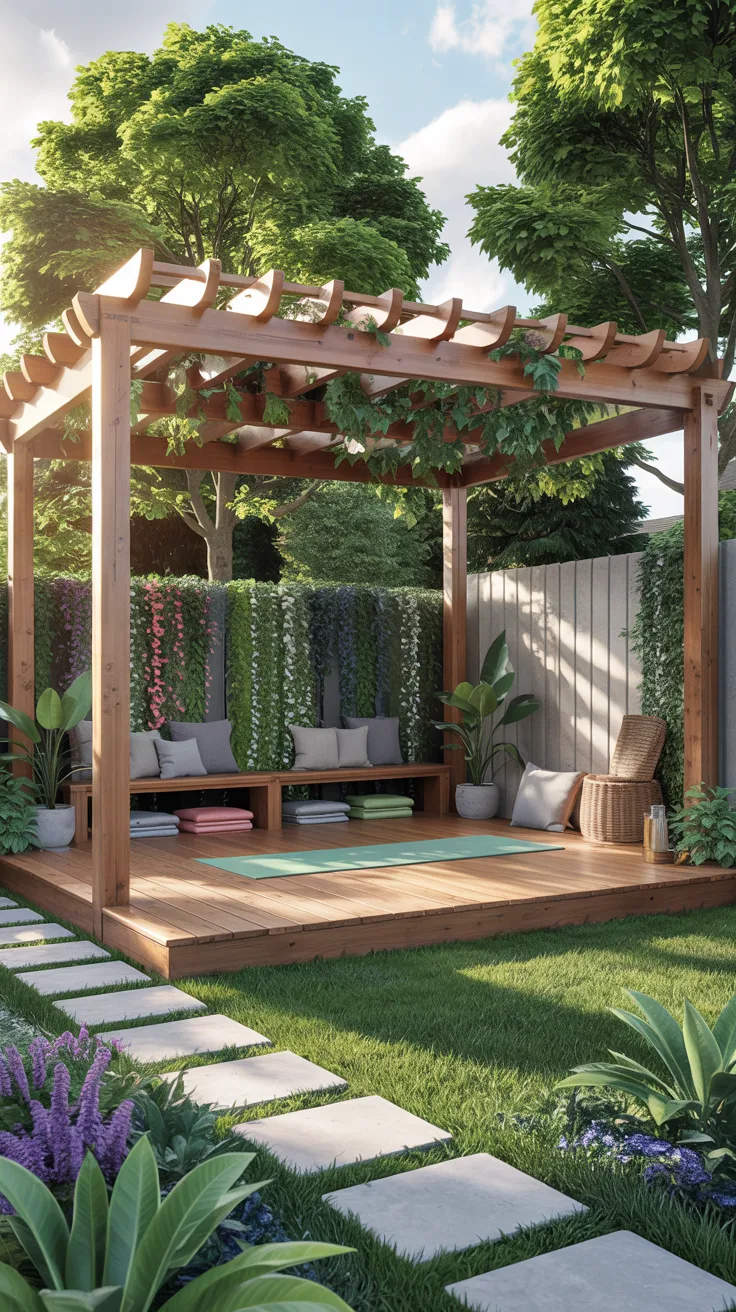
During the implementation stage, I prioritize durable flooring, ergonomic storage solutions, and adaptable shade structures. This ensures the final result supports both meditation and active yoga sessions without requiring frequent adjustments. The transition from concept to reality becomes smoother when the Design process anticipates daily functional needs.
Personally, I encourage clients to prototype their layout using temporary mats and seating arrangements before committing to permanent structures, allowing them to test comfort and movement flow.
21. Innovative Outdoor Yoga Space Design Ideas Shaping Wellness In 2026
The future of outdoor yoga space design ideas emphasizes flexibility, sustainability, and technological integration. I increasingly incorporate solar lighting, eco-friendly decking, and modular seating systems that adapt to multiple wellness activities beyond yoga.
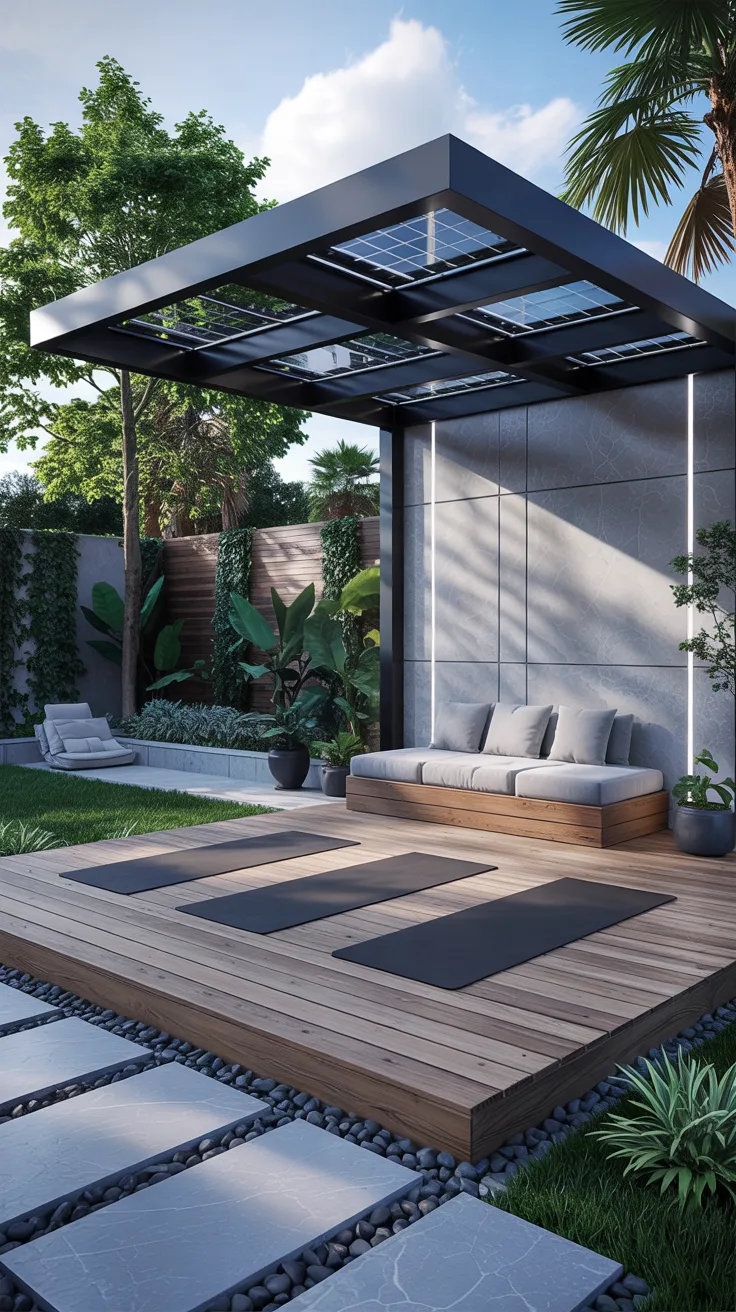
I often recommend incorporating smart lighting scenes, discreet audio systems, and integrated planter irrigation to simplify maintenance. These features ensure the space remains functional while preserving the calm atmosphere essential for mindfulness practice.
From my perspective, the most successful wellness environments are those that combine thoughtful Design ideas with everyday usability, allowing homeowners to maintain consistent routines without additional effort.
22. Conclusion
 Save Pin