How can we design outdoor spaces in 2026 that truly support children’s development while still fitting modern family lifestyles? In this article, I explore outdoor area for kids backyard ideas and outdoor area for kids on patio that balance safety, creativity, and everyday usability. These concepts show how thoughtful planning can turn any backyard, patio, or small space into a place where kids love to Play every day.
1. Outdoor Area For Kids Backyard Ideas That Encourage Daily Play
I approach backyard play areas as extensions of the home, designed for daily use rather than occasional activity. A well-planned kids’ outdoor area supports movement, imagination, and independence, while remaining safe and visually integrated with the rest of the yard. In 2026, the focus is on flexible zones that evolve as children grow.
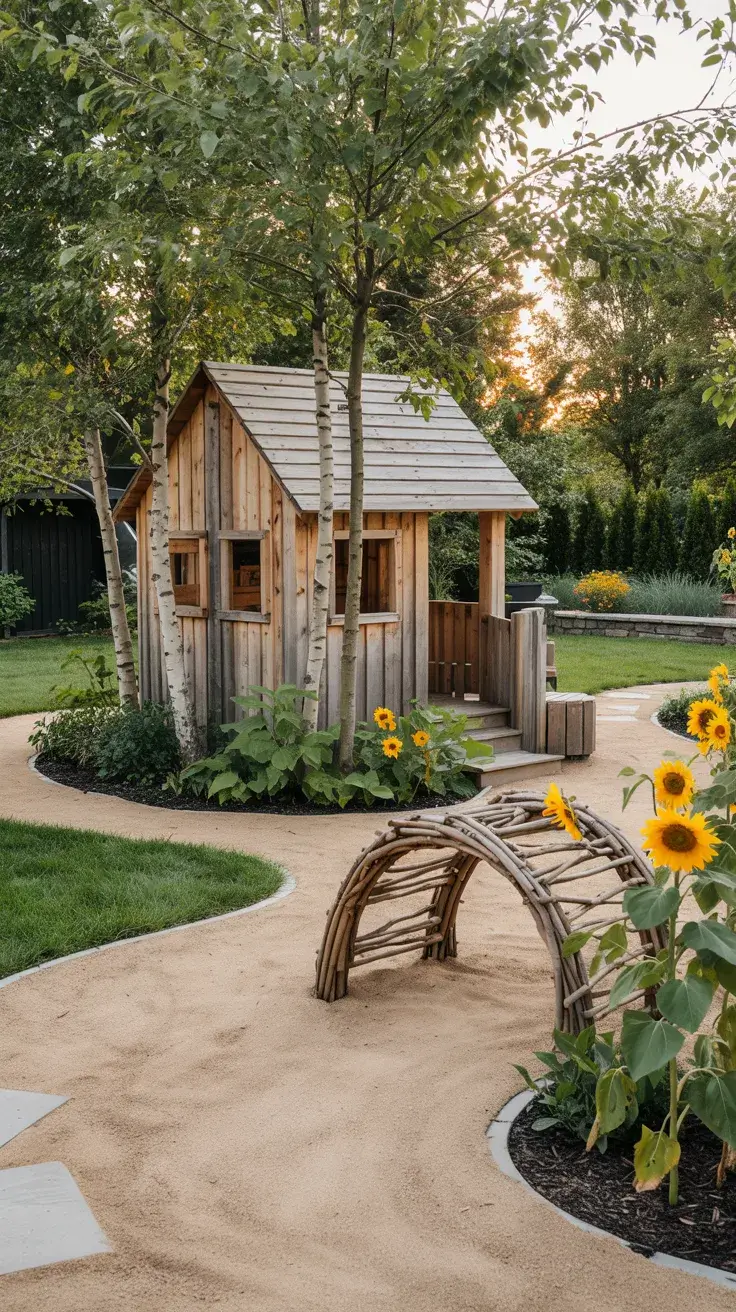
I usually include open play surfaces, low climbing elements, and shaded seating. Natural materials, grass zones, and soft ground finishes help kids move freely while reducing the risk of injury. Storage benches or small sheds keep toys organized without cluttering the space.
From my experience, landscape designers often stress that kids’ play areas should feel accessible and inviting, not hidden away. I agree, as children are more likely to use spaces that feel connected to everyday family life.
2. Outdoor Area For Kids On Patio: Smart Solutions For Limited Space
Designing an outdoor area for kids on patio requires careful planning, especially in urban homes or apartments. I treat patios as multifunctional zones where play elements can be added without sacrificing adult use or circulation.
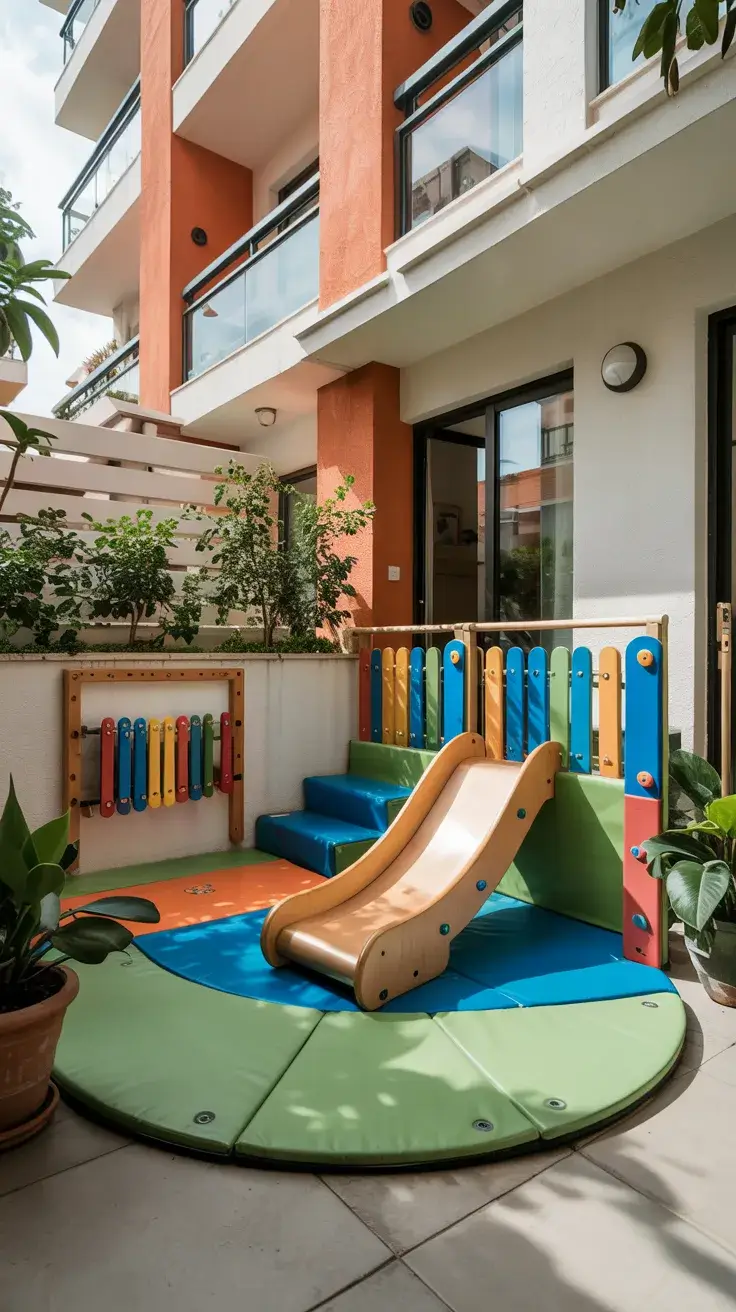
Foldable play structures, modular mats, and compact activity tables work well in limited areas. I often recommend chalk walls, small climbing panels, or sensory boards that attach to existing walls or railings, making the most of vertical space.
In my professional view, smart patio solutions succeed when they remain adaptable. Many US design experts recommend flexible furniture that can be moved or stored easily, which aligns with my approach.
3. Outdoor Area For Kids And Adults: Shared Spaces That Work For Everyone
Creating an outdoor area for kids and adults means balancing play with relaxation. I design shared spaces where children can explore while adults feel comfortable staying nearby.
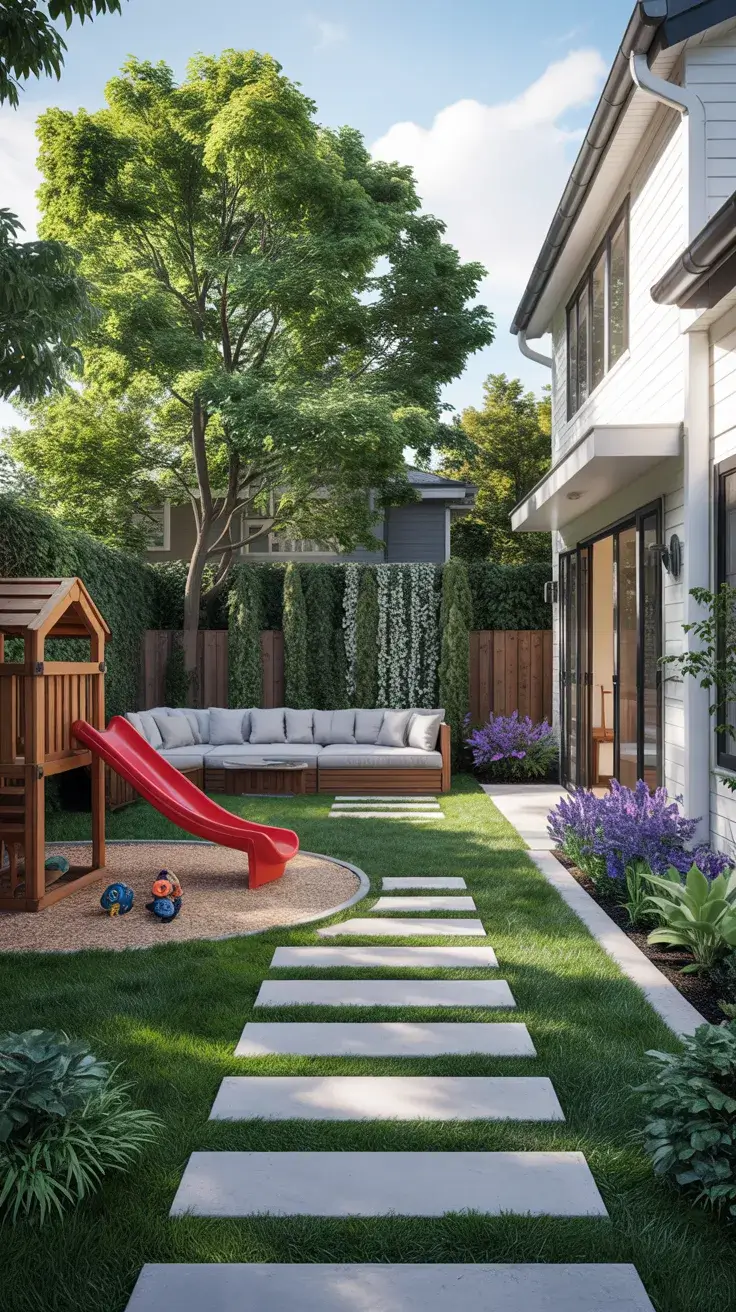
Seating areas placed around the play zone allow supervision without interruption. I often include picnic tables, loungers, or benches that double as play surfaces. This layout encourages family interaction rather than separation.
Personally, I find shared spaces lead to more consistent outdoor use. Designers featured in family-focused design publications often highlight visibility and comfort for adults as key to successful kids’ areas.
4. Small Space Outdoor Play Areas That Still Feel Fun
A small space does not limit creativity. I design compact play areas that rely on clever layouts rather than size, ensuring children still have room to move and imagine.
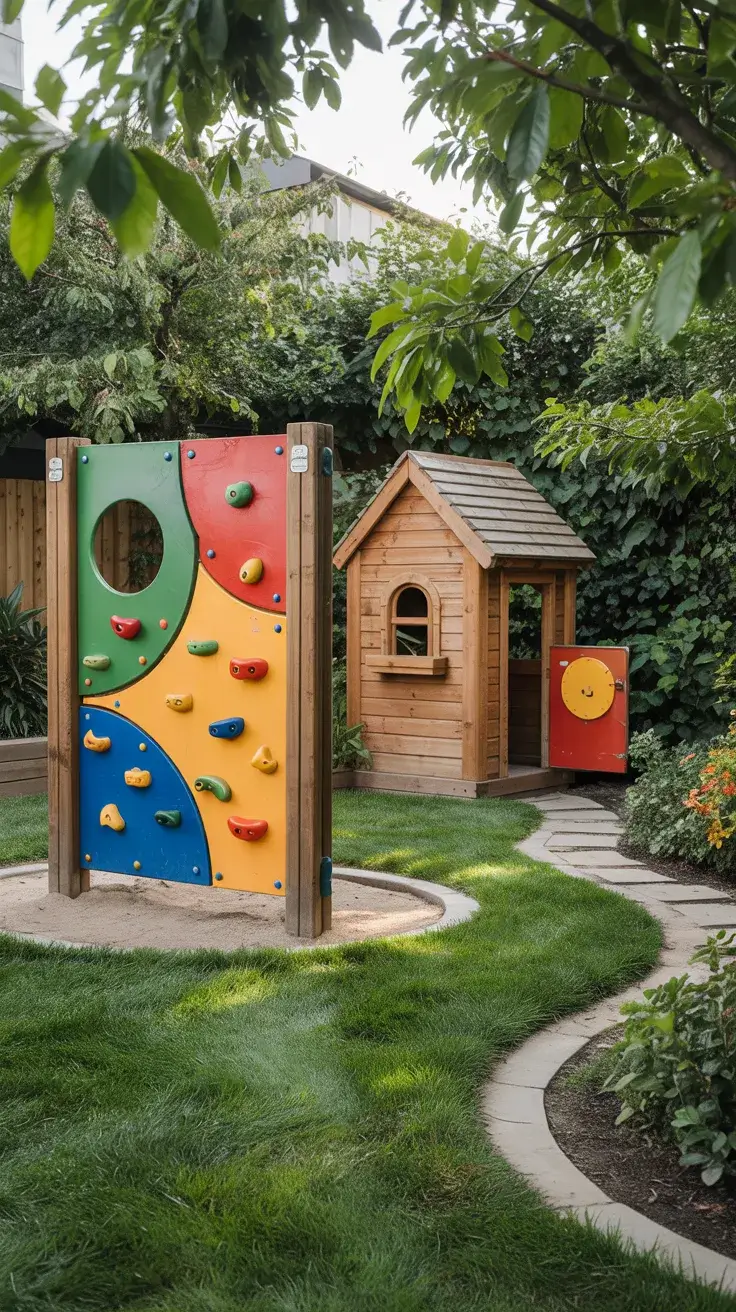
Key elements include vertical play panels, compact slides, and floor games painted directly onto surfaces. Using corners efficiently allows even narrow yards or side gardens to become engaging play zones.
In my experience, simplicity is often more effective than overcrowding. Many Montessori-inspired designers recommend fewer, more open-ended play elements, a principle I regularly apply.
5. Garden Play Areas For Kids That Blend Nature And Creativity
A Garden play area connects children with nature while supporting creative play. I design these spaces to feel organic, using plants, paths, and natural textures rather than bright plastic structures.
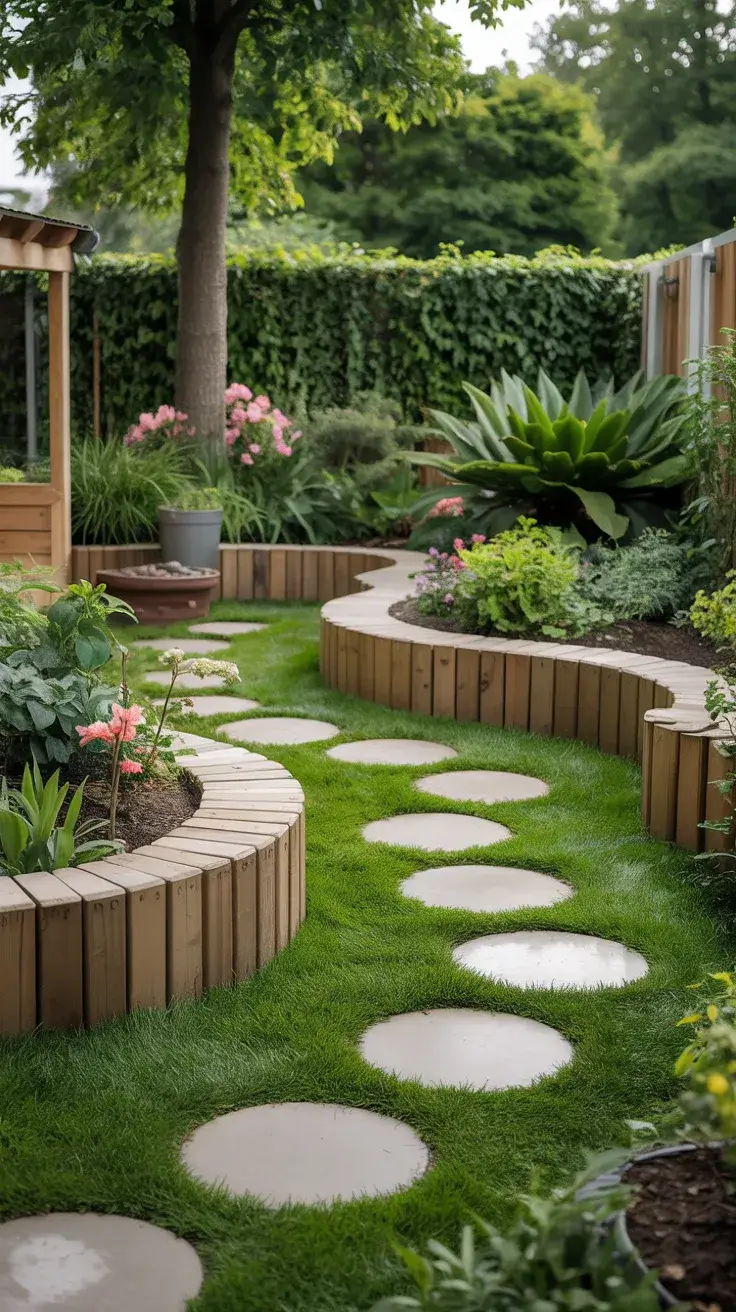
Logs, stepping stones, sand patches, and small planting beds allow kids to explore textures and movement. A play garden encourages curiosity and teaches respect for the natural environment.
From my perspective, nature-based play supports emotional and cognitive development. Many child development experts emphasize outdoor learning through nature, and I see clear benefits in real projects.
6. Playground Design Plan For A Functional And Safe Kids Area
A clear playground design plan is essential for safety and long-term use. I always begin by mapping activity zones, circulation paths, and rest areas before selecting equipment.
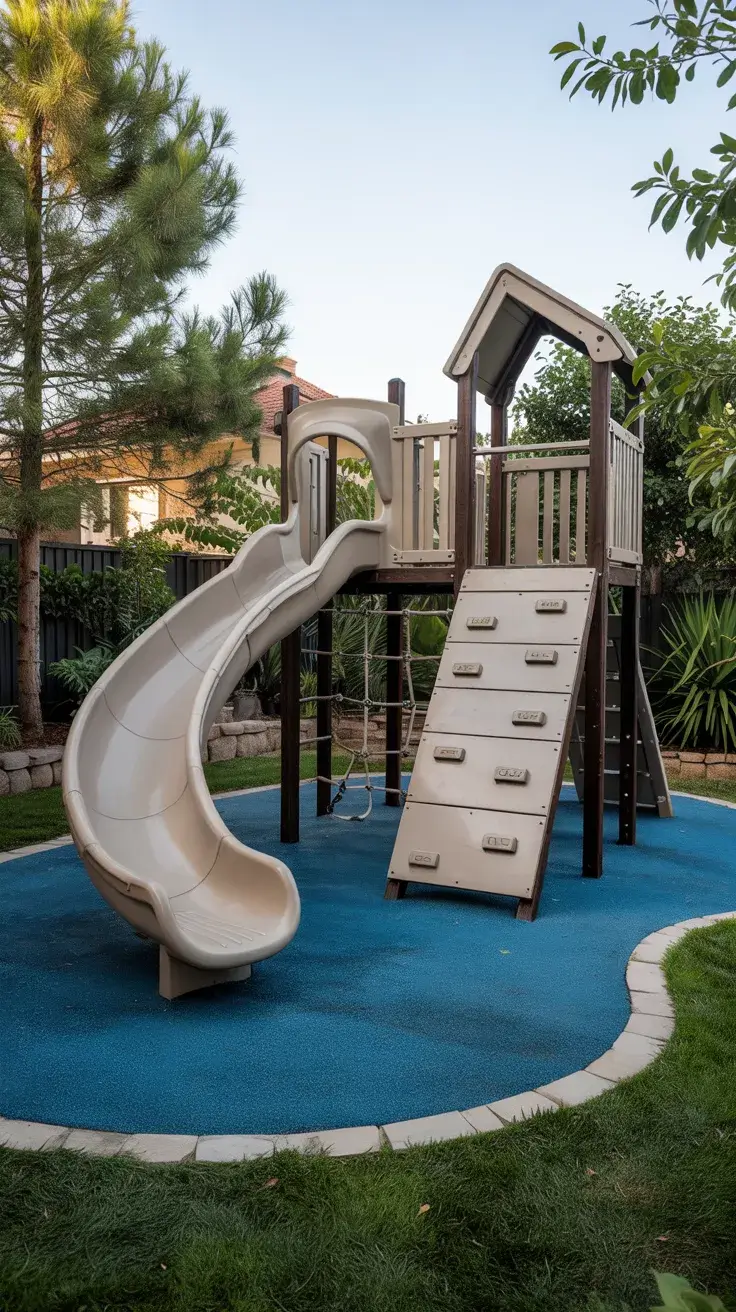
Safety surfaces, clear sightlines, and age-appropriate equipment define a functional playground design. I also ensure access points are clear and that play elements are spaced correctly.
In my experience, following basic safety guidelines recommended by US playground standards prevents most design mistakes. Planning first always saves time and budget later.
7. Playground Design Backyard Ideas For Modern Families
Playground design backyard concepts in 2026 focus on blending play structures with modern landscaping. I design playgrounds that feel like part of the yard rather than an added structure.
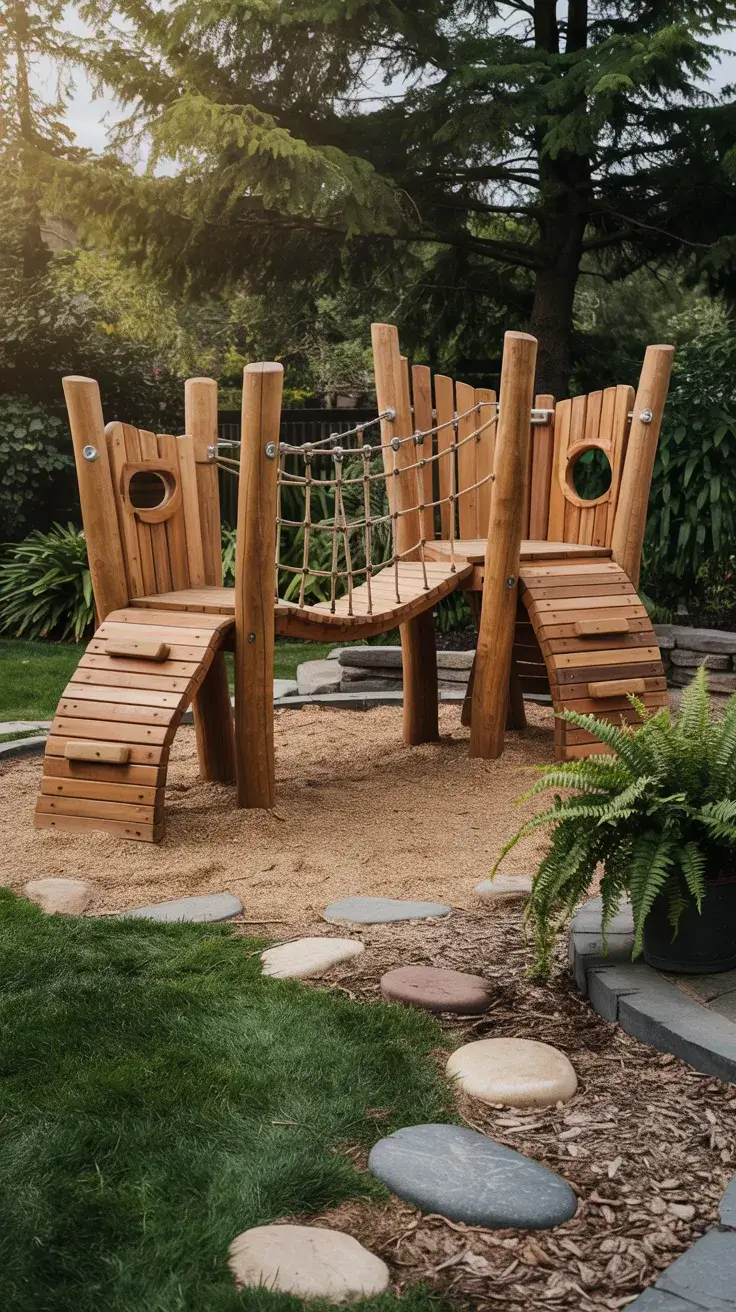
Natural wood frames, neutral colors, and integrated seating make playgrounds visually appealing. These designs allow families to enjoy a cohesive outdoor space that grows with their children.
Personally, I believe modern playgrounds should be subtle yet engaging. Many contemporary landscape architects advocate for this integrated approach, and I consistently see positive feedback from families.
8. Simple Playground Design Ideas For Easy DIY Projects
I often recommend starting with Simple playground concepts, especially for families who want fast results without complex construction. Easy DIY playground designs focus on open-ended play rather than fixed structures, allowing kids to move, imagine, and adapt the space freely.
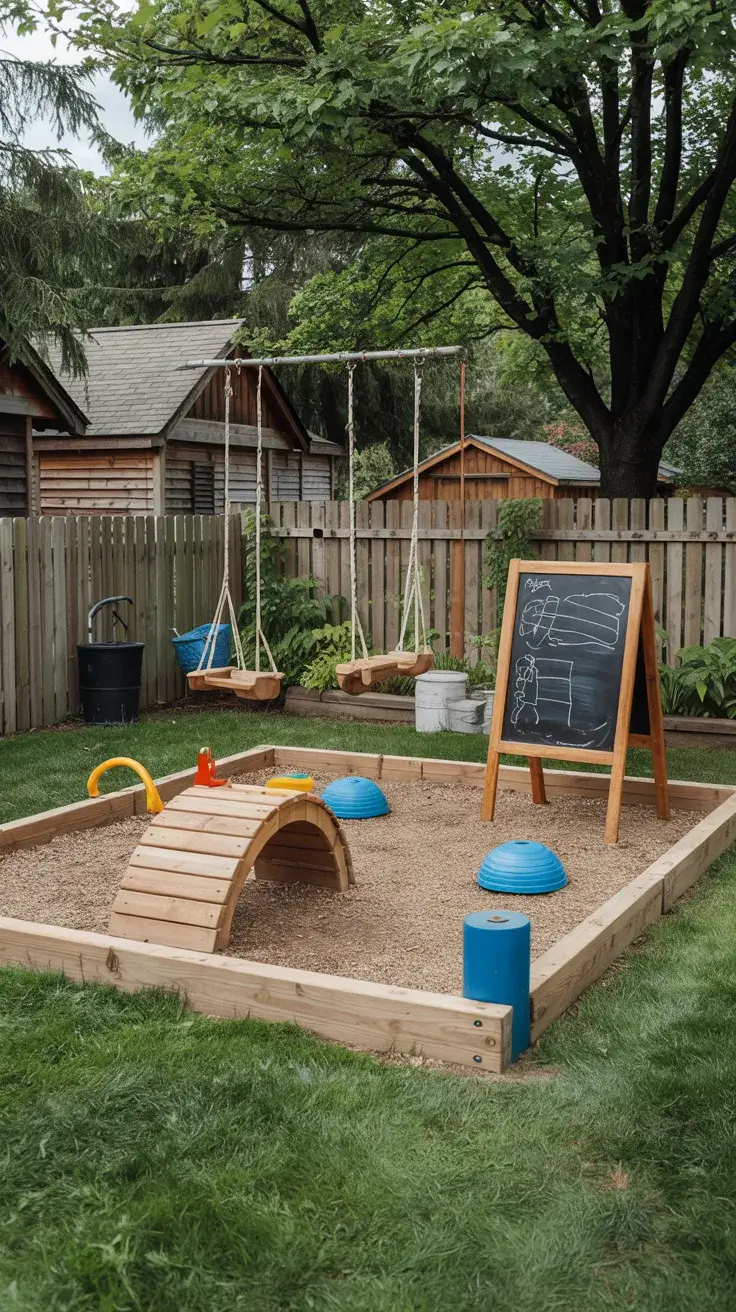
Key elements include balance beams, chalk boards, climbing ropes, and modular play boxes. These features are affordable, flexible, and easy to install, making them ideal for families new to outdoor play planning.
From my experience, many Montessori-focused educators support simple setups that encourage independent play. I agree, because fewer elements often lead to deeper engagement and creativity.
9. Playground Design With Natural Wood For A Warm Look
Playground design natural wood creates a calm, welcoming environment that blends naturally into the landscape. I use wooden structures to make playgrounds feel like part of the garden rather than an added object.
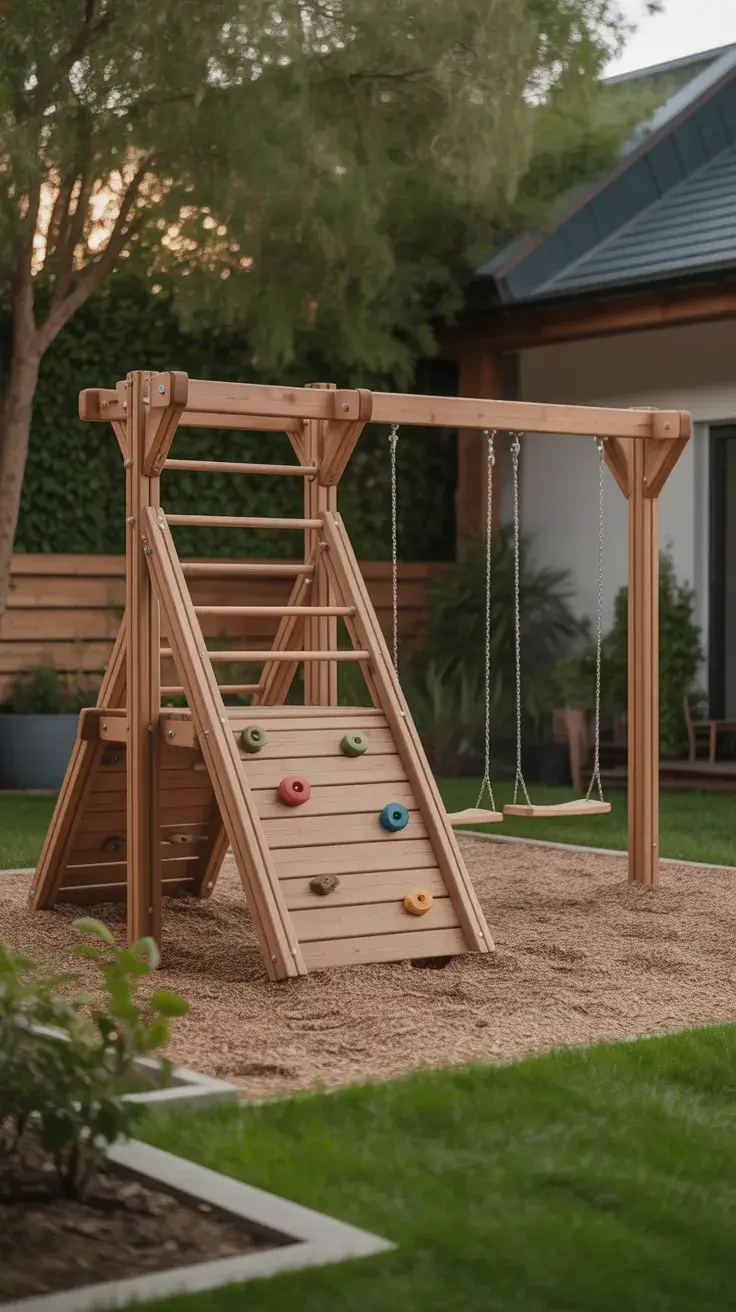
Wooden climbing frames, swings, and playhouses offer durability and visual warmth. I often pair them with neutral tones and greenery to enhance the natural feel while maintaining safety and comfort.
Personally, I find natural wood playgrounds age beautifully over time. Many landscape architects recommend wood for its ability to harmonize with outdoor surroundings, which I see reflected in family satisfaction.
10. Playground Design With Rubber Tiles For Safety And Comfort
Safety is a priority in any playground design plan, and playground design rubber tiles provide excellent impact protection. I often specify rubber tiles for active play zones where kids run, jump, or climb frequently.
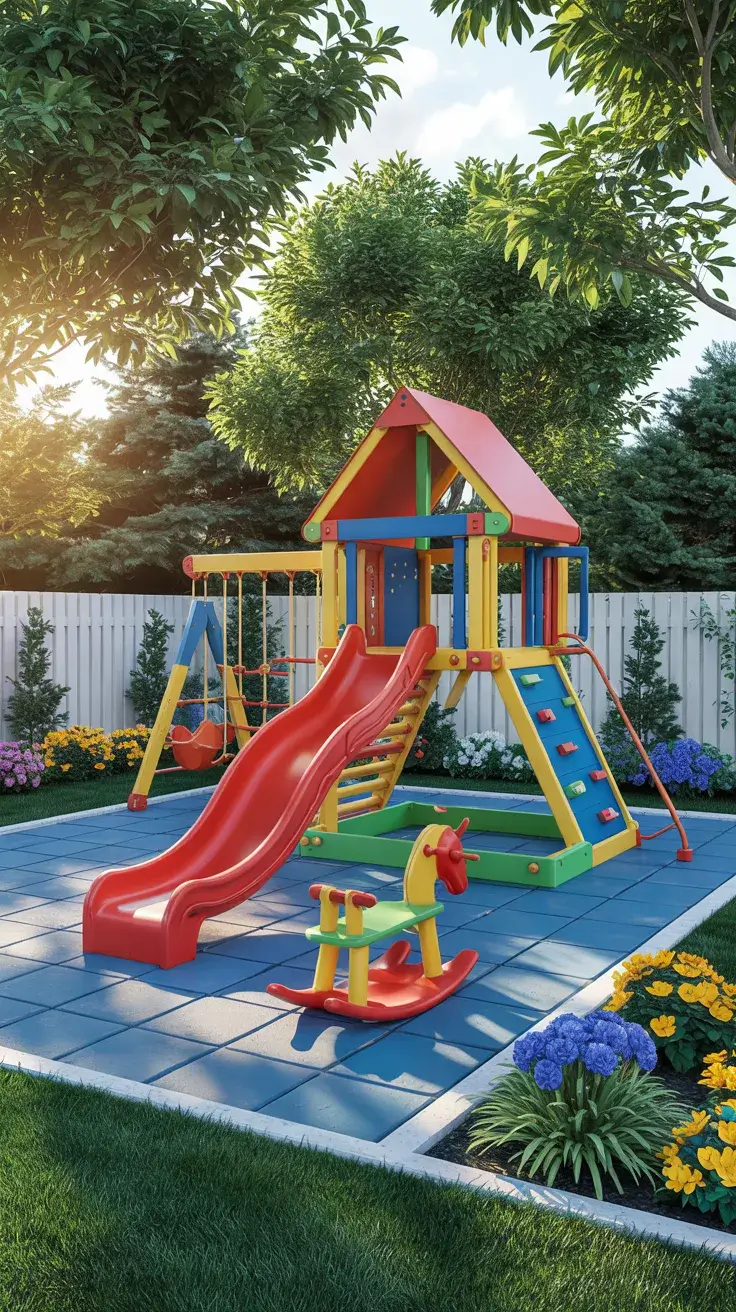
These tiles are slip-resistant, easy to clean, and available in neutral colors that fit modern outdoor aesthetics. They also help define play zones clearly within a larger yard or patio.
From my professional experience, safety specialists consistently recommend rubber tiles for fall-prone areas. I find they offer peace of mind without compromising design quality.
11. Playground Design With Rubber Mulch For Active Play
Playground design rubber mulch is another practical option for active play areas. I use it when families want a softer, more natural-looking ground cover that still meets safety standards.
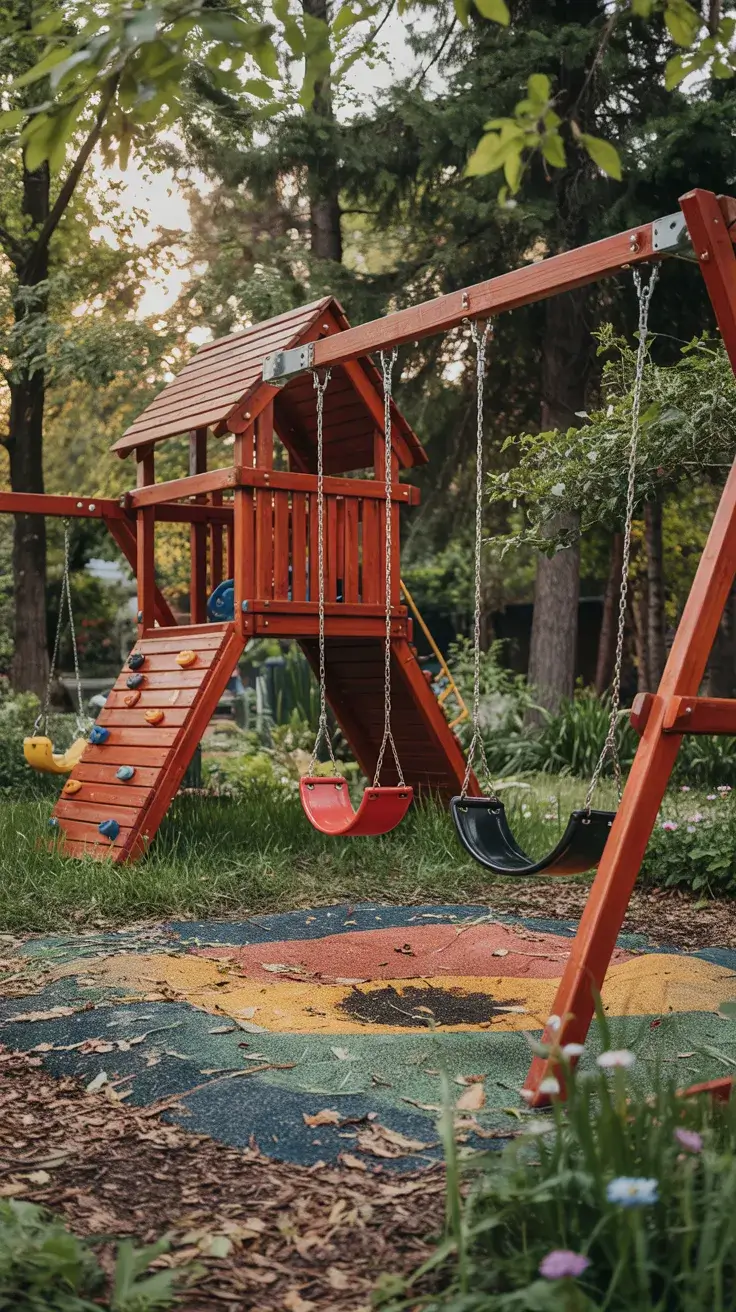
Rubber mulch works well under swings, slides, and climbing frames. It drains well, reduces maintenance, and adapts easily to irregular ground shapes.
In my experience, many US playground guidelines recognize rubber mulch as a safe and cost-effective solution. I recommend it particularly for larger backyard playgrounds.
12. Playground Design Sand Boxes For Imaginative Play
Playground design sand boxes remain one of the most effective tools for imaginative play. I see sand play as essential for sensory development and creative storytelling.
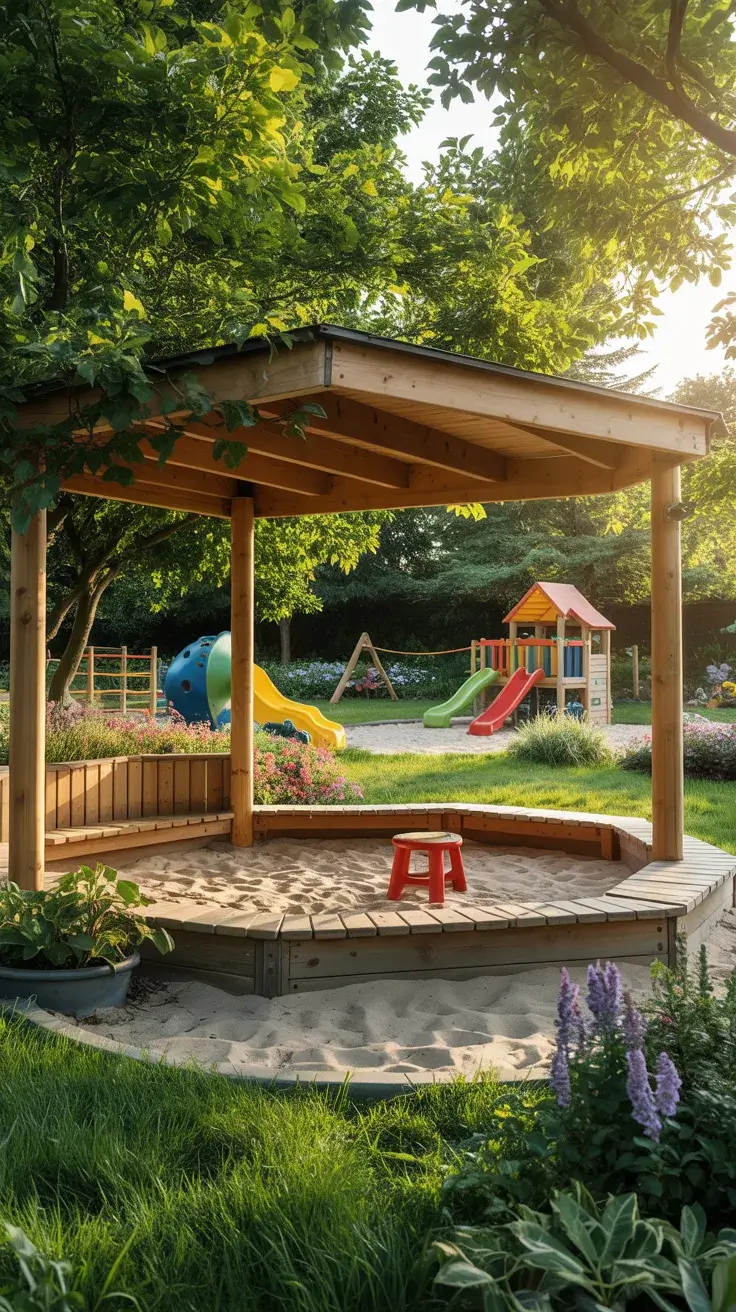
Modern sandboxes often include covers, seating edges, and integrated storage for toys. I usually place them in shaded areas to improve comfort and usability.
From my perspective, child development experts frequently highlight sand play as foundational. I find that sandboxes consistently attract long, focused play sessions.
13. Playground Design Mud Kitchen Ideas Kids Love
A playground design mud kitchen encourages hands-on exploration and role play. I design mud kitchens to be durable, accessible, and easy to clean, supporting messy but meaningful play.
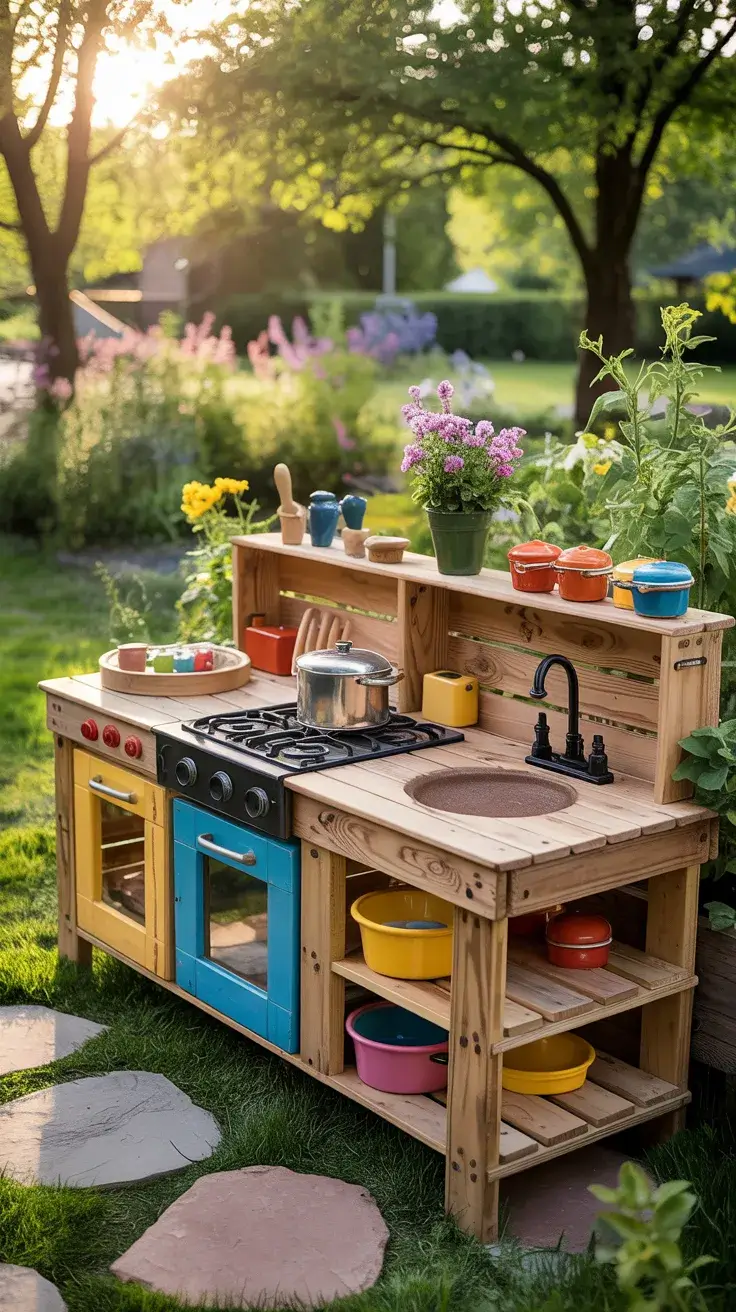
Typical elements include low counters, shelves, hooks, and recycled kitchenware. Using Pallets or reclaimed wood keeps costs low and supports sustainable design.
Personally, I see mud kitchens as one of the most engaging outdoor play features. Many Montessori educators advocate for this type of open-ended play, and I fully support it.
14. Water Play Areas For Outdoor Fun In Summer
Water play areas bring excitement and cooling relief during warmer months. I design these zones to be safe, contained, and easy to manage within the broader playground layout.
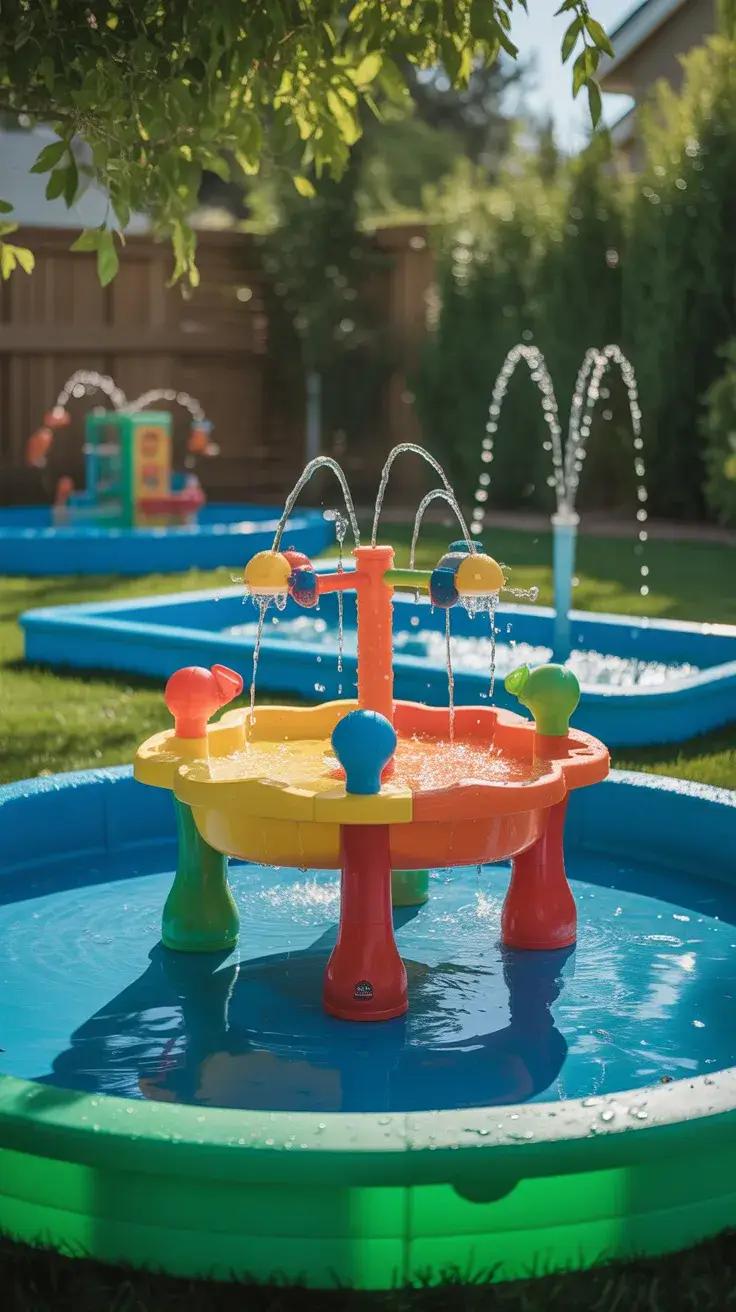
Splash pads, water tables, and hose-friendly surfaces allow kids to experiment with water without constant supervision. Proper drainage and non-slip surfaces are essential here.
In my experience, summer water play significantly increases outdoor activity time. Designers often recommend temporary or modular water features, which I find practical and flexible.
15. Playground Design Music Wall For Creative Expression
A playground design music wall adds sound and creativity to outdoor play without taking up much space. I use music walls to encourage free expression, rhythm, and collaboration, especially in shared family gardens or school-style backyards.
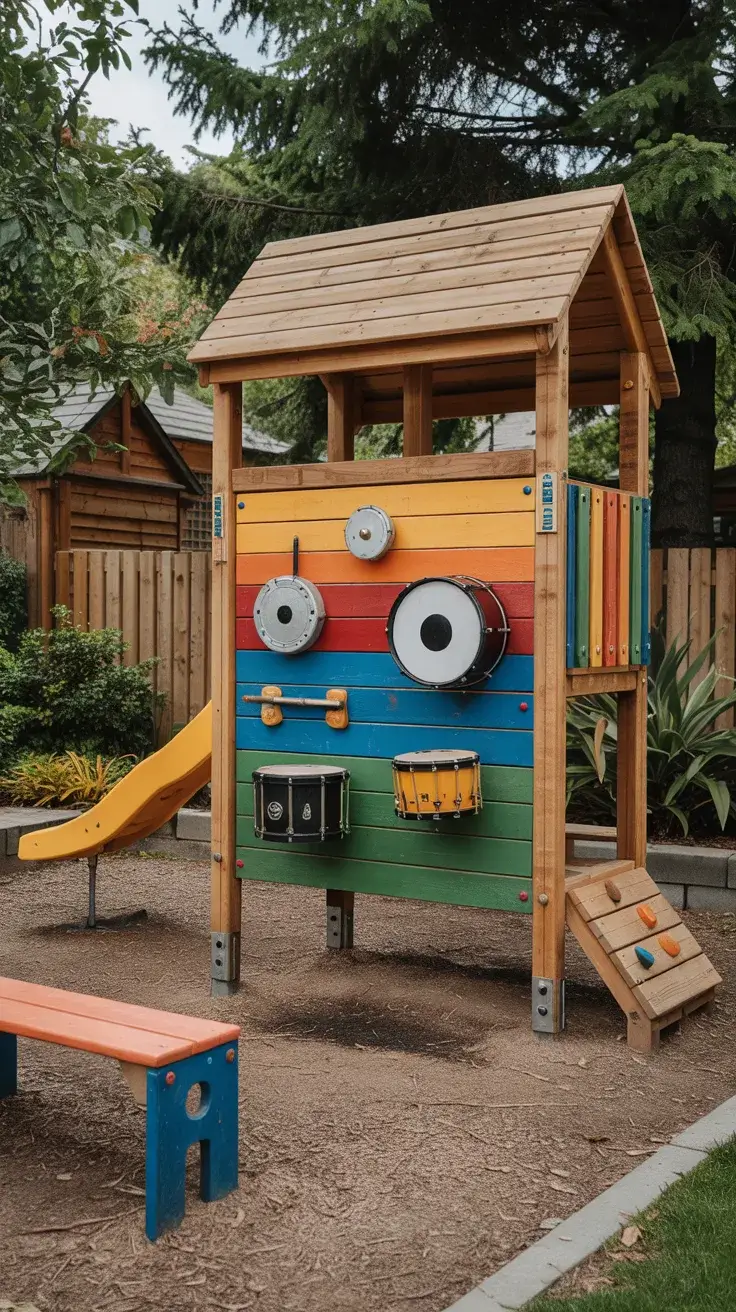
Typical elements include mounted drums, xylophones, metal pipes, and recycled kitchen items attached securely to walls or fences. These materials are durable, weather-resistant, and accessible to children of different ages.
From my experience, child development specialists often highlight music as a powerful learning tool. I see music walls quickly become favorite features because they invite spontaneous and cooperative Play.
16. Sensory Garden Outdoor Areas For Kids Development
A sensory garden is designed to stimulate touch, sight, sound, and smell. I create these spaces to support emotional regulation and curiosity, making them ideal for daily outdoor use.
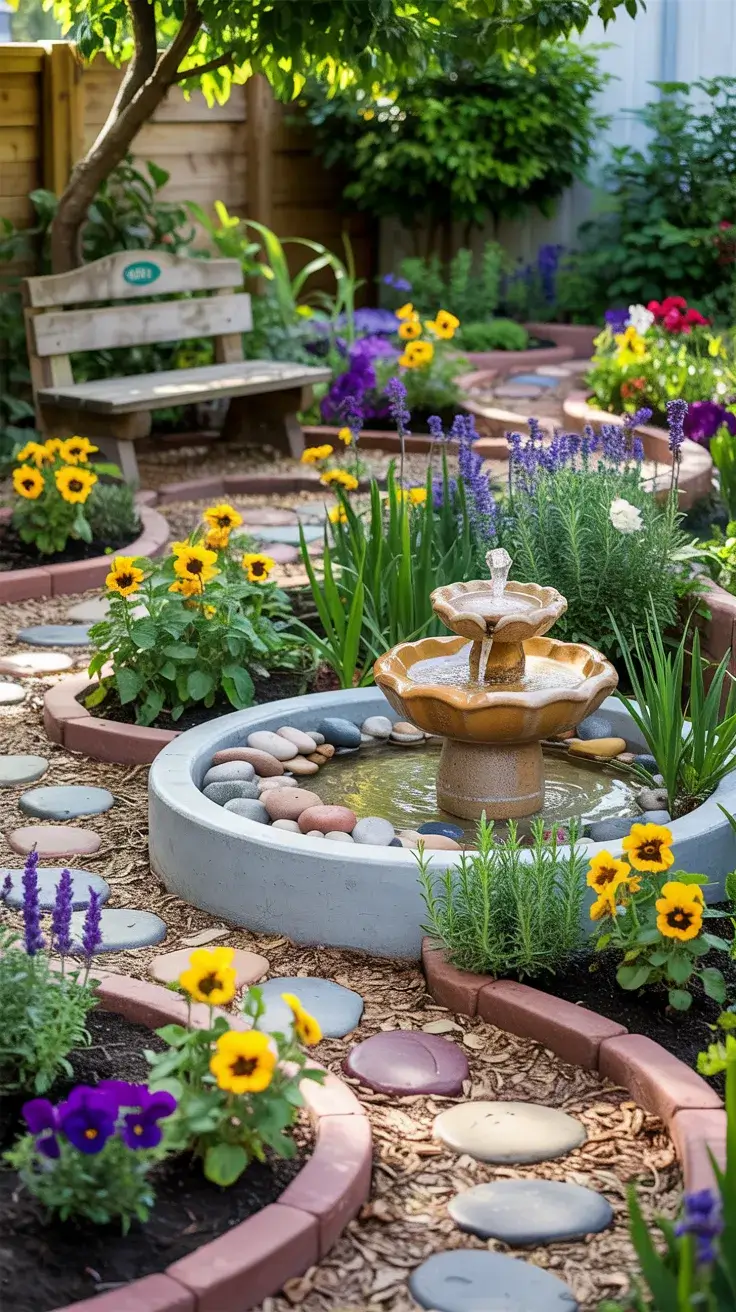
Key elements include textured paths, fragrant plants, water features, and tactile panels. Seating stones or logs allow children to pause and explore their surroundings calmly.
In my professional opinion, sensory gardens are especially effective for inclusive play. Many educators recommend sensory-rich environments to support cognitive and emotional development.
17. Montessori-Inspired Outdoor Play Areas For Kids
Montessori outdoor play areas focus on independence, choice, and real-world interaction. I design these spaces to feel structured but flexible, encouraging kids to guide their own activities.
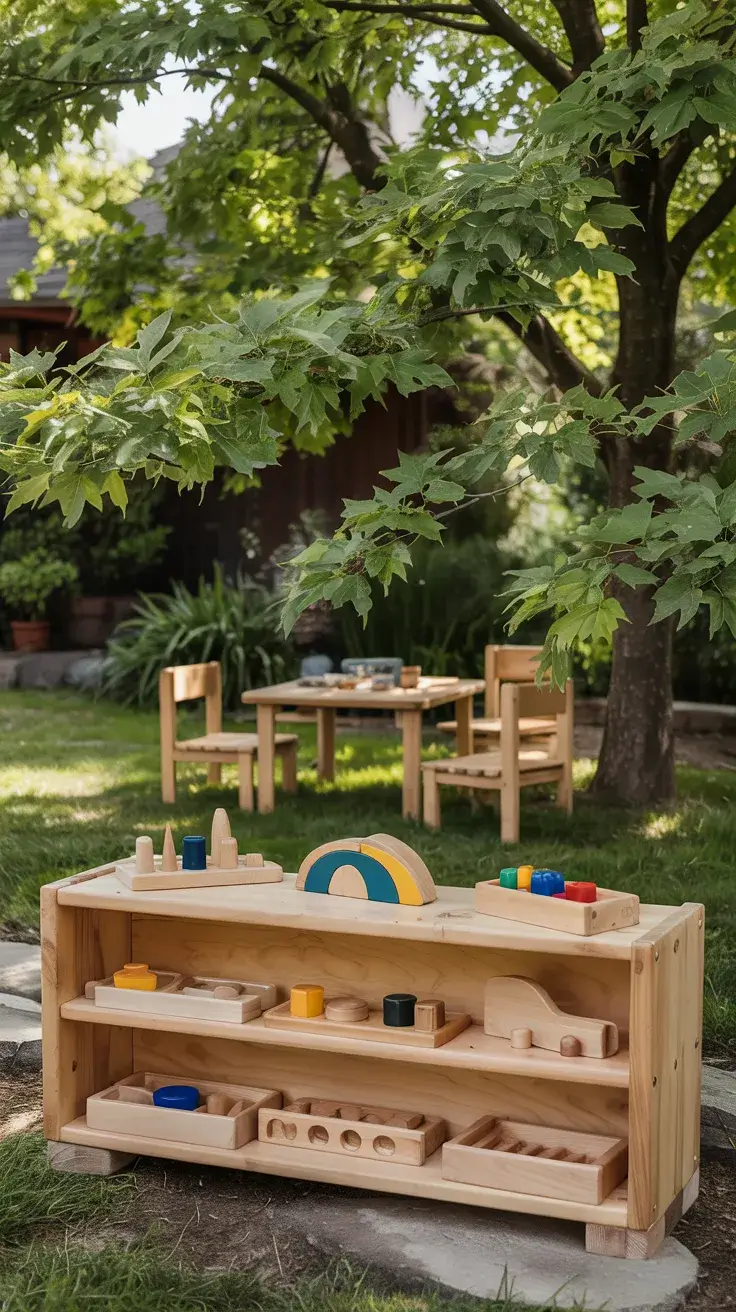
Low shelves, work tables, gardening tools, and practical life stations allow children to explore at their own pace. Natural materials and neutral colors support concentration and calm engagement.
From my experience, Montessori-inspired designs result in longer, more focused play sessions. Many US Montessori educators stress the importance of prepared environments, which I fully support.
18. Pallet Playground Ideas For Budget-Friendly Builds
Using pallets is one of my favorite ways to create affordable and creative playground structures. Pallet playgrounds are flexible, sustainable, and ideal for families working with limited budgets.
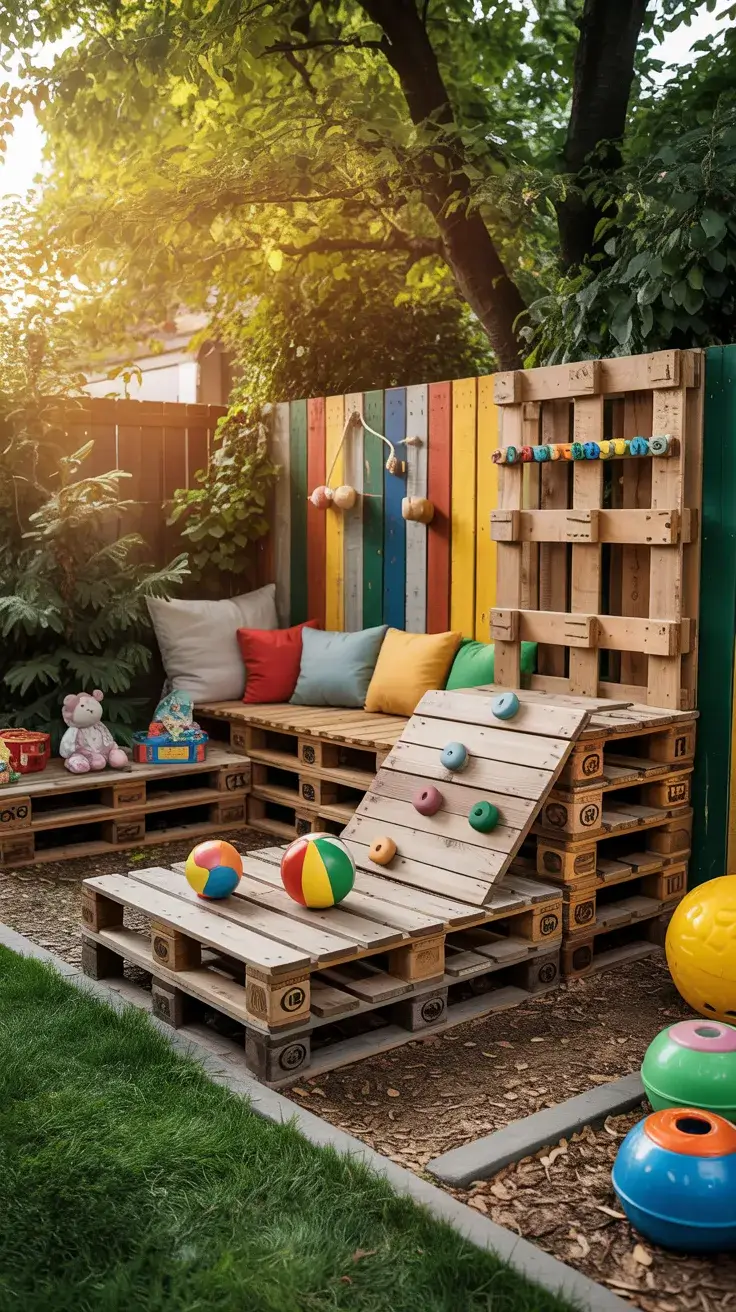
Pallets can be transformed into climbing frames, stages, seating, or storage units. With proper sanding and sealing, they are safe and durable for outdoor use.
Personally, I see pallet projects as opportunities for family collaboration. Many DIY experts recommend pallet builds for Simple easy outdoor projects that grow with children.
19. Simple Easy Outdoor Play Garden Designs
Simple easy play garden designs focus on openness rather than equipment. I design these gardens to allow children to invent their own games using natural surroundings.
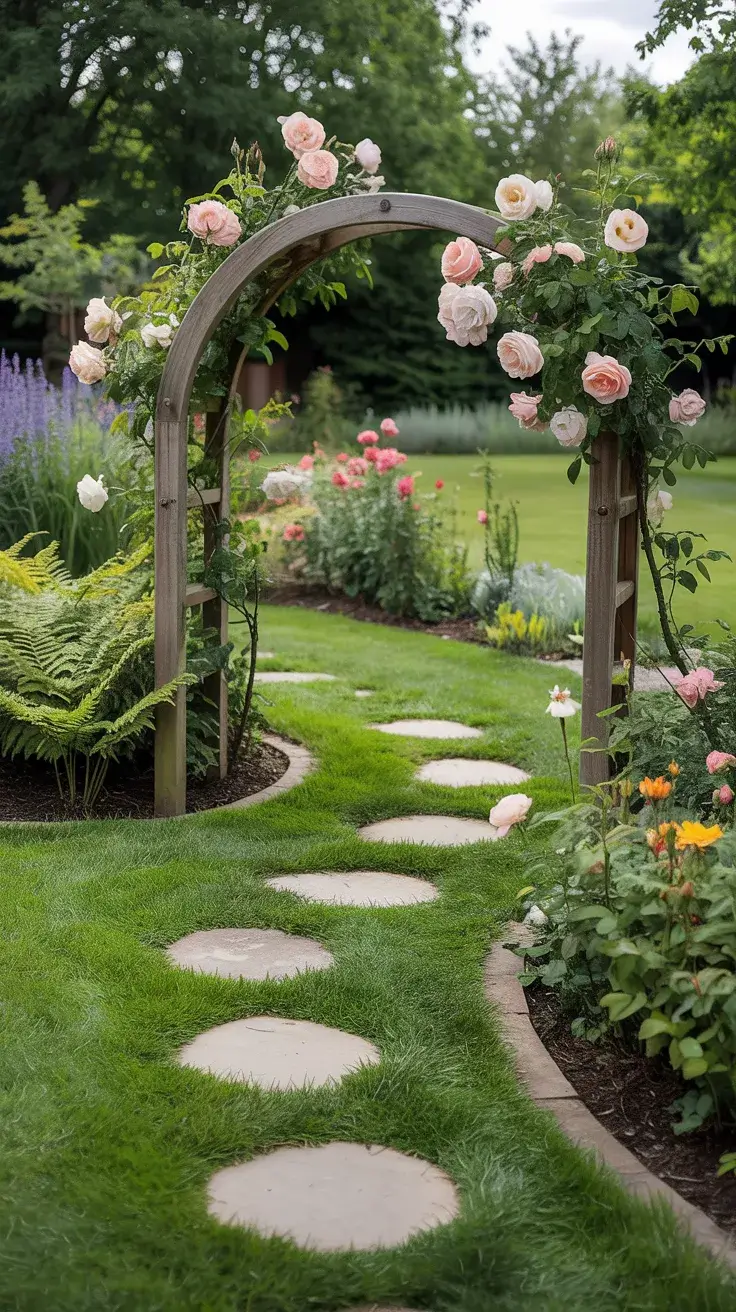
Elements like stepping stones, open lawns, garden beds, and shaded nooks encourage exploration and movement. This approach works well in both large yards and small space settings.
In my experience, less structured environments often lead to more imaginative play. Landscape designers frequently advocate for simplicity in children’s outdoor spaces.
20. Play Garden Ideas For Learning And Exploration
A play garden combines learning and play through interaction with plants, soil, and insects. I design these areas to introduce children to basic gardening and environmental awareness.
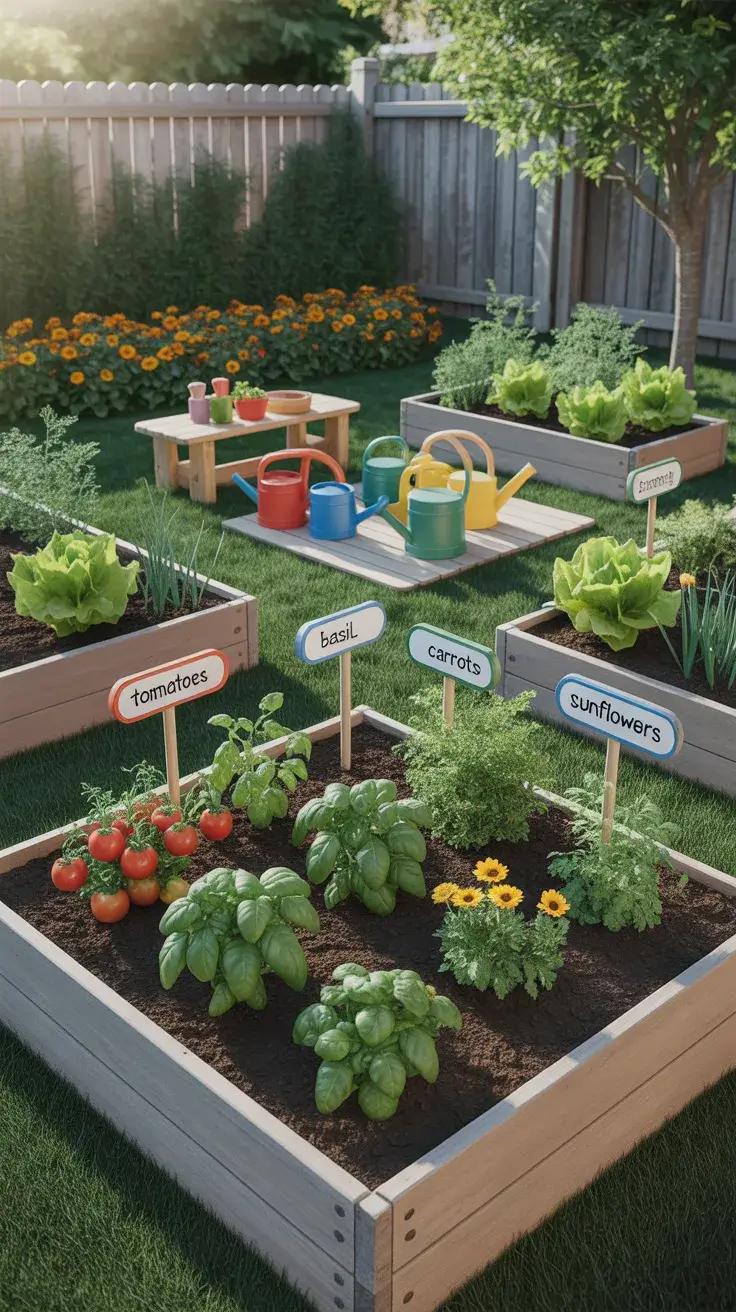
Raised beds, labeled plants, and simple tools make learning hands-on and engaging. Seating nearby allows adults to participate or observe comfortably.
From my perspective, play gardens support long-term learning habits. Many educators emphasize outdoor education as a foundation for curiosity and responsibility.
21. Outdoor Party-Friendly Kids Play Areas For Celebrations
Designing a play area that supports a Party means planning for flexibility and safety. I create open layouts that accommodate games, decorations, and group activities without permanent changes.
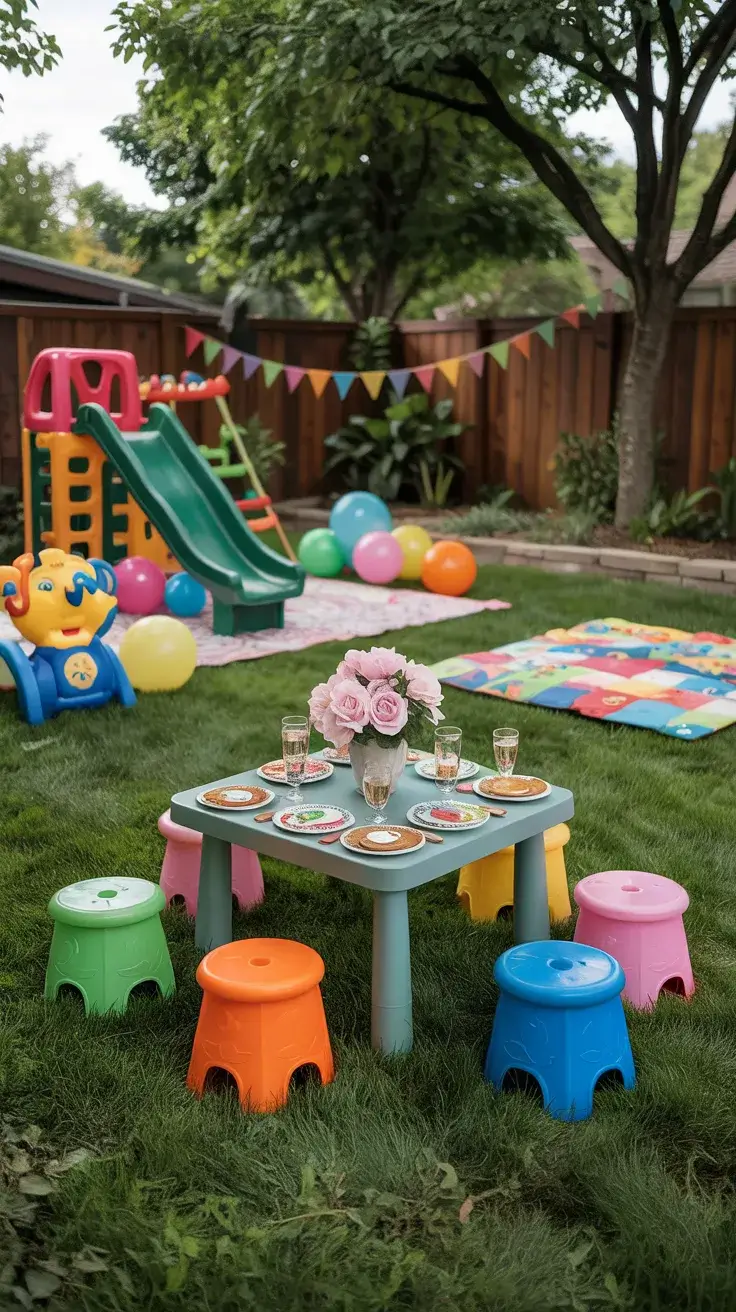
Portable play equipment, open lawns, and clear circulation paths allow easy transformation for birthdays or family gatherings. Shade structures and seating ensure comfort for both kids and adults.
In my experience, party-ready spaces increase the value of outdoor areas. Event planners often recommend neutral, adaptable layouts, which I find effective for everyday use as well.
22. Conclusion
Outdoor play spaces in 2026 are no longer just about keeping kids busy, they are places for creativity, learning, and shared family moments. With thoughtful planning, even a simple backyard, patio, or garden can support daily play, exploration, and celebrations. I invite you to share your ideas, experiences, or favorite outdoor play solutions in the comments and join the conversation about creating better outdoor environments for kids.
23.
 Save Pin