The kitchen island remains one of the most important design features in modern homes, but what makes an island truly exceptional in Kitchen Island Ideas 2025? How do styles like bold keywords: kitchen island ideas with seating, kitchen island ideas decorating, and kitchen island ideas modern influence the functionality and beauty of a kitchen? In this article, I explore the most impactful design trends shaping the way homeowners approach kitchen islands in 2025. We will discuss layouts, materials, lighting, décor, and organizational solutions that can transform even compact spaces.
My goal is to answer key questions about how kitchen islands can serve both aesthetic and practical roles. Whether you’re designing for a large open-concept home or exploring kitchen island ideas for small kitchens, this guide reveals how the right choices can elevate the entire space. From decorative touches to performance-enhancing features, you’ll learn how kitchen islands blend form and function in today’s homes.
Let’s dive into the most inspiring and effective island concepts shaping modern kitchens.
1. Kitchen Island Ideas With Seating
When I incorporate kitchen island ideas with seating, I focus on creating a comfortable and practical space that enhances how people use the kitchen. Seating transforms the island from a simple prep zone into a social hub where family and guests can gather. This idea works especially well in open-concept homes where casual dining connects seamlessly with cooking and entertaining. I often use multi-level countertops or extended overhangs to provide adequate legroom while maintaining sleek design lines.
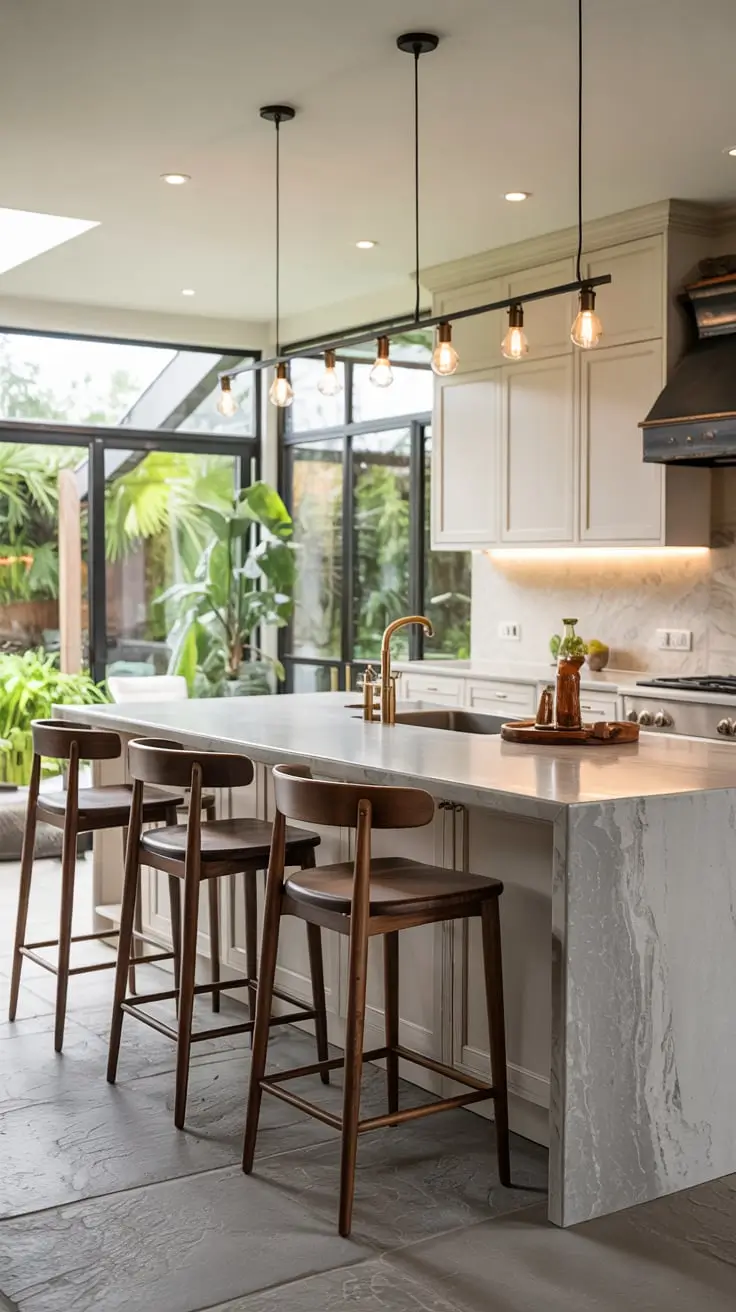
To support island seating, I select durable bar stools, ergonomic counter-height chairs, and materials like quartz or natural stone for long-term performance. Using warm woods, cushioned seats, or textured upholstery can make the island feel more inviting. I also ensure the surrounding layout provides comfortable clearance so the seating area does not interfere with workflow. Pendant lighting above the seating area adds both style and functional illumination.
From my experience, interior designers often emphasize proportion when pairing seating with islands. According to Kitchen & Bath Design News, the best rule of thumb is to allow at least 24 inches of space per seat for comfort. I frequently follow this guideline to ensure the island supports daily use and entertaining without feeling cramped.
If expanding this section, I would include optional drawer storage beneath seating overhangs to enhance organization without compromising legroom.
2. Kitchen Island Decorating Inspirations
When working with kitchen island ideas decorating, I focus on using décor to enhance the island’s personality without overwhelming its function. Styling should feel intentional, minimal, and reflective of the homeowner’s lifestyle. I often incorporate decorative bowls, fresh flowers, trays, or seasonal accents to keep the look clean yet sophisticated. These pieces add warmth and visual interest to the kitchen, creating an inviting focal point.
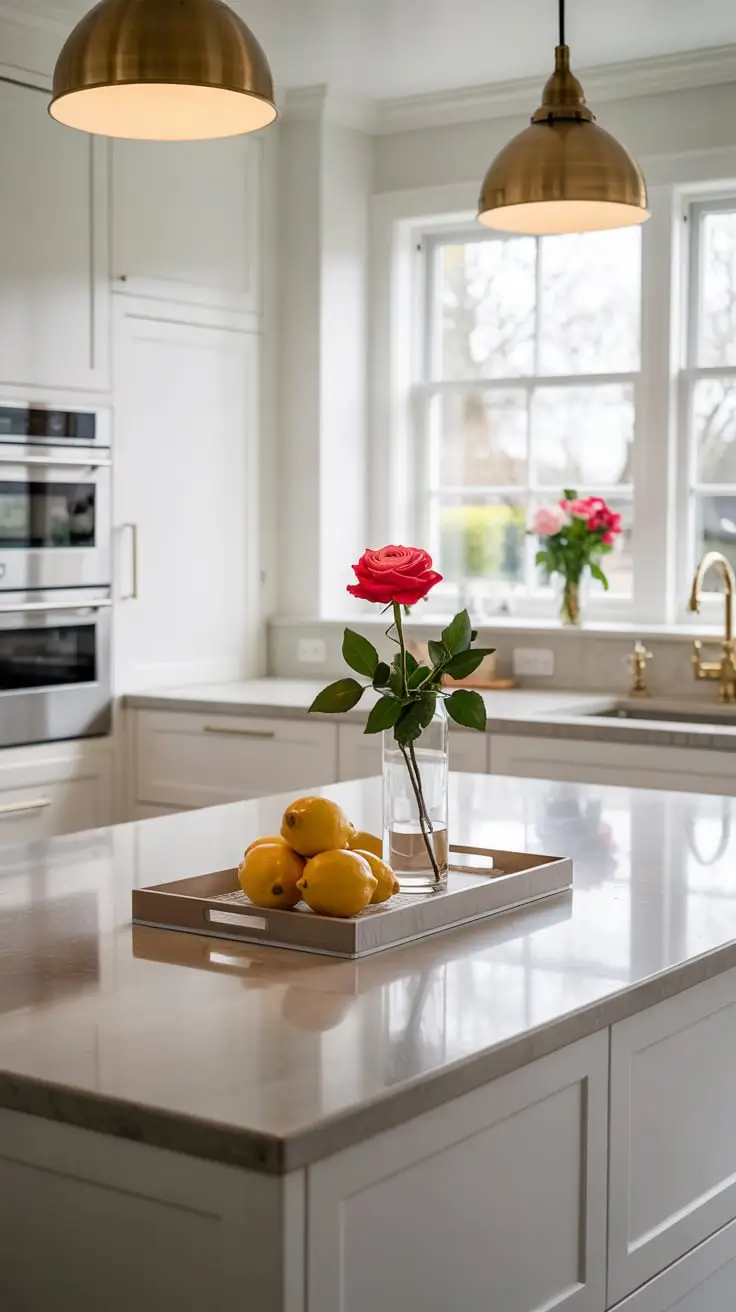
The items I choose depend on the overall kitchen style. In modern spaces, I prefer sleek ceramic vases or sculptural objects; in farmhouse settings, wooden trays and greenery provide charm. Layering different textures—such as marble trays, linen napkins, or woven baskets—creates a richer visual experience. I also consider the island’s countertop material, using décor that complements rather than competes.
Professionally, I’ve learned that less is more when styling kitchen islands. Many designers recommend grouping items in sets of three to create balance without clutter. I apply this tip often because it allows décor to enhance the space while maintaining a functional work surface.
If expanding this section, I’d add ideas for changing décor seasonally to keep the kitchen feeling fresh year-round.
3. Modern Kitchen Island Design Ideas
When creating kitchen island ideas modern, I prioritize clean lines, minimal forms, and innovative materials. Modern islands often feature waterfall countertops, handleless cabinetry, and bold finishes like matte black or soft taupe. I also love integrating hidden storage to maintain the simplicity that defines modern design. These islands contribute a sleek, architectural presence that complements contemporary homes.
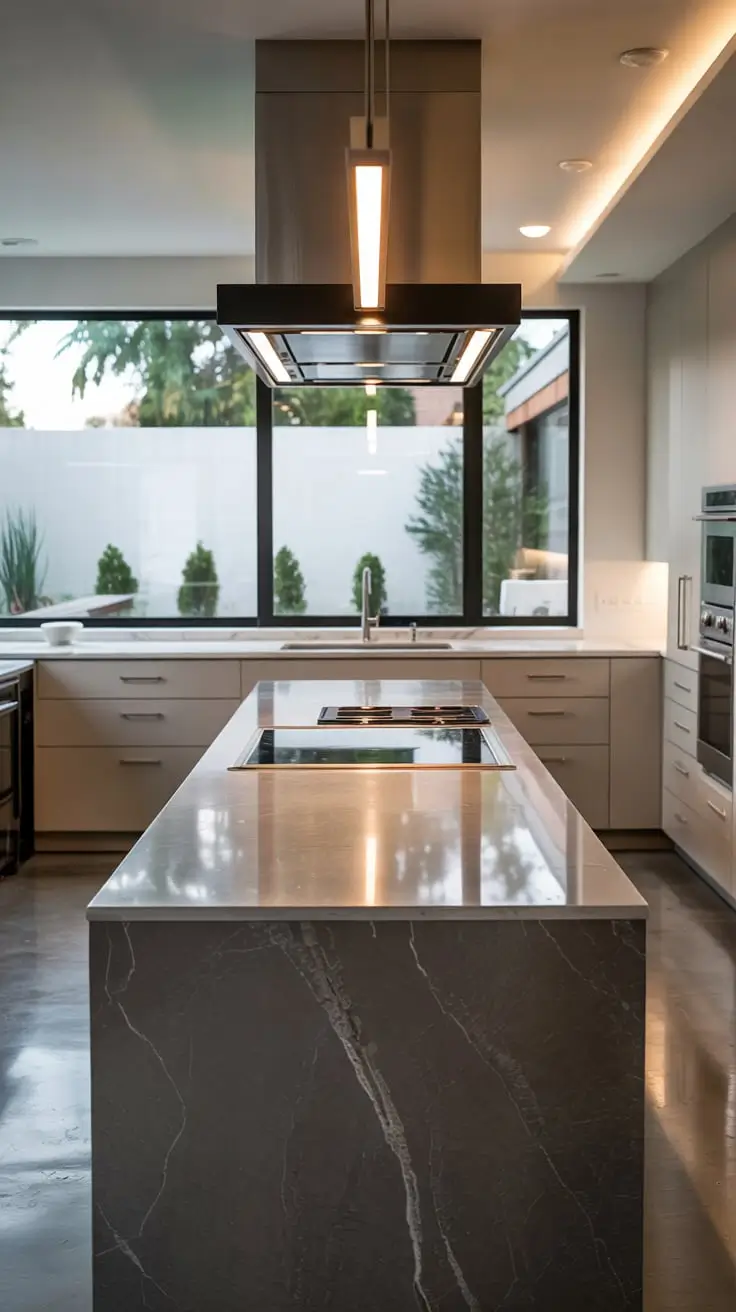
To complete the modern look, I use integrated appliances, push-to-open drawers, and sculptural kitchen island lighting. Large pendant lights or linear LED fixtures help emphasize the island’s geometry. Pairing the island with bar stools that feature metal frames or upholstered neutrals elevates the cohesive aesthetic. Textures such as quartzite, polished concrete, or woodgrain laminates add subtle depth without overpowering the minimal style.
From experience, modern kitchens benefit greatly from thoughtful lighting and surface selection. Leading designers frequently highlight the importance of mixing warm and cool tones to prevent modern interiors from feeling too cold. I follow this advice by incorporating warm woods or soft accent lights that balance the clean aesthetic.
If expanding this section, I could explore integrating smart technology like wireless charging zones or touchless faucets.
4. Kitchen Island Ideas For Small Kitchens
When implementing kitchen island ideas for small kitchens, I focus on maximizing function without overwhelming the space. Compact islands or mobile carts are excellent solutions that offer prep surfaces, storage, and even casual seating. In kitchen island ideas small space designs, I often choose slim, narrow islands or curved models that improve movement flow. Multi-functional islands also allow small kitchens to feel more open and organized.
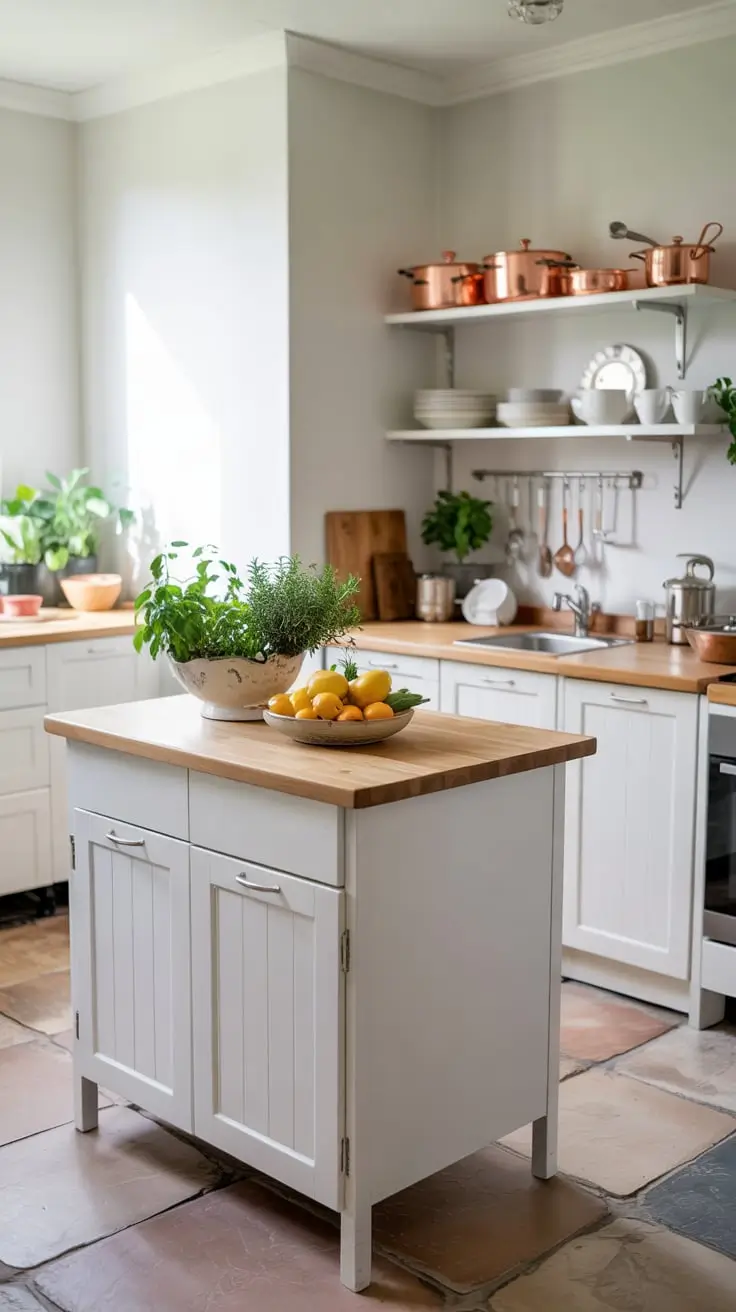
I usually incorporate open shelving, pull-out baskets, and small overhangs to enhance functionality. Light-colored materials like white oak or pale quartz help visually lighten the space, while caster wheels add mobility when flexibility is necessary. Integrated kitchen island storage options make small kitchens more efficient, especially when there is limited cabinetry.
Professionally, I’ve found that interior designers often suggest maintaining at least 36 inches of clearance around the island for comfortable movement. I follow this guideline to ensure the kitchen feels functional rather than cramped. In addition, reflective surfaces or under-counter lighting can make small kitchens feel larger.
If expanding this section, I would discuss incorporating dual-height countertops to help small islands serve multiple purposes.
5. Kitchen Island Decor Concepts
When exploring kitchen island ideas decor, I focus on harmonizing the island with the surrounding kitchen through complementing colors, textures, and materials. Decor should feel connected to the home’s overall style—whether modern, farmhouse, or traditional. I often use a combination of subtle materials like stone, wood, and metal to create a visually appealing composition. This ensures the island feels like a centerpiece rather than a disconnected addition.
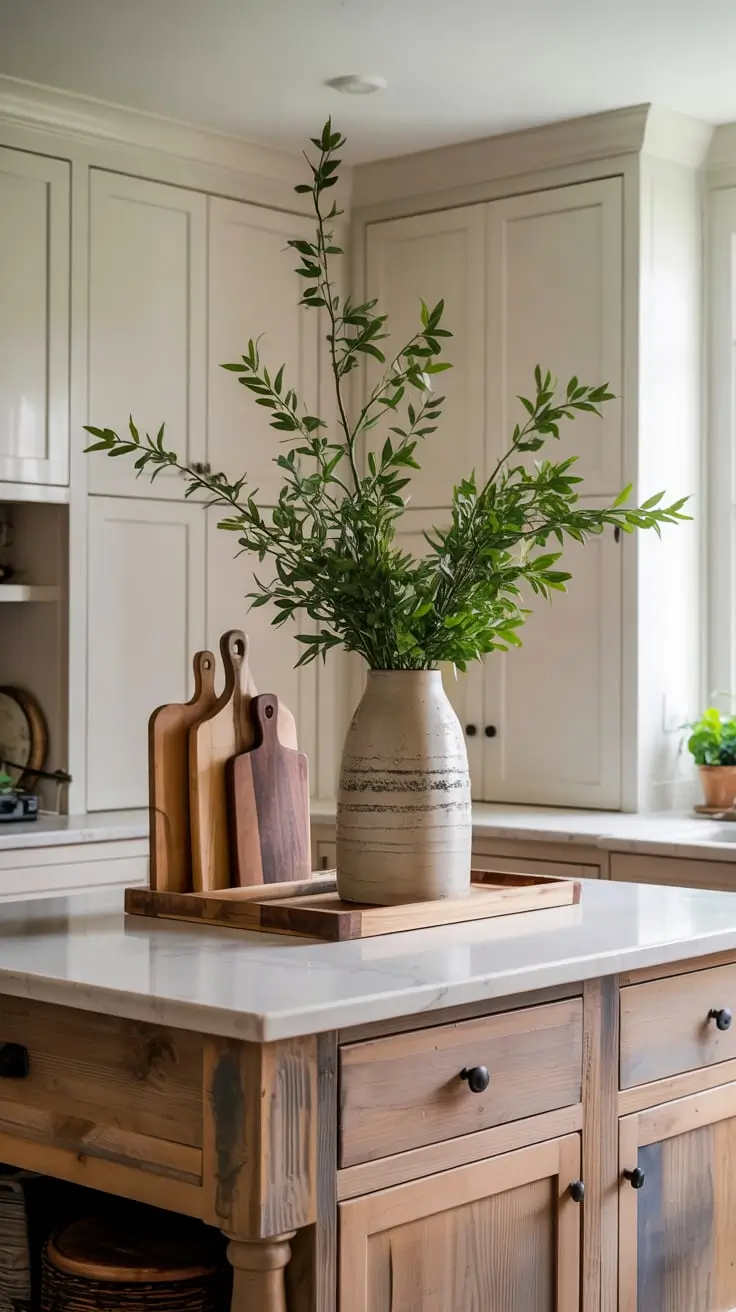
For décor, I often include sculptural vases, cutting boards, candles, or fruit bowls. These items serve as functional and decorative elements, enhancing the island’s purpose. Using a tray helps keep décor organized while making cleaning easier. The countertops and cabinetry also contribute to the island’s decorative presence; for example, pairing dark stone with warm wood adds contrast and sophistication.
I’ve noticed that professional designers recommend choosing décor based on lifestyle rather than trends. A practical and beautiful island must reflect how the homeowner uses the kitchen. For families, décor should be durable and minimal; for entertainers, dramatic centerpieces can create atmosphere.
If expanding this section, I would explore how décor trends shift seasonally and how to adapt them without redesigning the island entirely.
6. Kitchen Island Ideas With Sink
When designing kitchen island ideas with sink, I prioritize function, workflow, and convenience. Placing a sink in the island creates a central workstation ideal for food prep and cleanup. This layout works particularly well in open kitchens where the cook can face the room rather than the wall. A sink-equipped island also enhances the kitchen’s ergonomics by dividing zones for cooking, prepping, and cleaning.
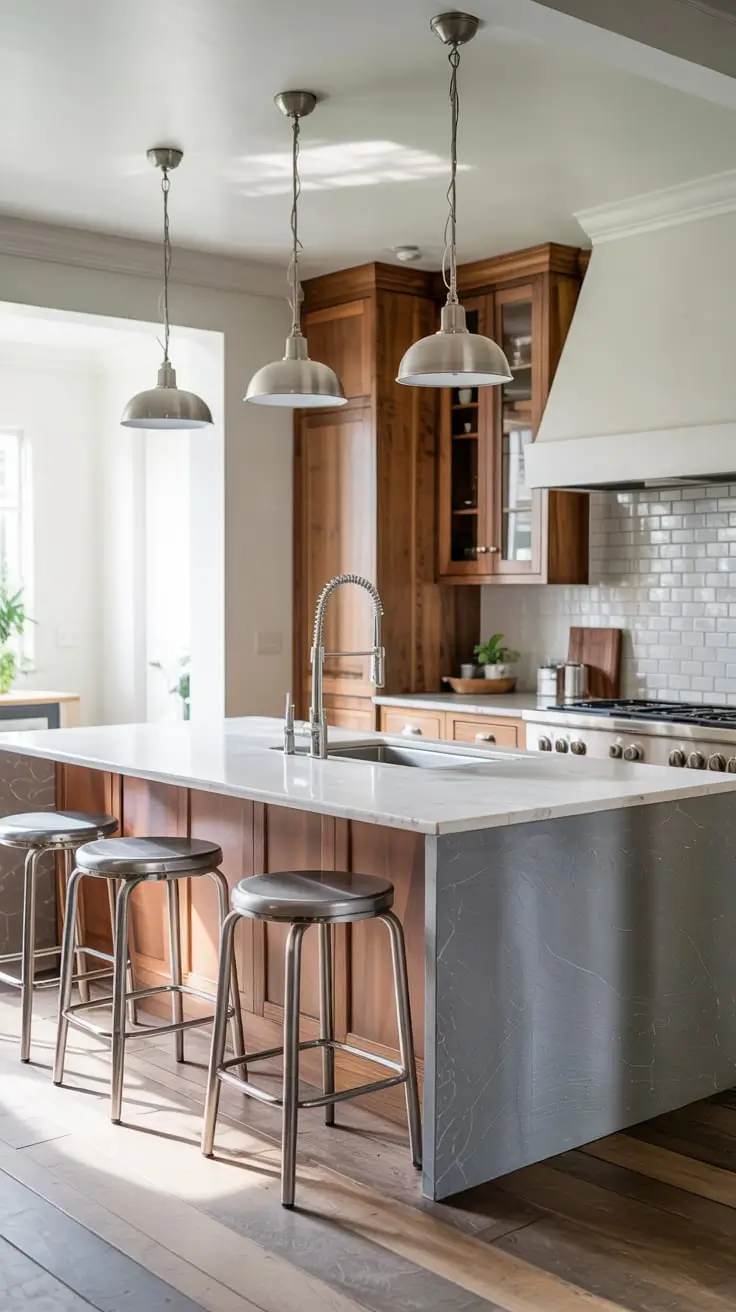
To support this feature, I often include pull-out trash bins, dishwasher placement nearby, and accessories like cutting boards or drying racks that integrate with the sink. Materials such as stainless steel, fireclay, or composite sinks pair well with stone countertops. In addition, I ensure adequate kitchen island lighting above the sink area to improve visibility. A deeper sink also helps reduce splashing, which is beneficial in multi-use kitchen environments.
From experience, I find that sinks in islands work best when paired with durable surfaces and thoughtful storage. Designers often recommend placing dishwashers adjacent to the sink to streamline kitchen workflow. I follow this advice to ensure efficiency in daily routines.
If expanding this topic, I’d include ideas for integrating filtered water faucets or instant hot water taps.
7. Small-Space Kitchen Island Solutions
When creating kitchen island ideas small space, I focus on multi-functionality and flexibility. Small kitchens demand innovative solutions that maximize utility without sacrificing aesthetics. I often use extendable countertops, collapsible surfaces, or narrow islands designed to function as prep areas, dining tables, or storage units. Compact islands help homeowners enjoy the benefits of kitchen islands even when floor space is tight.
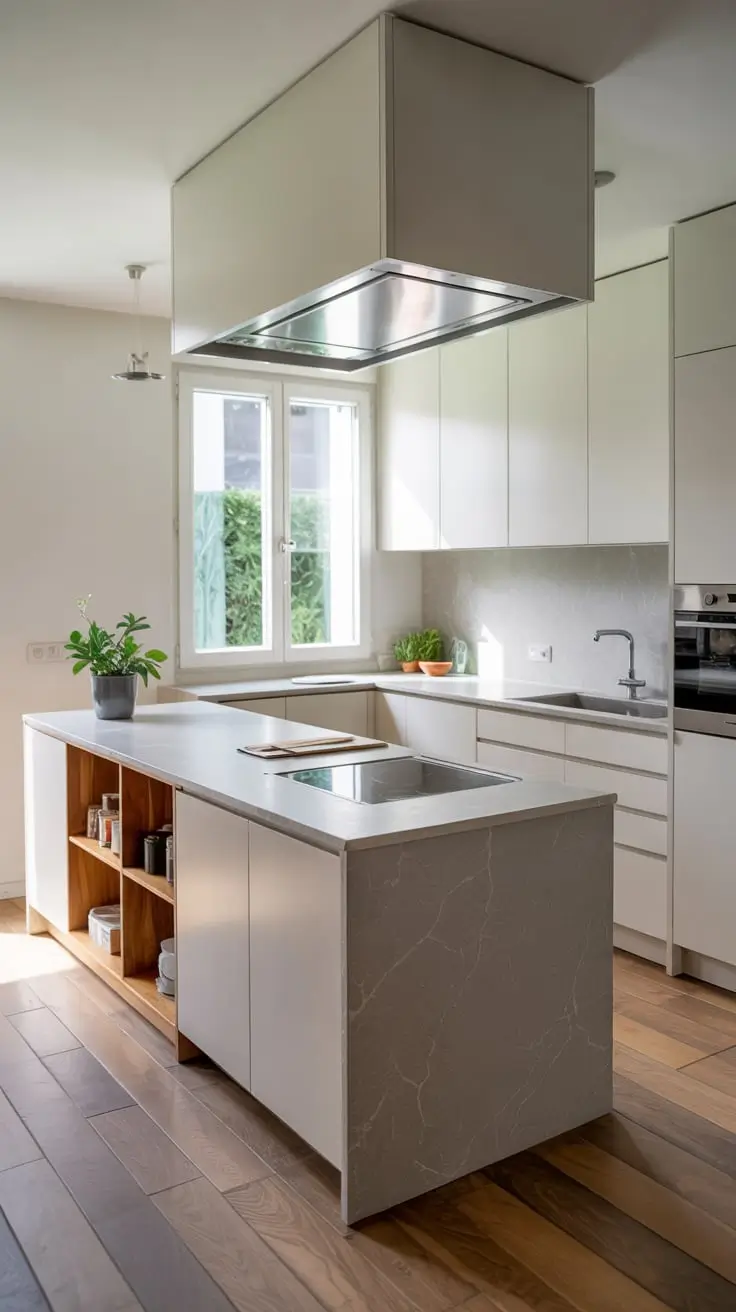
To enhance these islands, I select lightweight bar stools, slim cabinetry, and open shelving that keeps the kitchen from feeling heavy. Using high-gloss finishes or light-colored materials like white, pale blue, or natural oak helps expand the visual space. Integrated features such as built-in spice racks, microwave shelves, or vertical dividers ensure the island contributes real value to the kitchen.
In my professional experience, small-space solutions must prioritize circulation. Many design experts suggest maintaining a minimum of 40 inches of walkway space for comfort, and I apply this rule frequently. Thoughtful island sizing makes even compact homes feel functional and stylish.
If expanding this section, I would discuss mobile islands or nesting stools as additional ways to improve versatility.
8. Kitchen Island Lighting Ideas
When I explore kitchen island ideas lighting, I prioritize creating a layered and visually balanced illumination plan. Good lighting transforms a kitchen island from a simple work surface into a focal point that enhances both functionality and ambiance. In 2025, I’ve found that homeowners gravitate toward blending task lighting, ambient lighting, and statement fixtures to make their island an architectural highlight. Whether designing modern, farmhouse, or transitional kitchens, lighting plays a crucial role in defining the island’s personality.
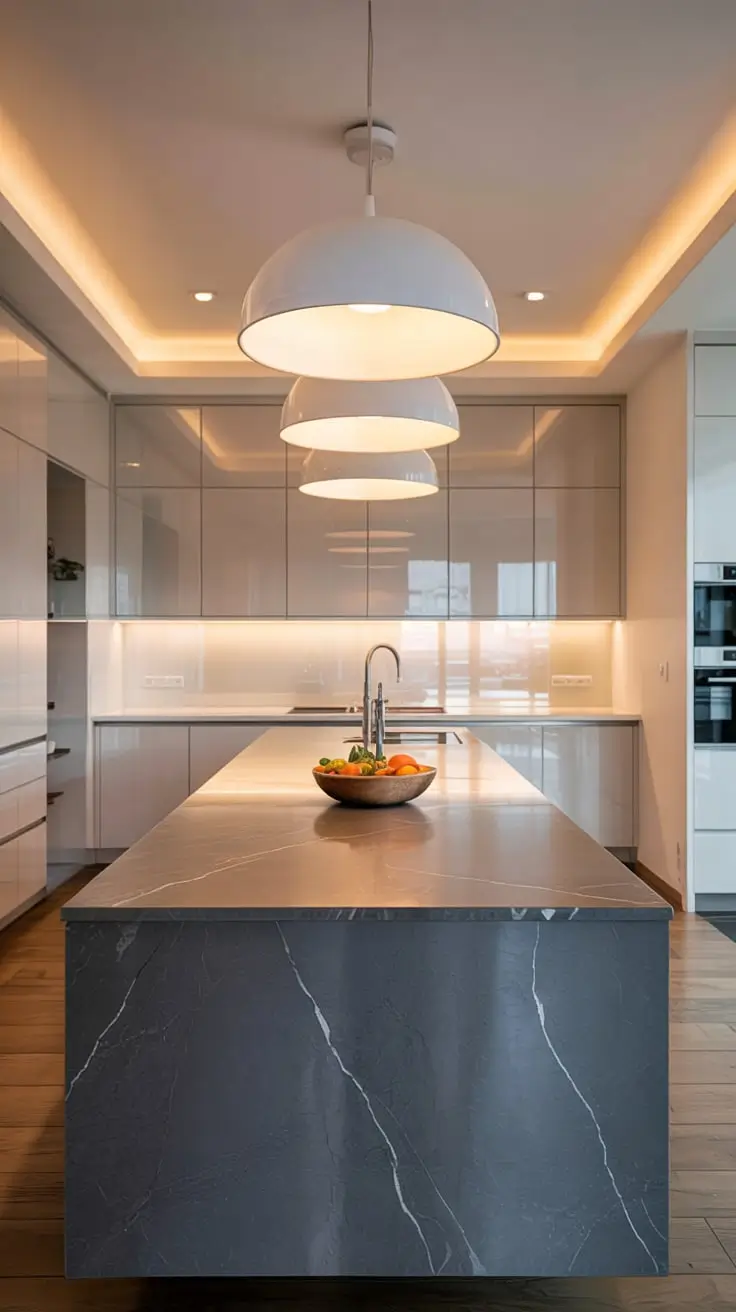
The fixtures I select depend on the overall kitchen island design. For modern kitchens, I often choose sleek LED strips or matte black linear pendants. In more traditional settings, warm brass sconces or sculptural glass pendants create a sense of charm. The height and spacing of kitchen island lights also matter—pendants should hang low enough to illuminate the workspace but high enough to avoid visual clutter. Dimmable lights allow flexibility for cooking, dining, and entertaining.
Many U.S. design experts recommend using lighting as a tool to visually anchor an island in open-concept spaces. I often apply their advice by aligning pendant lights with the island’s edges and selecting fixture finishes that complement faucet hardware or barstool frames. This method ensures harmony throughout the room.
If expanding this section, I would explore how smart lighting systems can enhance the functionality of island-focused illumination in contemporary kitchens.
9. Kitchen Island Ideas With Stove
When designing kitchen island ideas with stove, I prioritize convenience, workflow efficiency, and safety. Installing a stove in the island allows me to create a central cooking hub where the cook remains engaged with the rest of the room. This setup is ideal for homeowners who enjoy cooking while interacting with family or guests. It also enhances ergonomic movement between prep, cook, and clean zones.
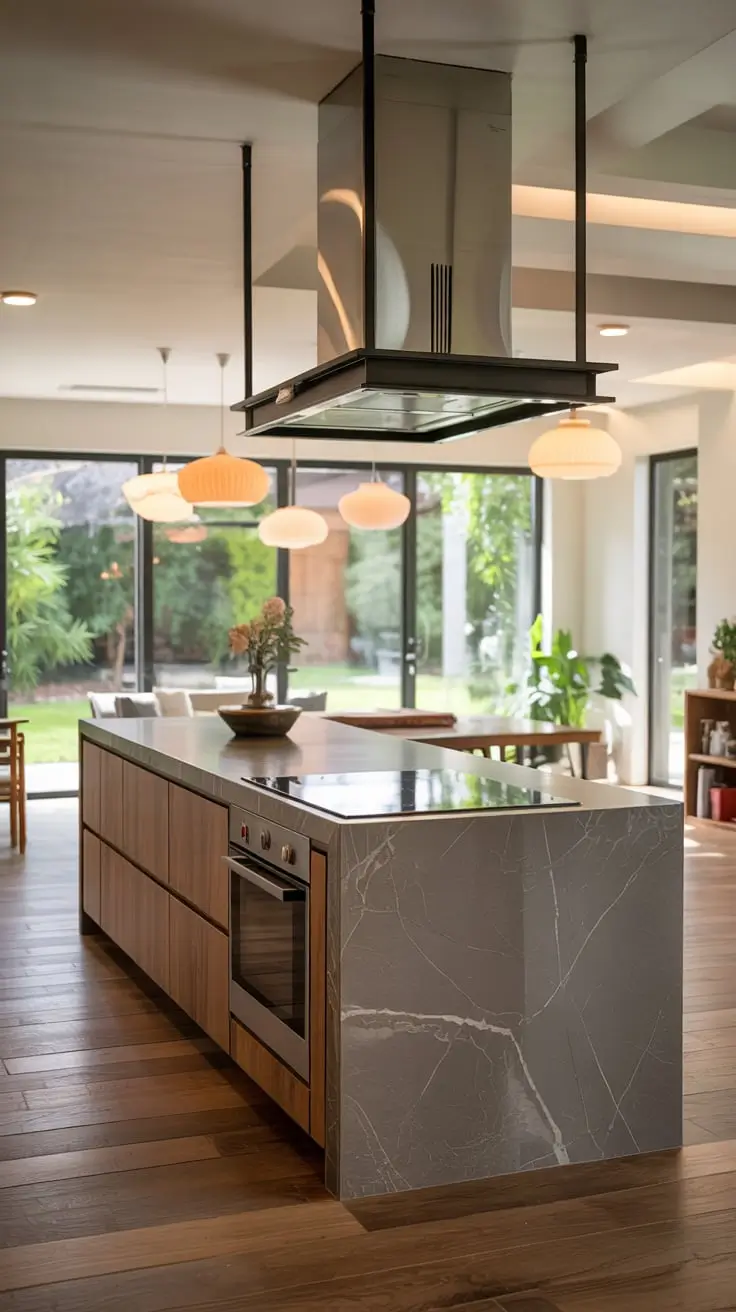
To make this layout successful, I incorporate heat-resistant countertops, proper ventilation, and thoughtful storage near the stove area. A well-designed overhead hood—either concealed or sleekly exposed—ensures the island remains visually appealing. Pairing the stove with drawers for pots, spices, or utensils increases the island’s usefulness. Adequate kitchen island lighting is also essential to ensure the cooking area is well-lit.
Professionally, I find that island cooktops are recommended by designers for open floor plans where the kitchen serves as the home’s social center. However, experts also stress ensuring at least 12 inches of counter space on each side of the stove. I follow this guideline to maintain safety and practicality.
If expanding this section, I’d include tips for integrating induction cooktops into islands for a sleek and modern upgrade.
10. Farmhouse Kitchen Island Inspirations
When I work with kitchen island ideas farmhouse, I emphasize warmth, texture, and timeless charm. Farmhouse islands often mix rustic wood with modern conveniences, creating a balanced aesthetic that feels both nostalgic and fresh. Using reclaimed wood, distressed finishes, or natural stone tops adds authenticity to the farmhouse look. This style pairs beautifully with open shelving, apron-front sinks, and vintage-style bar stools.
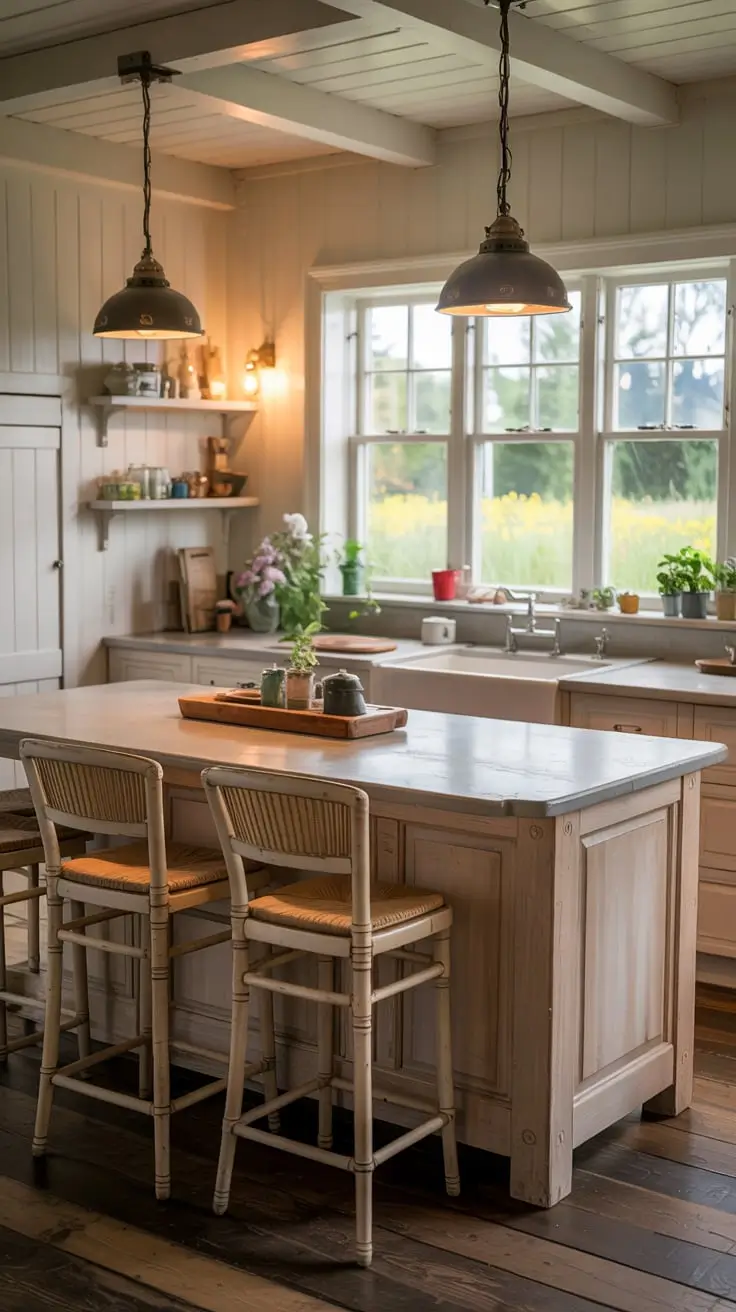
To complete the farmhouse feel, I incorporate matte black or oil-rubbed bronze hardware, soft neutral color palettes, and cozy accents such as woven baskets or ceramic pitchers. Pendant lighting with warm, diffused tones enhances the atmosphere. Shiplap siding on the island base adds an extra layer of character that aligns with farmhouse interiors. I also ensure generous kitchen island storage to maintain both functionality and charm.
From my experience, farmhouse design is highly adaptable. Many designers recommend mixing rustic materials with modern silhouettes to keep the space from feeling dated. I apply this by choosing contemporary lighting or sleek countertops to balance the rugged warmth of natural wood.
If expanding this section, I would include ideas on combining farmhouse islands with modern appliances to create a refined, transitional look.
11. Smart Kitchen Island Storage Solutions
When developing kitchen island ideas storage, I focus on maximizing functionality while preserving clean aesthetics. Today’s kitchens demand smart, efficient storage, and the island provides prime real estate for organizing cookware, prep tools, appliances, and everyday essentials. I often integrate pull-out drawers, hidden trash bins, vertical dividers, and deep cabinets to ensure every inch is used effectively.
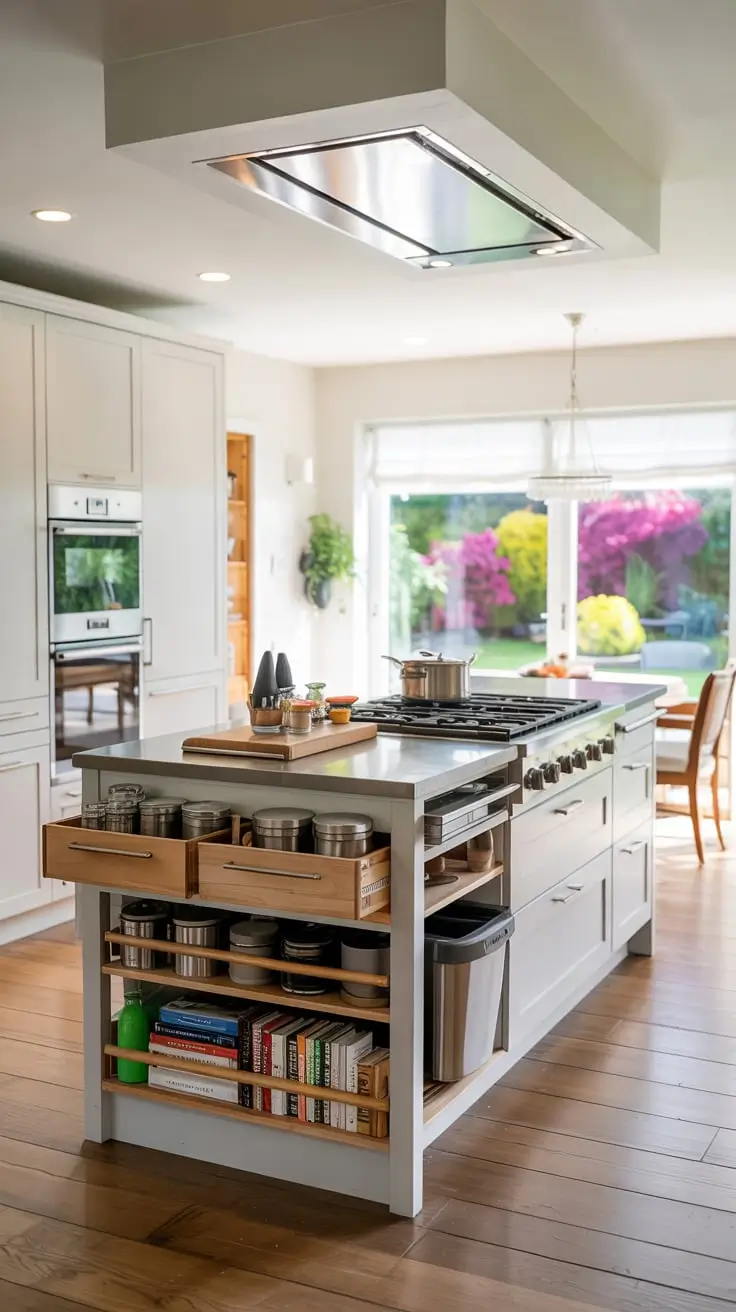
To enhance practical storage, I incorporate features like built-in spice racks, under-counter microwaves, and lift-up appliance garages. The island may also include shelving for cookbooks or display décor, depending on the homeowner’s preferences. Soft-close hardware and durable interior finishes ensure longevity. When designing for kitchen island ideas for small kitchens, I prioritize multifunctional storage to reduce countertop clutter.
Designers frequently recommend thoughtful storage planning at the beginning of a renovation rather than as an afterthought. I follow this approach, ensuring the island enhances the kitchen’s workflow without compromising aesthetics. Storage-forward islands support the beauty and functionality of modern cooking spaces.
If expanding this section, I would explore smart technology solutions such as drawer charging stations or refrigerated drawers built into the island.
12. Trendsetting Kitchen Island Ideas
When I explore kitchen island ideas, I pay attention to the emerging trends that redefine today’s cooking spaces. Trendsetting islands often feature unique shapes, bold color palettes, innovative materials, and architectural details. These islands highlight the homeowner’s personality and can dramatically elevate the kitchen’s visual appeal. Whether sculptural bases, fluted wood designs, or colorful marble tops, trend-forward islands make unforgettable statements.
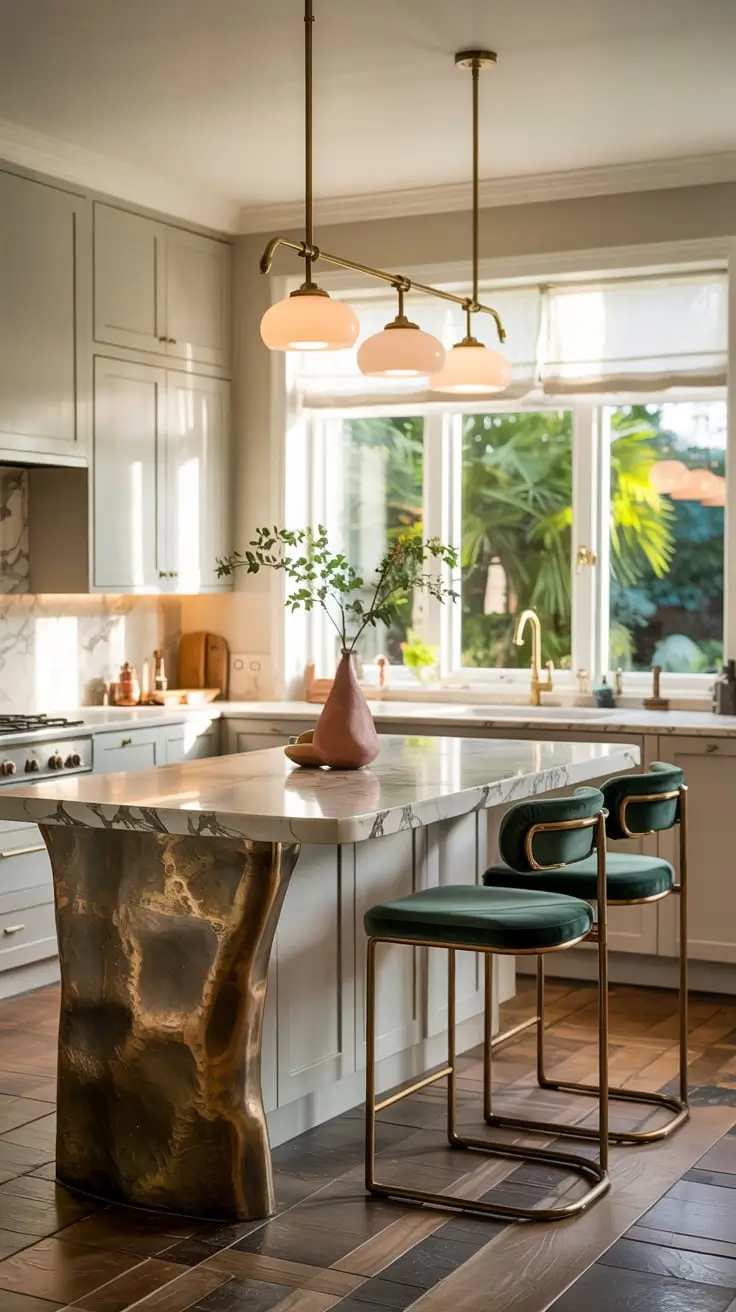
To complement trendsetting islands, I use high-impact lighting, artistic barstools, and stylish kitchen island decor elements. Features such as waterfall countertops, mixed-material finishes, or asymmetrical silhouettes enhance their contemporary appeal. Coordinating the island finish with accent walls or cabinetry helps achieve a cohesive yet dynamic aesthetic.
From experience, trendsetting designs work best when balanced with practical elements. Many interior designers suggest grounding bold islands with neutral surroundings. I apply this principle by using soft cabinetry colors or understated fixtures to allow the island to shine.
If expanding this section, I’d explore how these bold island concepts pair with eco-friendly materials, which are growing in popularity.
13. Stylish Kitchen Island Decor Themes
When creating kitchen island ideas decor, I focus on styling themes that complement the island’s material, shape, and purpose. A stylishly decorated island strikes the right balance between functionality and visual interest. I often develop décor themes around natural textures, minimalism, seasonal styles, or modern elegance. These themes help homeowners express personality through curated accents without overwhelming the space.
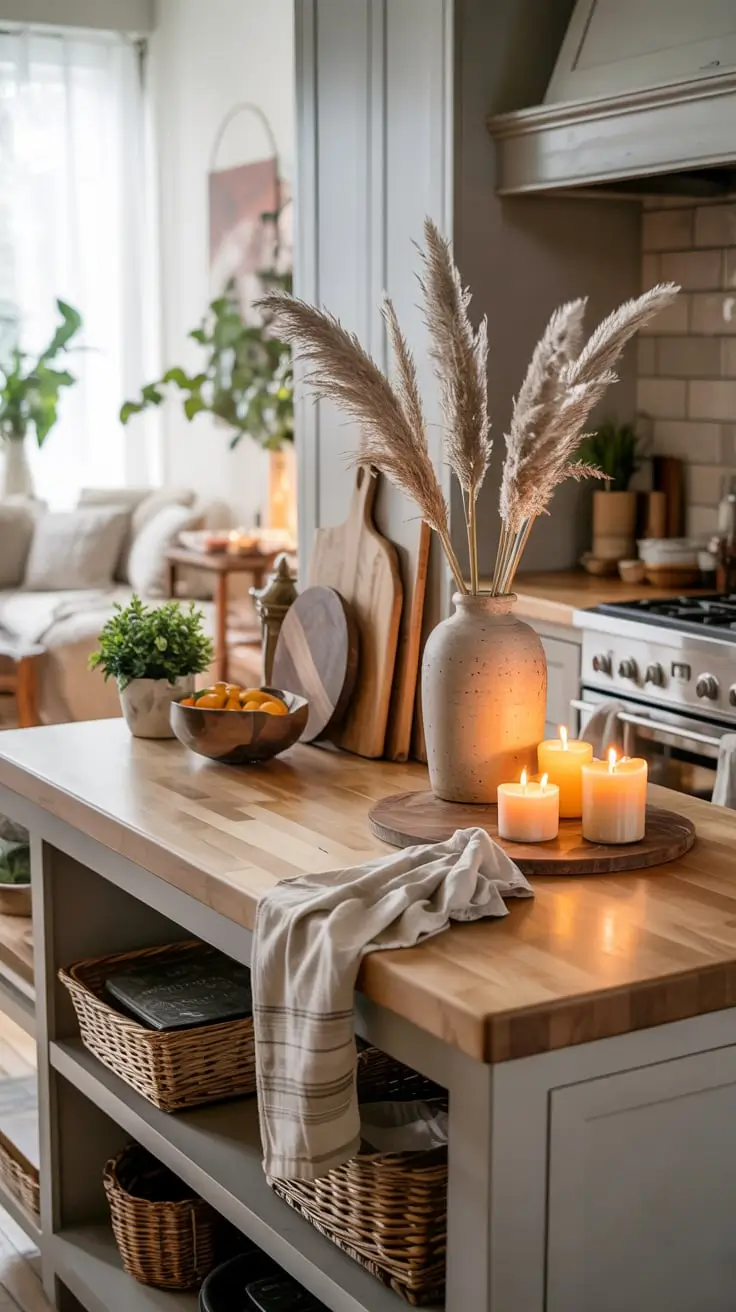
For décor pieces, I typically use cutting boards, glass vases, ceramic bowls, candles, or low-profile greenery. These items add depth and texture to the island while preserving open workspace. I also consider kitchen island styling rules such as grouping items in odd numbers or using trays to maintain structure. Choosing accents that complement countertop material—such as warm-toned décor on white quartz—ensures cohesion.
In my experience, restraint is key to successful kitchen island décor. Renowned designers often emphasize simplicity to prevent clutter. I follow this advice, especially in modern kitchens where clean lines define the aesthetic.
If expanding this section, I’d explore how décor themes can shift for holidays or celebrations without requiring a full kitchen redesign.
14. Kitchen Island Lighting Essentials
When planning kitchen island lighting, I focus on creating a balanced environment where task lighting and ambiance meet seamlessly. Good lighting enhances safety, elevates design, and highlights key island features such as sinks, stoves, or seating. In 2025, layered lighting—combining pendant lights, recessed fixtures, and under-counter illumination—remains one of the strongest design strategies for kitchen islands.
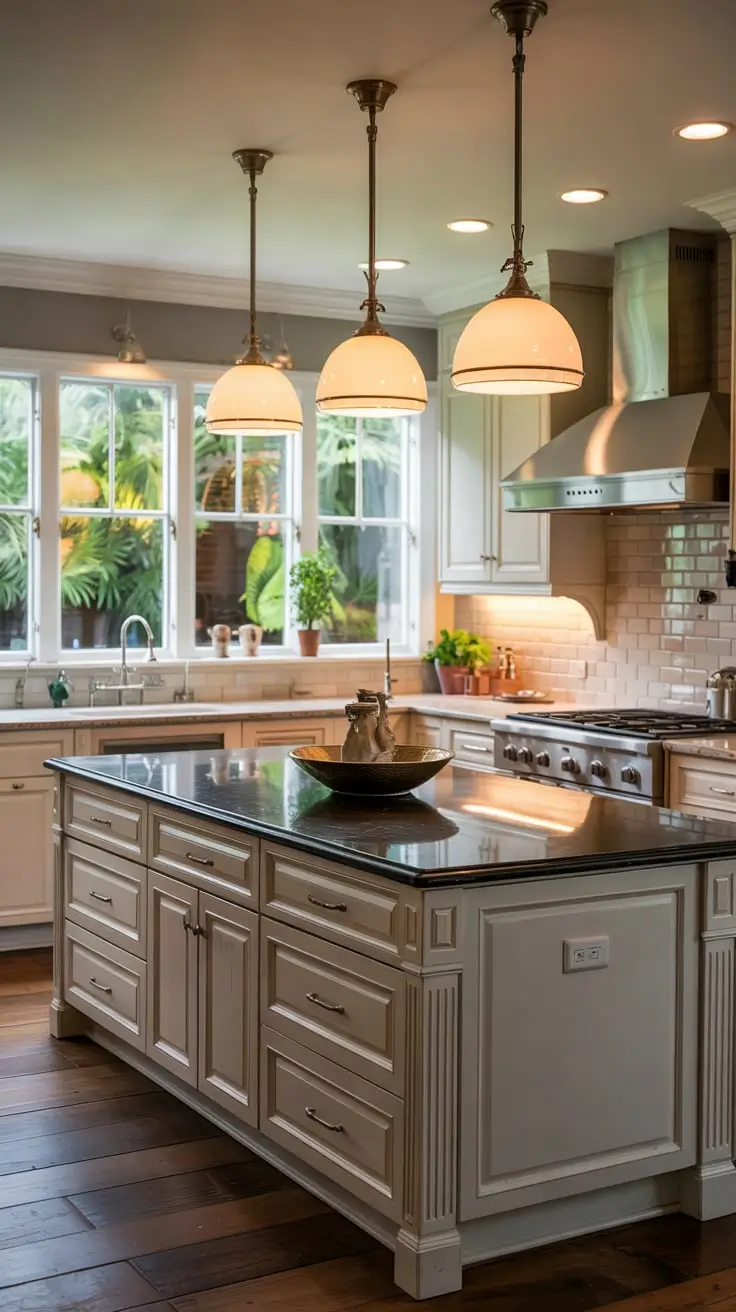
To achieve this, I choose kitchen island pendant lights that complement the kitchen’s style. Oversized pendants suit grand open spaces, while small glass or metal fixtures are perfect for compact kitchens. I also use dimmers to control brightness throughout the day. Adequate spacing between fixtures ensures uniform lighting across the island’s surface, and LED technology offers long-lasting efficiency.
Design experts frequently recommend installing pendant lights 30 to 36 inches above the island countertop for optimal illumination. I use this guideline consistently to ensure comfortable sightlines and effective task lighting. Lighting choices also influence atmosphere—warm tones create coziness, while cool tones emphasize modernity.
If expanding this section, I’d discuss how lighting can highlight architectural elements like fluting or waterfall edges on a kitchen island.
15. Contemporary Kitchen Island Design Approaches
When I explore contemporary kitchen island design approaches, I focus on refined lines, functional minimalism, and efficient use of space. This design style aligns naturally with bold keywords: kitchen island ideas modern and kitchen islands, which prioritize simplicity without sacrificing elegance. Contemporary islands often feature neutral palettes, soft curves or sharp edges, and subtle textures that enhance the overall sophistication of the kitchen. These islands work beautifully in both open-concept layouts and compact homes.
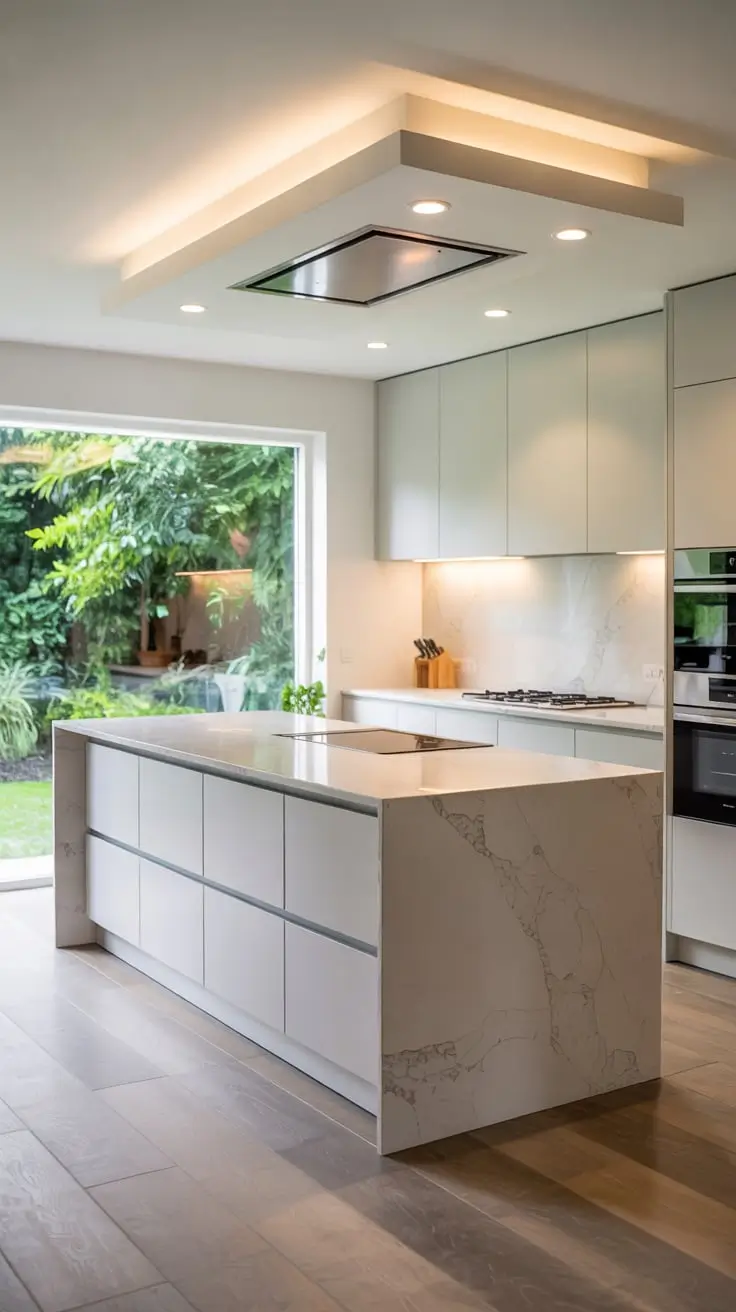
To deliver a modern look, I typically incorporate waterfall countertops, concealed appliances, and flush cabinetry. Integrated cooktops or sinks enhance practicality, while matte or satin finishes support a clean aesthetic. Statement kitchen island lighting—such as linear LED bars or sculptural pendants—adds architectural interest. Bar stools with minimalist frames complement the island’s design without overwhelming the visual flow.
From my experience, contemporary islands appeal to homeowners who want their kitchens to feel polished and timeless. Leading U.S. designers often emphasize the importance of material cohesion when crafting modern spaces. I apply this insight by coordinating the island’s surface with the backsplash, flooring, and cabinetry to create continuity.
To expand this section further, I would discuss integrating technology, such as touch-activated drawers or hidden charging ports, which elevate contemporary functionality.
16. Functional And Stylish Kitchen Islands
When I implement functional and stylish kitchen islands, I strive to balance performance with aesthetics. Functionality is critical, whether the home features kitchen island ideas with seating, a prep sink, or expanded storage solutions. Stylish design integrates seamlessly with these elements to maintain a visually appealing yet hardworking centerpiece. This combination ensures the island supports cooking, dining, and entertaining.
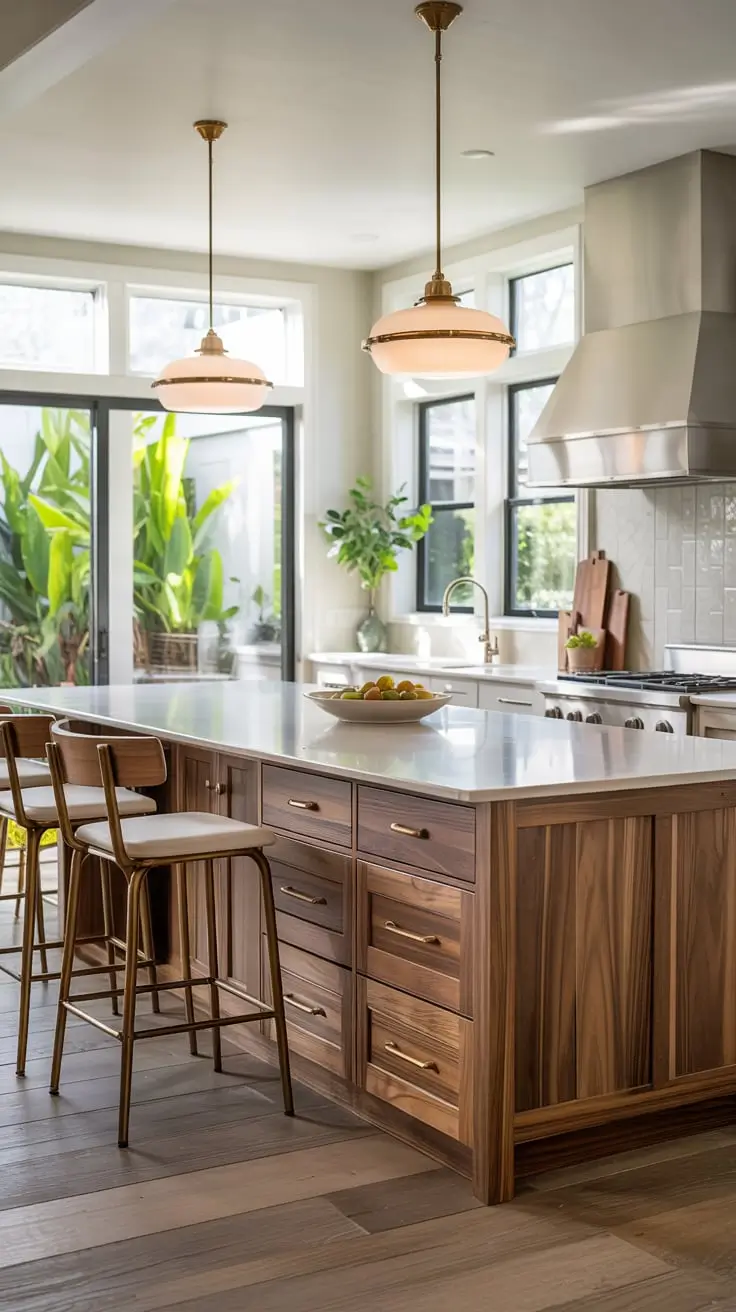
To achieve this balance, I include deep drawers, hidden storage compartments, or shelves for everyday items. A mix of materials—stone surfaces, wood bases, and metallic hardware—creates visual contrast and richness. Adding decorative elements such as vases or trays contributes to the kitchen island decor, while still allowing the island to remain efficient. Lighting also plays a significant role, especially when paired with functional surfaces like sinks or stoves.
Professionally, I find that the most successful islands adapt to the homeowner’s workflow. Experts often suggest mapping out daily routines before finalizing the island design. I frequently apply this practice, ensuring the island meets practical needs without compromising style. This makes the kitchen more intuitive and enjoyable.
If expanding this concept, I would highlight how custom cabinetry inserts—such as utensil organizers or spice pull-outs—enhance both efficiency and visual appeal.
17. Kitchen Island With Seating Layout Concepts
When creating kitchen island with seating layouts, I emphasize proportion, comfort, and efficient circulation. Seating transforms the island into a multipurpose zone ideal for casual dining, homework, or social gatherings. It enhances the appeal of kitchen island ideas with seating, especially in open floor plans where the island often becomes the home’s social hub. The right layout can significantly improve usability while enhancing aesthetics.
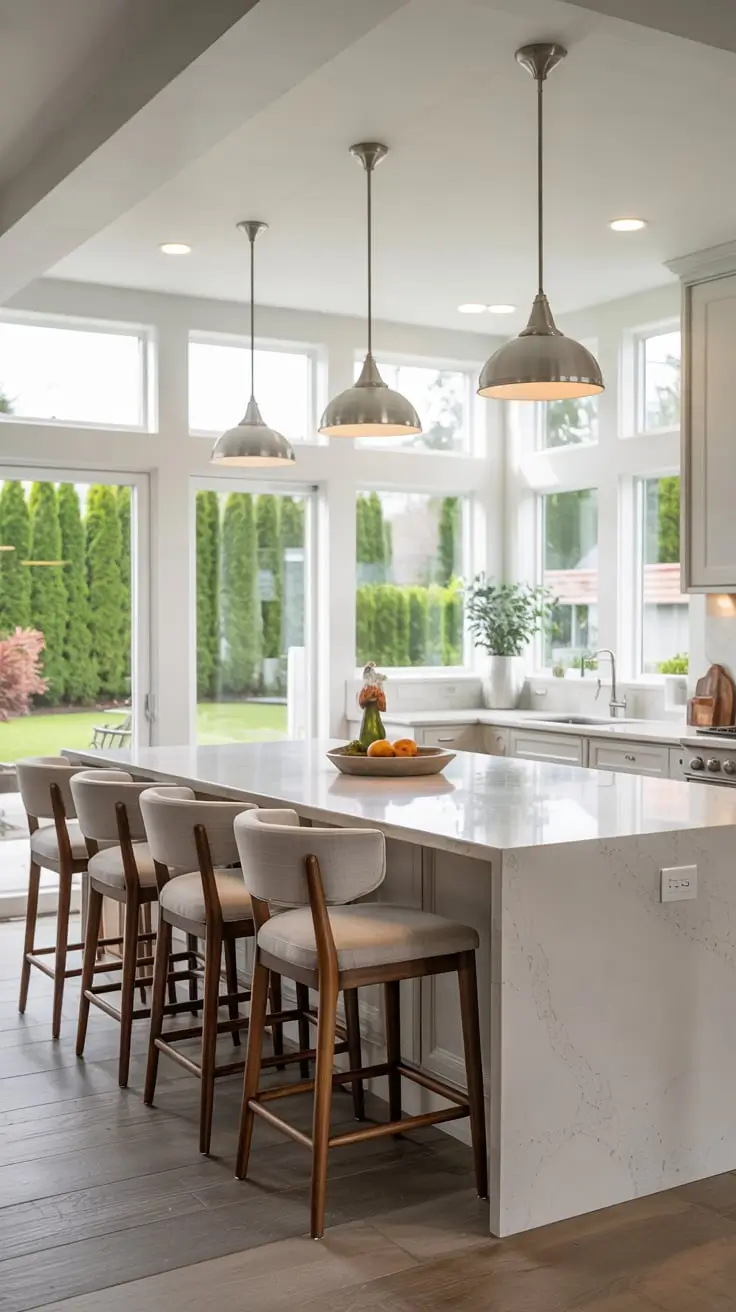
I typically incorporate countertop overhangs, multi-height island levels, or L-shaped seating arrangements. Bar stools with supportive backs or upholstered designs work well for extended gatherings. I also consider the island’s orientation—placing seating on the side opposite the cooking area maintains safety and workflow efficiency. Pendant kitchen island lights above the seating area help define the zone and add ambience.
From my own professional experience, designers frequently recommend allowing at least 24 inches of width per seat to ensure comfort. I follow this guideline consistently to make sure seating arrangements don’t feel crowded. Thoughtful design enhances the island’s practicality and encourages more use.
If expanding this section further, I would explore integrating built-in benches or corner seating for unique, space-saving layouts.
18. Creative Kitchen Island Inspiration
When I develop creative kitchen island inspiration, I enjoy blending unique shapes, unconventional materials, and imaginative detailing. This approach suits homeowners who want more than a standard island and prefer a design that reflects personality. Creative concepts work particularly well with kitchen island ideas decorating and kitchen island styling, allowing greater freedom in color, form, and décor. Rounded islands, asymmetrical structures, and sculptural bases are trending in 2025.
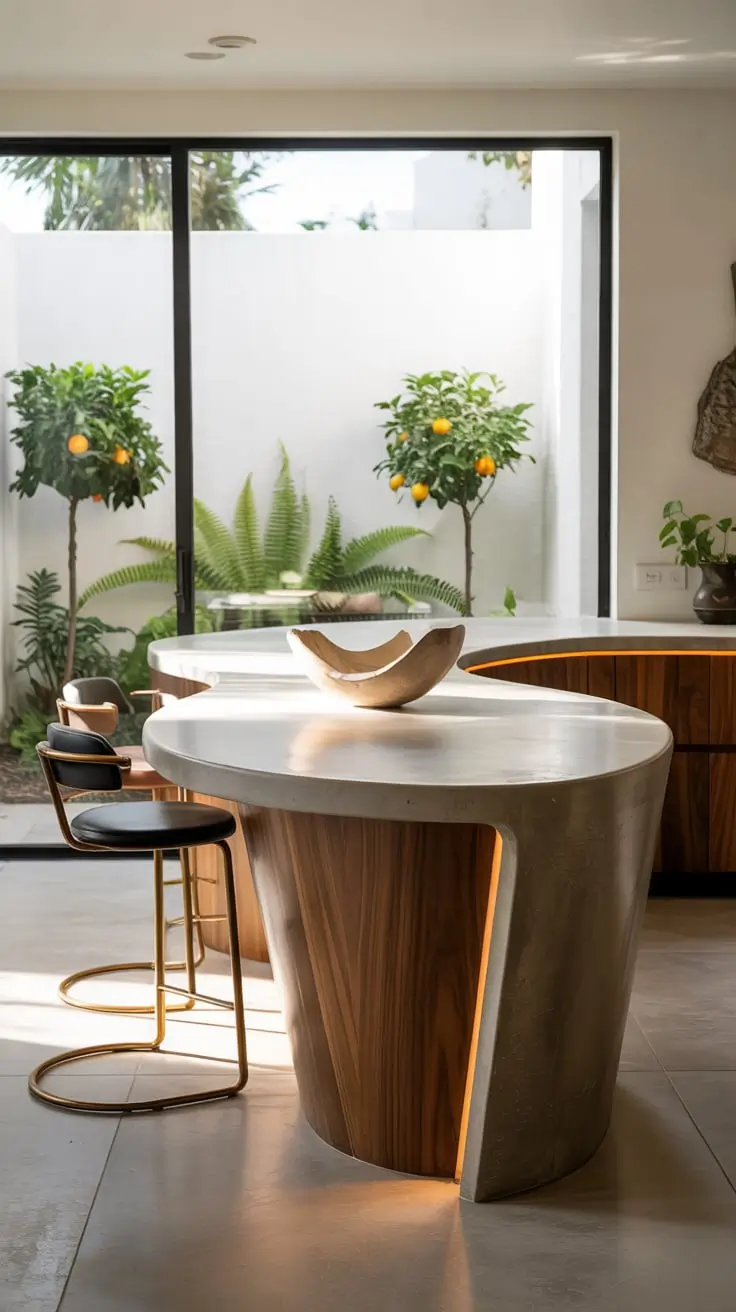
To support these artistic ideas, I incorporate elements like mixed metals, contrasting countertop materials, and textured finishes. LED accent lighting beneath overhangs or around the base adds depth and drama. Decorative pieces—such as ceramics, books, or artisan bowls—reinforce the island’s individuality. The key is ensuring the creativity doesn’t compromise functionality, so I maintain ample workspace and storage.
Design magazines in the U.S. often encourage homeowners to explore unconventional island concepts as a way to elevate the kitchen’s personality. I agree with this perspective because a creatively designed island becomes a conversation piece and enhances the entire space. I’ve seen how a bold island design can invigorate even the most minimal kitchens.
If expanding this section, I would add examples of islands with integrated art pieces or hand-crafted paneling for maximum originality.
19. Pendant Lighting Ideas For Kitchen Islands
When exploring pendant lighting ideas for kitchen islands, I focus on creating a harmonious balance between the size of the island and the scale of the fixtures. Pendants help highlight the island’s design while enhancing task and ambient lighting. This idea works beautifully with kitchen island pendant lights, which are available in countless styles—ranging from sleek metals to blown glass designs. Pendants also create visual rhythm in open kitchens.
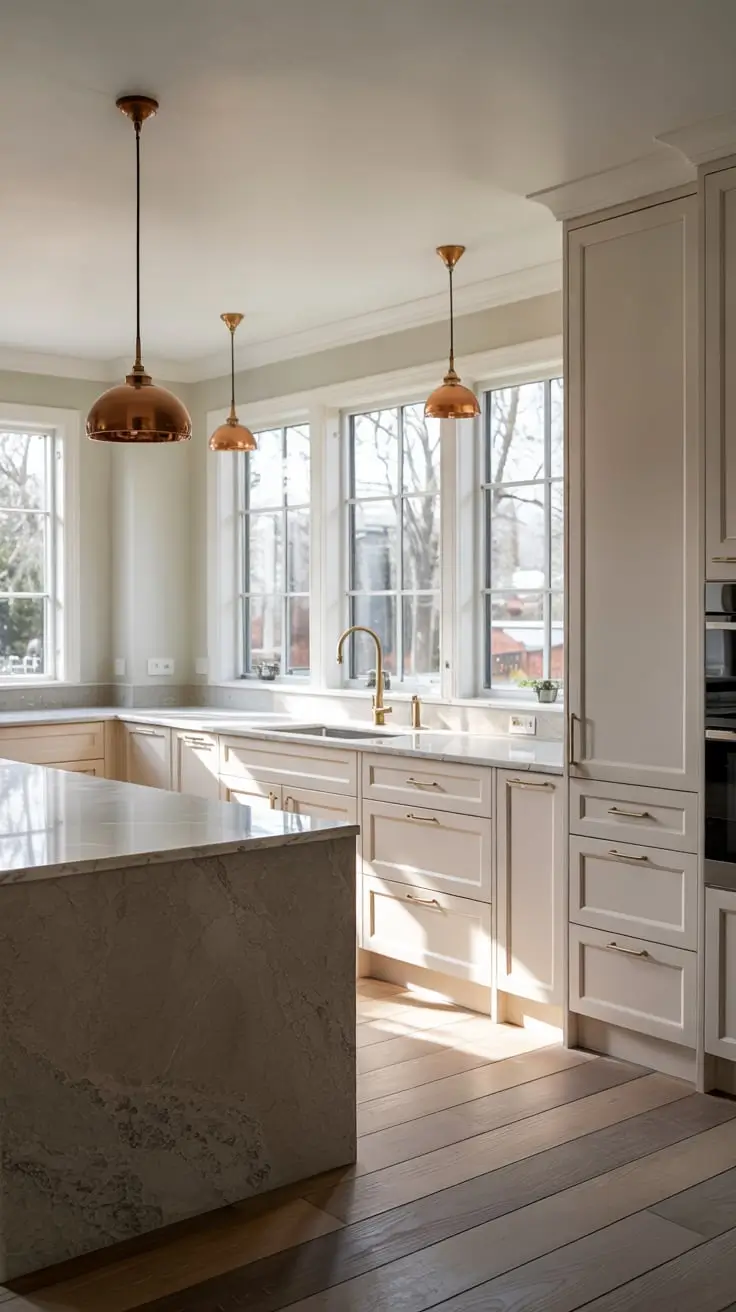
I pair pendant lights with island materials to create cohesion. For example, brass pendants complement warm wood islands, while matte black fixtures pair well with modern stone surfaces. Depending on the ceiling height, I select fixtures that provide appropriate illumination without obstructing sightlines. Pendant spacing is equally important, with even distribution ensuring consistent lighting across the island’s surface.
Professionally, I’ve learned that designers recommend installing pendant lights 30–36 inches above the countertop for optimal effect. I apply this rule frequently to maintain both function and aesthetic balance. Pendants also contribute greatly to kitchen island inspiration, helping to define the island as a statement feature.
If expanding this section, I’d discuss mixing pendant styles—such as pairing industrial fixtures with organic materials—to create layered visual interest.
20. Kitchen Island Pendant Light Styles
When I choose kitchen island pendant lights, I consider how different styles influence the overall design mood. Pendant lights serve as both functional and decorative elements, supporting visibility while enhancing the island’s visual appeal. Whether working with modern, farmhouse, or eclectic kitchens, pendant lights can completely shift the island’s personality. They also complement broader kitchen island ideas lighting strategies by helping define specific zones within the kitchen.
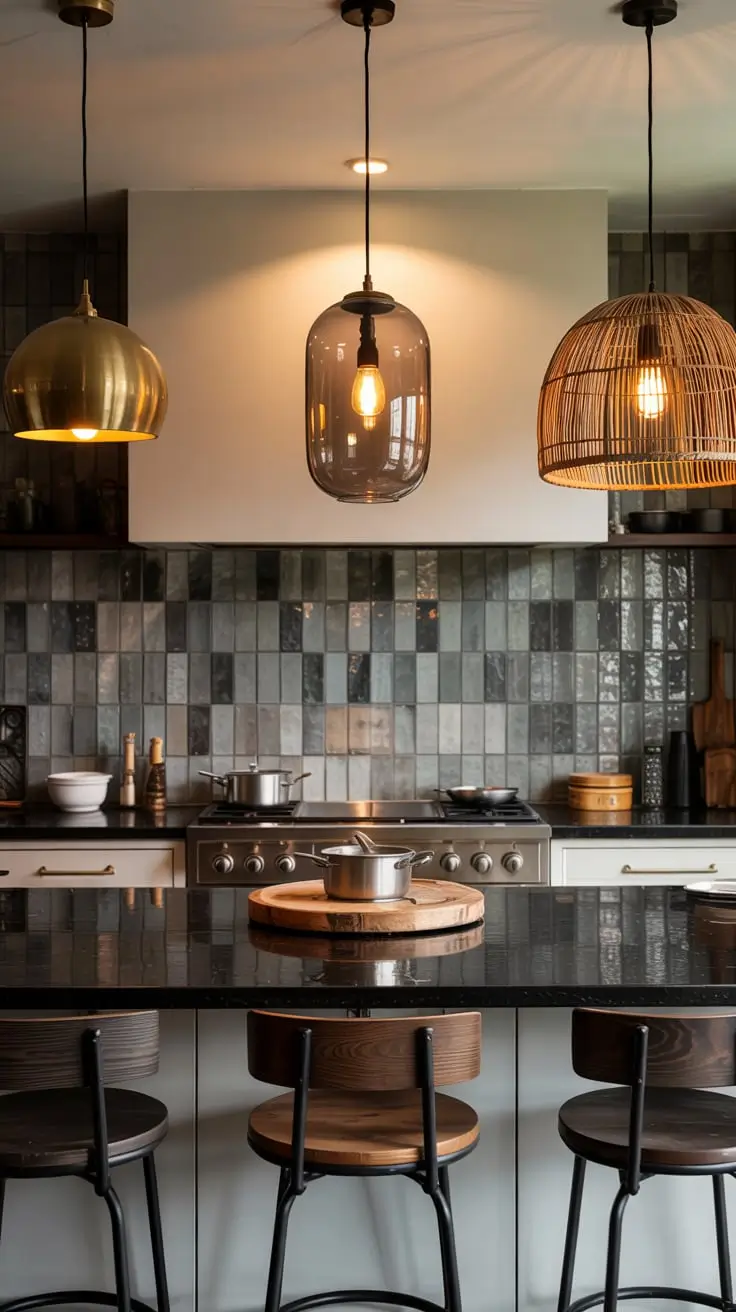
I often select pendants in materials such as brushed brass, textured glass, matte black steel, or woven rattan. Each material creates a distinct ambiance—glass adds elegance, metal adds sophistication, and natural fibers evoke warmth. The shapes of the fixtures also matter: domes, cylinders, globes, and lanterns each cast different lighting effects. I coordinate pendant choices with bar stools, cabinetry hardware, and countertop finishes for a cohesive design.
In my experience, pendant lights are one of the easiest ways to update a kitchen island without undergoing a full renovation. Designers also often recommend varying pendant sizes or using two oversized fixtures rather than three smaller ones to create a modern appearance. I find this suggestion especially effective in kitchens with high ceilings.
If expanding this section, I would include tips for layering pendants with recessed lighting or under-counter LEDs for enhanced brightness.
21. Kitchen Island Styling Techniques
When I develop kitchen island styling techniques, I focus on balancing beauty with practicality. Styling the island helps reinforce the kitchen’s design direction while maintaining an inviting atmosphere. This aligns with kitchen island ideas decorating and kitchen island decor, which encourage thoughtful use of accessories, textures, and colors. A well-styled island becomes a centerpiece that enhances both functionality and visual appeal.
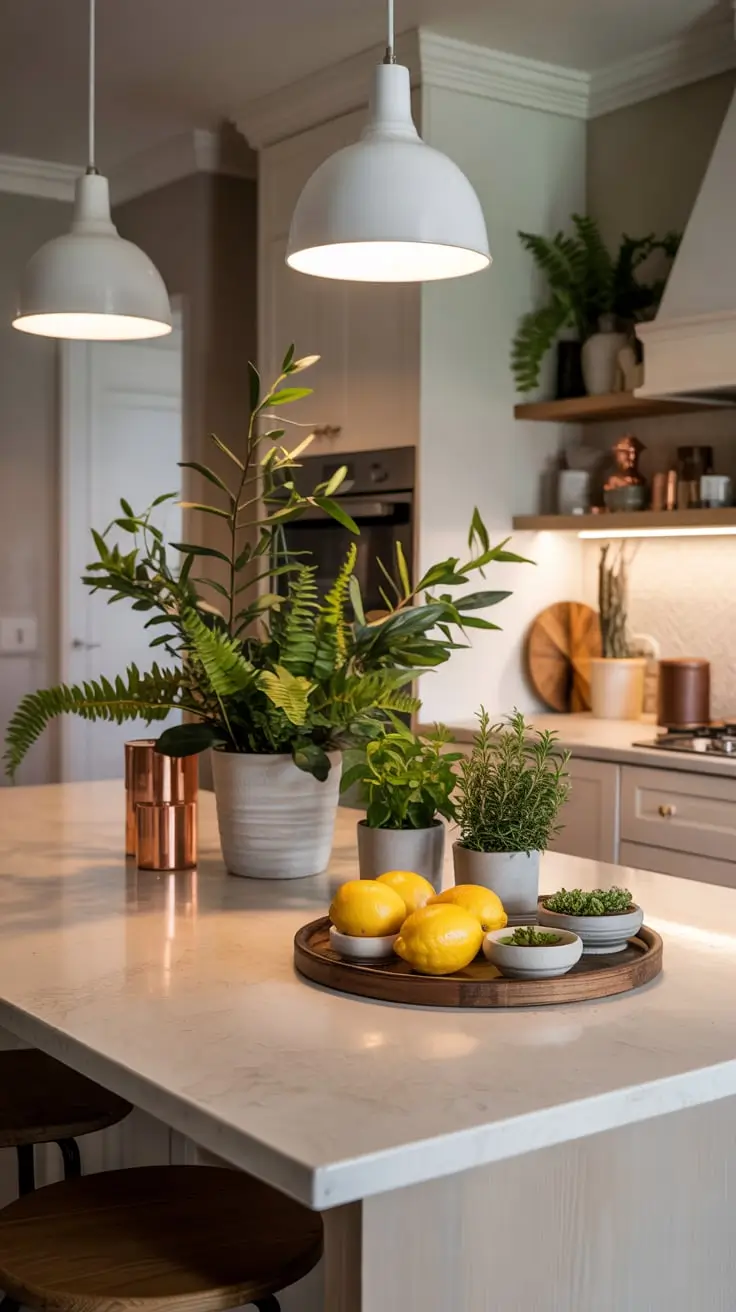
The décor elements I incorporate depend on the home’s aesthetic. For modern kitchens, I use sleek trays, sculptural vases, and minimalistic accents. In farmhouse or rustic kitchens, I include wooden boards, pottery, and greenery. Proper styling often involves grouping items in odd numbers, mixing heights, and adding fresh or seasonal elements. These techniques create dimension and interest while keeping the island purposeful.
Professionally, I’ve found that leading designers stress the importance of editing. Too many items can clutter the island and interfere with daily tasks. I follow this advice by choosing décor that complements the island’s role rather than competes with it. The goal is always cohesion, warmth, and usability.
If expanding this section, I would add examples of styling for special occasions—such as holiday arrangements or thematic entertaining décor.
22. Multi-Functional Kitchen Island Designs
When I design multi-functional kitchen island designs, I focus on making the island a central hub that enhances cooking, dining, and entertaining. This concept pairs naturally with bold keywords: kitchen island ideas with seating and kitchen island ideas storage, creating an island that performs multiple tasks seamlessly. Multi-functional islands often combine sinks, seating, appliances, prep areas, and hidden storage to support every aspect of kitchen life. These islands work well in both modern and traditional kitchens, adapting to the homeowner’s lifestyle.
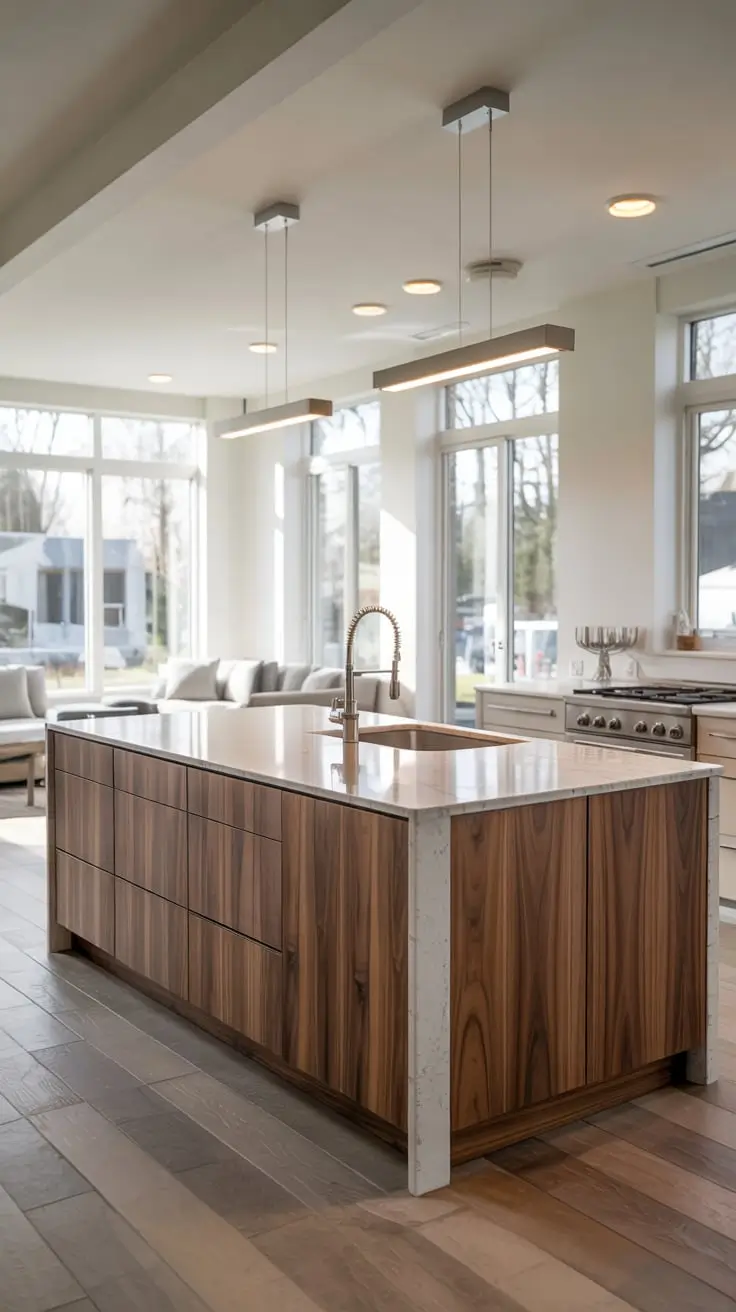
To achieve this level of versatility, I include elements such as built-in sinks, dishwasher drawers, microwave shelves, and extended countertops for dining. Deep storage drawers, pull-out trash systems, or slide-out cutting boards maximize function while keeping the kitchen organized. I also incorporate kitchen island lights or under-counter LEDs to illuminate each functional zone. For modern homes, integrating induction cooktops or smart charging stations elevates usability even further.
Professionally, I’ve learned that multi-functional islands are highly recommended in open-concept homes where the kitchen serves as a social center. Designers often emphasize the importance of thoughtful zoning—separating prep, cook, and seating areas. I follow this advice by ensuring each function has sufficient space without interference. This creates a smooth workflow and makes the island an indispensable part of daily routines.
If expanding this section, I would discuss incorporating movable seating, adjustable-height countertops, or modular storage units that adapt as family needs evolve.
23. Space-Saving Kitchen Island Innovations
When I focus on space-saving kitchen island innovations, I prioritize efficiency and adaptability—especially for homes exploring kitchen island ideas for small kitchens or kitchen island ideas small space. Compact kitchens require creative solutions that maximize utility without overwhelming the room. Space-saving islands often include collapsible surfaces, mobile bases, slim profiles, or dual-purpose features that allow flexibility depending on the situation.
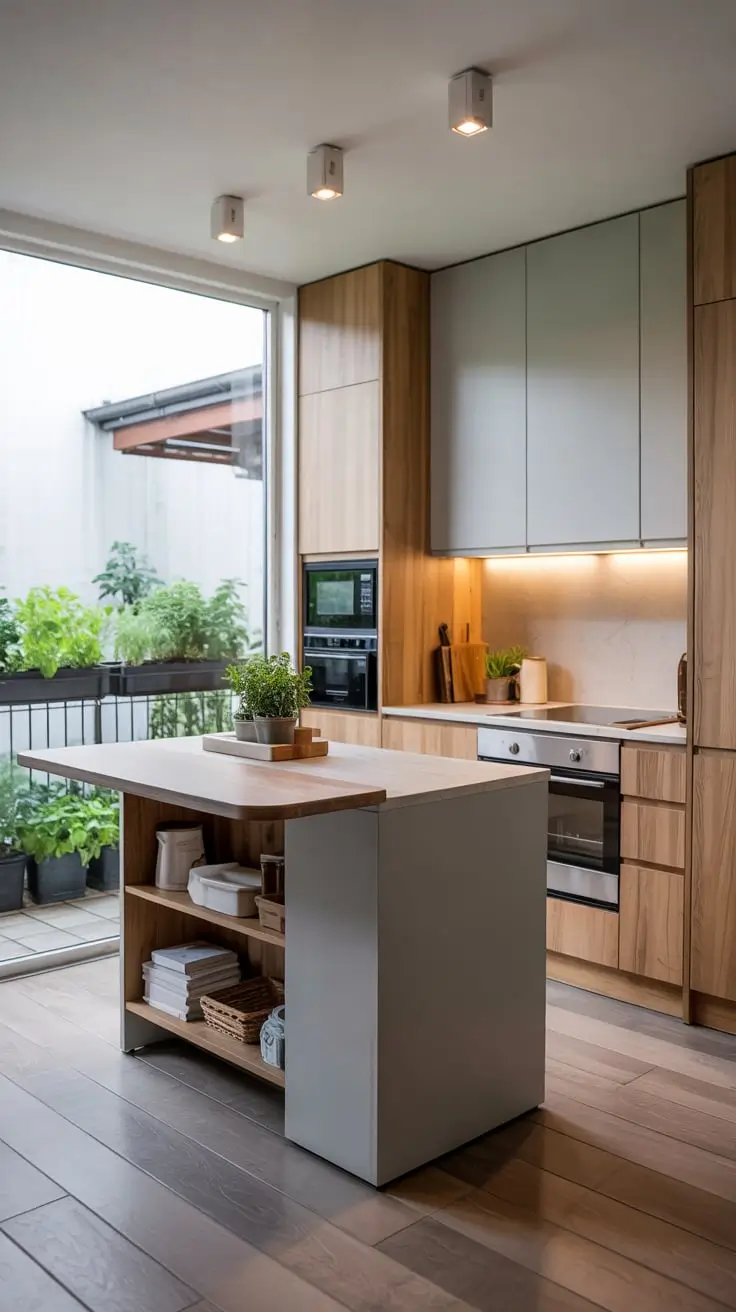
To support small-space functionality, I incorporate narrow islands with extendable countertops, built-in shelves, and hidden compartments for everyday essentials. Lightweight bar stools that tuck completely under the island help maintain an open footprint. Materials like light wood, soft white finishes, and minimal hardware contribute to visual spaciousness. Smart kitchen island lighting—such as overhead pendants or integrated LED strips—ensures the island remains a bright and functional work zone.
From my experience, leading interior designers stress the importance of circulation in small kitchens. Maintaining at least 36 inches of clearance around the island prevents the space from feeling cramped. I apply this guideline to ensure homeowners benefit from the island without compromising comfort. Mobile islands with wheels or modular pieces that can be rearranged are also highly effective in compact layouts.
If expanding this section, I would add ideas like nesting stools, retractable dining surfaces, or built-in spice towers to further optimize storage and usability.
24. Conclusion
Kitchen islands in 2025 are more versatile and innovative than ever, blending beauty, practicality, and purposeful design. Whether your focus is modern aesthetics, farmhouse warmth, compact layouts, or multi-functional efficiency, the right island concept can transform the entire kitchen experience. I hope these ideas inspire you to reimagine your space and explore new possibilities. Share your questions or design preferences in the comments—I’d love to hear how you plan to enhance your kitchen in the coming year.
25.
 Save Pin