A thoughtful Japanese garden can make even a small outdoor corner feel calm, intentional, and visually balanced. In 2026, the best approach to japanese garden design is not about copying every traditional element, but about understanding proportion, natural texture, quiet movement, and the emotional feeling of the space. Many homeowners look for japanese garden ideas because they want a peaceful backyard, a softer landscape, or a meditative place that feels connected to the house. In this article, I will explore how japanese gardens can work with stone, moss, gravel, water, lanterns, plants, and modern design details without losing their natural aesthetic. I will also show how each idea can be practical for a backyard, indoor corner, miniature garden, or larger landscape plan.
1. Japanese Garden Design With A Calm 2026 Layout
A calm japanese garden design begins with a layout that feels open, balanced, and easy to understand from the first view. I like to start by imagining how a person will walk through the garden, where they will pause, and what they will notice from the house. In a modern 2026 layout, the design should not feel crowded, because negative space is just as important as plants or decor. Gravel areas, low greenery, stepping stones, and one clear focal point can make the garden feel peaceful without requiring a large yard. This kind of design layout is useful because it creates order, reduces visual noise, and helps the backyard feel more connected to daily life.
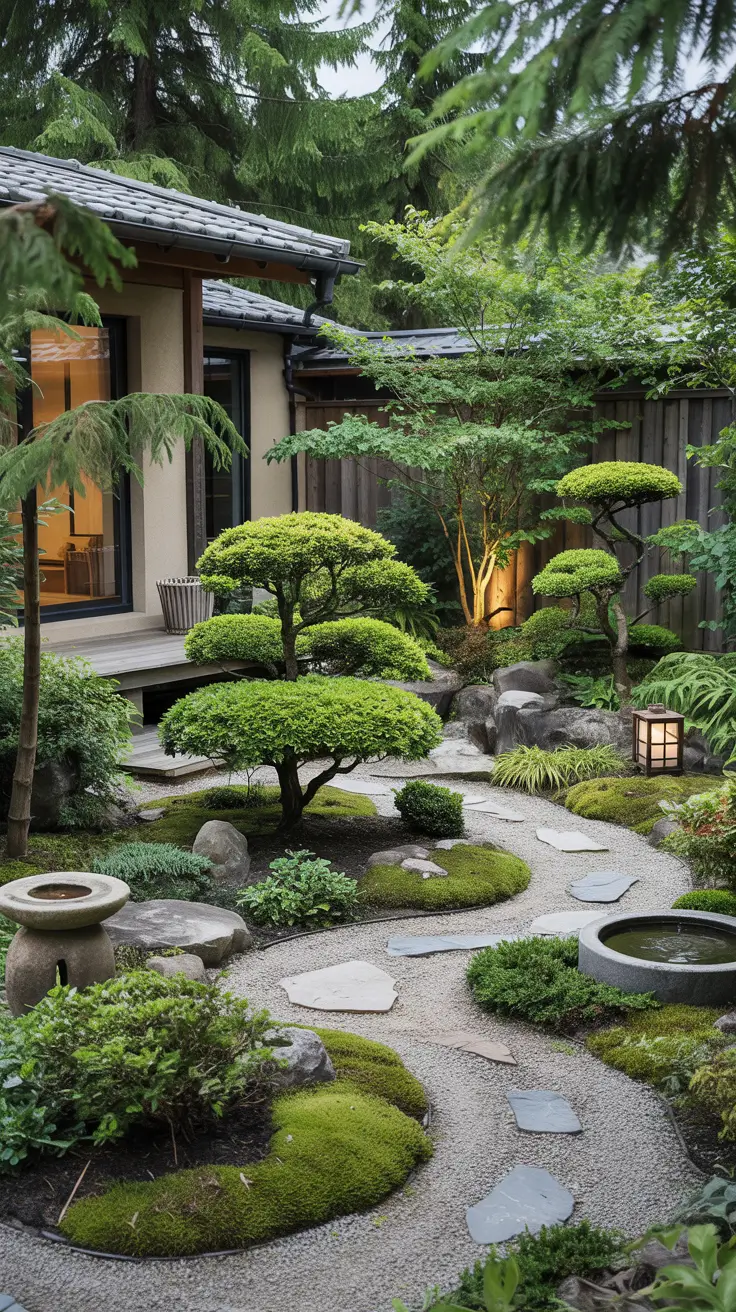
For this section, I would include a curved gravel path, a compact maple tree, trimmed shrubs, mossy ground cover, and a small stone lantern. The gravel gives the garden a clean base, while the stones guide movement without making the space feel too formal. A low wooden bench or simple viewing platform can be added near the edge, especially if the garden is seen from a patio or house window. I also think a single water basin works well because it adds quiet detail without taking over the layout. These elements support japanese garden style because each item has a purpose and does not compete for attention.
In my experience, the strongest japanese gardens design ideas are the ones that feel simple at first, then reveal small details over time. I would avoid filling every corner with decor, even if the garden has a generous footprint. A calm plan needs breathing room, especially around lanterns, stone features, and japanese garden plants. If something feels missing, I would add texture rather than more decoration, such as moss, fine gravel, soft ferns, or weathered stone. This keeps the garden beautiful, modern, and grounded instead of making it look staged.
2. Japanese Garden Ideas For A Peaceful Backyard Escape
Japanese garden ideas for a peaceful backyard escape should focus on privacy, shade, and a sense of separation from busy outdoor areas. I would design this space as a quiet retreat rather than a decorative corner that is only meant to be viewed. A backyard japanese garden can include a small seating area, layered plants, and a gentle path that encourages slow movement. Even if the yard is small, the feeling of escape can be created with bamboo screens, evergreen shrubs, and a carefully placed focal point. This makes the space practical because it can be used for reading, morning tea, meditation, or simply taking a break outside.
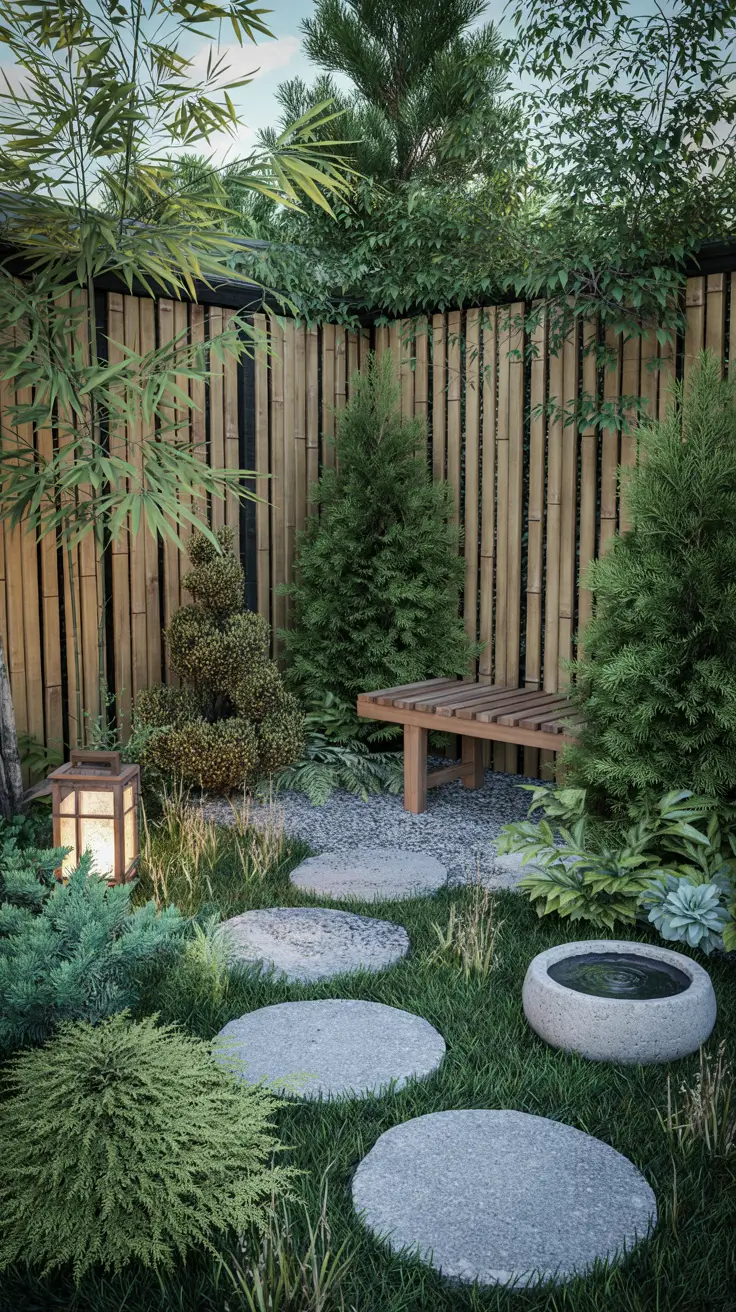
The key elements I would add are a low bench, a gravel base, stepping stones, a stone lantern, and soft planting around the edges. A bench should be simple and natural, preferably wood or stone, so it blends into the landscape instead of looking like patio furniture. I would use japanese garden decor sparingly, with one lantern or one water bowl rather than several competing features. For plants, I would choose a mix of ornamental grasses, dwarf conifers, moss, ferns, and a small Japanese maple if the climate allows it. These choices create a layered aesthetic that feels peaceful without becoming difficult to maintain.
I personally think a peaceful backyard escape works best when it has one strong view from inside the house. A window, patio door, or kitchen view can become part of the design, because japanese gardening often values the experience of observing nature from a still position. I would make sure the most beautiful feature is visible from that everyday viewpoint. If the section feels incomplete, I would add a soft boundary, such as a bamboo fence, hedge, or simple wood screen. That one addition can make the backyard feel more private and intentional.
3. Japanese Gardens With Natural Stone Paths And Soft Greenery
Japanese gardens with natural stone paths and soft greenery feel timeless because they combine movement with texture. I like using irregular stones because they make the path feel natural, as though it has always belonged in the landscape. The path should not be perfectly straight unless the design is very formal, because gentle curves create a slower and calmer walking experience. Soft greenery around the stones helps blur the edges and makes the garden feel settled rather than newly installed. This idea works especially well for a japanese garden landscape because it connects different areas while keeping the mood relaxed.
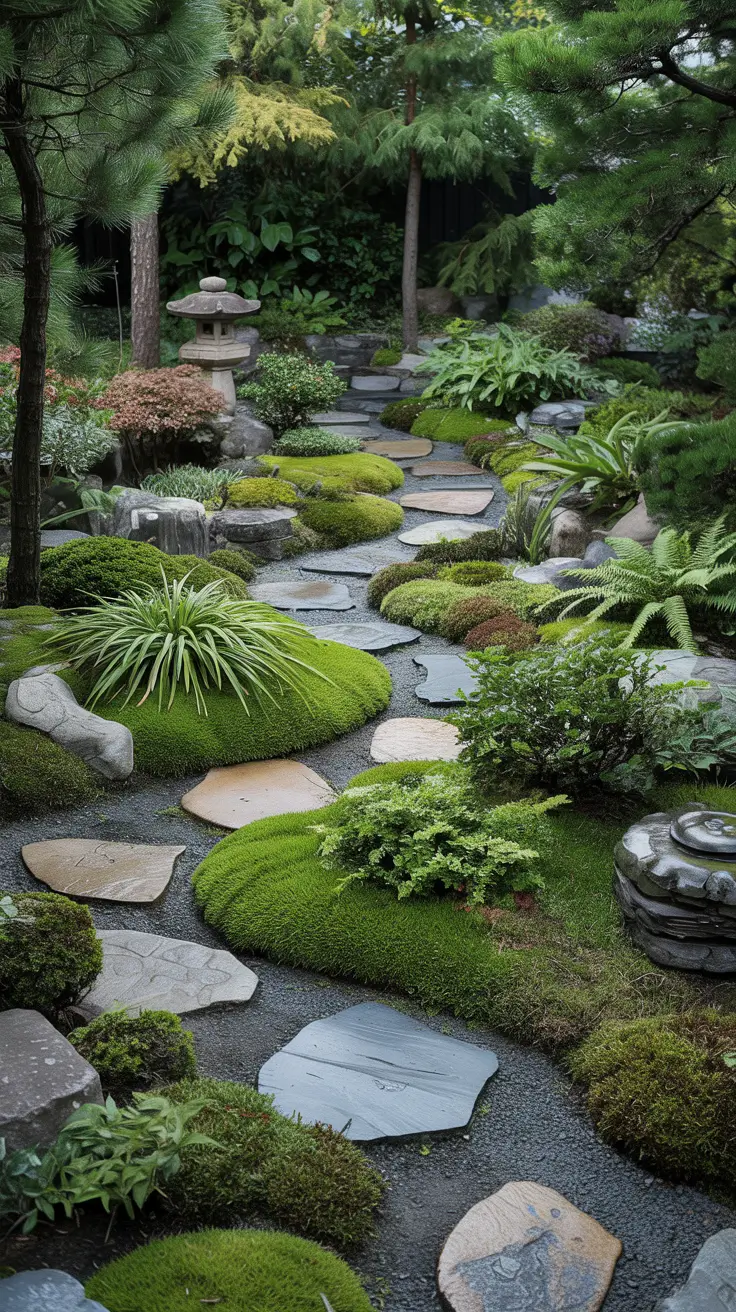
For the path, I would choose flat stepping stones with varied shapes, placing them with enough space for comfortable walking. Around them, I would add moss, mondo grass, ferns, low shrubs, and small patches of gravel to create contrast. A stone lantern can sit near a bend in the path, where it feels discovered rather than displayed. If the garden connects to a house, I would use wood or dark stone near the entrance to create a smooth transition from architecture to landscape. These details make the design modern while still respecting the natural feeling of japanese gardens.
I have found that stone paths look best when they are not too polished or too symmetrical. A little variation in size, color, and spacing makes the garden feel more authentic and relaxed. I would avoid bright paving materials because they can break the quiet mood and make the greenery look less soft. What this section needs most is careful edging, because without it, gravel and plants can spread into the walking area. A discreet border of buried stone, metal edging, or dense low planting will keep the path clean without making it look artificial.
4. Japanese Garden Backyard Ideas For Small And Large Spaces
Japanese garden backyard ideas can work in both small and large spaces if the scale is handled correctly. In a small backyard, I would focus on one compact scene with gravel, a few plants, and a clear focal point. In a larger backyard, I would divide the landscape into zones, such as a viewing garden, a stone path, a shaded seating corner, and a water feature. The important part is to keep the design layout calm, not to fill the space just because it is available. A well-planned backyard can feel beautiful and useful whether it is narrow, wide, urban, or detached from the main house.
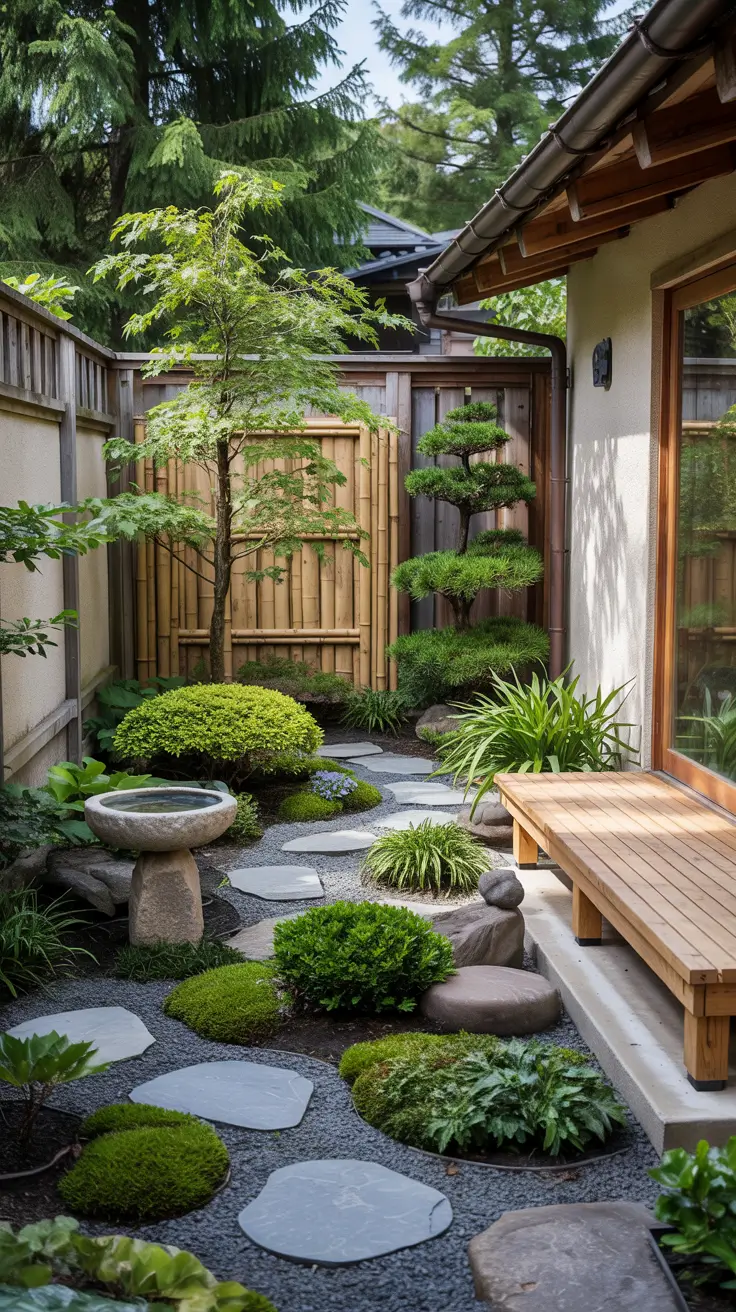
For a small space, I would include a miniature gravel garden, a dwarf maple, a stone basin, and a vertical bamboo screen. For a larger space, I would add layered planting, a curved path, a small pond, mossy stones, and a simple wooden bridge if the scale allows it. A house with a patio can also benefit from a raised viewing deck that looks toward the japanese garden backyard. I would choose furniture carefully, using low benches, floor cushions in covered areas, or a simple wooden platform instead of bulky outdoor seating. Every piece should support the quiet aesthetic and leave enough open space around it.
My personal advice is to plan the garden from the main viewpoint before buying plants or decor. I would stand at the door, window, or patio and decide what should be seen first, second, and last. This helps avoid a random collection of items and turns the backyard into a composed scene. If anything is missing, I would add height through a tree, bamboo screen, or tall grass rather than adding more ground decor. Height gives the design depth and makes both small and large japanese gardens feel more complete.
5. Japanese Garden Landscape With Water, Moss, And Gravel
A japanese garden landscape with water, moss, and gravel creates a strong sense of balance between movement and stillness. I like this combination because water brings sound and reflection, moss brings softness, and gravel brings structure. The design can be simple, with a small basin and raked gravel, or more detailed, with a pond, stones, and layered planting. In 2026, this idea feels modern because it supports calm outdoor living without relying on bold colors or heavy decoration. It is also practical because gravel can define open areas, while moss and water soften the overall mood.
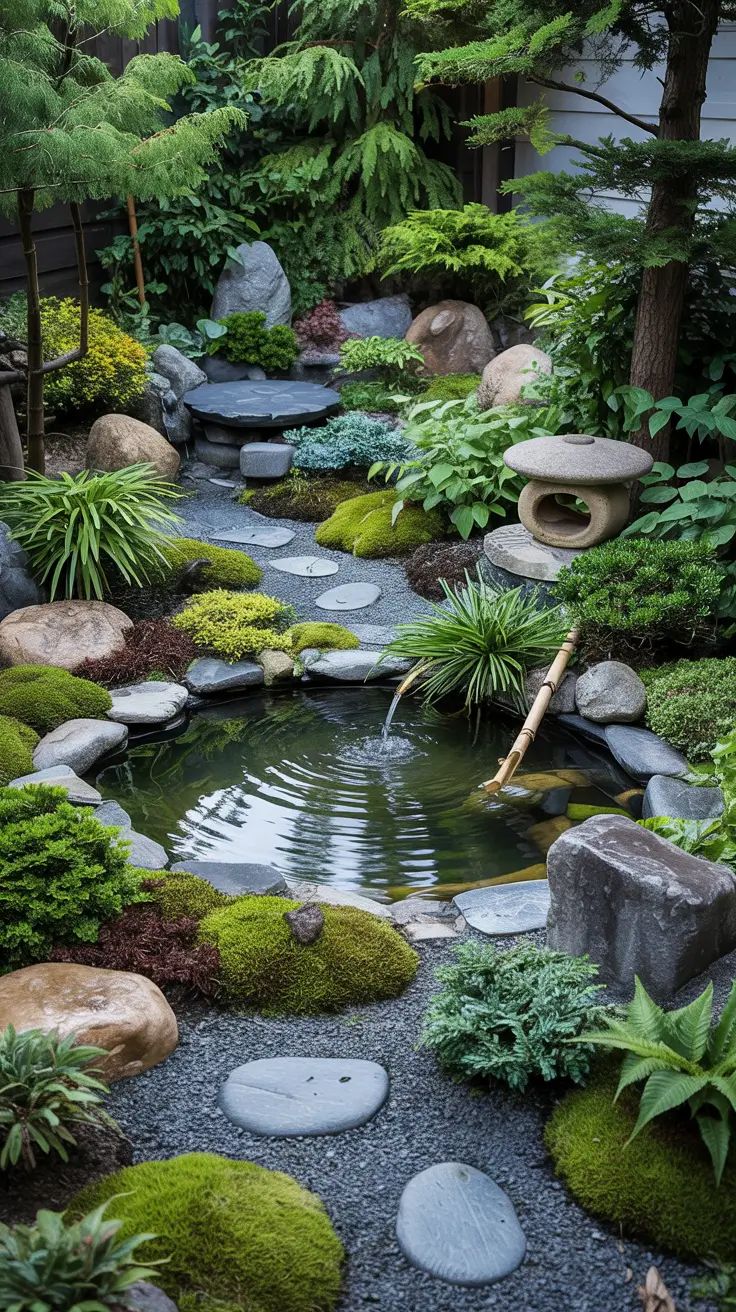
The main elements I would include are a shallow pond or water basin, river stones, raked gravel, moss patches, ferns, and a few carefully placed boulders. A stone lantern can be added near the water, but I would keep it slightly off-center so the composition feels natural. If the garden is near a house, I would use dark gravel or muted gray stone to create a refined connection with modern architecture. For plants, I would include japanese garden plants that enjoy shade or partial shade, such as ferns, moss, dwarf evergreens, and compact ornamental grasses. These details help the garden feel lush without becoming visually heavy.
I personally think water should be used with restraint in a Japanese garden. A small reflective basin can be more powerful than a large feature that feels difficult to maintain. Moss also needs the right conditions, so I would only use it where there is shade, moisture, and limited foot traffic. If the section needs one more detail, I would add a subtle sound element, such as a bamboo water spout or a small recirculating stream. That gentle movement can make the landscape feel alive while keeping the design peaceful.
6. Japanese Garden Decor With Lanterns, Bamboo, And Stone Details
Japanese garden decor works best when every object feels connected to the surrounding landscape, not placed there only for decoration. I like starting with stone because it gives the garden a stable structure and helps define paths, edges, and quiet resting areas. Bamboo adds vertical rhythm and can soften fences, walls, or narrow corners near the house. Lanterns bring a traditional detail that still feels modern when the shape is simple and the placement is calm. This kind of japanese garden style is especially useful for creating a peaceful entry, side yard, or backyard corner with a strong visual identity.
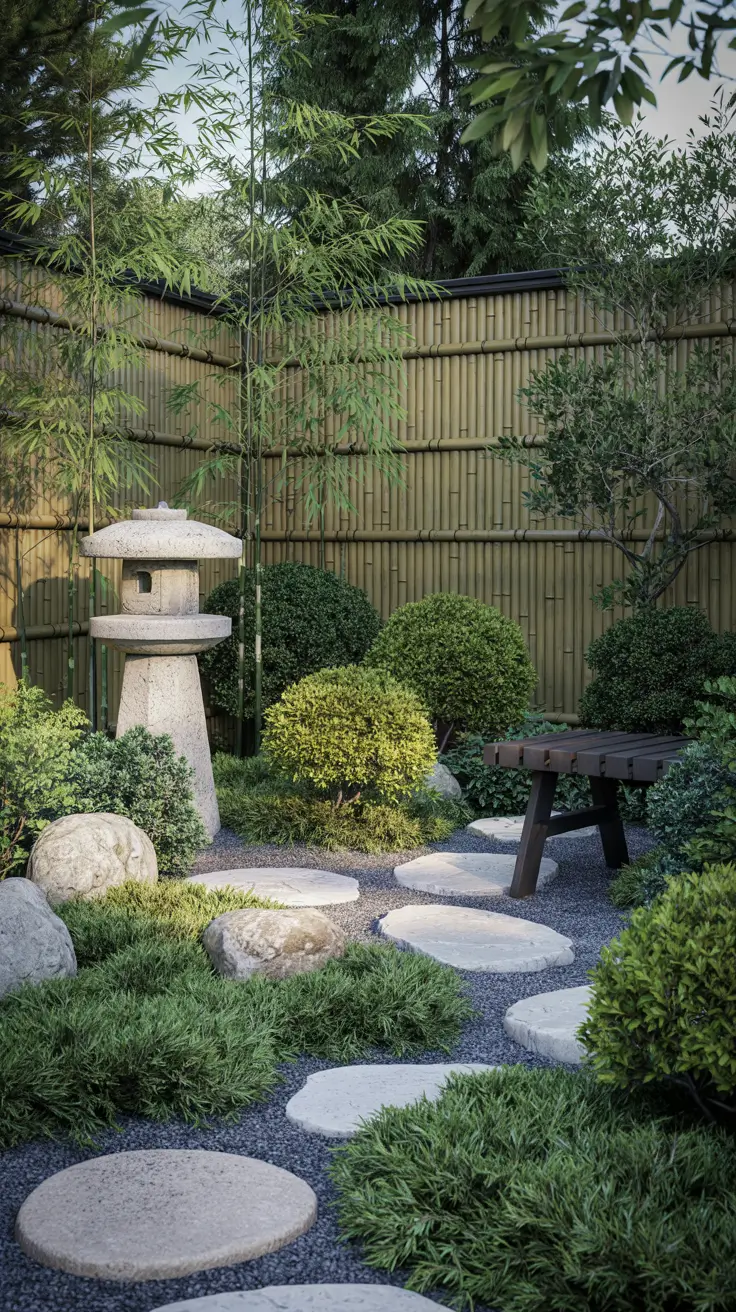
For this design, I would include a stone path, low gravel areas, bamboo screening, one or two lanterns, moss-like ground cover, and carefully shaped shrubs. A stone lantern should not be too large unless the whole landscape has enough space to support it visually. Bamboo can be used as a living screen or as a decorative fence panel, depending on the climate and maintenance plan. Smooth river stones help soften the base of the design, while larger rocks create anchor points. I also like adding a simple wooden bench because it gives the garden a practical reason to be used, not only admired.
In my opinion, the main mistake with lanterns and bamboo is using too many decorative pieces at once. I prefer a design modern approach where one lantern becomes a focal point and the rest of the garden supports it quietly. Many designers recommend repeating materials in small ways to make a space feel cohesive, and I think that advice is very useful for japanese gardens design ideas. If the lantern is stone, I would repeat stone in the path or border. If bamboo appears in a fence, I would echo its warm tone with a small wooden seat or gate.
What I would add to complete this section is soft lighting that does not overpower the natural atmosphere. A low warm light near the lantern, a subtle path light, or a hidden light behind bamboo can make the garden beautiful in the evening. I would also include a practical drainage plan because gravel, stone, and planted areas need to stay clean and dry enough to look intentional. A small drawing before installation helps decide where each stone, plant, and lantern belongs. With this plan, the decor feels balanced instead of random.
7. Japanese Gardening Ideas For A Balanced Outdoor Space
Japanese gardening is about balance, but balance does not mean perfect symmetry. I usually think of it as a careful relationship between open space, planted space, texture, and movement. A balanced japanese garden backyard might include gravel for calmness, plants for softness, rocks for structure, and a small water feature for sound. The design should guide the eye slowly instead of showing everything at once. This makes the outdoor space feel larger, more peaceful, and more personal.
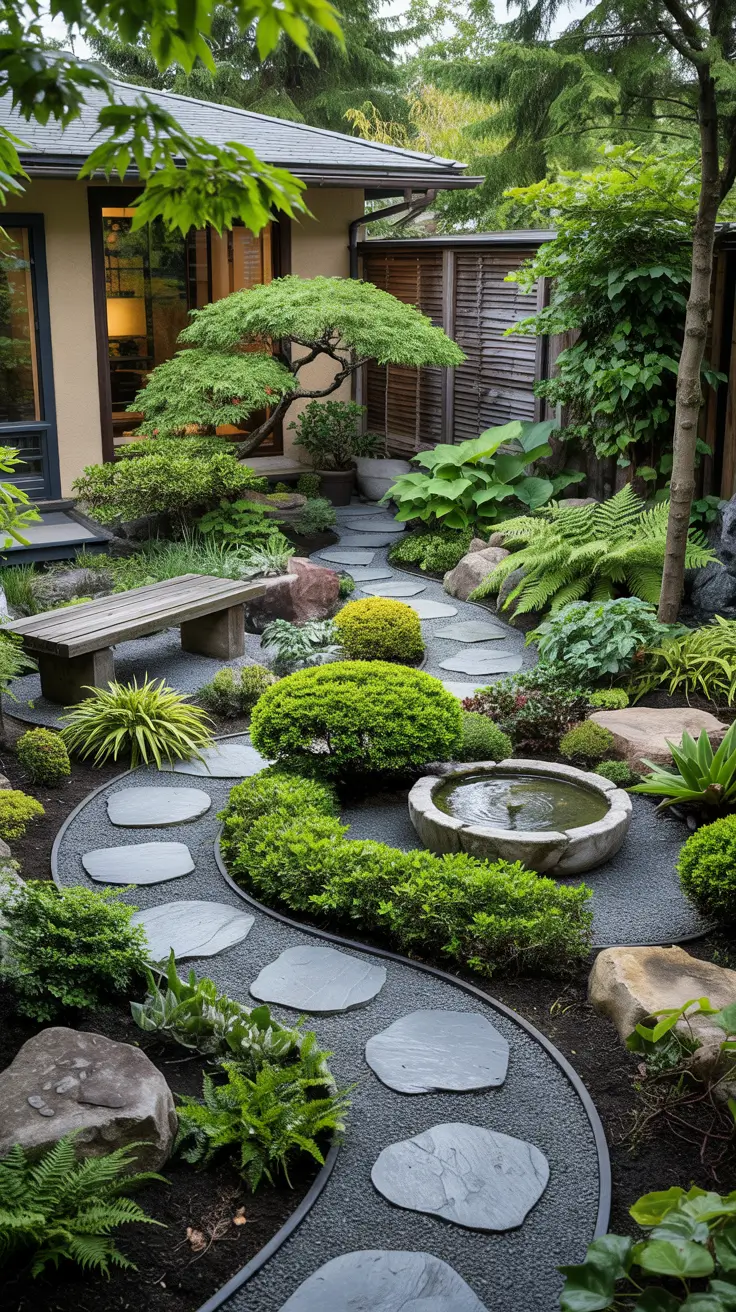
For a balanced outdoor design, I would include a curved path, layered plants, stepping stones, a low basin, and one quiet seating area. The plants should vary in height, but they should not create visual noise. Japanese maple, pine, ferns, moss, ornamental grasses, and azaleas can all support the look when chosen for the climate. A small bench or low stool gives the space a practical purpose, while the path gives the garden a clear flow. Gravel or sand can be used to create empty visual breathing room between plants and stones.
I have found that a balanced japanese garden landscape often depends more on what is removed than what is added. When I reduce unnecessary pots, bright colors, and mismatched decor, the remaining elements feel stronger. This is why japanese garden ideas often look simple but require careful editing. I would rather use five well-chosen elements than fifteen pieces that compete for attention. The result feels calmer and easier to maintain over time.
What this section needs most is a clear maintenance plan, because balance can disappear quickly if plants outgrow their shape. I would add seasonal pruning, gravel raking, path cleaning, and plant replacement to the overall plan. It is also smart to leave open areas where the garden can breathe, especially in a small space. A balanced outdoor garden should not feel packed from edge to edge. The beauty comes from the relationship between full and empty areas.
8. Japanese Garden Style With Minimalist Beauty And Natural Harmony
Japanese garden style is strongly connected to minimalist beauty, but it should not feel cold or empty. I see it as a warm type of minimalism built with natural harmony, soft texture, and meaningful placement. Instead of filling the garden with many features, I would focus on a few strong choices that create atmosphere. A quiet stone path, clipped shrubs, a simple water bowl, and restrained planting can be enough. This approach works especially well for a modern house because it makes the outdoor area feel refined without looking overly formal.
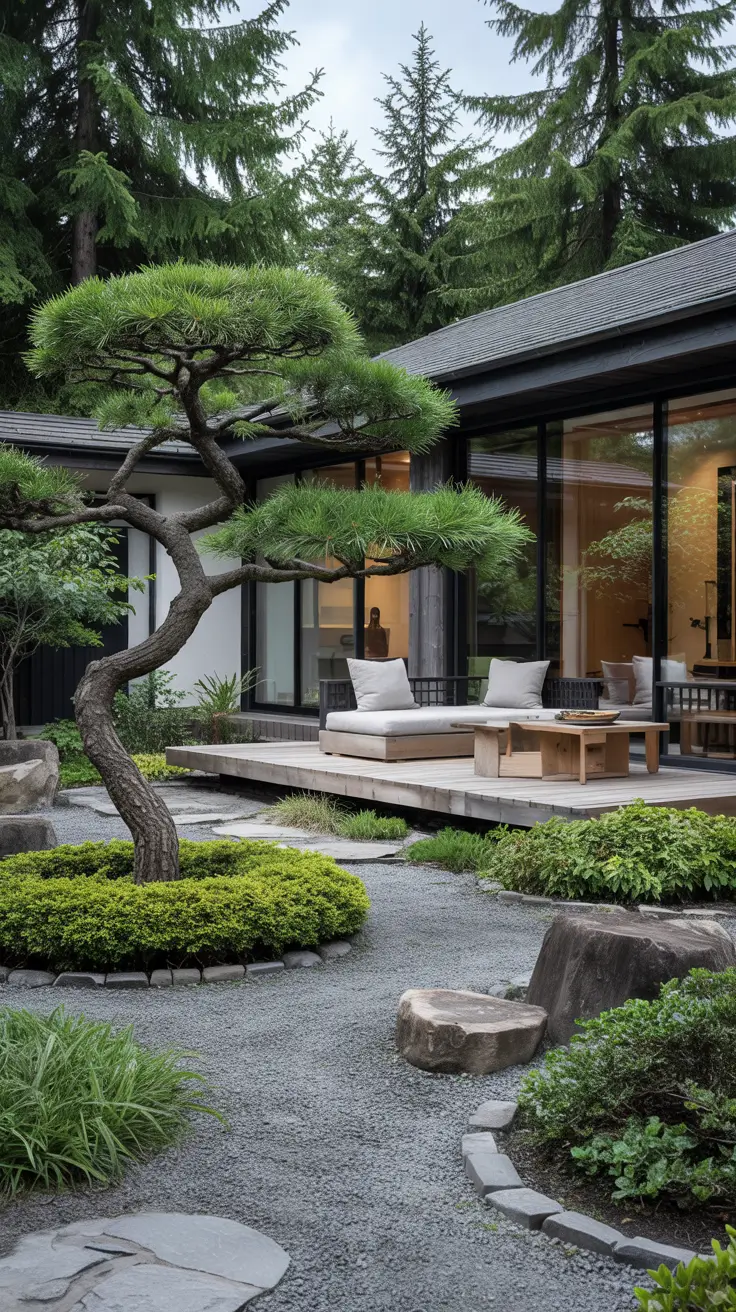
The main items I would include are natural stones, gravel, evergreen plants, a low wooden platform, and one sculptural tree. The furniture should be simple, with clean lines and natural materials such as wood, stone, or dark metal. I would avoid bright plastic, glossy finishes, and overly decorative outdoor furniture because they can weaken the calm aesthetic. If a seating area is included, I would keep cushions neutral and weather-resistant. The goal is to make every object look like it belongs to the garden, not like it was added after the design was finished.
In my opinion, minimalist japanese gardens are successful when they still feel alive. I like adding seasonal details, such as a maple that changes color, flowering azaleas, or soft grasses that move in the wind. These elements prevent the design from feeling static. A modern minimalist garden should not be empty just for the sake of simplicity. It should feel edited, natural, and emotionally calm.
What I would add here is a stronger connection between the garden and the house. Sliding doors, a wide window view, a small deck, or a framed path can make the garden feel like part of the home. I would also think about how the view changes from inside the house, not only from the garden itself. A beautiful japanese garden design modern concept often starts with the view from the living room, kitchen, or bedroom. When the indoor and outdoor views work together, the whole property feels more thoughtful.
9. Japanese Gardens Design Ideas For A Modern Home
Japanese gardens design ideas for a modern home should respect tradition while still feeling practical for today’s lifestyle. I like using clean geometry near the house and softer natural shapes farther into the garden. This creates a connection between modern architecture and organic landscape. A modern japanese garden design layout might include a rectangular deck, a gravel court, stepping stones, structured planting, and a quiet focal tree. The result feels polished but not artificial.
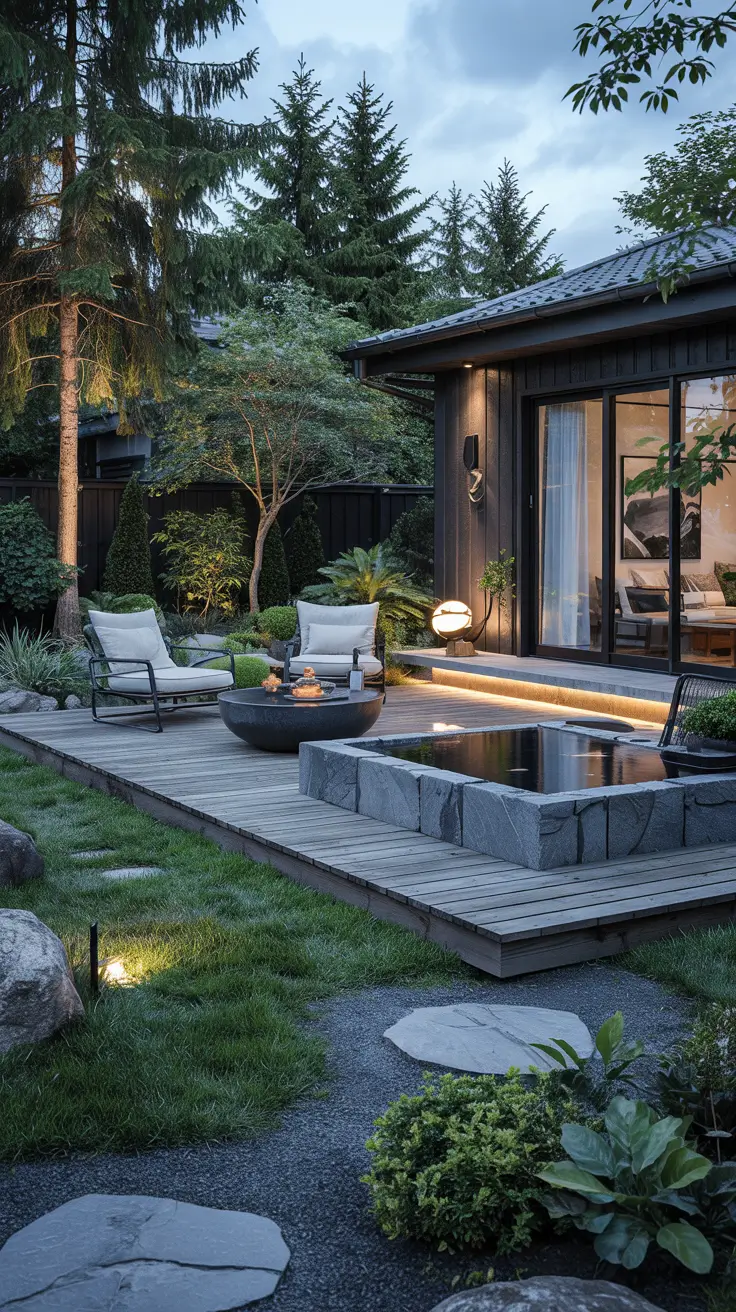
For this design, I would include a simple patio, low-profile outdoor furniture, a gravel field, black or natural wood accents, stone planters, and layered green plants. The furniture should be comfortable but visually quiet, such as a low bench, a simple table, or floor cushions in a protected area. Stone planters can hold small trees or sculptural shrubs when in-ground planting is limited. A water bowl or narrow reflecting feature can add movement without taking too much space. I would use lighting carefully so the garden looks calm at night rather than theatrical.
I think modern japanese garden ideas are especially useful for homes with compact yards because they make small spaces feel organized. Instead of trying to fit a lawn, flower beds, furniture, and decor into one tight area, the design can focus on fewer zones. This makes the backyard easier to maintain and more relaxing to use. I also like how a modern plan can include diy elements, such as gravel installation, simple bamboo screening, or a small stone path. The key is to keep the finish clean and consistent.
What I would add to this section is a practical zoning plan. A modern home needs outdoor areas that support real daily use, such as morning coffee, quiet reading, or a peaceful view from indoors. I would define one zone for sitting, one zone for plants, one zone for movement, and one focal point. This keeps the garden from becoming only decorative. When every zone has a purpose, the design feels both beautiful and functional.
10. Japanese Garden Design Layout With Clear Zones And Flow
A japanese garden design layout should guide people through the space without making the route feel too obvious. I prefer a layout with clear zones and gentle flow, where each area reveals itself gradually. This can include an entry point, a path, a planted zone, a stone feature, a seating area, and a quiet focal point. The flow should feel natural, not like a straight walkway from one side to the other. Even a small backyard can feel more spacious when the layout creates moments of pause.
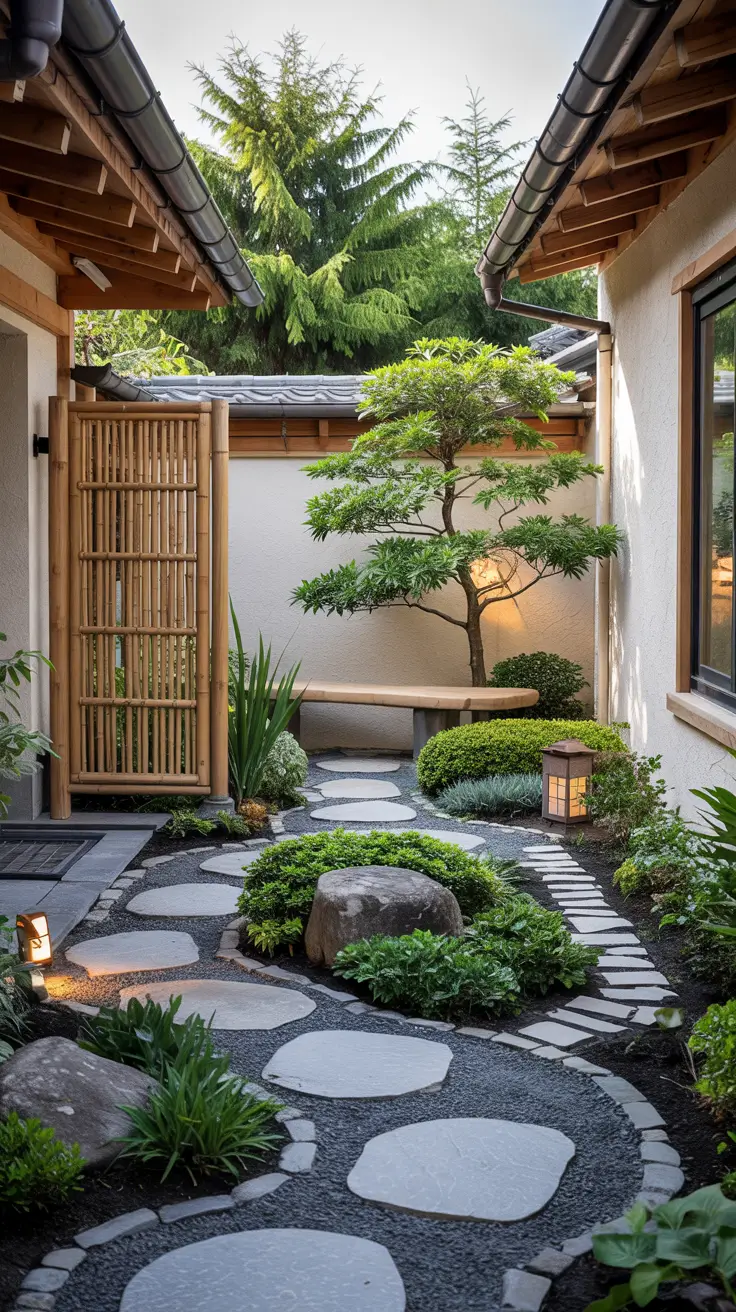
For this layout, I would use stepping stones, gravel, planted edges, a small bridge or crossing element, a bench, and a focal tree or lantern. The path should be comfortable to walk on, with stones spaced naturally for real movement. Planting should frame the path instead of blocking it, using low plants near the edges and taller plants in the background. A bench should face the best view, not simply fill an empty corner. If there is room, a small water basin or dry stream can help connect the zones visually.
In my experience, the strongest design layout starts with observation before decoration. I would study sunlight, shade, drainage, views from the house, and how people naturally move through the space. This helps decide where plants, stones, and seating should go. A drawing is very useful here because it shows whether the zones feel balanced before anything is installed. Good planning prevents the garden from feeling crowded later.
What I would add to this design is one transition feature between zones. This could be a stepping-stone turn, a bamboo gate, a low bridge, a change from gravel to stone, or a lantern placed near a path curve. Transitions make the garden feel layered and intentional. They also help a small space feel like a journey instead of one flat view. With clear zones and flow, a japanese garden backyard becomes easier to use and more beautiful to experience.
11. Japanese Garden Design Modern With Clean Lines And Texture
I like this approach because it makes japanese garden design modern without losing the quiet feeling that makes these spaces special. Clean lines help the garden feel organized, especially when the yard is small or close to the house. I would begin with a simple japanese garden design layout that uses straight or gently angled paths, low planting beds, and open gravel areas. Smooth concrete, pale stone, black edging, and timber screens can create a calm structure before any plants are added. This kind of design works well for a modern house because it connects the garden to the architecture instead of making the outdoor space feel separate.
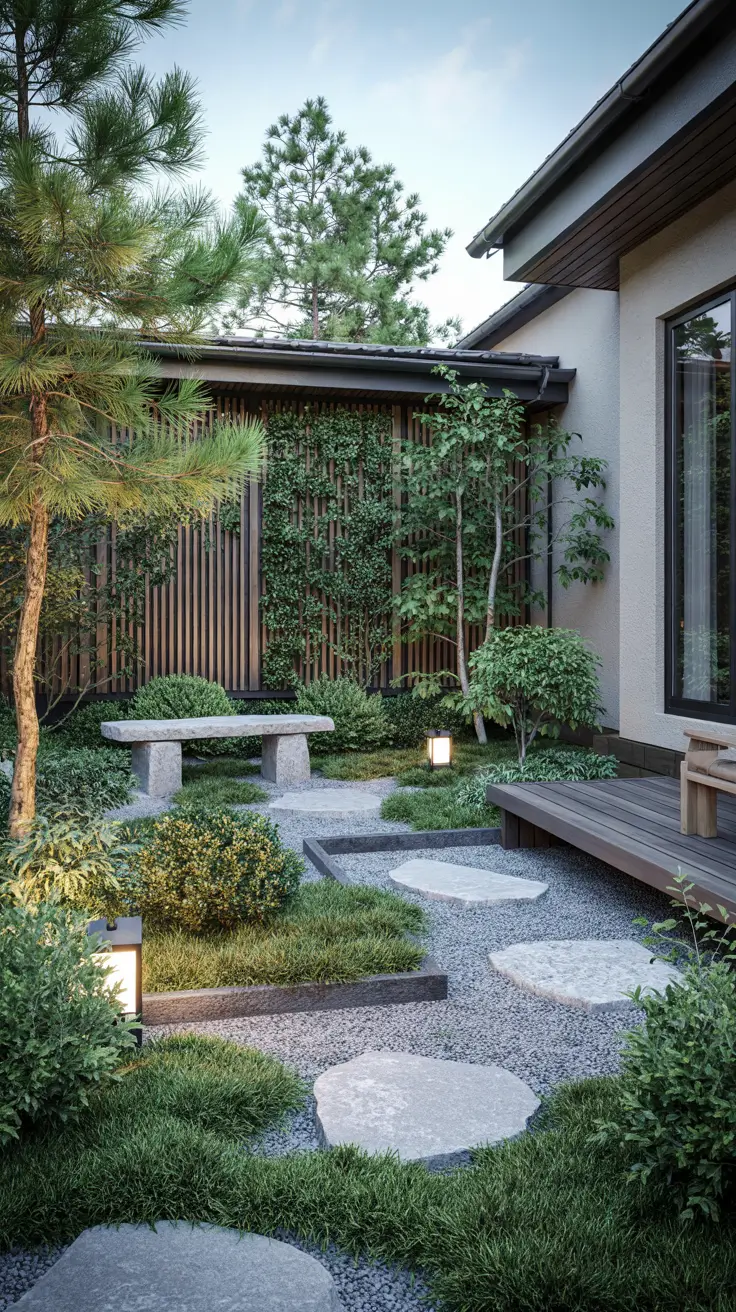
For the main elements, I would include gravel, large stepping stones, clipped shrubs, mossy ground cover, and a simple bench made from wood or stone. A low water bowl or narrow reflecting basin can add movement without making the space feel busy. I also like using textured walls, bamboo fencing, or slatted wood screens because they give the garden depth and privacy. Japanese garden decor should be minimal here, so one lantern, one sculptural rock, or one ceramic vessel is enough. The furniture should be simple, low, and natural, because oversized outdoor furniture can weaken the peaceful balance of the design.
In my opinion, the success of this idea depends on editing more than adding. I often find that a modern japanese garden looks better when there is space between objects, because empty space helps each texture stand out. Designers in modern landscape media often emphasize the value of negative space, and I think that advice fits japanese gardening especially well. A single stone path can feel more powerful than a crowded arrangement of small accents. I would rather use fewer materials and repeat them carefully than introduce too many finishes.
What I would add to complete this section is soft lighting placed low along the path or behind planting. Without lighting, the clean lines may disappear in the evening, and the garden will feel less useful after sunset. I would choose warm outdoor lights, hidden fixtures, and small lanterns rather than bright garden lamps. A few low lights can highlight gravel, stones, and plant shadows without disturbing the calm mood. This is also where the garden becomes practical for daily life, not just beautiful during the day.
12. Japanese Garden Plants For A Soft And Timeless Look
Japanese garden plants are essential because they create softness, seasonality, and a sense of age. I would choose plants that look natural together instead of selecting too many bright or competing varieties. Japanese maples, ferns, moss, ornamental grasses, boxwood, azaleas, pine, and bamboo can all support a timeless japanese garden landscape. The goal is not to fill every corner, but to create layers that feel calm from different viewing angles. This kind of planting can make a backyard, side yard, or small courtyard feel more established and peaceful.
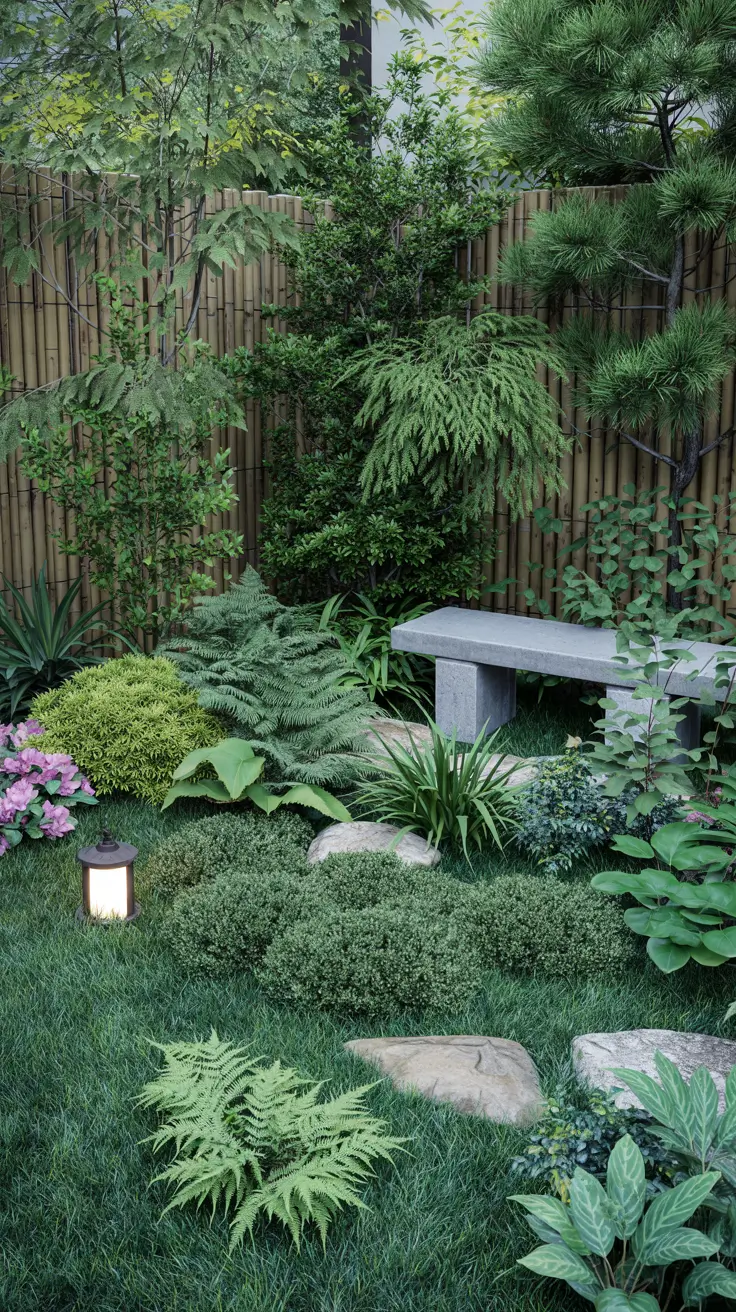
For furniture and design details, I would keep the planting area close to a simple seating spot. A stone bench, wooden stool, or low outdoor chair can give the reader a practical reason to spend time near the plants. I would place taller plants toward the back, medium shrubs in the middle, and moss or ground cover near the front. This creates depth and makes the garden feel larger without needing extra decor. Japanese garden lanterns can also work here, but I would place only one lantern near the planting so it feels intentional.
I personally prefer soft green layers over colorful planting in a japanese garden. Color can still appear through seasonal flowers, autumn leaves, or small accents, but the main feeling should come from texture. When I look at beautiful japanese gardens, the most memorable parts are often the quiet contrasts between moss, stone, water, and leaves. I also think this is one of the easiest japanese garden ideas for beginners because plants can be added gradually. A garden does not need to look complete on the first day to feel meaningful.
What I would add here is a clear maintenance plan, because plant beauty depends on care. I would include pruning scissors, a small storage box for garden tools, and a simple watering routine. If the space is dry or sunny, I would avoid relying too heavily on moss and choose drought-tolerant ground covers instead. If the area is shaded, ferns and hostas can create a softer look with less stress. Good japanese gardening is not only about what looks beautiful, but also about what will stay healthy in the real conditions of the yard.
13. Japanese Garden Design Ideas With Gravel And Stepping Stones
Gravel and stepping stones are some of the most useful japanese gardens design ideas because they add structure without heavy construction. I would use gravel to create a calm base and stepping stones to guide movement through the garden. This works especially well when the outdoor area needs to feel organized but not overly formal. The gravel can represent stillness, while the stones create a slow walking rhythm. In a small japanese garden backyard, this simple combination can make the space feel carefully planned and easy to maintain.
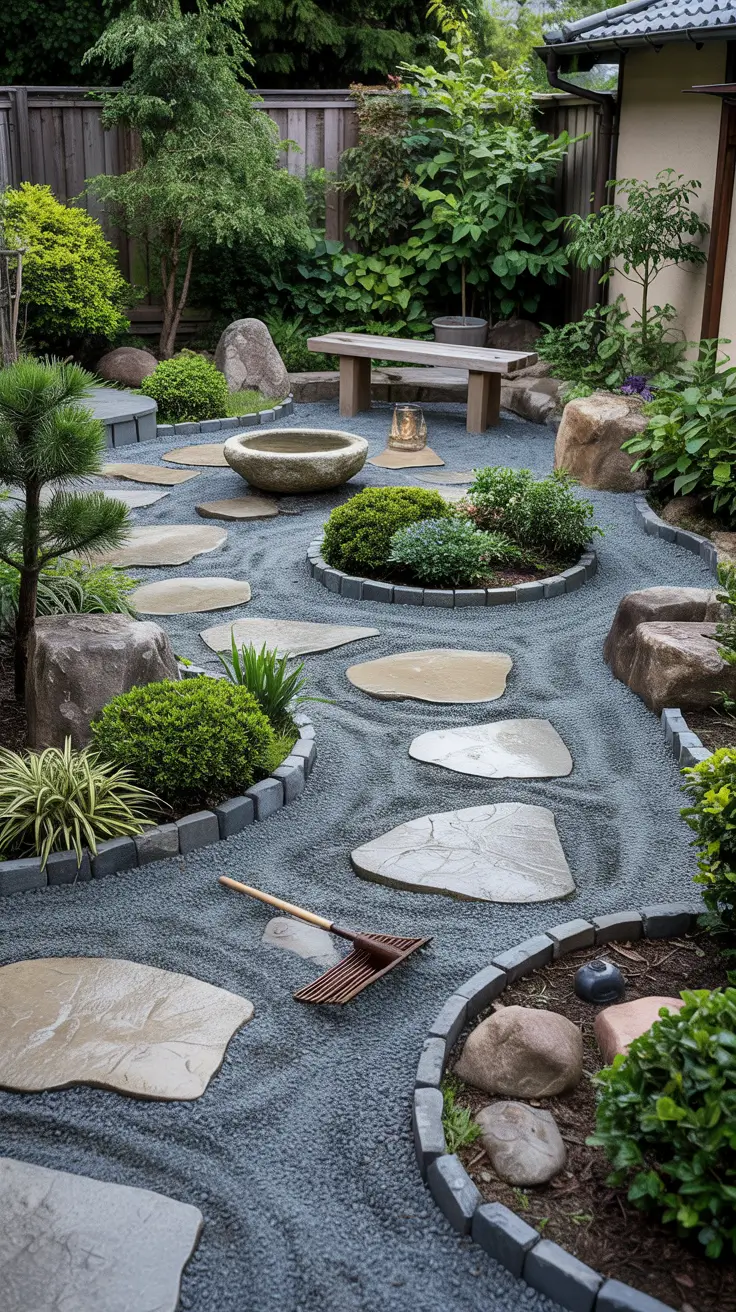
For the design, I would choose gravel in a soft gray, warm beige, or pale sand tone depending on the house exterior. Large flat stones should be spaced naturally, so walking feels comfortable and relaxed. I would add edging in metal, stone, or wood to keep the gravel neat and separate from planting beds. A small bench, stone lantern, or low water feature can be placed near the end of the path to create a destination. The most important detail is scale, because tiny stones in a large area can look weak, while oversized stones in a small garden can feel crowded.
I like this idea because it is practical for people who want a diy japanese garden plan without too much maintenance. Gravel does not need mowing, and stepping stones help protect planted areas from foot traffic. I would still avoid making the layout too straight or predictable unless the house has very strong modern architecture. A slight curve can make the garden feel more natural and inviting. In my experience, the best gravel gardens feel simple at first glance but reveal careful details as you walk through them.
What I would add to this section is a focal point at the end of the path. Without a focal point, the stepping stones may feel decorative rather than purposeful. A stone basin, small tree, miniature bridge, or sculptural rock can give the path a reason to exist. I would also add a rake pattern in the gravel if the garden is more decorative than high traffic. This detail brings a quiet japanese garden aesthetic and makes the gravel feel intentional rather than plain.
14. Japanese Garden Aesthetic With Quiet Corners And Layered Greenery
A japanese garden aesthetic often works best when it includes at least one quiet corner. I would design this area as a small retreat where the reader can sit, read, drink tea, or simply look at the garden. Layered greenery is important because it gives the corner privacy without making it feel closed in. Tall bamboo, soft shrubs, ferns, and a small tree can frame the seating area naturally. This idea is especially useful for a backyard that needs both beauty and a sense of emotional calm.
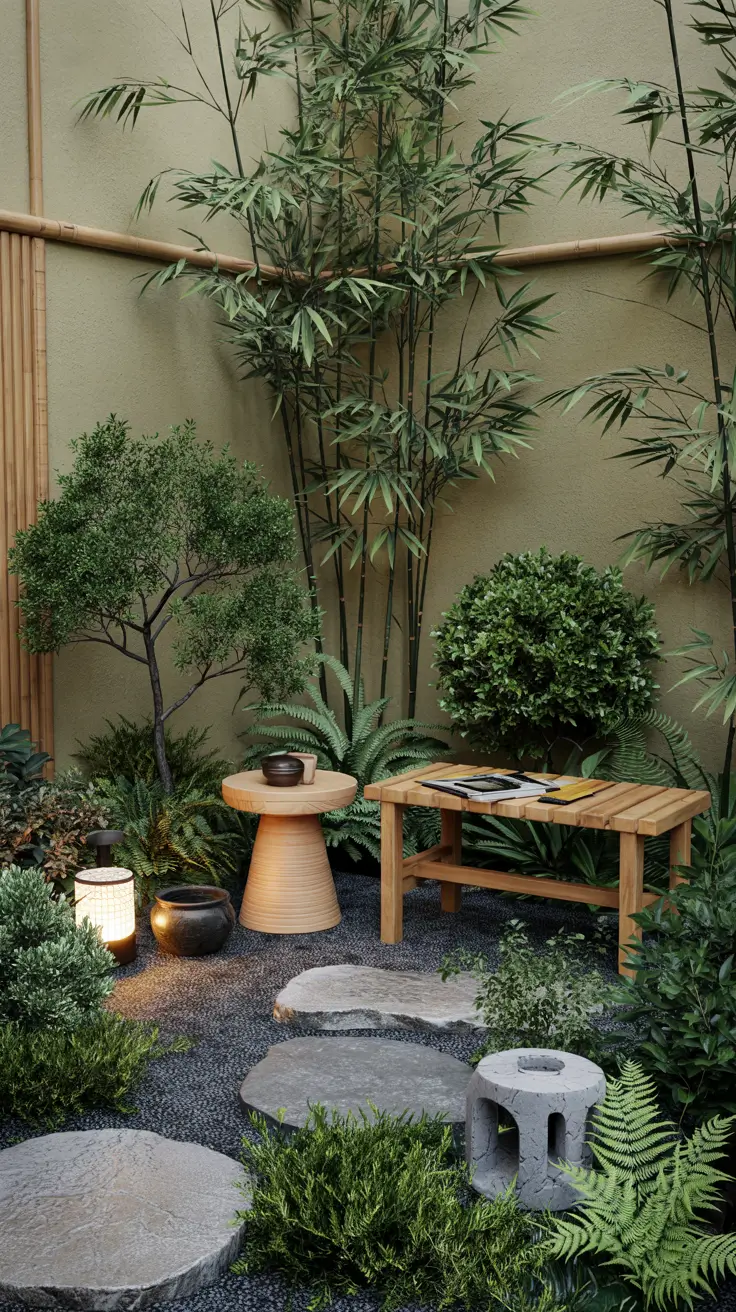
For furniture, I would choose a low wooden bench, a compact outdoor chair, or a simple stone seat. I would place it near a textured wall, fence, or hedge so the corner feels protected. A small side table can be included, but I would keep it modest and natural in shape. Japanese garden decor could include one lantern, one ceramic pot, or a narrow water bowl placed close to the greenery. I would avoid bright cushions or busy patterns because they can interrupt the soft, layered look.
I personally think quiet corners are what make japanese garden ideas feel livable rather than only decorative. A garden can look beautiful from a window, but it becomes more meaningful when there is a place to pause inside it. Many well-designed outdoor spaces use the idea of a framed view, and this works perfectly in japanese garden style. From the seat, I would make sure the viewer sees a pleasing composition of stone, plants, and open space. That view is just as important as the furniture itself.
What I would add here is a sense of enclosure that still feels breathable. A partial bamboo screen, a slatted wood panel, or a clipped hedge can make the corner feel private without blocking light. I would also add soft ground texture, such as gravel, moss-like ground cover, or flat stone paving. If the garden is near a house, I would connect the corner visually with the interior through similar wood tones or neutral colors. This helps the outdoor space feel like an extension of the home rather than a separate decoration.
15. Modern Japanese Garden Ideas For Contemporary Outdoor Living
Modern japanese garden ideas can support everyday outdoor living while still feeling calm and balanced. I would design this type of garden with a simple seating area, clear walking paths, layered plants, and controlled decorative accents. The layout should feel open enough for use but refined enough to keep the japanese garden style visible. This is a good option for a contemporary patio, townhouse yard, or compact suburban backyard. It creates a space where the garden is not only admired, but also used for quiet mornings, small meals, and relaxed evenings.
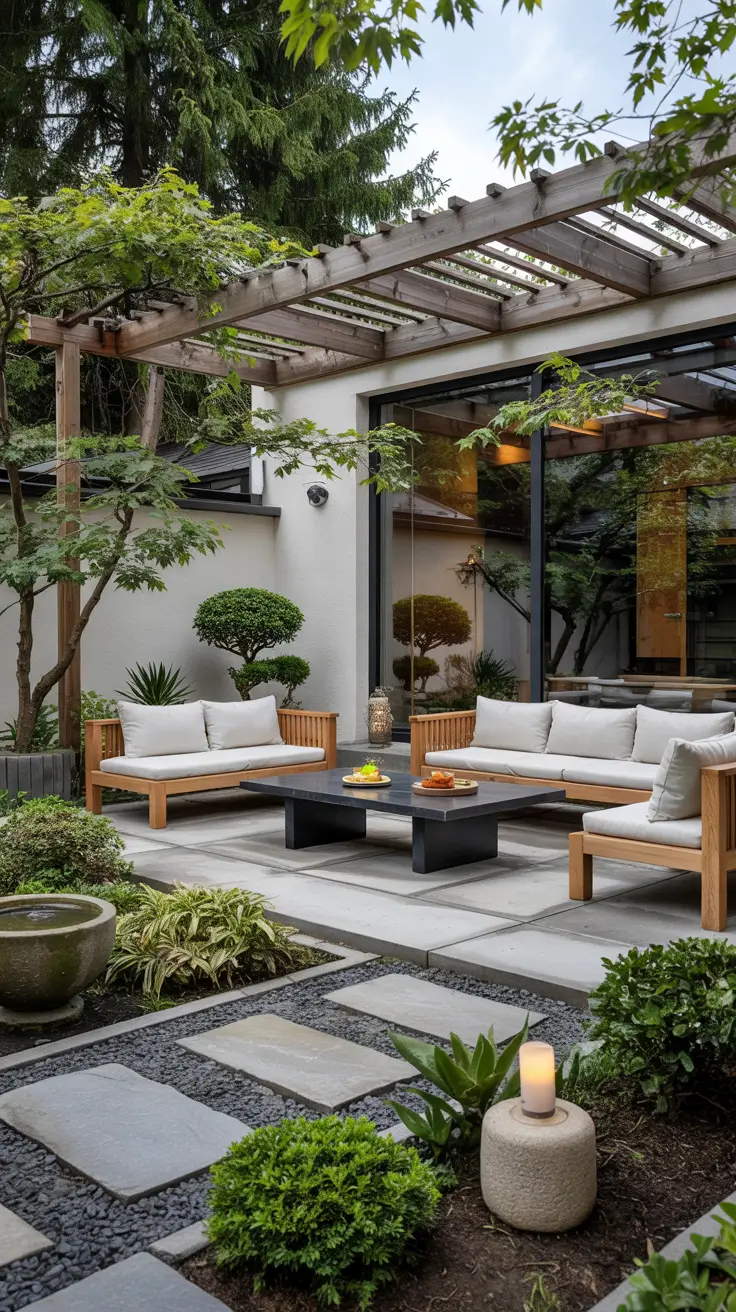
For furniture, I would choose low-profile outdoor seating, a simple breakfast table, and natural materials like teak, stone, ceramic, or woven textures. A pergola, slatted shade screen, or covered corner can make the area more comfortable during sunny hours. I would add planters with japanese garden plants, such as maple, pine, grasses, or compact shrubs, to soften the modern lines. A gravel border, stepping stone path, and one lantern can bring the design back to its japanese garden roots. The furniture should never dominate the garden, so I would keep the shapes clean and the colors calm.
I like this idea because it answers a common problem in modern homes: people want outdoor spaces that are peaceful but still practical. A garden that looks perfect but has nowhere to sit often feels incomplete to me. In contemporary design, function matters, but in japanese gardens, function should be quiet and respectful of the atmosphere. I would place the seating so it looks toward the best plant grouping or water feature. This turns an ordinary patio into a daily ritual space.
What I would add to complete the design is a balance between open surface and planted texture. If the patio has too much paving, it can feel cold, even with beautiful furniture. If it has too many plants, it may lose the clean modern structure. I would use planters, gravel strips, and low planting beds to soften the edges without cluttering the layout. This is the point where design modern and japanese garden decor can work together in a refined and useful way.
16. Backyard Japanese Garden With A Tea Corner And Stone Basin
I like this idea because a backyard japanese garden can turn an ordinary outdoor area into a quiet place for slow mornings, evening tea, and simple reflection. The design works best when the tea corner is placed slightly away from the main path, so it feels private without being hidden. I would use a compact gravel courtyard, a low wooden platform, and a stone basin as the main visual anchor. The stone basin gives the space a traditional feeling, while the surrounding plants soften the structure and make the garden feel alive. This type of japanese garden style is practical because it does not require a large lawn or many decorative objects. Instead, the calm atmosphere comes from proportion, texture, and the relationship between natural materials.
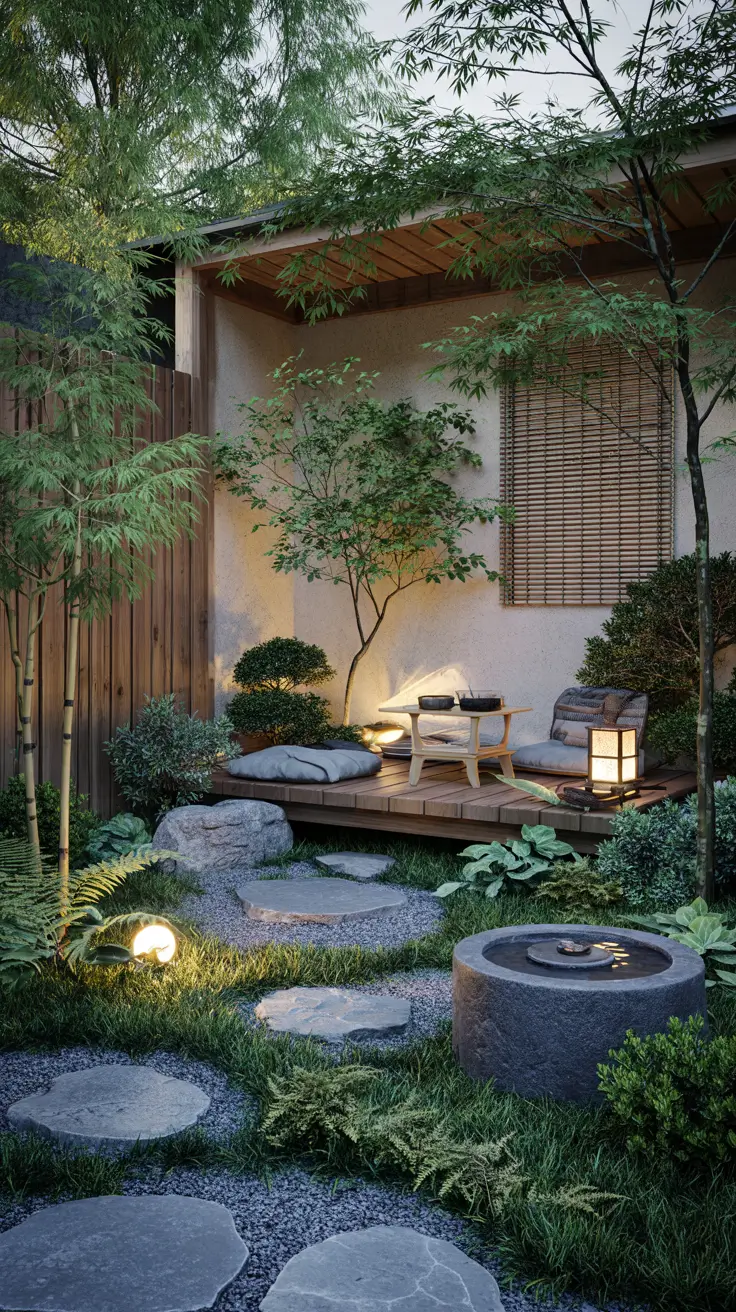
For the furniture and design details, I would include a low bench, two simple floor cushions, a small tea table, and a bamboo screen for gentle separation from the rest of the yard. A stone lantern would work well near the basin, but I would keep it modest so it does not overpower the tea corner. Smooth stepping stones can guide the eye toward the seating area and create a natural rhythm across the gravel. Around the edges, I would use japanese garden plants such as dwarf maple, moss, ferns, and clipped shrubs to frame the scene. A small water ladle beside the basin can make the design feel more authentic and thoughtful. I would also add a few larger rocks because they help the composition feel grounded rather than decorative.
In my opinion, the success of this idea depends on restraint, because a tea corner should feel quiet instead of styled too heavily. I often prefer using fewer objects with better placement, especially in japanese gardens design ideas where negative space is just as important as plants and decor. Designers often recommend repeating natural materials to make outdoor spaces feel cohesive, and I think that advice fits this garden perfectly. If I use stone for the basin, stepping path, and border details, the whole backyard feels more unified. I would avoid bright furniture, glossy finishes, and oversized outdoor accessories here. The best result is a garden that feels lived in, peaceful, and easy to return to every day.
What I would add to complete this section is a subtle lighting plan, because the tea corner should remain beautiful after sunset. I would place warm low lights behind rocks, near the basin, and along the path, keeping the fixtures hidden as much as possible. A small gravel rake pattern around the tea area can also give the space a finished look without adding clutter. If the backyard is exposed, I would add a simple wooden pergola or partial bamboo canopy to create shade. The missing detail in many backyard designs is sound, so even a tiny trickle of water can improve the atmosphere. With these additions, the space becomes more than decor – it becomes a small ritual area inside the garden.
17. Japanese Garden Design Layout For A Narrow Side Yard
A narrow side yard is one of my favorite places for japanese garden design layout because the limited width naturally encourages a simple, linear plan. Instead of trying to make the space look wider with too many features, I would treat it as a quiet passage garden. The main design should guide movement from one end to the other with stepping stones, gravel, and carefully spaced plants. A narrow side yard can become useful when it connects the front of the house to the backyard in a more beautiful way. I would use asymmetry to keep the path from feeling too rigid or hallway-like. This approach makes the area feel intentional, even if it is only a small space beside the house.
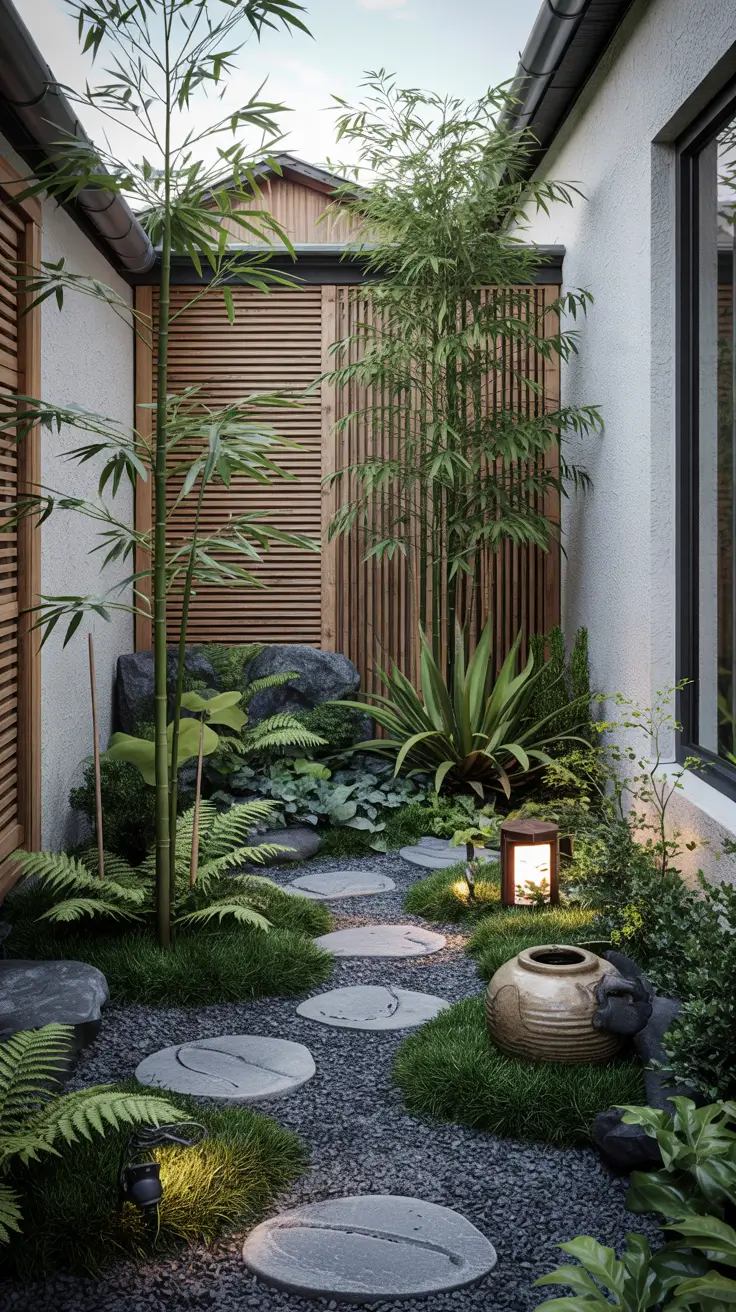
For the materials, I would include flat stepping stones, pale gravel, slim bamboo fencing, and shade-tolerant plants along the edges. Ferns, moss, mondo grass, dwarf bamboo, and small evergreens are practical choices because they can handle the enclosed feeling of a side yard. I would place one vertical feature, such as a narrow stone lantern or a tall ceramic water jar, near the middle or far end of the path. This gives the eye a destination and makes the design feel more complete. If the wall of the house feels plain, I would add a simple wooden trellis or horizontal slat screen to bring warmth. The furniture should be minimal here, but a small wall-mounted shelf or compact bench can work if the side yard has enough clearance.
I think the most important rule for this kind of design is to avoid filling every inch. A narrow japanese garden backyard path becomes more beautiful when the viewer has breathing room between stones, plants, and decor. I have noticed that small outdoor spaces often feel more expensive when the materials are repeated in a disciplined way. For example, using one gravel color, one stone style, and one wood tone creates a calm visual order. A japanese garden design modern approach can work especially well here because clean lines suit tight spaces. I would keep the palette soft, natural, and slightly muted so the side yard feels quiet rather than busy.
What I would add here is a clear drainage plan, because narrow side yards often collect water along the foundation. Gravel should not be only decorative – it should also support practical water movement. I would place landscape fabric and a proper gravel base under the visible surface layer to keep the path stable. If privacy is needed, I would add slim vertical screens instead of thick hedges that steal walking space. A small focal point at the end of the path is also essential, such as a stone basin, sculptural rock, or planted ceramic pot. These finishing details help the narrow area feel like a designed garden rather than a leftover strip of land.
18. Japanese Garden Landscape Plan With Trees, Rocks, And Water
A japanese garden landscape plan with trees, rocks, and water feels timeless because it combines the strongest natural elements in one balanced composition. I would begin by deciding where the main viewing point is, such as from a patio, window, or garden bench. From there, the trees should frame the view, the rocks should create structure, and the water should bring movement. This type of design works beautifully in a medium or large backyard, but it can also be scaled down for a smaller area. The key is not to add everything everywhere, but to create a clear relationship between each element. A good plan should feel calm from the first glance and more interesting the longer someone looks at it.
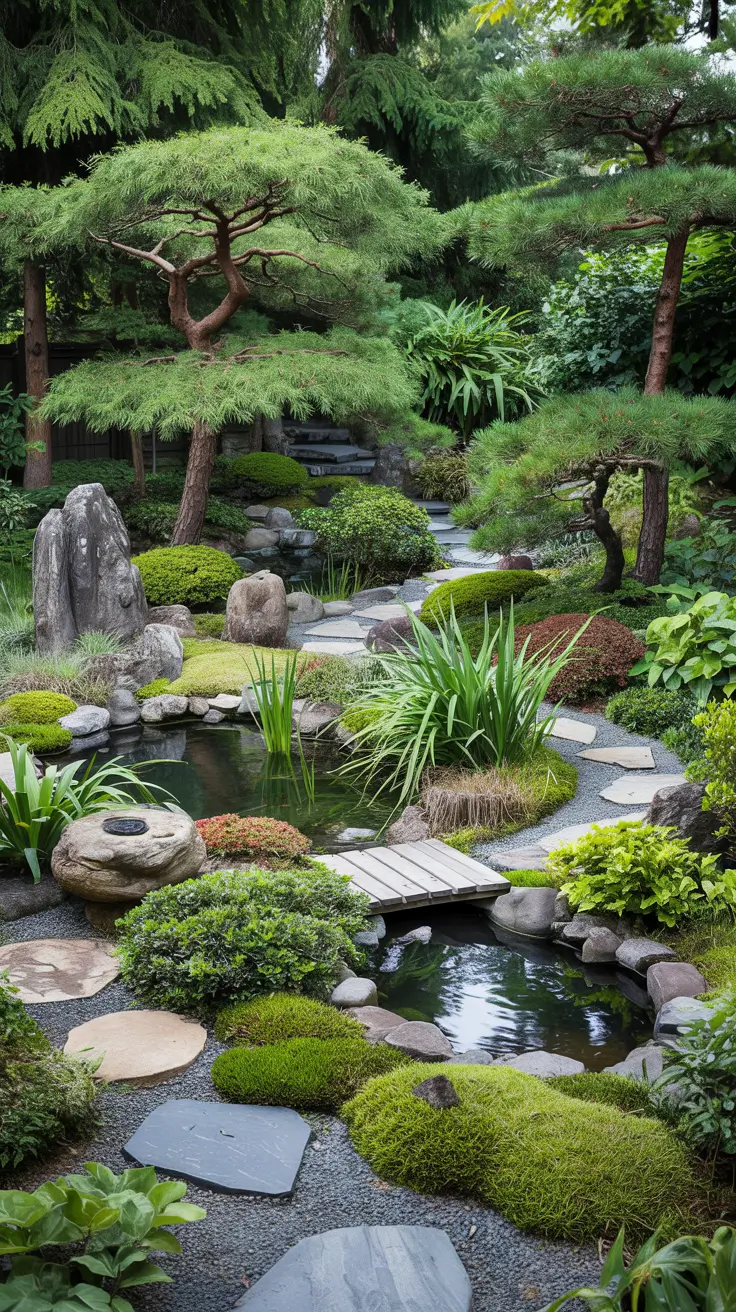
For the trees, I would choose a Japanese maple, pine, or flowering cherry depending on the climate and available light. Rocks should be placed in groups of three or five, with one larger stone acting as the main anchor. A small pond, stream, or reflective water bowl can introduce softness and help the garden feel more alive. Around the water, I would use moss, low grasses, iris, ferns, and carefully selected japanese garden plants to create layered texture. A simple wooden bridge or flat stone crossing can make the water feature feel connected to the rest of the design. I would avoid too many plant varieties because the design becomes stronger when the planting feels controlled and harmonious.
Personally, I think trees and rocks are the foundation of the most beautiful japanese garden ideas because they give the design age and permanence. Water is important, but it should support the composition rather than become a loud centerpiece. In many professional landscape projects, designers use large stones first and plant around them later, and I think that method creates a more natural result. If I start with plants only, the garden can feel soft but not structured. If I start with rocks and trees, the entire layout has a stronger sense of place. This is especially useful for homeowners who want a garden that still looks good in every season.
What I would add to this landscape plan is a maintenance path, even if it is hidden behind shrubs or gravel. Every water feature, tree, and planted edge needs access for cleaning, pruning, and seasonal care. I would also include a seating spot that faces the best view, because the garden should invite stillness rather than only be seen in passing. A lantern near the water can create a beautiful evening reflection, but it should be placed with care. If the space allows, I would add one dry gravel area to contrast with the water and make the design feel more layered. This balance between wet and dry, tall and low, open and planted, is what makes the landscape plan feel complete.
19. Diy Japanese Garden Ideas For A Budget Friendly Makeover
Diy japanese garden ideas can be very effective when the goal is a budget friendly makeover rather than a complete landscape rebuild. I would begin with the areas that create the strongest visual change, such as gravel paths, stone borders, simple planting beds, and one clear focal point. A small garden can look dramatically calmer when the lawn is reduced and replaced with gravel, mulch, or stepping stones. This approach supports japanese gardening because it encourages order, maintenance, and a closer connection to each plant and material. I would not try to copy a large temple garden in a small yard, because that can feel forced. Instead, I would create a simplified version that fits the house, climate, and daily routine.
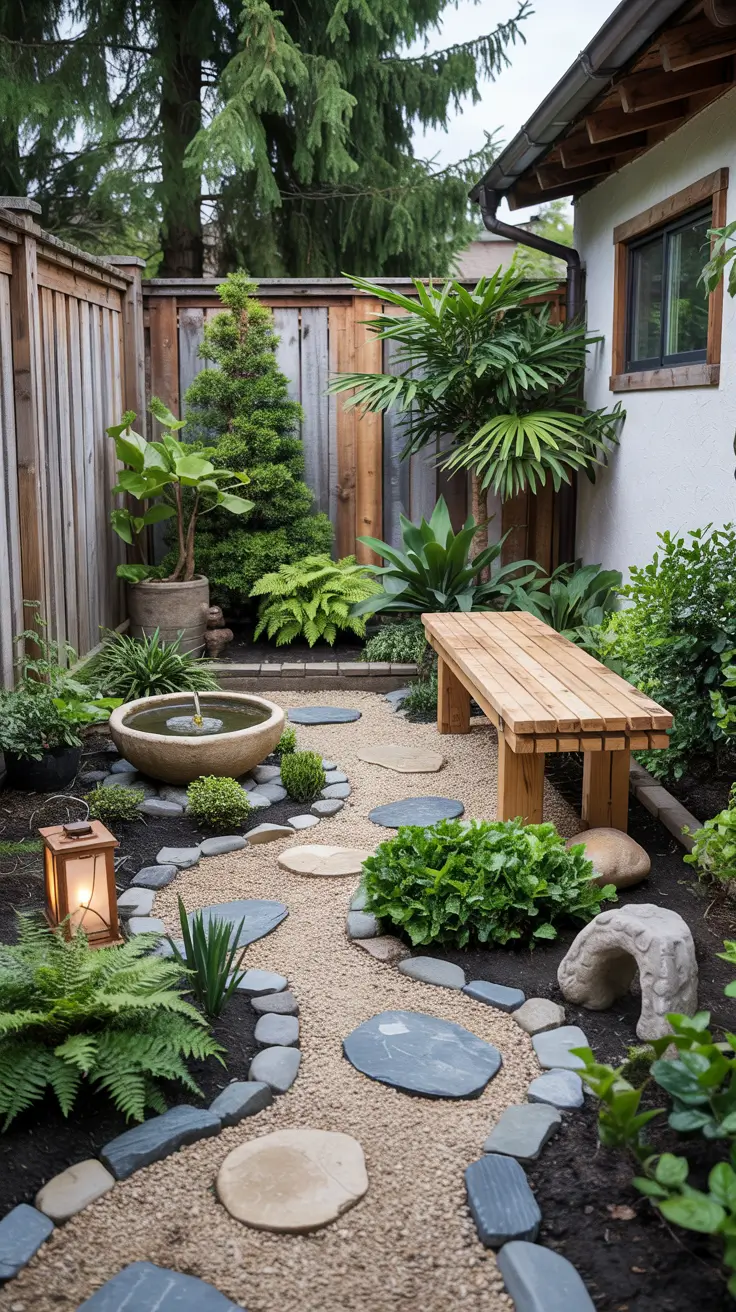
For the main pieces, I would use pea gravel, river stones, reclaimed wood, bamboo edging, ceramic pots, and affordable evergreen plants. A diy stone path can be made with irregular pavers or flat natural stones, as long as the spacing feels comfortable for walking. A budget friendly water feature can be as simple as a ceramic bowl with floating plants or a small recirculating fountain. For decor, I would choose one lantern, one bamboo screen, and one sculptural rock instead of buying many small accessories. If there is an old patio chair or bench, I would repaint or restain it in a natural wood or charcoal tone. The best diy designs usually look intentional because they edit down rather than add too much.
I believe a budget garden should still feel refined, and that is where planning becomes more important than spending. Before buying anything, I would make a simple drawing of the space and mark the path, focal point, plants, and seating zone. This small plan helps prevent random purchases that do not work together. Many home and garden publications often emphasize starting with structure before decoration, and I think that advice is especially useful for japanese gardens. If the gravel, path, and plant placement are strong, even inexpensive decor can look beautiful. I would focus on calm repetition, clean edges, and natural texture instead of trendy outdoor pieces.
What I would add to this diy makeover is a clear plant list that matches the local climate. It is easy to be inspired by japanese garden plants, but not every plant will survive every region. I would choose hardy alternatives when needed, such as native ferns, compact evergreens, ornamental grasses, or shade plants with similar texture. A simple edging system is also important because gravel and mulch can spread quickly without boundaries. If the budget is very limited, I would add one project at a time, starting with the path and focal point. This makes the makeover manageable and allows the garden to improve slowly without losing its calm design direction.
20. Japanese Garden House Entrance With A Calm First Impression
A japanese garden house entrance can create a calm first impression before anyone even steps inside. I would design this area as a transition between the street and the home, using natural materials to slow the pace visually. A small entry garden does not need to be large, but it should feel composed and welcoming. I would use a stone path, low planting, a simple lantern, and one strong focal element near the door. This works especially well for a modern house because the organic garden details soften straight architectural lines. The entrance becomes practical too, because it guides movement while making the front area feel more personal.
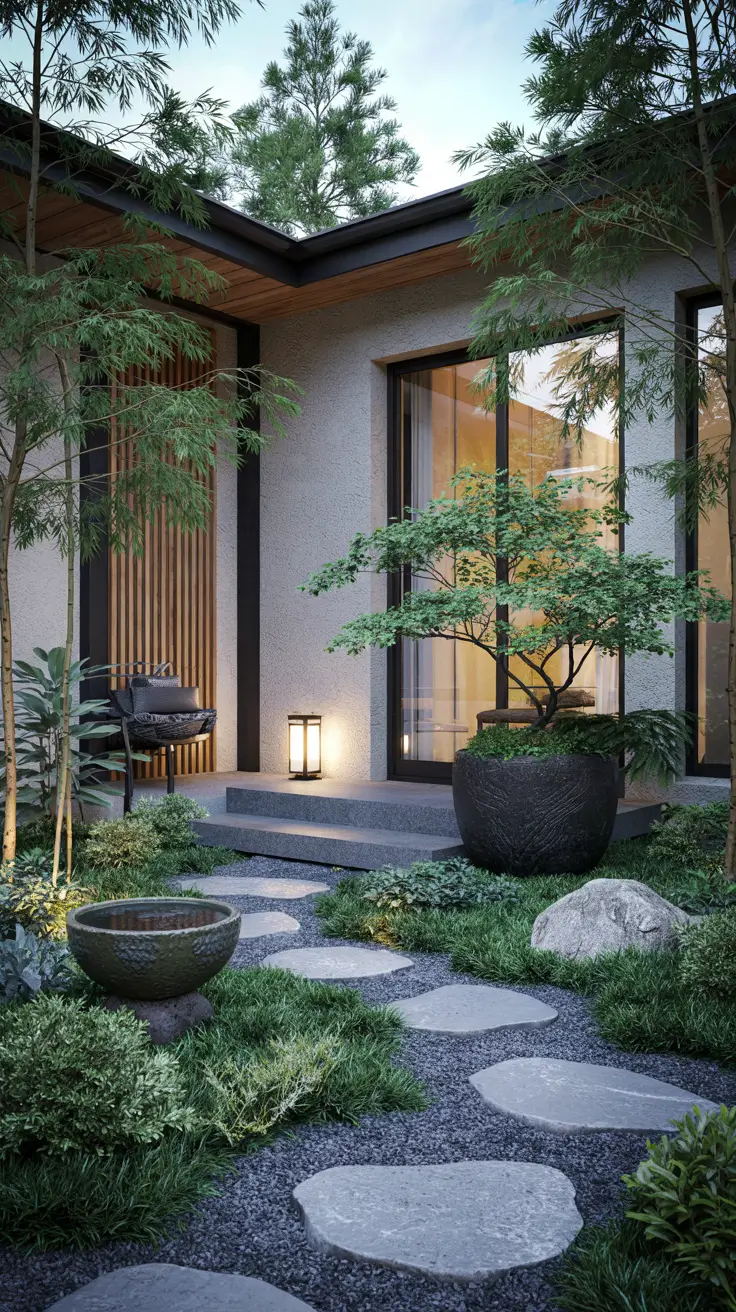
For the design details, I would include stepping stones or rectangular pavers set into gravel, with compact shrubs and moss-like groundcover along the edges. A stone basin or ceramic water bowl near the entry can create a quiet sense of arrival. If privacy is needed, I would use a bamboo screen or a wooden slat panel rather than a heavy fence. A small bench can be included near the door if the entry has enough space, especially for removing shoes or placing a bag. I would also add a Japanese maple or sculptural evergreen in a large planter to bring height and softness. The decor should feel subtle, with natural textures rather than bright colors or busy patterns.
In my opinion, the house entrance is one of the best places to use japanese garden decor because even small details can change the feeling of the whole home. I would avoid symmetrical planting that feels too formal, unless the architecture strongly calls for it. A slightly asymmetrical design often feels more natural and closer to traditional japanese garden style. I also like when the path is not perfectly straight, because a gentle curve creates a slower, more thoughtful approach. The entrance should not look like a display area, but like a peaceful threshold. That quiet feeling is what makes the design memorable.
What I would add here is lighting that supports safety without ruining the calm mood. Low path lights, a soft wall light, or a hidden fixture behind a rock can make the entrance usable at night. I would also add a practical place for seasonal planting, such as one large ceramic pot that can be updated without changing the whole design. If the entry gets strong sun, I would select plants that keep the same simple texture but tolerate heat better. If it is shaded, I would use ferns, moss alternatives, hostas, or compact evergreens. With the right plan, the entrance becomes a beautiful bridge between the house and the landscape.
21. Japanese Garden Decor Ideas For A Beautiful Outdoor Scene
When I plan japanese garden decor, I always start with the feeling the outdoor scene should create before choosing individual pieces. A beautiful japanese garden style usually depends on quiet balance, not on filling every empty corner with objects. I like to leave space around stones, plants, and paths because negative space makes the garden feel more intentional. For a practical japanese garden backyard, decor should also help guide movement, frame views, and create a calm place to pause. This kind of Design works especially well when the decor supports the Landscape instead of competing with it. I would use simple materials such as stone, gravel, wood, bamboo, and aged ceramic because they make the garden feel grounded.
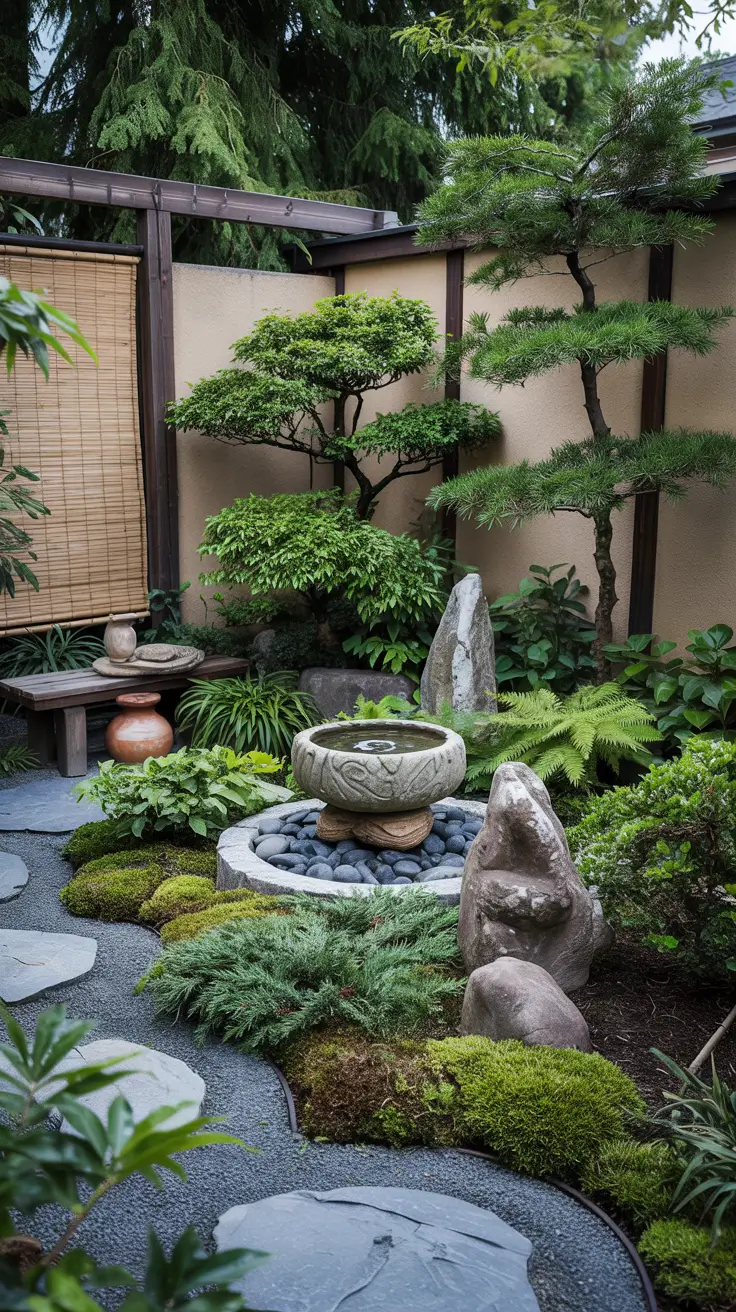
For this idea, I would include a low stone basin, a few sculptural rocks, a bamboo screen, and carefully placed japanese garden plants around the edges. A small bench or simple wooden stool can give the outdoor area a quiet resting point without making it feel like a regular patio. I also like adding lanterns, but only one or two, because too many can make the Decor feel staged. Moss-style ground cover, compact evergreens, ornamental grasses, and a small maple can create layers that look natural through different seasons. If the space is close to the House, I would keep the color palette soft so the garden connects gently with the exterior. The best japanese gardens design ideas are often the ones where every detail feels useful, calm, and visually connected.
I personally prefer decor that looks as if it has always belonged in the garden, rather than pieces that feel newly placed for decoration alone. In my experience, a japanese garden becomes more Beautiful when textures are repeated in small ways, such as stone near the path, stone near the basin, and stone near a planted border. I would avoid bright ornaments, glossy finishes, or oversized statues because they can weaken the Aesthetic. A good rule I follow is to choose one main decorative focus and let everything else support it quietly. For a small Backyard, that focus might be a stone basin or a single lantern. For a larger garden, it might be a framed view with layered Plants, gravel, and a curved path.
22. Japanese Garden Drawing Ideas For Planning Paths And Planting
Before building or changing a japanese garden design layout, I like to create a simple Drawing that shows the main paths, planting zones, sitting areas, and focal points. This step helps me understand how the garden will be used, not only how it will look in photos. A good drawing does not need to be artistic, but it should clearly show where people walk, where they stop, and what they see from each point. For japanese garden ideas, I find it helpful to sketch curved paths because they make a small space feel deeper and more peaceful. A clear Plan also prevents the garden from becoming crowded with too many features. This is especially important for Diy projects, where every mistake can affect the budget and the final Landscape.
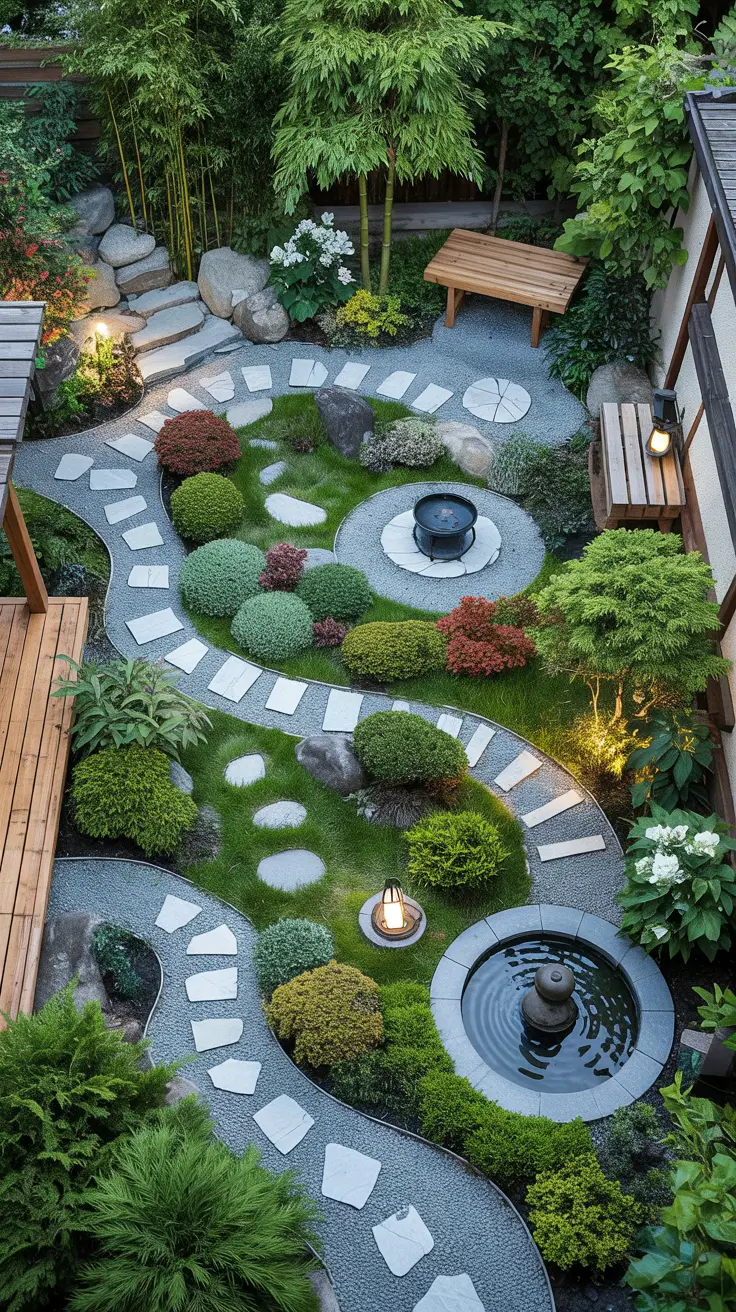
In the drawing, I would mark the house wall, patio edge, existing trees, sunlight direction, drainage, and any areas that need screening. Then I would add the main path using gravel, stepping stones, or flat natural stone pieces. Around that path, I would place japanese garden plants in layered groups, with taller plants at the back and lower plants closer to the walkway. I would also include zones for a bench, lantern, water feature, or Miniature dry garden if the space is small. The Design layout should show open gravel or moss areas because empty areas are part of the composition. Without these quiet zones, even a well-planted garden can feel too busy.
I like using a drawing because it forces me to make decisions before buying plants or decor. It also helps me see whether the garden has enough rhythm, which means the eye moves naturally from one feature to the next. For example, a path might lead first to a lantern, then to a maple, then to a small seating area. I would not place every feature directly in the center because japanese gardens often feel more natural when focal points are slightly off-center. This simple planning method also works for Indoor garden corners, balcony gardens, and narrow side yards. What I would add to this section is a small material list beside the drawing, so the plan becomes easier to follow in real life.
23. Japanese Garden Design Modern For A Minimal Patio
A japanese garden design modern approach is ideal for a minimal patio because it keeps the space clean, calm, and easy to use. I would focus on straight or gently curved lines, simple furniture, and a limited number of plants. Modern japanese garden ideas often work well in compact patios because they use restraint instead of excess. A minimal patio can still feel warm if the materials are chosen carefully, such as smooth concrete, pale gravel, dark wood, and soft green planting. I like this Design modern direction for a House with contemporary architecture because the garden can feel connected to the building. The goal is not to copy traditional japanese gardens exactly, but to adapt the mood in a practical way.
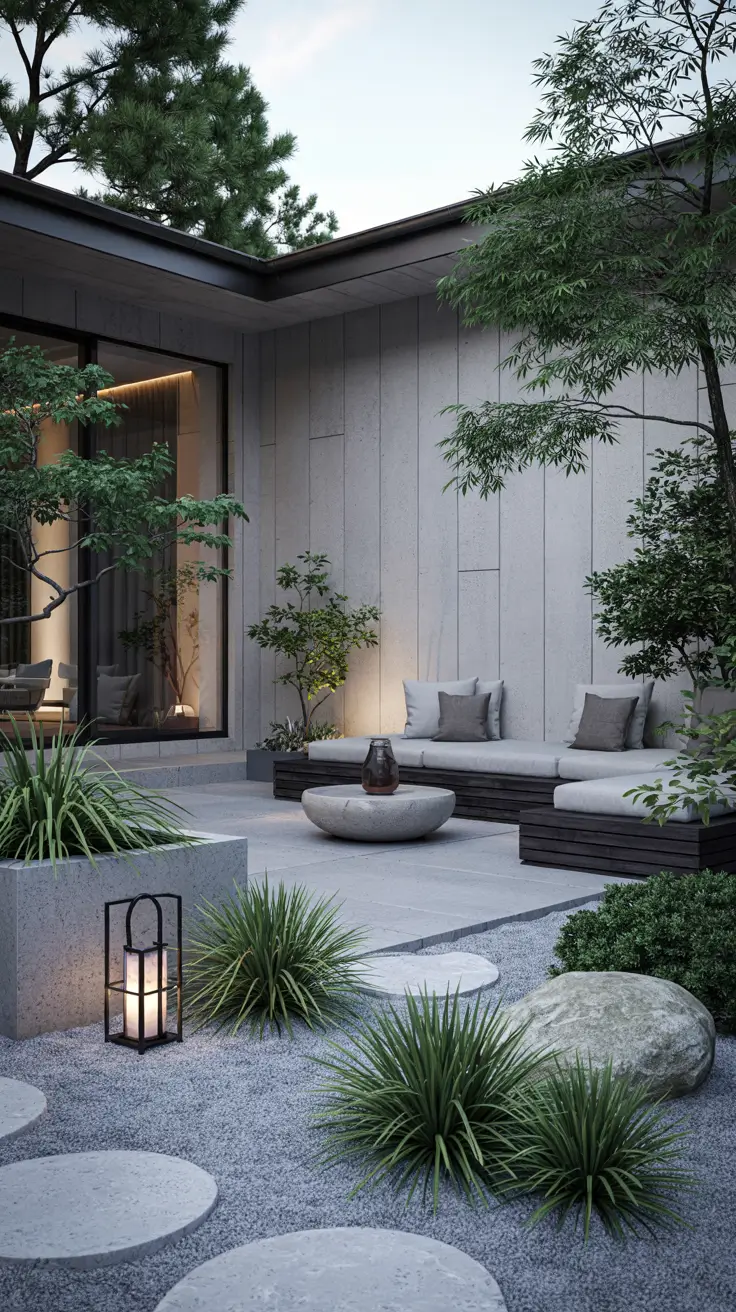
For furniture, I would choose a low outdoor bench, a slim table, or built-in wood seating with clean edges. Large planters can hold japanese garden plants such as dwarf pine, Japanese maple, ferns, or ornamental grasses. I would use gravel as a calm surface and add stepping stones to create movement without cluttering the patio. A single lantern, a low water bowl, or a simple ceramic vessel can become the main Decor feature. If the patio is small, I would avoid too many plant varieties and repeat only a few textures. This makes the Aesthetic feel modern while still keeping the quiet spirit of japanese gardening.
I personally think a modern japanese patio works best when it feels useful every day, not only decorative. I would make sure there is enough space to sit with tea, read, or enjoy breakfast outside. The planting should frame the seating area rather than cover it, because a patio still needs to function as a living space. I also like using warm lighting under benches or near planters to make the garden softer at night. What is often missing in minimal designs is comfort, so I would add weather-resistant cushions in muted colors. This keeps the garden practical while protecting the peaceful japanese garden style.
24. Japanese Garden Plan With A Pond, Bridge, And Seating Area
A japanese garden Plan with a pond, bridge, and seating area creates a more complete outdoor scene because it combines movement, reflection, and rest. I would use this idea for a larger japanese garden backyard where there is enough room for the water feature to breathe. The pond should not feel oversized, but it should be large enough to reflect plants, stones, and the sky. A small bridge adds charm and helps guide the viewer through the Landscape. The seating area gives the garden a practical purpose, making it a place to spend time rather than only look at. This type of Design layout needs careful planning because water, paths, and furniture must work together.
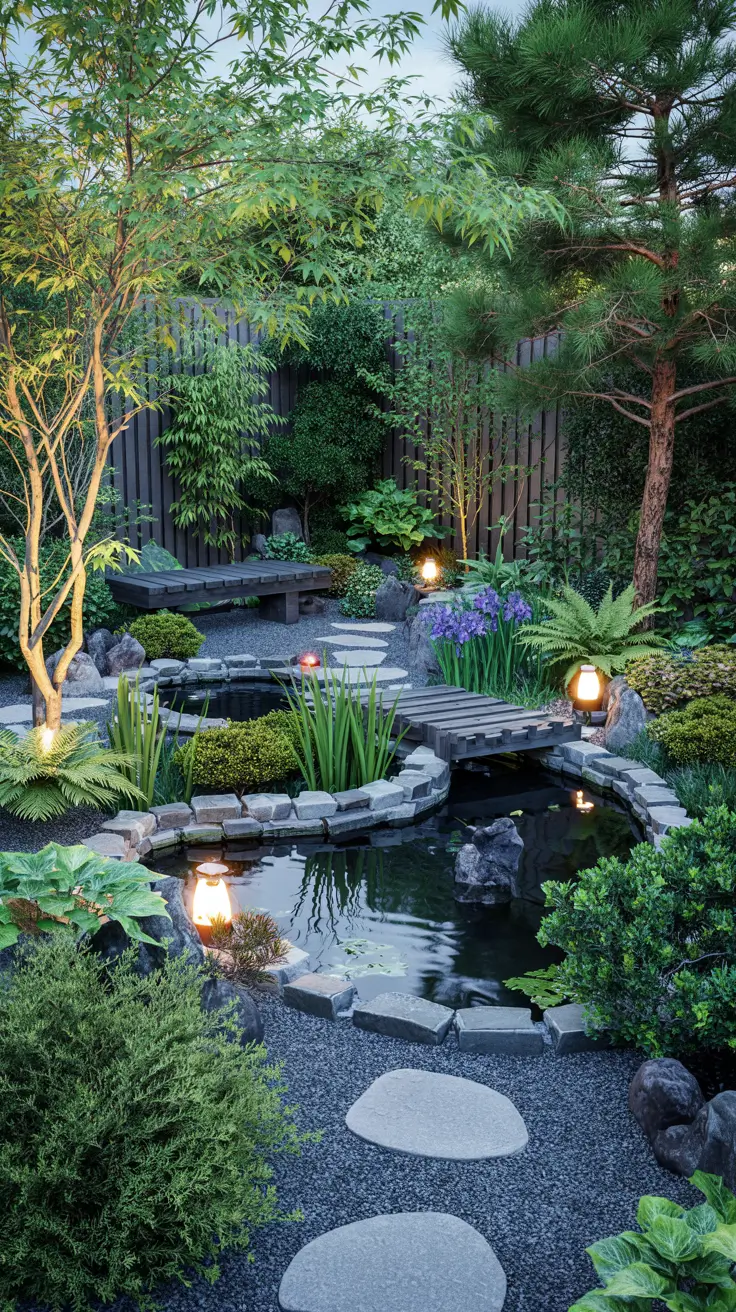
For the pond, I would include natural stones around the edge, aquatic plants, and nearby shrubs to soften the border. The bridge could be a simple curved wooden bridge or a flat stone crossing, depending on the style of the house. I would place a bench or small seating platform where the best view of the water is visible. Around the seating area, japanese garden plants such as maple, iris, fern, hosta, and dwarf pine can create depth. Lanterns near the pond can add evening atmosphere, but I would keep them low and subtle. The bridge, pond, and seating should form one calm scene rather than three separate features.
I like this idea because water naturally slows down the mood of a garden. In my experience, even a small pond can make a Backyard feel more peaceful if it is placed where people can see and hear it. I would avoid adding too many decorative pieces around the water because reflection is already a strong visual element. The bridge should feel safe and simple, especially if the garden is used often. What I would add to this section is a clear maintenance plan for the pond, including filtration, leaf removal, and plant control. A beautiful pond garden should feel serene, but it also needs practical care to stay fresh.
25. Japanese Garden Lanterns For A Warm Evening Atmosphere
Japanese garden lanterns can completely change the mood of an outdoor space in the evening. I like using them to create a warm atmosphere along paths, near seating areas, or beside water features. In japanese garden design, lanterns are not only decorative objects, because they can also guide movement and highlight important views. A lantern placed near gravel, moss, or a stone path makes the garden feel calm after sunset. For a modern garden, I would choose simple lantern shapes with soft lighting instead of bright, harsh bulbs. This creates a Beautiful evening scene without making the space feel artificial.
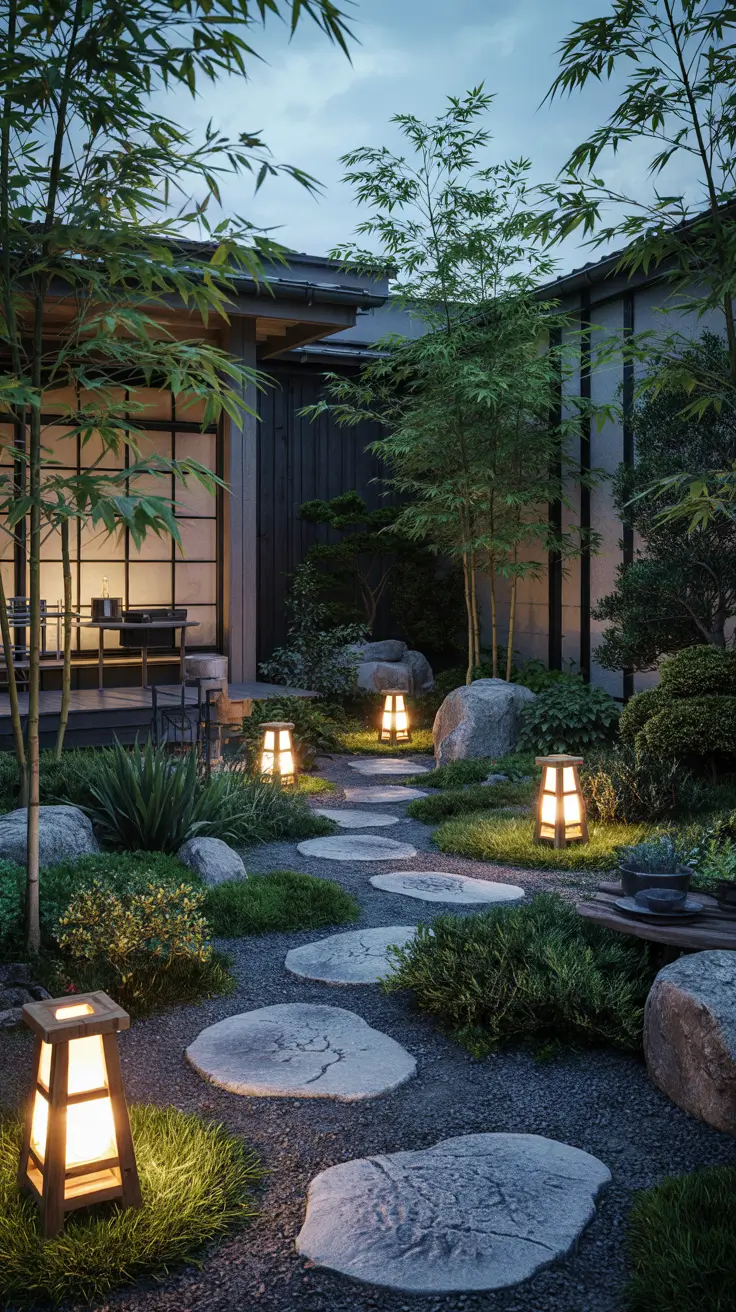
For this idea, I would include one main stone lantern, low path lighting, and maybe a small wooden or metal lantern near the seating area. The furniture should stay simple, such as a low bench, compact outdoor chairs, or a wooden platform with cushions. Around the lanterns, I would use japanese garden plants with interesting silhouettes, such as bamboo, maple, pine, ferns, or ornamental grasses. Gravel, stepping stones, and dark mulch can help the light stand out without extra decoration. If the garden is near the House, I would make sure the lanterns match the exterior lighting temperature. This keeps the whole scene cohesive and avoids a disconnected look.
I personally think lanterns are one of the easiest japanese garden decor details to add, but they need restraint. One well-placed lantern can feel elegant, while several random lanterns can make the garden look crowded. I would use lighting to reveal texture, not to flood the entire garden. A soft glow on stone, leaves, and water creates a much stronger Aesthetic than bright lighting everywhere. What is often missing from lantern designs is a clear nighttime path, so I would add subtle safety lighting near steps or uneven surfaces. This makes the garden both beautiful and practical for evening use.
26. Beautiful Japanese Garden Ideas With Seasonal Color
Seasonal color is one of my favorite ways to make a japanese garden design feel alive throughout the year. I like this idea because it respects the calm structure of traditional japanese gardens while still giving the space a gentle change from season to season. A small backyard can feel more thoughtful when spring blossoms, summer greenery, autumn foliage, and winter evergreens each have a role in the plan. This approach works especially well when the garden has a simple path, a seating point, and layered planting instead of too many decorative objects. For 2026, I see this as one of the most practical japanese garden ideas because it creates beauty without relying on constant updates.
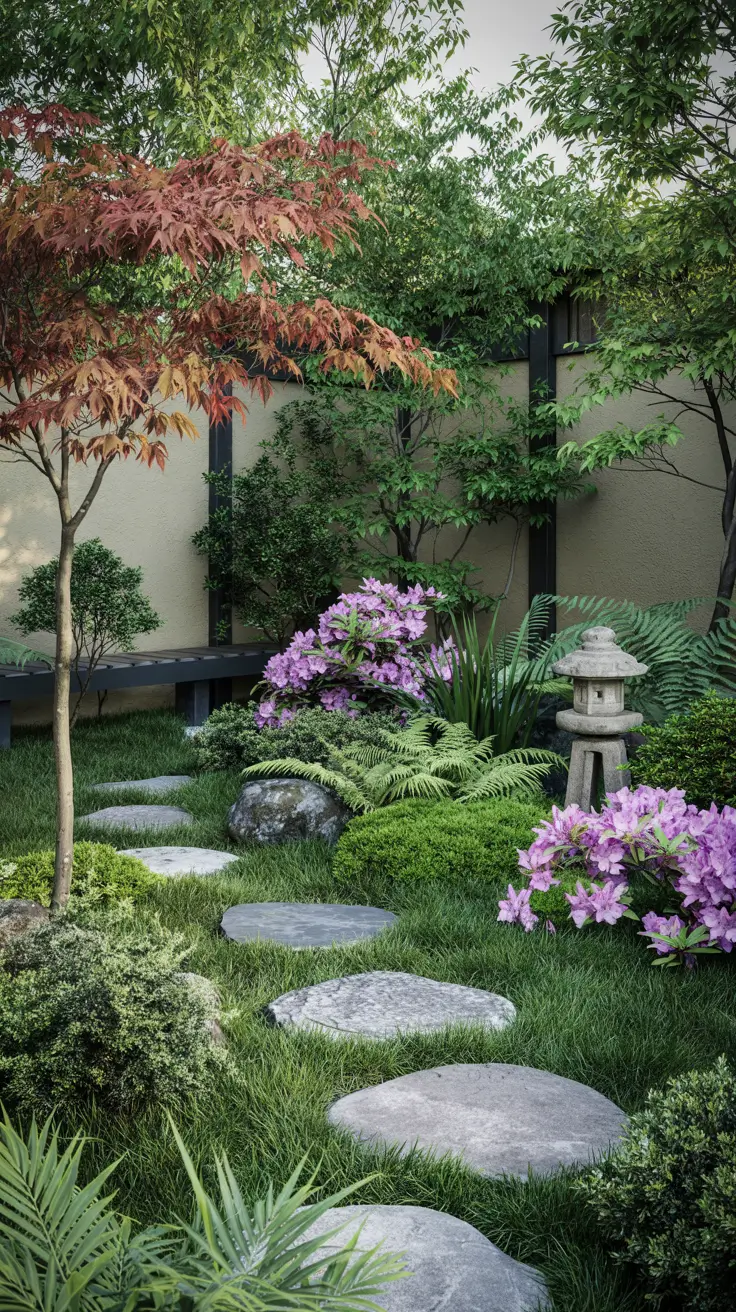
For this design, I would include japanese maple, moss, ornamental grasses, azaleas, ferns, and low evergreen shrubs. Each plant should have a clear purpose, so the maple becomes the sculptural focal point, moss softens the ground, and grasses add movement near stones or gravel. A stone lantern can be placed near the path, but I would keep it slightly off-center so the garden feels natural rather than staged. A simple wooden bench or low platform seat can make the design more useful, especially if the backyard is meant for quiet morning coffee or evening rest. I would also add stepping stones because they guide the eye and make the japanese garden landscape feel intentional.
In my opinion, seasonal color works best when it is controlled and not too bright. I prefer soft pink blooms, deep red leaves, pale green moss, and warm golden grasses because they support the peaceful Aesthetic of the space. Many landscape designers often recommend building gardens around structure first, then adding color as a layer, and I think that advice is especially useful here. If the garden has too many colorful plants, it can lose the quiet rhythm that makes japanese gardening so special. I would rather see a few Beautiful changes through the year than a crowded planting plan that feels difficult to maintain.
What I would add to complete this section is a clear Design layout before planting begins. The homeowner should decide where the main viewpoint will be, because japanese garden style often depends on what the eye sees first. I would place the strongest plant form near that viewpoint, then use smaller Plants to create depth around it. A shallow gravel area or simple stone border can help separate the planting beds from walking space. This makes the garden easier to care for and gives every seasonal detail enough room to stand out.
27. Japanese Garden Portland Inspiration With Mossy Woodland Charm
Portland inspiration fits naturally with japanese garden ideas because the climate often supports moss, ferns, maples, and layered woodland planting. I like this style for a shaded Backyard because it feels soft, mature, and deeply connected to the surrounding environment. Instead of forcing a bright and polished look, I would use the natural moisture and shade to create a calm woodland atmosphere. This kind of japanese garden landscape works well beside a House, along a side yard, or in a small courtyard where tall trees already create filtered light. The result can feel peaceful and established, even if the garden is newly designed.
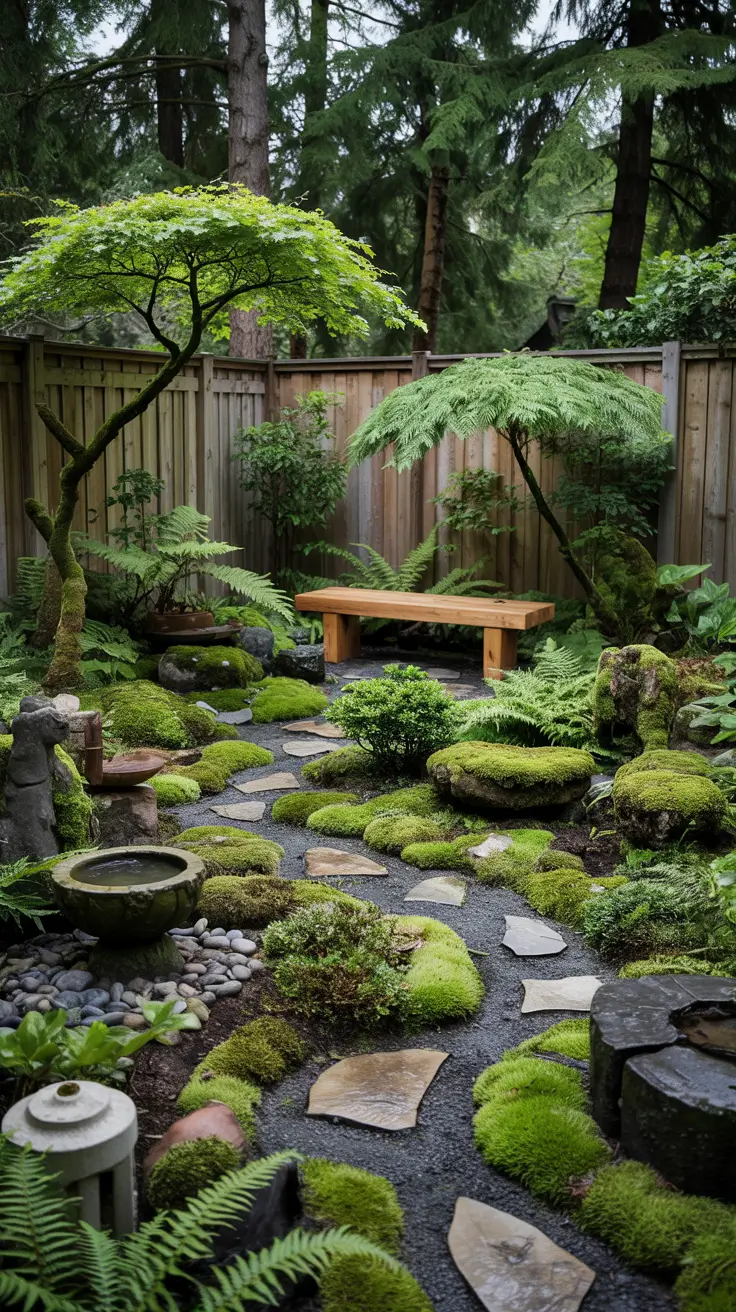
For the main elements, I would include moss-covered stones, a curved gravel path, fern clusters, japanese maple, bamboo accents, and a simple water basin. Each detail should feel quiet, because the charm of a Portland-inspired garden is its natural softness. I would choose weathered stone instead of glossy Decor, since aged materials look more believable in a mossy setting. A cedar bench, a small tea table, or a low wooden deck could give the space a practical place to pause without interrupting the woodland mood. If space allows, I would also add Lanterns near the path, but I would keep them simple and muted.
I personally think this is one of the most Beautiful options for anyone who wants a japanese garden backyard that feels private and soothing. Moss creates a sense of age and calm that is hard to achieve with ordinary lawn or mulch. I also like how this idea can be adapted for Modern homes by keeping the path clean, the plant palette restrained, and the furniture minimal. The best advice I would follow here is to work with the site instead of fighting it, especially if the area is shaded or damp. In my experience, a garden looks more expensive and thoughtful when the Design respects the existing conditions.
What this section needs most is a careful Plan for moisture and foot traffic. Moss can look stunning, but it should not be placed where people walk constantly, because it can wear down quickly. I would keep moss in protected zones around stones and trees, then use gravel or stepping stones for movement. Drainage should also be considered, because even a mossy garden needs balance and should not become muddy. With the right Design ideas, this Portland-inspired japanese garden style can feel natural, practical, and timeless.
28. Indoor Japanese Garden Ideas For A Serene Home Corner
An Indoor japanese garden can bring calm into a home without requiring a large outdoor space. I like this idea for apartments, small houses, reading corners, and sunrooms because it creates a peaceful visual pause in everyday life. The key is to keep the Design modern and minimal, using natural materials instead of cluttered decoration. A small corner near a window can become a quiet japanese garden style feature with stones, Plants, a water bowl, and soft lighting. This approach is especially useful for people who love japanese gardens but do not have a full Backyard to transform.
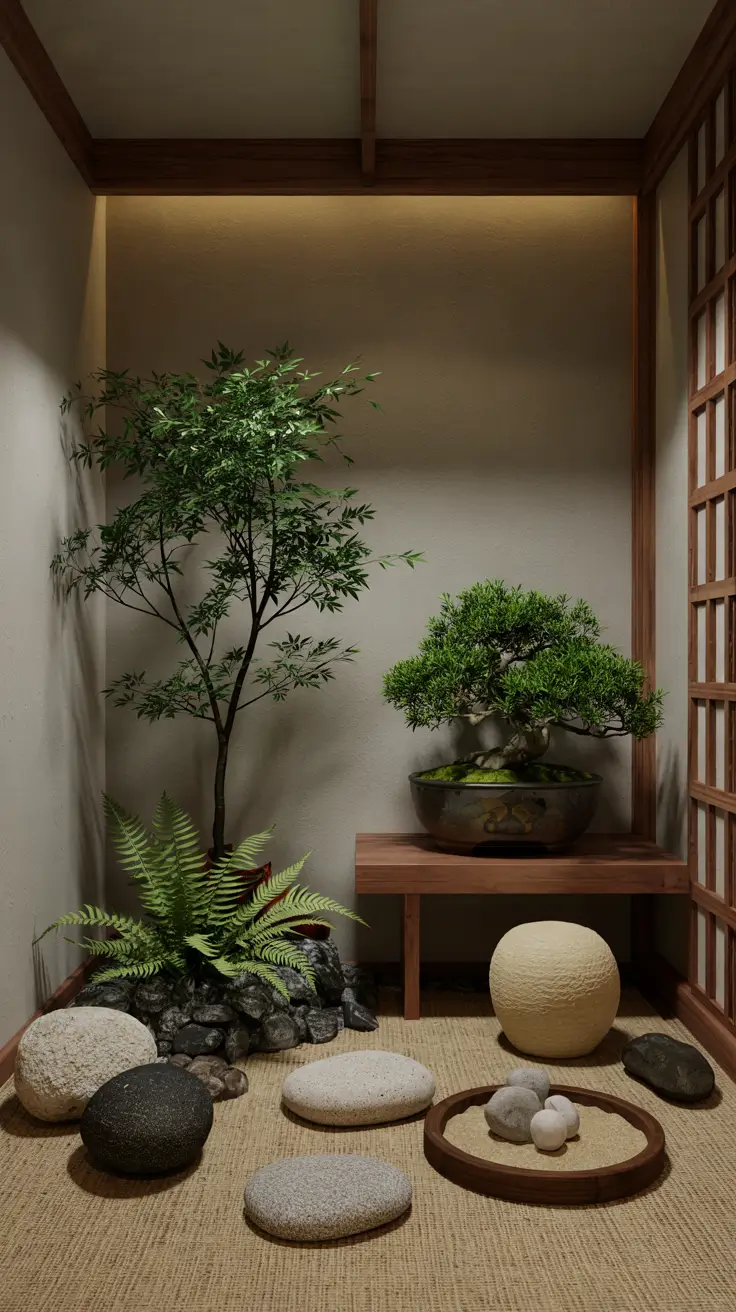
For the furniture and decor, I would include a low wooden bench, a ceramic planter, smooth river stones, a small sand tray, and a sculptural indoor plant such as bonsai, bamboo, fern, or dwarf ficus. Every item should be chosen for proportion, because a small Indoor garden can quickly feel crowded if the pieces are too large. A woven floor cushion can make the corner more inviting, while a narrow wood shelf can hold a lantern, small vase, or Miniature garden element. I would use neutral pottery and warm wood tones to keep the space calm and connected to the rest of the House. If the room is Modern, a clean black or stone-gray planter can make the garden feel more architectural.
In my opinion, indoor japanese gardening is less about copying an outdoor garden and more about capturing the feeling of stillness. I would not add too many decorative objects, because the space should feel intentional rather than themed. A single beautiful branch, a small bonsai, or a carefully placed stone can have more impact than several accessories. I also think soft indirect lighting is important, because it makes the garden feel restful in the evening. This idea works best when the corner becomes part of a daily routine, like reading, journaling, or simply slowing down.
What I would add to improve this idea is a simple Drawing before arranging the items. Even a basic sketch helps decide the balance between plant height, floor space, and decorative features. I would place the tallest plant in the back, keep the stones low, and leave open space around the main feature. A small tray of raked sand can be included, but it should look refined and not playful unless the goal is a Miniature display. With the right Design layout, an Indoor japanese garden can feel elegant, useful, and easy to maintain.
29. Japanese Garden Wedding Setting With Elegant Natural Details
A japanese garden Wedding setting can feel graceful, intimate, and deeply connected to nature. I like this idea because it avoids overly heavy decoration and lets the Landscape become the main atmosphere. A garden path, water feature, maple tree, stone lantern, or wooden bridge can create a natural ceremony backdrop without needing dramatic additions. This type of design works well for small weddings, vow renewals, or quiet outdoor celebrations at home. It feels especially relevant for 2026 because many people are looking for more personal and peaceful event settings.
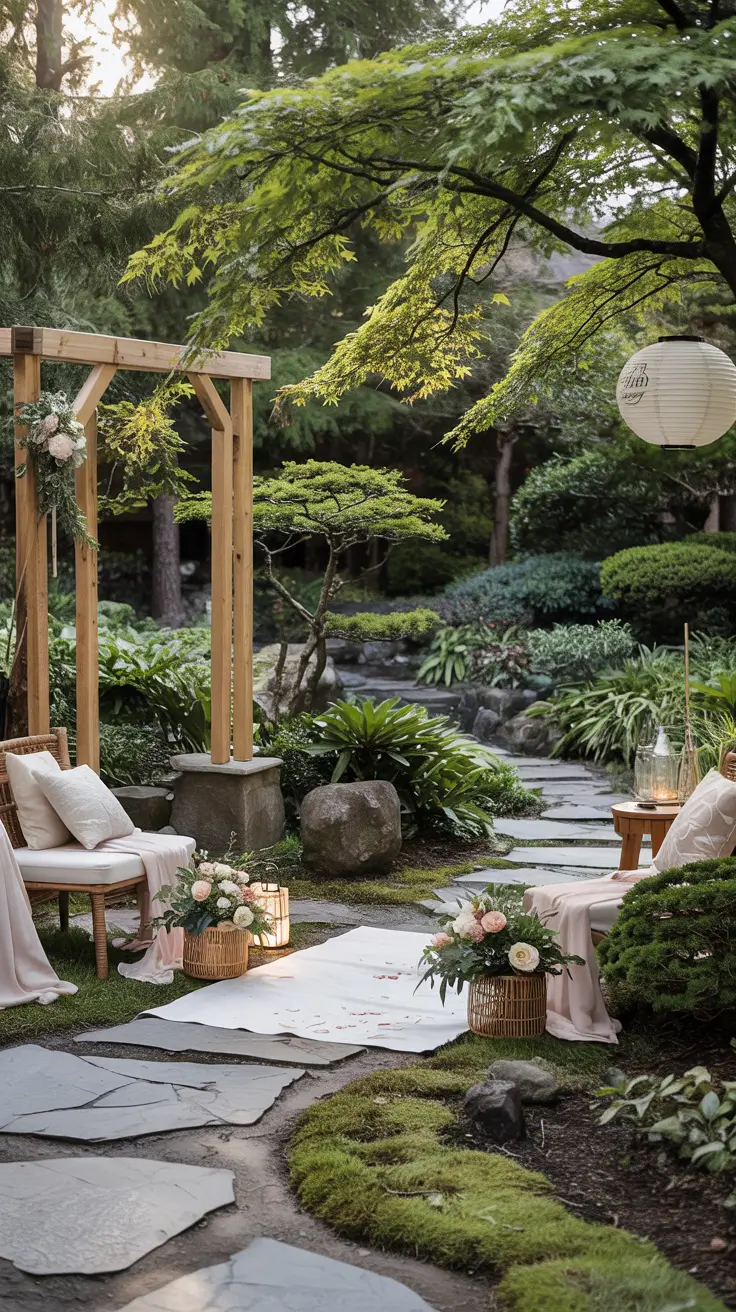
For the design details, I would include a simple wooden arch, low floral arrangements, stone pathways, paper lanterns, moss accents, and soft neutral seating. Each item should support the garden rather than compete with it, so I would avoid overly bright colors or large artificial decor. A low table for tea, small ikebana-style arrangements, and linen cushions could make the space feel refined while staying natural. If the garden has water, I would place the ceremony area nearby but not directly in front of it, so guests can enjoy the view without blocking the composition. For evening, warm Lanterns along the path would create a beautiful glow and guide movement safely.
I personally think a japanese garden Wedding setting is most successful when it feels quiet and intentional. The Decor should look like it belongs to the garden, not like it was added only for one day. I would choose white, ivory, soft blush, sage green, and warm wood tones because they blend well with japanese garden plants and stone textures. Many event designers emphasize the importance of using the venue’s natural features, and I agree with that completely for this style. When the natural setting is strong, fewer details are needed to make the moment feel memorable.
What I would add here is a practical Plan for guest flow. A Wedding garden must be beautiful, but it also has to work for walking, seating, photos, and quiet conversation. I would create a clear path from the entrance to the ceremony point, then place seating so guests can see both the couple and the garden background. A shaded rest area with a bench or small table would make the space more comfortable. With thoughtful Design ideas, this setting can feel elegant without losing the calm spirit of japanese gardens.
30. Miniature Japanese Garden Ideas For Tabletops And Balconies
A Miniature japanese garden is a smart choice when space is limited but the desire for calm design is strong. I like this idea for balconies, tabletops, small patios, and apartment corners because it creates a complete garden feeling in a compact form. The design can include gravel, stones, moss, a tiny bridge, a small lantern, and one carefully chosen plant. This is one of the most flexible japanese garden ideas because it can be moved, refreshed, or redesigned without major work. It is also a good Diy option for anyone who wants to start japanese gardening in a simple and affordable way.
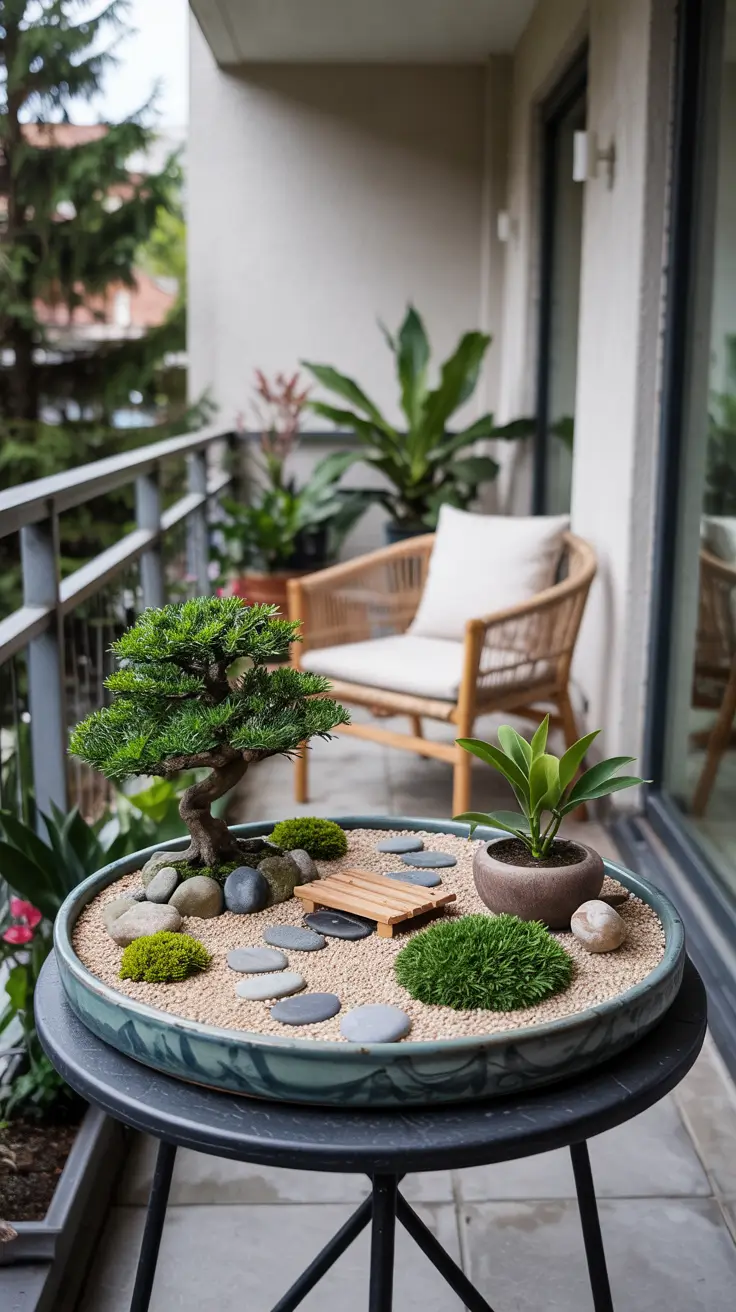
For the main pieces, I would use a shallow ceramic tray, fine gravel or sand, smooth stones, a small bonsai or fern, and a tiny wooden bench or bridge. Each item should be scaled carefully, because the charm of a miniature garden depends on proportion. A small rake can be included for shaping sand patterns, but I would store it neatly so the display still feels refined. On a balcony, I would place the garden on a low outdoor table beside a floor cushion or compact chair. This makes the piece feel like part of the living space instead of just a decorative object.
In my opinion, miniature japanese gardens are most beautiful when they are simple and not overloaded. I would avoid too many tiny ornaments, because they can make the design look more like a toy than a peaceful garden. A few strong elements, such as one plant, three stones, and a clean gravel surface, can express the Aesthetic much better. I also like that this idea can be changed seasonally with a small branch, a different stone, or a new moss accent. It gives the feeling of caring for a garden even when there is no full Landscape available.
What I would add to complete this idea is a clear location with good light and easy access. If the garden is kept Indoors, I would choose a plant that suits the available light instead of forcing a delicate species to survive in the wrong place. If it is placed on a balcony, I would protect it from strong wind and heavy rain. A tray with a defined edge is important because it keeps gravel and sand contained. With the right Plan, a miniature japanese garden can become a peaceful daily detail for a Modern home.
31. Japanese Garden Plants For Shade, Texture, And Year Round Interest
When I plan a japanese garden landscape, I always begin with plants because they create the mood before any stone, lantern, or path is added. Shade-loving greenery is especially useful because many japanese gardens design ideas depend on softness, depth, and layered texture rather than bright color alone. Ferns, moss, hostas, Japanese forest grass, and compact maples can make the space feel calm even in a small Backyard. I like using different leaf shapes because they give movement and contrast without making the garden feel too busy. This kind of planting also supports a natural Aesthetic that looks elegant in spring, summer, autumn, and winter.
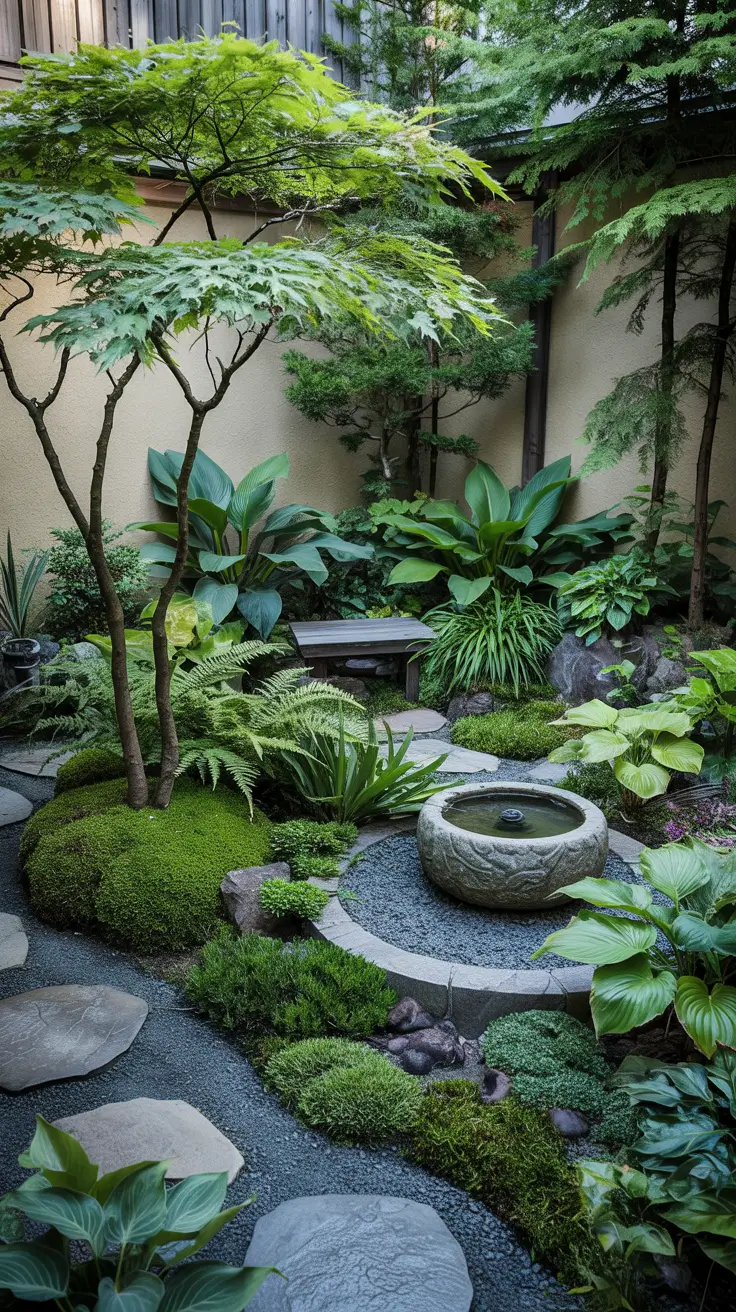
For this section, I would include low mossy areas, stepping stones, a small gravel zone, and plants arranged in layers from low to tall. Japanese maple can act as a sculptural focal point, while ferns and hostas soften the ground around paths or water features. Bamboo can be used carefully as a background plant, but I prefer clumping varieties or contained planting areas because they are easier to manage. A stone basin, simple bench, or low wooden seat can make the garden more usable without disturbing the quiet atmosphere. These details support japanese gardening because the design feels cared for, balanced, and practical.
In my opinion, the strongest japanese garden plants are the ones that look interesting even when they are not flowering. I like gardens where texture does most of the work, because the result feels more timeless and less seasonal. Publications such as Garden Design often emphasize structure, repetition, and foliage as important parts of successful landscape planning, and I find that advice especially useful for this style. For a shaded Japanese garden, I would not depend only on one beautiful tree or one dramatic plant. I would build layers so the garden still feels complete from every angle.
What I would add here is a stronger year-round plan, especially for winter and early spring. Evergreen shrubs, sculptural stones, and clean gravel patterns help the garden stay attractive when softer plants are dormant. I would also include a simple maintenance Plan, because moss, maple leaves, and shaded paths need regular attention to stay refined. A small Drawing before planting can help decide where each plant belongs and how the paths should move through the space. Without that planning step, even a Beautiful Japanese garden can start to feel crowded instead of peaceful.
32. Japanese Garden Ideas With Bamboo Screens And Privacy Walls
Bamboo screens are one of my favorite japanese garden decor ideas because they give privacy while still feeling natural and light. In a japanese garden style, privacy should not look heavy or closed off, so bamboo works better than a plain fence in many spaces. It creates a warm background for greenery, stone, gravel, and water features. I would use it around a seating corner, narrow side yard, tea-inspired patio, or quiet garden path. This idea is especially helpful when the garden is close to neighboring homes or visible from the street.
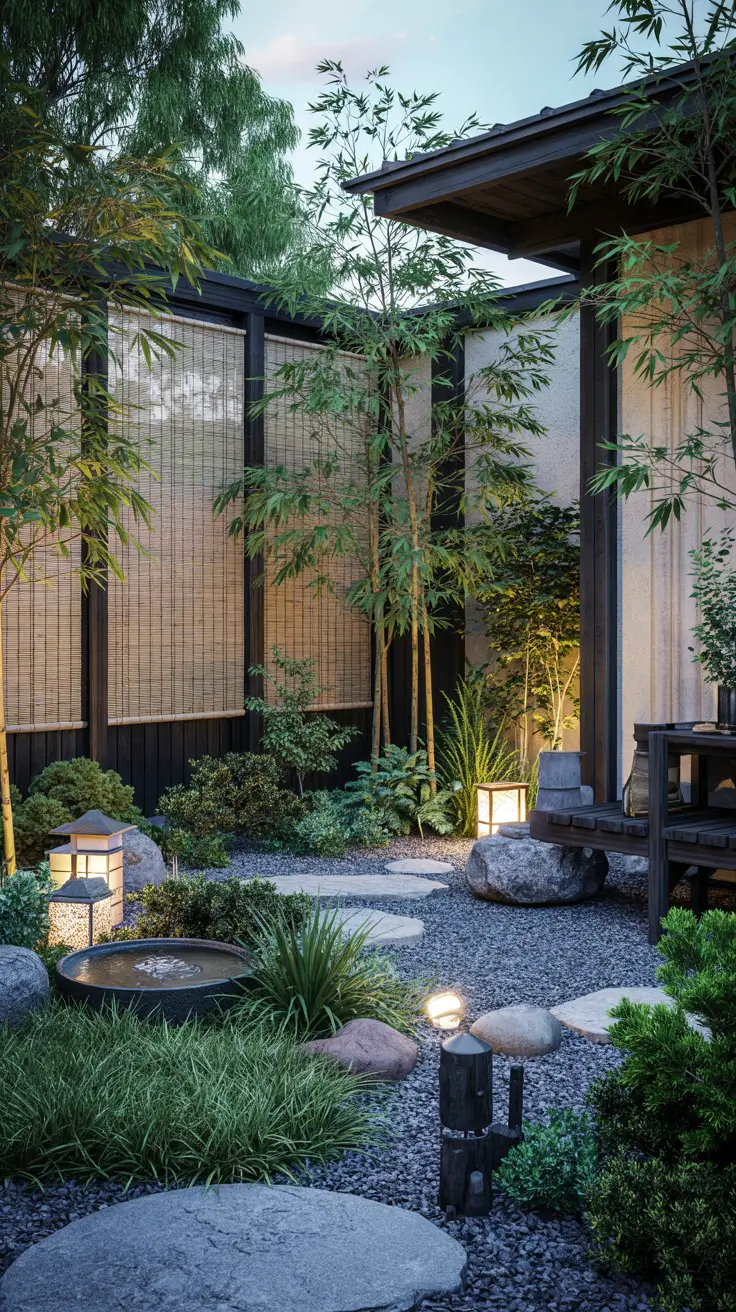
The main items I would include are vertical bamboo panels, dark timber posts, gravel at the base, and soft plants in front to reduce the hard line of the screen. A simple wooden bench or low outdoor chair can turn the privacy wall into a restful sitting area. Stone lanterns, smooth river stones, and a shallow water bowl can add detail without making the design feel decorative in a loud way. For a more Modern look, I would combine bamboo with black metal edging or clean rectangular stepping stones. This creates a Design modern result while still keeping the natural character of the garden.
I personally think bamboo screens work best when they are used as a background, not as the main attraction. The screen should support the plants, path, and sitting area instead of taking over the whole Design. I also like leaving small visual gaps or using layered planting in front because it keeps the garden from feeling boxed in. Many designers in outdoor living spaces recommend privacy solutions that feel integrated with planting rather than added afterward, and I agree with that approach. In a Japanese garden, the boundary should feel calm, intentional, and connected to the rest of the Landscape.
What I would add to this section is lighting, because bamboo can look flat in the evening if it is not softly illuminated. Low warm lights near the gravel or hidden behind plants can make the texture of the bamboo more visible. I would also add one or two Lanterns, but I would avoid using too many because repetition can quickly feel artificial. If the garden is part of a House patio, I would connect the bamboo wall color to nearby doors, decking, or furniture. That small detail makes the privacy screen feel like part of the full Design layout, not a separate piece.
33. Japanese Garden 2026 With Timeless Design And Modern Comfort
A japanese garden design modern approach in 2026 should feel simple, comfortable, and deeply connected to nature. I would not make the garden overly minimal, because Japanese-inspired spaces need warmth, texture, and quiet details. The best Ideas combine timeless features like stone paths, gravel, water, and layered Plants with practical modern comfort. A small seating area, weather-resistant cushions, and a clear walking route can make the garden enjoyable every day. This is where japanese garden design layout becomes important, because beauty and function need to work together.
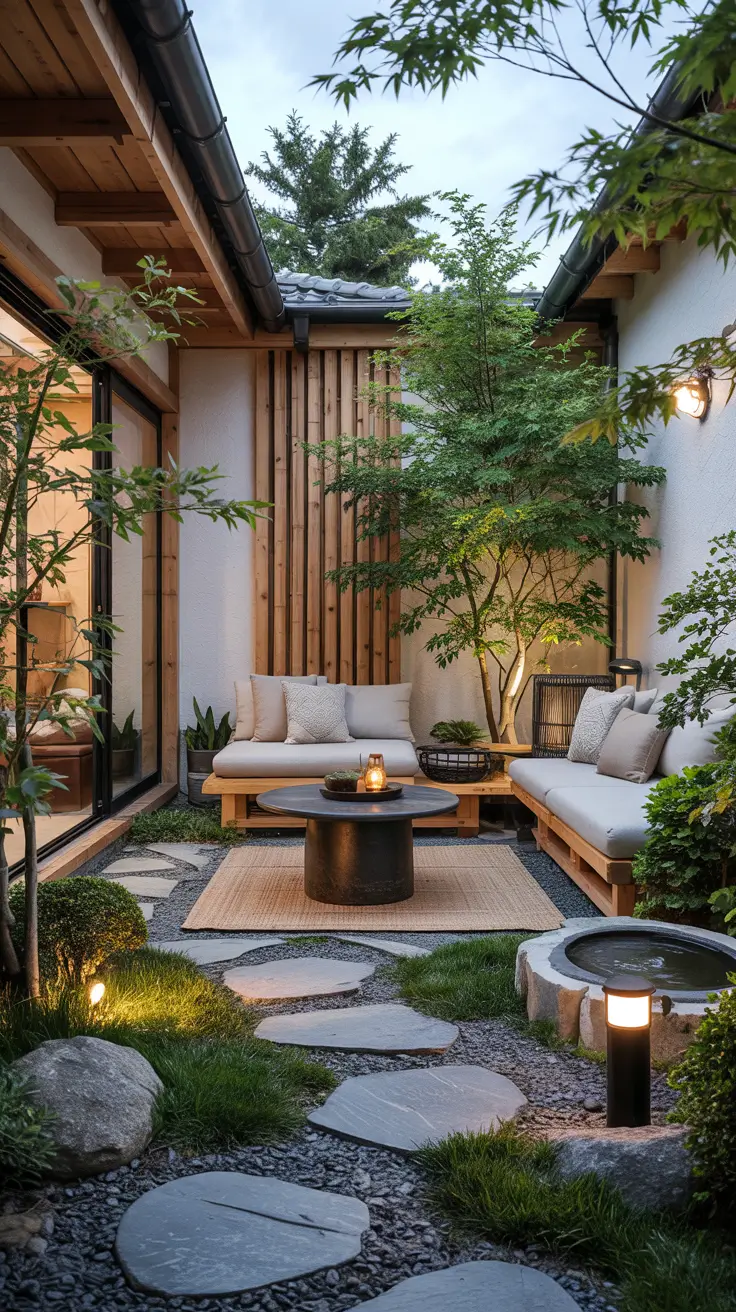
For furniture, I would choose low-profile wooden seating, a compact outdoor table, and simple cushions in natural colors. The materials should feel calm, so I would use wood, stone, linen-look outdoor fabric, bamboo, and matte ceramic pieces. A gravel courtyard, stepping-stone path, and small water element can create structure without making the space difficult to maintain. If the garden is connected to an Indoor room, I would align the view so the best feature can be seen from inside the home. This makes the garden feel like part of daily life rather than a separate decorative area.
I like this direction because it respects classic Japanese garden principles while making the space more usable for modern homes. A garden can be peaceful and still include comfort, especially when the furniture is quiet and the layout is carefully controlled. I would avoid oversized sofas, bright fabrics, or too many accessories because they weaken the calm atmosphere. In my experience, the most successful japanese garden ideas are the ones where every object has a reason to be there. Even a small Miniature courtyard can feel complete if the proportions, materials, and planting are balanced.
What I would add here is a flexible use plan for different moments of the day. Morning light might suit a small tea table, while evening use may need soft lighting near paths and seating. If the garden is designed for a Wedding corner, photography spot, or quiet family gathering, I would keep the background simple and let plants frame the scene naturally. A Diy version can still look refined if the gravel lines are clean, the plants are limited, and the decor is chosen with restraint. For inspiration, even gardens in places like Portland show how Japanese influence can blend beautifully with modern homes and lush planting.