Living rooms in 2026 are becoming more thoughtful, more flexible, and much more personal. I see more homeowners looking for living room furniture ideas that do not just look attractive in photos, but also support everyday routines, quiet evenings, family time, and a cleaner visual layout. How do you choose pieces that feel current without making the room look temporary? How do you build a space that feels warm, modern, practical, and easy to live in at the same time? In this article, I answer those questions through fresh approaches to living room furniture design, living room furniture arrangement, living room furniture placement, and living room furniture decor that can make almost any space feel new again.
1. Living Room Furniture Ideas 2026 That Make Any Space Feel New
When I think about living room furniture ideas for 2026, I immediately focus on spaces that feel lighter, softer, and more intentional. I see a strong shift away from overcrowded rooms and toward interiors where every piece has a clear purpose. A fresh living room does not always require a full renovation, because the right furniture choices can completely change how the space feels. I notice that curved silhouettes, textured upholstery, natural wood, and calmer color palettes are defining what many people now call living room furniture modern. In my experience, the most successful updates are the ones that improve both the appearance of the room and the way people actually use it. That is why I treat furniture as both a design tool and a practical foundation for daily life.
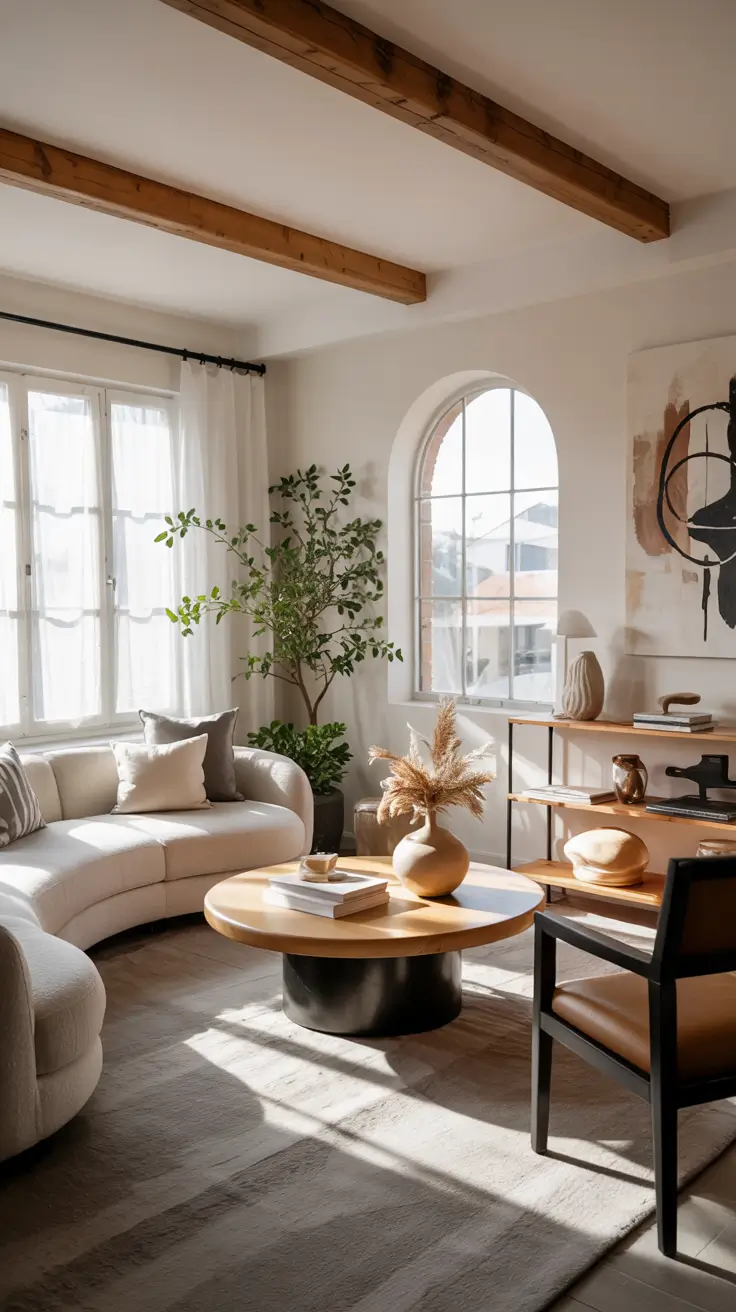
I usually begin with the largest pieces because they set the tone for the whole room. A comfortable sofa with a refined profile, a well-scaled coffee table, and one or two accent chairs often do more for the room than a long list of decorative extras. I also like to include a media console, a side table with storage, and a rug that visually anchors the arrangement without making it feel heavy. Wooden elements are especially useful here because they add warmth and help the room feel timeless rather than overly trendy. If the space needs contrast, I often add black details through lighting, a table base, or a framed chair silhouette to sharpen the composition. When I build a room this way, the result feels current, balanced, and easy to adapt in the future.
From my perspective, the best living room furniture inspiration comes from rooms that feel lived in rather than staged. I often remind myself that a beautiful room is not just about matching furniture, because a subtle mismatched approach can add character and depth. Many respected designers and shelter magazines have emphasized that comfort, scale, and texture matter more than chasing every short-term trend, and I agree with that approach completely. I have found that when I mix one modern piece, one classic shape, and one natural material, the room almost always feels more layered and believable. This is especially true in 2026, when people want interiors that feel calm and personal rather than overly polished. I trust a room more when it reflects how someone lives, not just what they recently bought.
To complete this type of section in a real home, I would also add attention to lighting, negative space, and the relationship between furniture heights. I like to leave enough breathing room around major pieces so the layout feels open and deliberate. I would also think about textiles such as curtains, throws, and cushions, because they help connect the furniture to the architecture of the room. If the room feels unfinished, I usually look for one missing layer rather than adding several random objects. In many cases, that missing layer is either a larger rug, better task lighting, or a stronger focal chair. I find that those quiet adjustments often make the room feel newer than a dramatic change.
2. Modern Living Room Furniture Layout Ideas For A Balanced Room
A balanced room starts with a thoughtful layout, and this is where I believe many good interiors either succeed or fail. Modern living room furniture layout ideas are not just about symmetry, because balance can also come from proportion, spacing, and visual rhythm. In 2026, I see more layouts that feel open and flexible while still having a strong center. Instead of pushing everything against the walls, I prefer to create a conversation zone that gives the room structure. This approach makes the room feel more welcoming and often improves circulation at the same time. A good layout should guide movement naturally without making the furniture arrangement feel rigid.
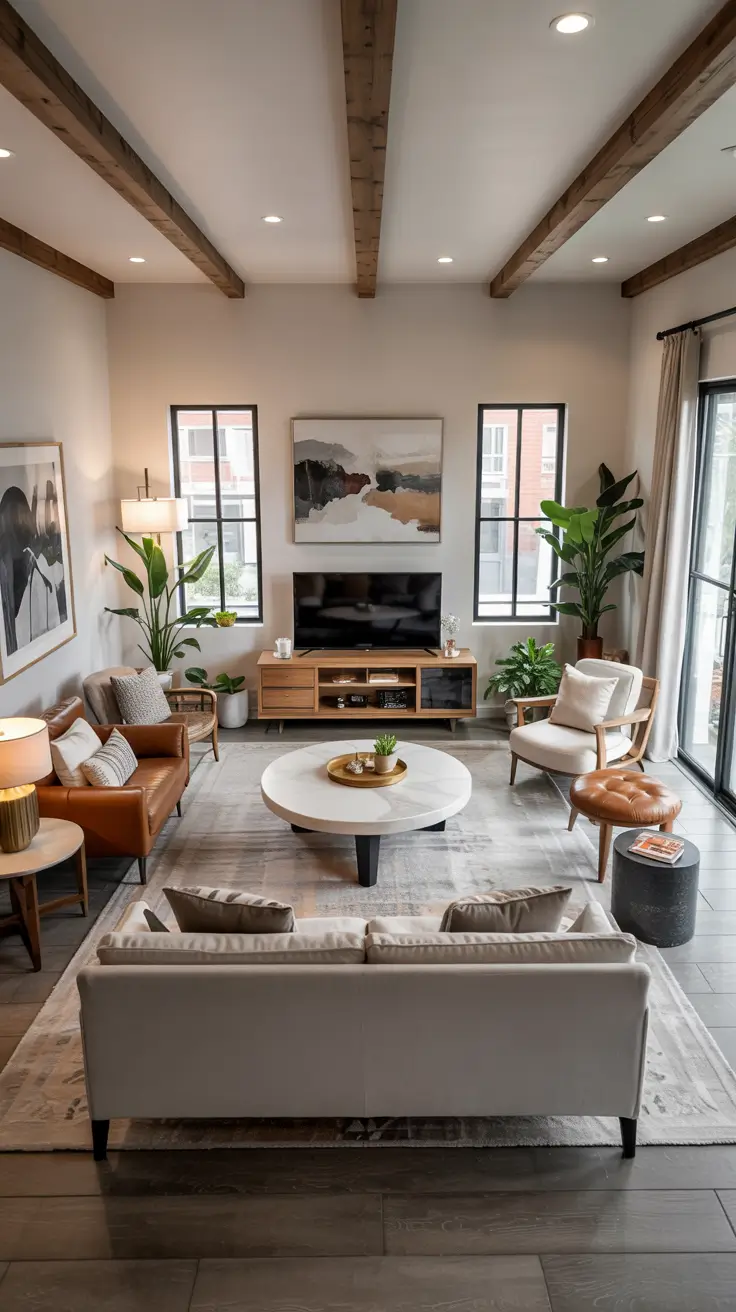
When I plan living room furniture layout ideas, I first define the focal point and then arrange the major pieces around it. That focal point might be a fireplace, a large window, a media wall, or even a statement coffee table. I usually position the sofa to establish the main axis, then place chairs or a bench to support the arrangement without blocking the flow. Side tables, storage cabinets, and lighting need to be positioned in a way that supports use, not just appearance. I also pay attention to distance, because furniture that sits too far apart can make the room feel disconnected, while furniture that sits too close can feel cramped. Layout is one of the clearest examples of how furniture placement affects comfort every day.
I have learned that the most successful modern layouts rarely rely on strict formulas alone. I use general arrangement tips, but I always adjust them based on the room’s actual dimensions, window placement, and how the space is used from morning to night. Designers often talk about creating zones within a room, and I find that especially useful in open-plan spaces where the living area needs clear identity. In my own work, I often use a rug, a central table, and aligned seating to create that zone without building visual barriers. This method helps the room feel organized while still relaxed. A balanced room should never feel overly controlled, because real comfort comes from a layout that supports movement and routine.
If I were refining this section further, I would add a stronger focus on vertical balance and sightlines. I always look at how tall pieces such as bookcases, lamps, and plants interact with lower elements like ottomans and tables. When everything sits at the same visual level, the room can look flat even if the layout is technically correct. I also think it is important to check the room from multiple entry points, because a good layout should look coherent from every angle. If something feels off, I usually test small changes before replacing any furniture. Very often, moving one chair or changing the angle of a table is enough to improve the whole composition.
3. Cozy Living Room Furniture Ideas For Warm And Inviting Interiors
A cozy living room should feel warm the moment someone enters it, and I think that feeling comes from layered comfort more than from decoration alone. When I work on living room furniture ideas cozy enough for everyday life, I focus on softness, warmth, and a sense of ease. Cozy does not mean cluttered, and I believe that is one of the most important distinctions in current interior design. In 2026, warm interiors are moving toward tactile materials, rounded shapes, and quieter colors that help people slow down. I see more brown, walnut, cream, muted purple accents, and soft white upholstery used in ways that feel grounded rather than overly styled. A cozy room should invite people to sit, stay, and relax without asking them to protect the space from use.
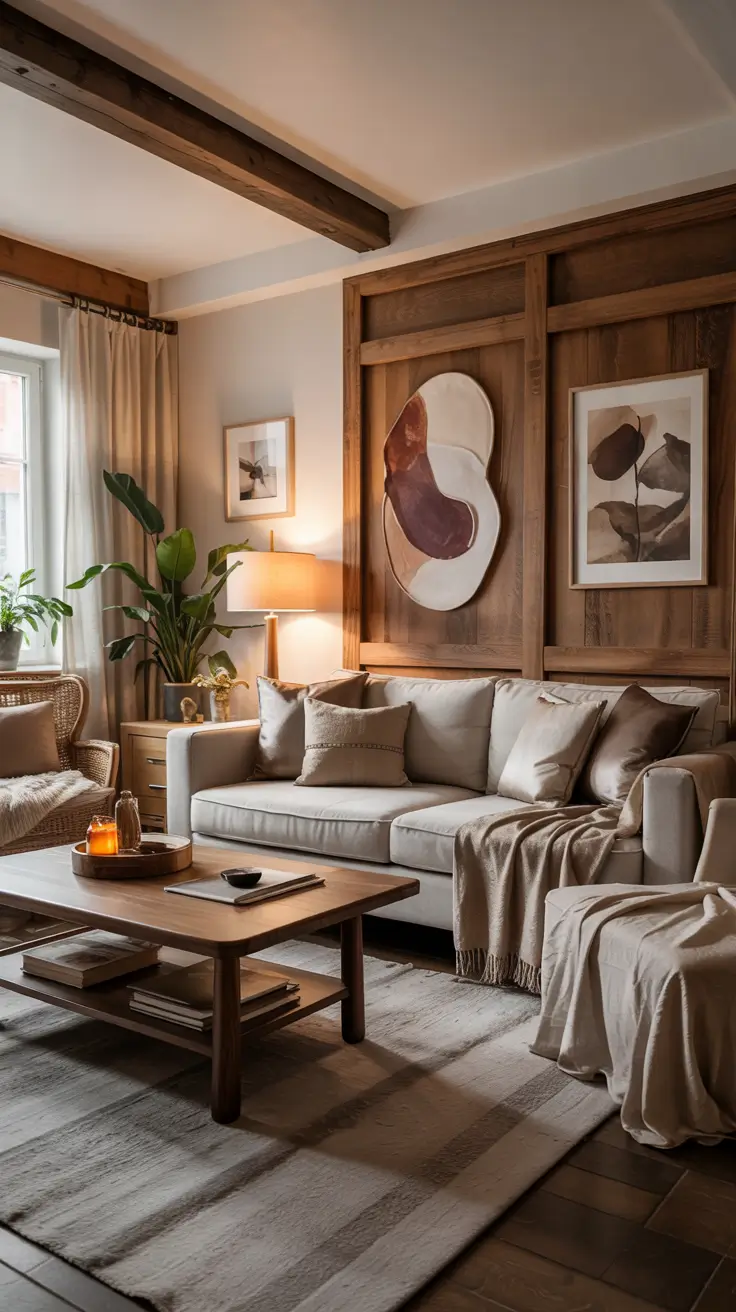
To build that kind of atmosphere, I usually start with a generously proportioned sofa and then add furniture that supports comfort from several angles. An upholstered ottoman, a textured armchair, and a solid wooden coffee table can create a strong base for a welcoming room. I also like to include side tables that allow for easy use of lamps, books, or a cup of tea, because practical comfort matters as much as visual warmth. If the room needs more character, I may bring in leather through a chair or stool, since leather adds depth and becomes softer visually when combined with warm woods and textiles. Farmhouse and rustic references can also work beautifully when they are simplified and paired with more modern lines. In my experience, cozy furniture works best when every piece feels substantial but not heavy.
Personally, I think many people underestimate the role of texture in making a room feel inviting. I have seen simple rooms become much more comfortable just by introducing boucle, linen, soft wool, brushed wood, and layered fabrics with a bit of tonal contrast. Design editors and experienced decorators often recommend combining smooth and tactile surfaces in the same room, and I rely on that principle often. I also find that a cozy room benefits from a slight mismatch, because too much uniformity can make the space feel flat. A room becomes memorable when it combines comfort with a bit of visual personality. That is why I prefer warmth that feels collected over time rather than assembled all at once.
To strengthen this section, I would also add a clearer note about lighting and seasonal adaptability. A cozy layout depends on warm ambient light, and I almost always combine overhead lighting with table lamps or floor lamps placed near seating. I would also think about how the furniture performs across the year, since a cozy room should feel good in winter and still feel breathable in warmer months. Sometimes the missing element is not another chair or table, but a better balance between upholstered pieces and open floor space. I also recommend checking whether the room has enough soft edges to offset harder architectural lines. That balance is often what gives a living room its emotional warmth.
4. Living Room Furniture Arrangement Ideas For Easy Everyday Comfort
When I plan living room furniture arrangement ideas, I think first about how the room supports ordinary life. A beautiful arrangement should make sitting, talking, reading, and moving through the space feel natural. I do not see arrangement as a decorative exercise alone, because it directly affects how relaxed a room feels. In 2026, I notice that people want living room furniture arrangement solutions that support both social interaction and personal comfort. That means fewer awkward layouts and more seating groups that feel connected without being crowded. Easy everyday comfort comes from an arrangement that understands routine, not just style.
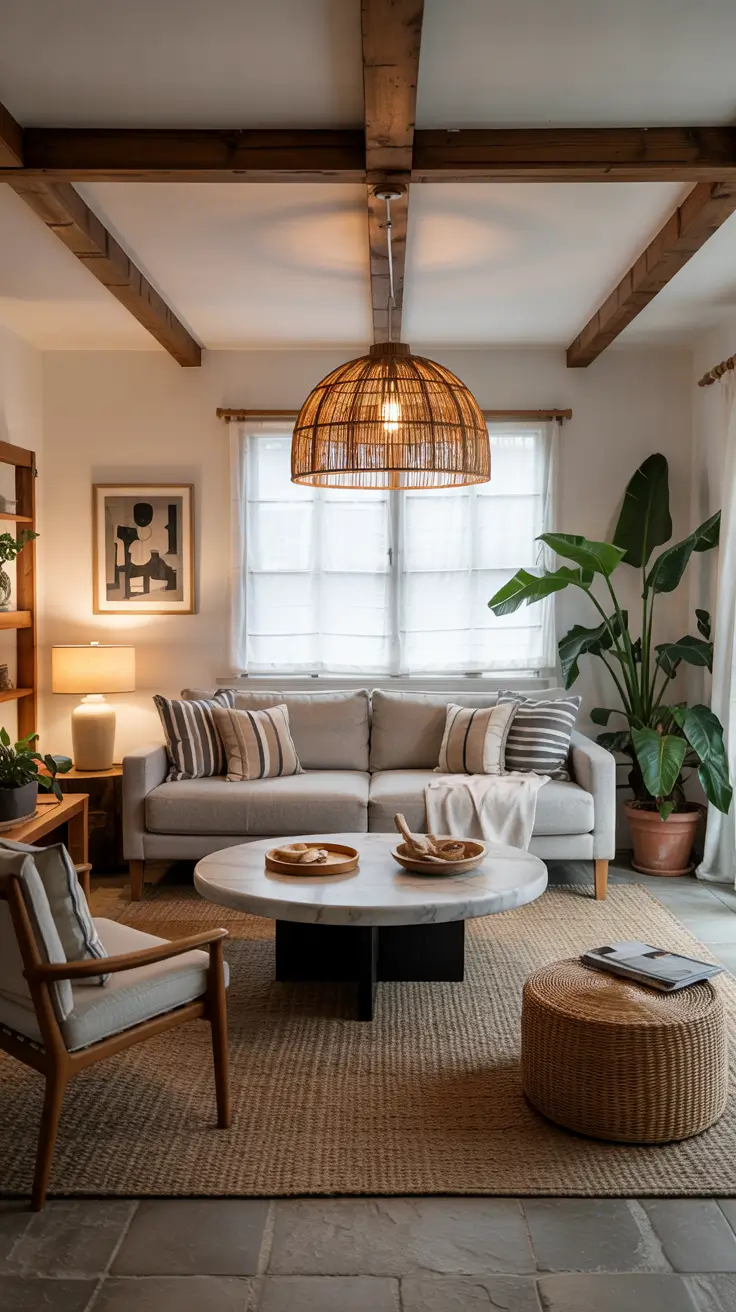
I usually begin the arrangement with a main seating anchor and then build outward in layers. A sofa defines the primary zone, while accent chairs, ottomans, or a secondary bench shape how people gather around it. I often use a coffee table or ottoman in the center to connect the seating pieces and create visual order. Living room furniture arrangement works best when everyone seated has a comfortable relationship to the focal point and to each other. I also consider practical placement for storage, lighting, and surfaces, because comfort increases when people do not have to reach awkwardly or move around obstacles. Even a traditional room can feel fresh if the arrangement supports easier use.
In my experience, everyday comfort depends on allowing the room to breathe. I do not like arrangements that fill every corner just because there is space available. Some of the strongest arrangement ideas come from restraint, especially when the room already has strong architectural features or a large window. Many professionals recommend planning for movement first and styling second, and I think that advice remains very relevant. I have seen rooms improve dramatically when one oversized chair was removed or when a table was resized to suit the scale of the seating. Arrangement should always make the room feel more effortless, never more complicated.
If I were adding more to this section, I would include a specific note on flexible furniture. In many homes, I like to add one movable piece such as a lightweight stool, nesting tables, or a compact pouf that can shift with different needs. This gives the room more adaptability without changing the core layout. I would also check whether the arrangement supports multiple activities, especially in rooms that serve as family rooms, media rooms, and quiet reading areas at once. If the room feels uncomfortable, I usually look at circulation paths and seating angles before questioning the style itself. Those practical corrections often solve the deeper problem.
5. Smart Living Room Furniture Placement Tips For Better Flow
Furniture placement is one of the most practical parts of interior planning, and I think it deserves much more attention than it usually gets. Good living room furniture placement can improve comfort, visual balance, and daily movement without requiring new furniture at all. In 2026, better flow is becoming a major priority because people want rooms that feel calm and easy to navigate. I approach placement as a way of guiding the body through space while also supporting the room’s design language. Even strong furniture pieces can feel wrong when they interrupt movement or block natural light. For me, placement is where design meets real life most directly.
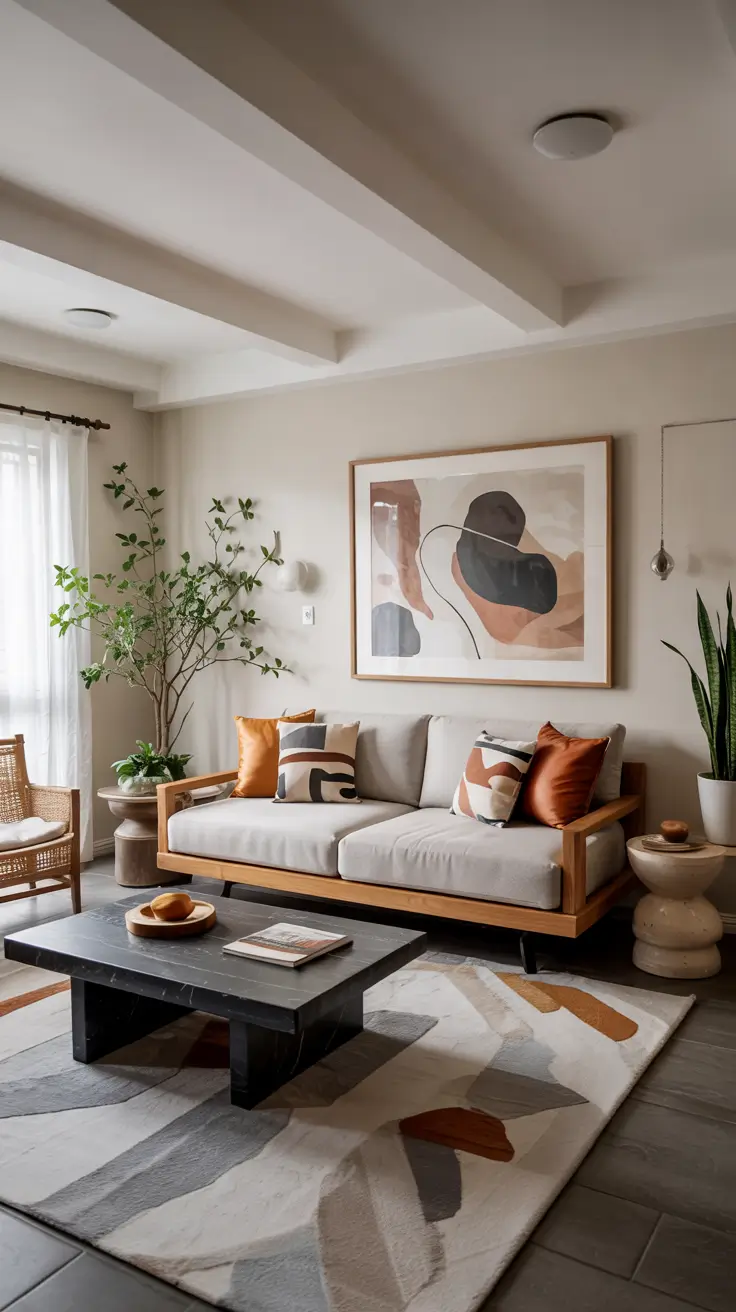
When I work on living room furniture placement, I pay close attention to walkways, door swings, window access, and the distance between key pieces. I prefer to leave clear circulation paths so that the room feels open instead of crowded. A sofa should not interrupt the most obvious route through the room, and coffee tables should allow comfortable reach without forcing awkward movement. I also think carefully about placement near walls, because not every room benefits from pushing all furniture outward. Sometimes floating the sofa slightly inward creates a better layout and more balanced proportions. Placement becomes even more important in smaller rooms, where every inch affects both comfort and visual clarity.
I have found that the best placement choices are often the simplest ones. People sometimes assume they need more furniture when what they really need is better positioning of the pieces they already own. Professional designers frequently emphasize scale, spacing, and sightlines, and I believe those three ideas solve many common living room problems. I also like to evaluate the room while standing, sitting, and entering from adjacent spaces, because flow should work from every perspective. A room with good placement feels intuitive, and that quality is immediately noticeable even if no one can explain it technically. That is often the sign of a well-resolved interior.
To make this section more complete, I would add a checklist for testing furniture placement in real use. I would ask whether people can move easily from one end of the room to the other, whether surfaces are placed where they are actually needed, and whether the layout supports both conversation and rest. I would also review how the room changes at night, since placement can affect lighting quality, television viewing, and overall comfort after dark. If the room still feels awkward, I usually reconsider one large piece before changing smaller details. In many cases, better placement solves problems that styling alone cannot fix. That is why I see it as one of the most valuable arrangement tips in any living room.
6. Living Room Furniture Design Trends 2026 With A Modern Edge
When I look at living room furniture design for 2026, I see a clear move toward cleaner silhouettes with softer visual impact. The most successful spaces are not cold or overly minimal, but balanced, layered, and easy to live in. I notice that living room furniture modern trends are leaning into curved edges, deeper seat profiles, and shapes that make a room feel relaxed instead of stiff. This approach works especially well when I want living room furniture inspiration that feels updated without becoming trend-heavy. In my experience, the modern edge comes from restraint, material contrast, and thoughtful proportions rather than from dramatic statements alone. That is why I treat the room as a whole composition rather than a collection of separate objects.
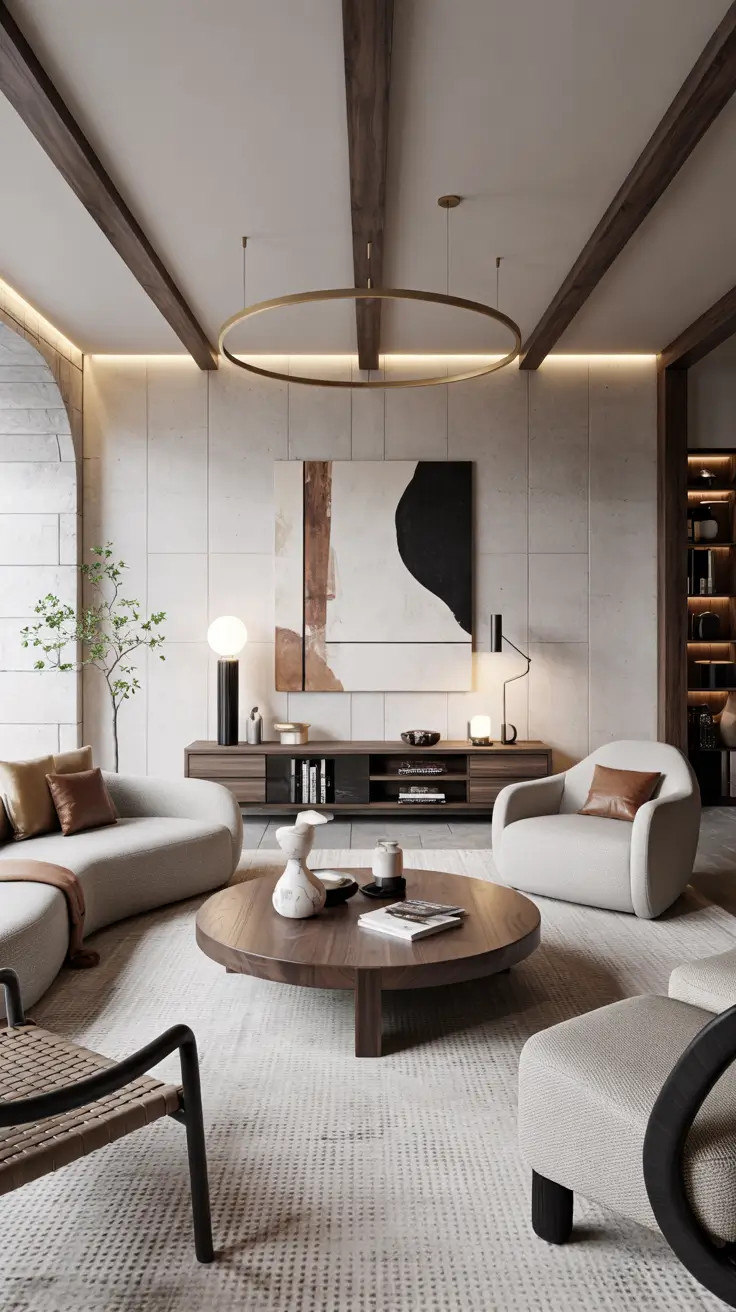
I usually start with a sofa that has a low, tailored profile and a shape that feels simple but not flat. Then I add accent chairs with a slightly different form so the living room furniture arrangement feels collected rather than purchased as a matching set. A wood or walnut coffee table brings natural weight into the room, while a textured rug helps anchor the seating zone and define the layout. I often include a slim media console, a floor lamp with sculptural lines, and side tables that keep the room functional without visual clutter. If I want the room to feel even more current, I use a restrained palette with white, brown, black, or muted purple accents. These elements support living room furniture decor that looks intentional and comfortable at the same time.
From my perspective, one of the best lessons from designers and major shelter magazines is that modern interiors work best when there is warmth in the mix. I agree with the advice often shared in American design media that texture matters just as much as color, especially when the furniture shapes are simple. A room with boucle, linen, wood grain, leather, and matte metal usually feels richer than one that depends only on color contrast. I have also found that mismatched seating often gives better results than identical pieces because it creates rhythm and personality. That kind of variation makes the arrangement feel more natural and gives the room a lived-in confidence. For me, modern living room furniture ideas cozy enough for real life always include softness, visual depth, and at least one organic material.
To complete this kind of room, I would add a large area rug, layered lighting, and a few objects with real visual weight such as oversized pottery, books, or a substantial vase. I also think window treatments are often missing from modern spaces, even though they soften architecture and improve acoustics. If the room feels too sharp, I add a curved chair, a round side table, or a softer fabric on the sofa. If the room feels too neutral, I bring in muted color through a pillow, ottoman, or artwork rather than replacing large furniture pieces. I also pay attention to furniture spacing because even beautiful objects fail when placement is careless. In my work, the modern edge only succeeds when it is supported by comfort, light, and a layout that makes sense.
7. How To Arrange Living Room Furniture In Large Open Spaces
Large open rooms often seem easy at first, but I find they are usually harder to arrange well than smaller ones. Without clear boundaries, furniture can float awkwardly and the room can feel disconnected or unfinished. The best living room furniture layout for an open space creates zones without building walls. I focus on scale, spacing, and visual anchors so the room feels purposeful from every angle. In many cases, the right living room furniture arrangement ideas are less about filling the space and more about controlling movement through it. I always try to make the room feel gathered, not scattered.
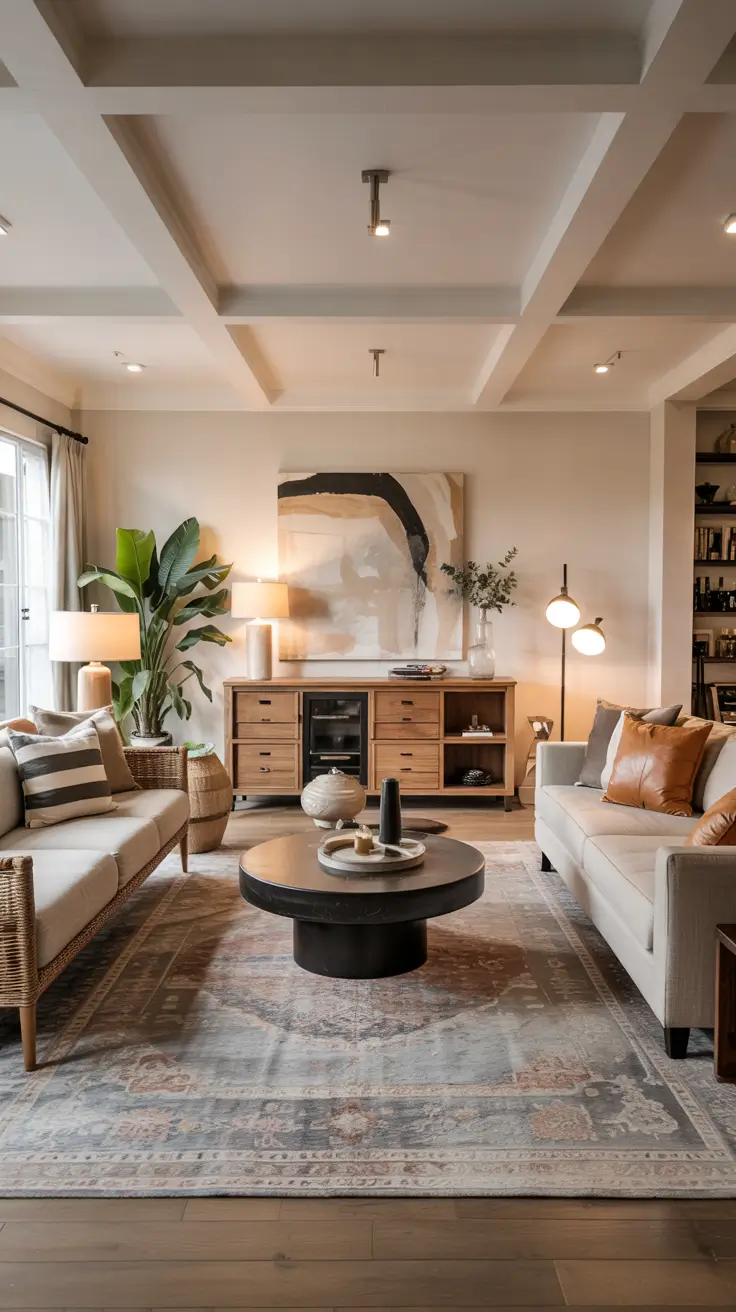
I usually begin by placing the main sofa and chairs on a large rug to establish the central conversation area. That single move improves living room furniture placement because it gives all the major pieces a shared foundation. In larger rooms, I often use two sofas facing each other, or a sofa paired with two substantial chairs, to create a balanced arrangement. A large coffee table helps prevent the center from feeling empty, and a console behind the sofa can act as a subtle divider between zones. If the open plan connects to a dining area or kitchen, I keep enough space for circulation but not so much that the seating area loses intimacy. This kind of layout creates structure while keeping the room visually open.
In my experience, one of the most useful arrangement tips for big rooms is to stop pushing everything against the walls. When I pull furniture inward, the room immediately feels more human in scale and more comfortable to use. Many designers in the US recommend defining activity zones in open-plan homes, and I strongly agree with that principle. A reading corner, a conversation area, and perhaps a secondary seating spot near a window can coexist without competing. I also find that symmetry can help in large spaces, but only when it is softened by texture or slight variation. A room this size needs order, but it also needs warmth so it does not feel staged.
What I often add to large open spaces is overhead and vertical balance. A pair of tall lamps, substantial curtains, larger artwork, or a cabinet with height can stop the room from feeling too horizontal. I also think large rooms need more than one light source, because a single ceiling fixture rarely supports the full layout. If the space still feels too open, I might include a bench, ottoman, or pair of stools that can shift position as needed. These flexible pieces improve function without locking the room into a rigid arrangement. I also make sure there is enough contrast in materials, because large rooms absorb detail and can look bland if every surface is similar. Good layout ideas for open spaces are always supported by scale, texture, and zoning.
8. Small Space Living Room Furniture Layout Ideas That Still Feel Open
A small living room does not need less style – it needs smarter decisions. When I work with tight dimensions, I focus on reducing visual heaviness while keeping the room fully functional. The best living room furniture layout ideas for small spaces create breathing room, preserve movement, and keep the eye traveling. I do not try to force too many pieces into the plan, because that usually makes the room feel smaller and more frustrating to use. Instead, I build around proportion, leggy furniture, and a clear focal point. That is how I keep the space open without making it feel underfurnished.
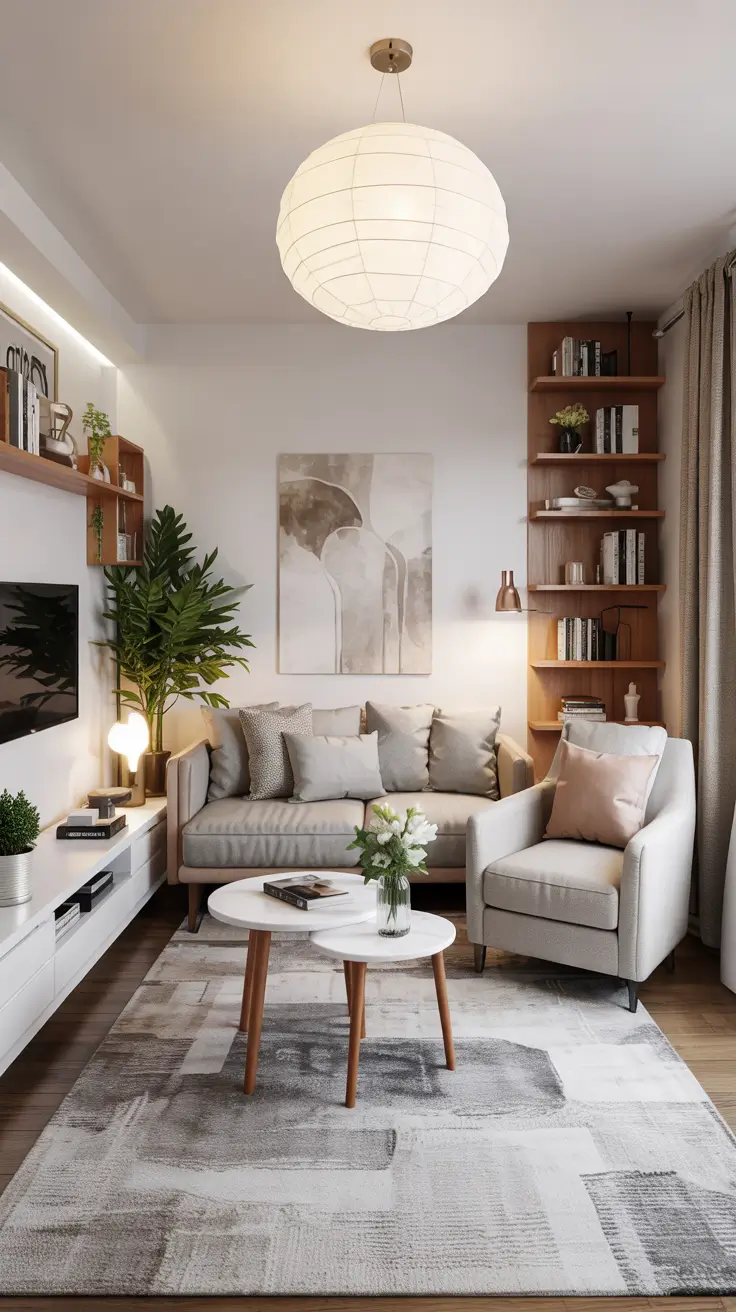
I often start with an apartment-scale sofa or a compact sectional that suits the room rather than dominating it. Then I add one accent chair if the floor plan allows, or I use a small bench or ottoman for flexible seating. A coffee table with an open base or a pair of nesting tables helps preserve sight lines and improve function. I also like wall-mounted media units or narrow consoles because they support living room furniture placement without consuming too much floor area. Light wood, white upholstery, and soft neutrals often help, but the real difference comes from smart spacing and shape. Even in a small room, living room furniture arrangement can feel generous when every piece earns its place.
I have found that one of the most effective small-room strategies is to avoid oversized matching sets. A mismatched arrangement usually feels lighter and more interesting because each piece serves a clear role. Design editors often point out that multifunctional furniture improves compact living, and I think that advice is especially useful in living rooms. Storage ottomans, slim side tables, and modular pieces can solve practical problems without crowding the room. I also pay close attention to leg height, because furniture raised slightly off the floor often makes a room seem less dense. For me, cozy does not mean crowded – it means the room supports real life with ease and clarity.
To improve this kind of section, I would also add a mirror, better window treatment choices, and a clear lighting plan. A mirror can widen the visual field, but only when it reflects light or something worth seeing. I also think many small rooms benefit from a rug that is larger than expected, because it helps unify the layout instead of chopping it up. If there is room, a narrow bookcase or vertical shelf can add storage without taking over the plan. I would avoid bulky recliners or thick-arm sofas unless comfort is the only goal and all other elements are scaled down. In my view, the best small-space layout is one that feels effortless, not one that looks like a compromise.
9. Leather Living Room Furniture Ideas That Add Depth And Luxury
Leather remains one of the most effective materials when I want a living room to feel grounded, refined, and long-lasting. In 2026, I see leather being used less as a traditional statement and more as part of a layered, modern composition. It adds depth because the surface changes with light, age, and use, which gives the room visual maturity. I especially like leather in rooms that need warmth or stronger contrast, since it works beautifully with wood, metal, stone, and woven fabrics. Used well, it supports living room furniture ideas that feel luxurious without becoming formal or overdecorated. I think that balance is why leather still holds its place in modern interiors.
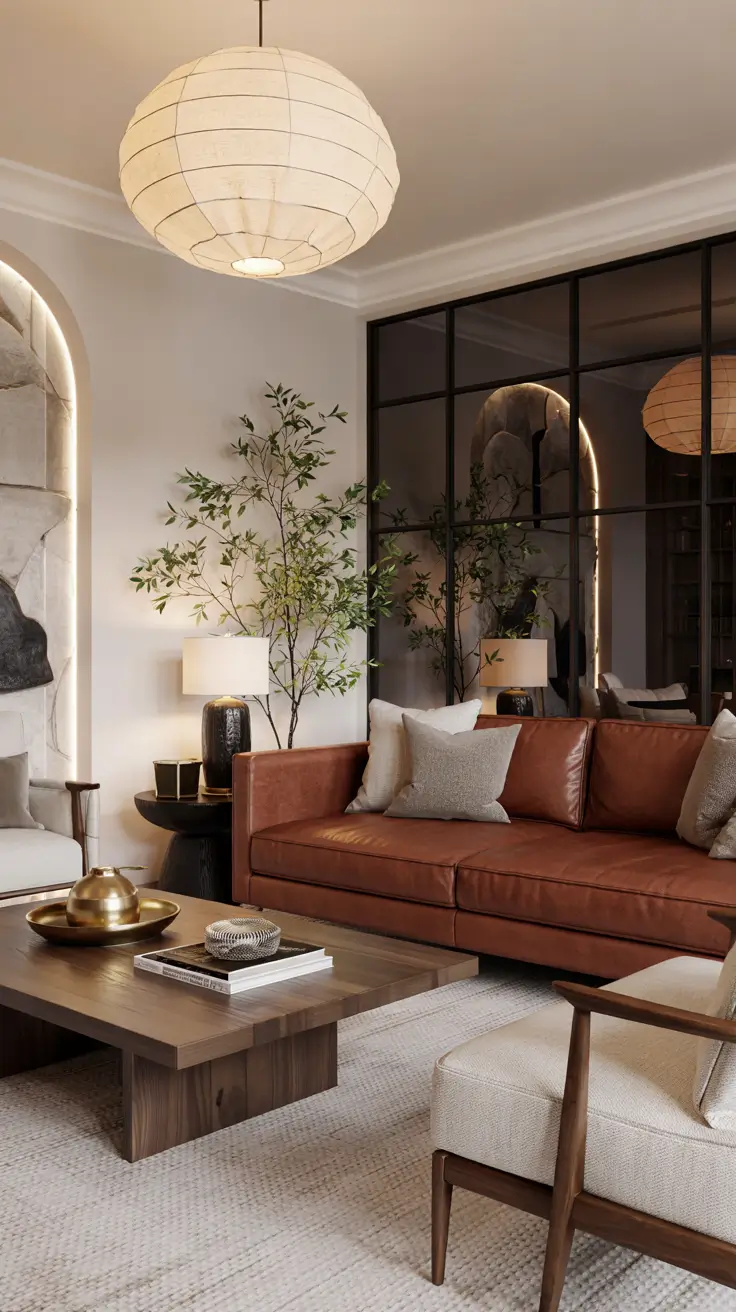
A brown leather sofa is often my first choice because it is versatile and rich without being too severe. In some rooms, black leather works better, especially when I want sharper contrast and a more architectural look. I usually pair leather with a wooden coffee table, a textured rug, and softer upholstery elsewhere so the room does not feel too hard. Linen chairs, boucle pillows, and a warm walnut or dark wood sideboard can help balance the smooth finish of the leather. I also think leather looks stronger when the shape of the furniture is simple and the palette is controlled. That combination makes the room feel elevated while keeping the arrangement comfortable and practical.
Personally, I find leather most successful when it is allowed to age naturally instead of being treated as something precious. Many respected designers have noted that honest materials improve with time, and leather is a perfect example of that idea. I agree with the view often shared in interior publications that patina adds character and makes a space more believable. A leather sofa that softens over time can become the most inviting element in the room, especially when it is surrounded by tactile fabrics and warm light. I also like using leather in one dominant piece rather than repeating it too often. That approach keeps the room layered and prevents the material from overpowering the space.
What I would add here is softness and tonal variation. A leather room often needs curtains, a substantial rug, and at least one upholstered piece in another fabric to create balance. I also think artwork is important because leather furniture can make a room feel visually heavy if the walls are left bare. If the palette feels too dark, I introduce white, cream, or muted purple through smaller decor rather than changing the main anchor piece. Good lighting is also essential, because leather becomes more attractive when natural and layered artificial light reveal its texture. In my opinion, luxury in a leather living room comes from contrast, comfort, and restraint rather than from excess.
10. Wooden Living Room Furniture Designs Modern Homes Will Love In 2026
Wooden furniture is becoming more important again because it brings permanence and warmth into rooms that might otherwise feel too smooth or generic. In 2026, I see living room furniture design moving toward cleaner wooden forms with visible grain, rounded detailing, and a more natural finish. These pieces work in modern, rustic, coastal, farmhouse, and mid century modern interiors, which makes wood especially useful in mixed-style homes. I often recommend wooden furniture when a room needs character but not visual noise. It gives structure to the space while keeping the atmosphere calm and welcoming. For me, that versatility is what makes wooden living room furniture so relevant now.
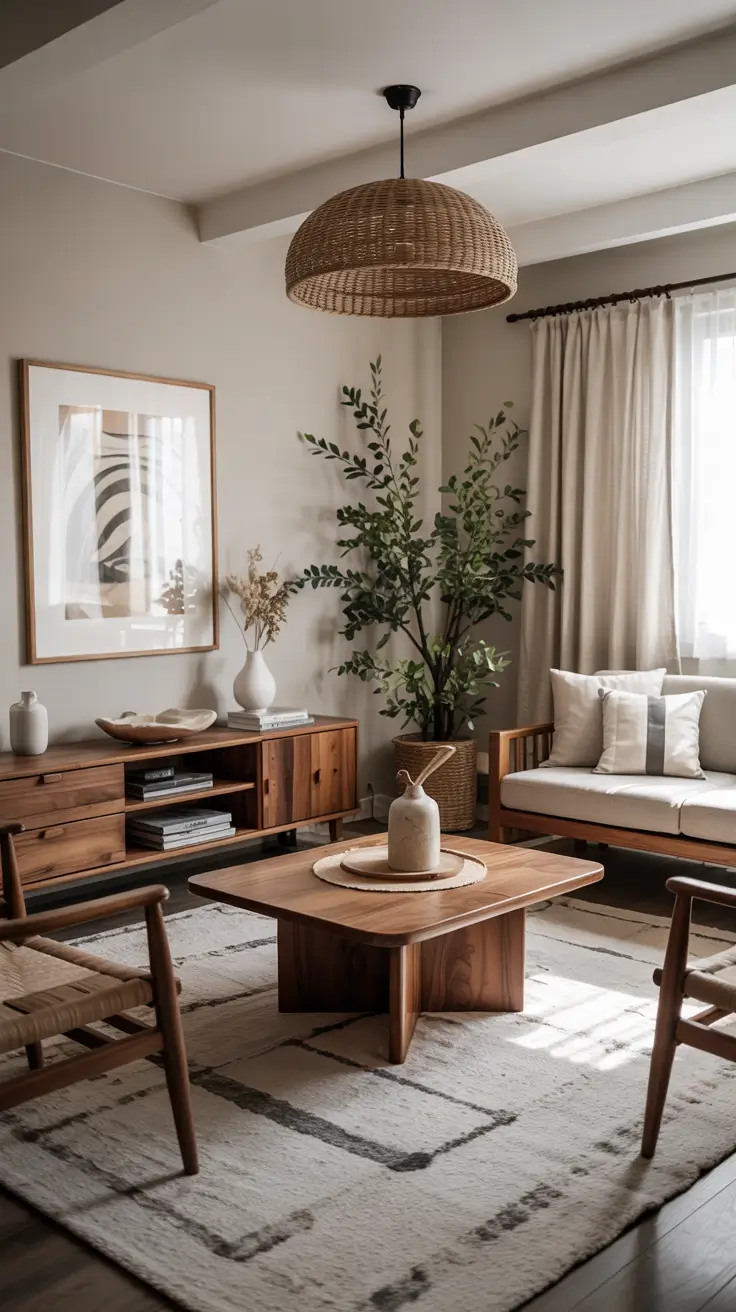
I like to start with one major wooden piece such as a coffee table, media console, or bookcase in walnut, oak, or dark wood. From there, I decide whether the room needs more wood or whether fabric, leather, and metal should carry the rest of the balance. Wooden sofa set designs modern enough for 2026 usually rely on cleaner lines, lighter profiles, and better upholstery pairings than older bulky versions. I also enjoy mixing painted white pieces with natural wood tones when I want contrast without losing warmth. In coastal or farmhouse rooms, wood can soften the space and keep it from feeling too polished. In a more traditional or mid century modern layout, it can act as the visual backbone of the room.
I have found that wood works best when the undertones are consistent, even if the finishes are not identical. That means I might mix walnut and brown oak, but I still keep them in the same warm family so the room feels intentional. Many designers advise against making every wooden surface match perfectly, and I agree because slight variation usually creates more depth. I also think wood becomes more modern when paired with contemporary upholstery, clean lighting, and fewer decorative extras. This is especially helpful when I want the room to feel current rather than themed. In my experience, wooden furniture brings credibility to a room because it feels substantial and honest.
To finish this kind of interior, I would add textiles that soften the solidity of the wood. A textured rug, layered throw pillows, linen curtains, and warm lighting help the furniture feel integrated rather than heavy. I also think greenery works particularly well with wooden furniture because it reinforces the natural aspect of the palette. If the room starts to look too brown, I introduce black accents, white upholstery, or a stone surface for contrast. If the design feels too flat, I vary the wood scale by combining one larger case piece with smaller tables or sculptural chairs. In my opinion, wood remains one of the best ways to create a living room furniture arrangement that feels modern, durable, and deeply comfortable.
11. Mismatched Living Room Furniture Arrangement Ideas That Still Look Cohesive
I often recommend mismatched pieces when I want a room to feel collected rather than overly matched, because that approach gives the space personality and a more natural rhythm. In 2026, one of the strongest living room furniture inspiration directions is combining different silhouettes, finishes, and textiles while keeping a clear visual structure. I find that this works best when the layout stays consistent, with the main seating grouped to encourage conversation and the accent pieces supporting that arrangement instead of competing with it. A balanced living room furniture arrangement can include a curved chair, a boxy sofa, and a different style of coffee table, as long as scale and spacing are handled carefully. This kind of mix makes the room feel designed over time, which is often more interesting than buying a complete set. I like this approach because it creates warmth, flexibility, and a sense of identity that many highly coordinated rooms lack.
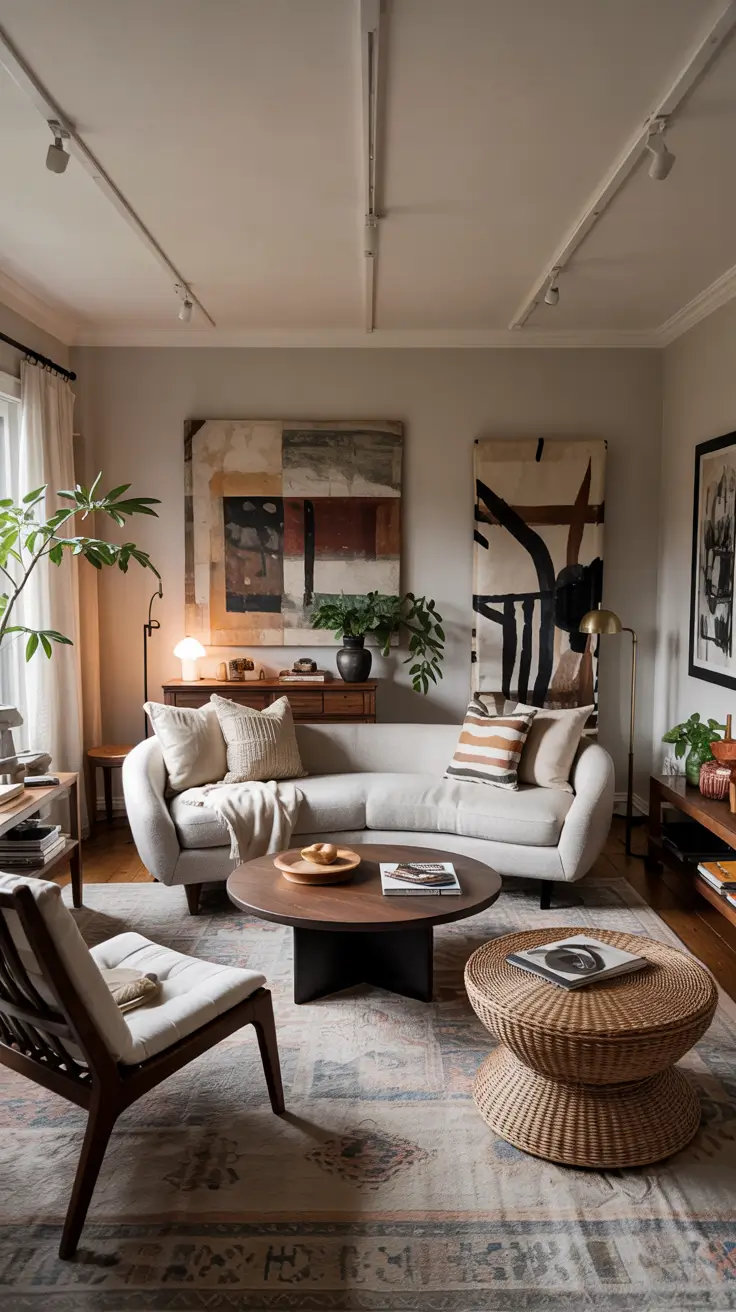
When I build a mismatched room, I usually start with one anchoring sofa and then layer in chairs with a different profile, such as a mid century modern lounge chair or a farmhouse-inspired accent seat. I also pay close attention to the coffee table, side tables, and storage pieces, because these items help tie together different styles through repeated materials like walnut, black metal, dark wood, or warm brown finishes. A textured rug is essential in my view, because it visually unifies separate pieces and softens transitions between shapes and tones. I often include lighting with a sculptural base or an oversized shade, since lighting can bridge modern and traditional elements without making the room feel forced. Cushions and throws are another important tool, especially when I want to connect leather, wooden, and upholstered furniture in one arrangement. I see these smaller details as the glue that helps mismatched furniture look intentional rather than random.
From my experience, the biggest mistake people make with arrangement ideas like this is mixing too many competing focal points without a common thread. I prefer to repeat at least one element throughout the room, such as curved lines, black accents, rustic wood grain, or a restrained neutral palette, because repetition gives the eye something familiar to follow. Designers featured in American interiors coverage often stress the importance of scale, and I fully agree that proportion matters more than matching styles. I have found that when seat heights feel compatible and table sizes relate properly to the sofa, the whole room instantly looks more professional. Even when the furniture styles differ, consistent spacing and a thoughtful layout create calm. That is why I see living room furniture arrangement ideas like this as one of the most practical ways to make a space feel personal and elevated at the same time.
To complete this kind of section in a real room, I would add one more element that reinforces cohesion without flattening the character of the design. I usually suggest artwork, a large mirror, or floor-length drapery that echoes one of the room’s tones and gives the composition a stronger frame. I would also consider one storage piece, such as a console or cabinet, that introduces another material without overpowering the mix. In many cases, a plant with architectural form helps soften hard lines and makes the arrangement feel more lived in. I think a carefully chosen rug with subtle pattern is often the missing link in mismatched rooms, because it visually joins the furniture grouping. When these finishing layers are present, the entire living room furniture layout ideas concept feels complete and easy to understand.
12. Black Living Room Furniture Decor Ideas For A Bold Contemporary Look
Black furniture can transform an ordinary room into something more defined, dramatic, and architectural, especially when it is used with restraint and purpose. I like black pieces because they give structure to open spaces and immediately sharpen the visual lines of a living room furniture layout. In 2026, black works especially well in contemporary interiors where contrast, texture, and clean geometry matter more than ornament. I usually recommend this direction when the room has decent natural light, because daylight keeps darker pieces from feeling too heavy. A black-based scheme can still feel inviting if I balance it with soft textiles, layered lighting, and warm secondary finishes. For me, this is one of the strongest living room furniture decor directions for people who want something bold but still timeless.
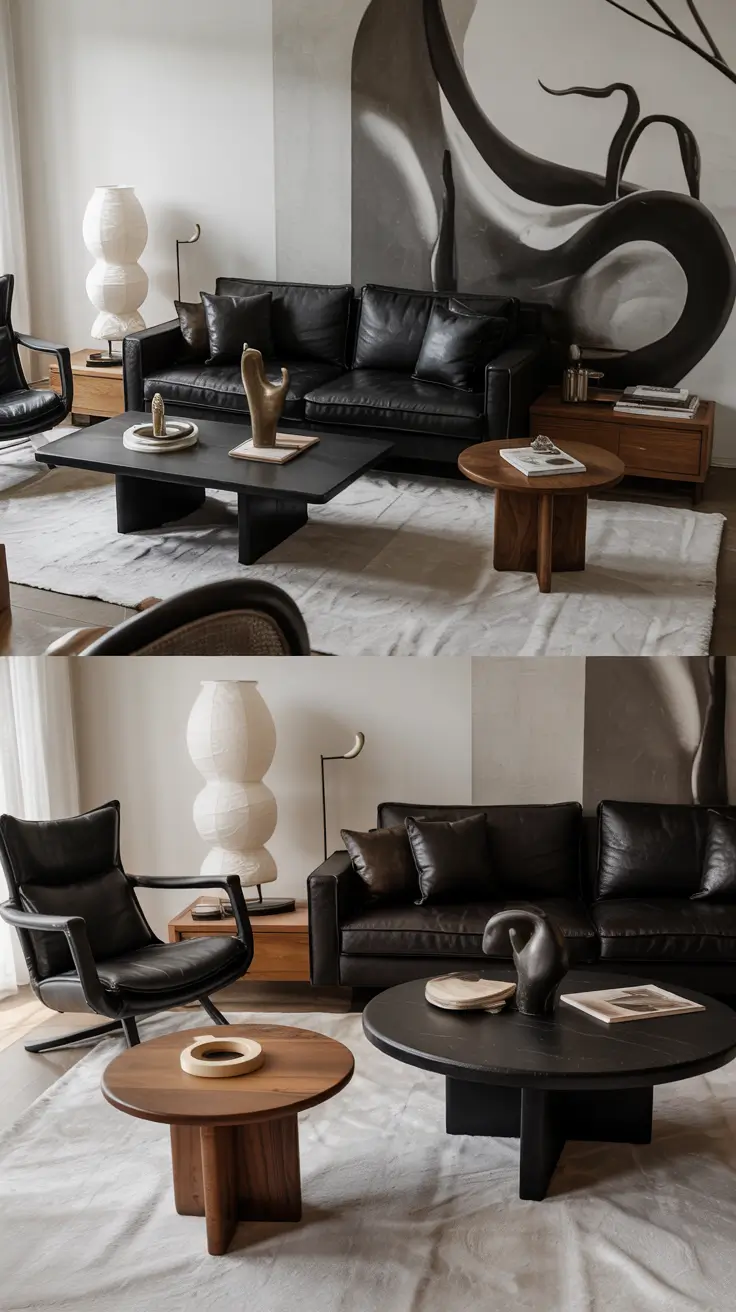
I typically begin with one major black piece, such as a sofa, media console, or pair of accent chairs, and then I build out the room with supporting tones like walnut, brown, white, or muted gray. A black leather chair can look especially refined when paired with a lighter fabric sofa, while a matte black coffee table adds weight to the center of the room without overwhelming it. I often include textured fabrics like boucle, woven linen, or ribbed velvet so the room does not become visually flat. Metal details in black can also appear on floor lamps, curtain rods, or shelving frames, creating repetition that strengthens the design. If the room needs softness, I add pillows, a pale rug, and natural wood tables to keep the furniture modern but approachable. This combination gives me a contemporary room that feels balanced rather than severe.
I have noticed that black furniture succeeds best when it is supported by contrast and negative space. If every piece is dark, the room can lose depth, so I usually leave some areas visually light through walls, textiles, or artwork. Many design editors in major US home publications emphasize contrast as the key to using darker interiors successfully, and I think that advice is especially relevant here. In my own projects, I often use black to create a focal line, then I soften the rest of the room so the contrast feels deliberate. That balance helps the room stay comfortable for everyday life instead of looking too staged. For anyone exploring living room furniture modern styling, black remains one of the clearest ways to create polish and confidence.
What I would still add to strengthen this section is a clearer sensory layer that keeps the room from feeling too rigid. I would bring in one tactile element like a chunky woven throw, a textured ottoman, or a soft ivory rug to create relief against the sharper furniture lines. I also think a warm wood or bronze detail is often missing in black-centered rooms, and that addition can make the palette feel richer and more human. A large table lamp or layered wall lighting would also improve the mood, especially in the evening when black finishes can either glow beautifully or disappear too much. I would not overload the room with decor, but I would include a few sculptural accessories to keep the style from feeling generic. With those additions, black furniture becomes a sophisticated foundation rather than a limiting color choice.
13. White Living Room Furniture Inspiration For Clean And Bright Interiors
White furniture continues to be one of the most effective ways to make a living room feel brighter, lighter, and more spacious. I often use it when the goal is to create calm and visual clarity without sacrificing comfort or character. In 2026, white interiors are becoming more layered, which means the room no longer relies on one flat tone but instead uses varied whites, creams, and soft natural textures. This approach works especially well for people searching for living room furniture ideas cozy enough for daily use but still elegant in appearance. I find that white furniture supports many directions, from coastal to modern to traditional, depending on the surrounding materials. It is one of the most adaptable choices for a fresh living room furniture design.
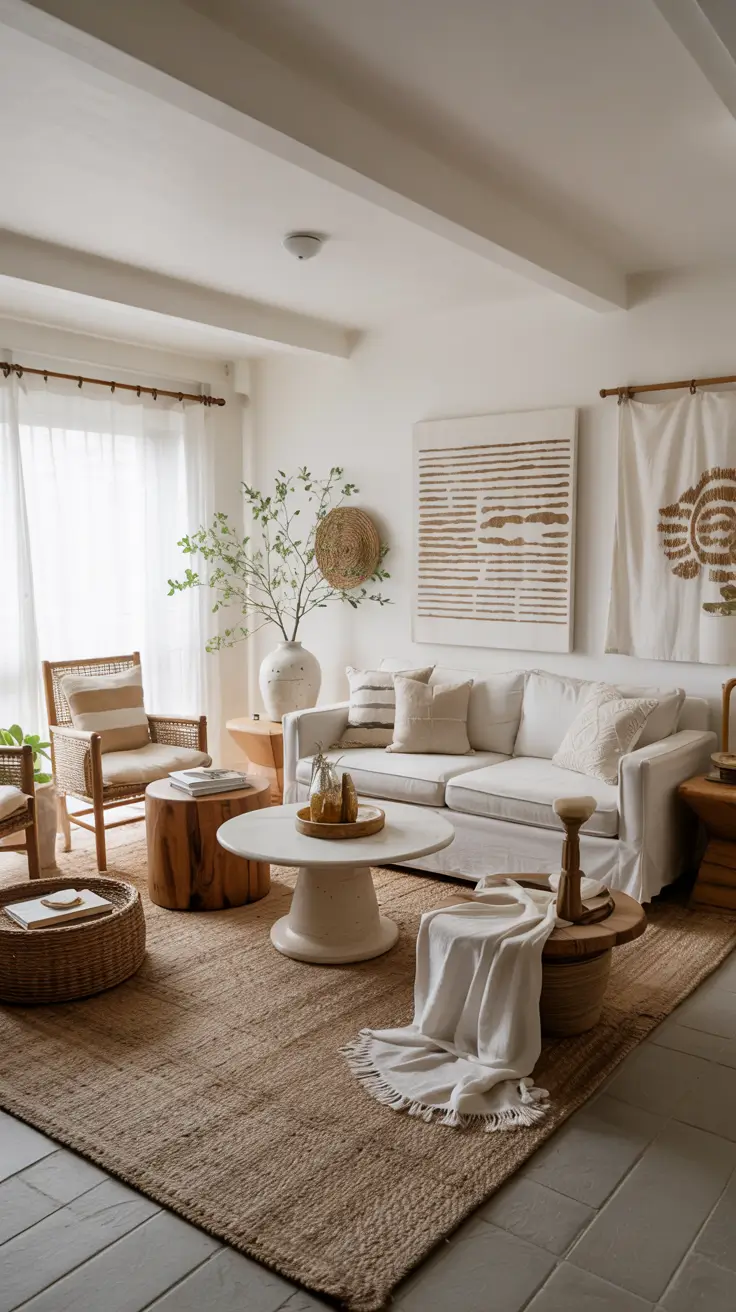
When I plan a white living room, I start with the main upholstered pieces, usually a sofa and one or two chairs in practical performance fabric or textured weave. I then add warmth with wooden side tables, a natural fiber rug, and soft-toned decor so the room feels layered rather than sterile. White furniture pairs especially well with walnut, pale oak, glass, and brushed metal, because those materials keep the space open while adding enough variation. I also think the coffee table matters a great deal here, since it can ground the room and prevent the seating from visually floating. Curtains, lamps, and storage pieces should support the airy atmosphere, so I avoid overly bulky forms unless the room is large enough to absorb them. This kind of arrangement gives me a clean and bright interior that still feels relaxed and livable.
Personally, I think the success of white furniture depends on how honestly the room is styled for real life. If the room lacks texture, it can feel unfinished, but if I layer upholstery, textiles, wood grain, and a few contrasting accents, the whole space becomes much more dynamic. American design coverage often recommends mixing tone-on-tone neutrals rather than relying on one shade of white, and I have found that advice consistently useful. In practice, I like combining white upholstery with beige, sand, oatmeal, or pale gray elements, because the room stays light while gaining depth. That layered neutrality also makes seasonal updates easier without changing the main furniture. For readers interested in living room furniture inspiration, white remains one of the easiest foundations to adapt over time.
To make this section feel more complete, I would add more guidance around durability and visual maintenance. White furniture performs best when I choose practical fabrics, removable covers, or finishes that can handle regular use without constant worry. I would also add one stronger contrast element, such as black hardware, a dark wood side table, or framed art, so the room does not become too soft or undefined. A white room often needs one grounding feature that sharpens the composition and adds depth. I also believe scent, greenery, and natural daylight matter here more than people expect, because they help the space feel alive rather than overly styled. When all of these details are considered, white furniture becomes inviting and practical instead of delicate and hard to maintain.
14. Brown Living Room Furniture Arrangement Ideas With Timeless Appeal
Brown furniture has a lasting quality that I continue to value because it adds depth, comfort, and a sense of permanence to the living room. I see it as one of the most dependable choices for anyone who wants a timeless interior that still feels current in 2026. Brown can lean classic, rustic, or modern depending on the silhouette, upholstery, and finishes around it, which makes it especially versatile. I often use brown furniture arrangement ideas when I want a room to feel grounded and welcoming without relying on overly trendy statements. This color works beautifully in spaces that need visual warmth, especially when the architecture feels plain or the light is cooler. To me, brown is one of the easiest colors to arrange because it naturally supports many surrounding tones and materials.
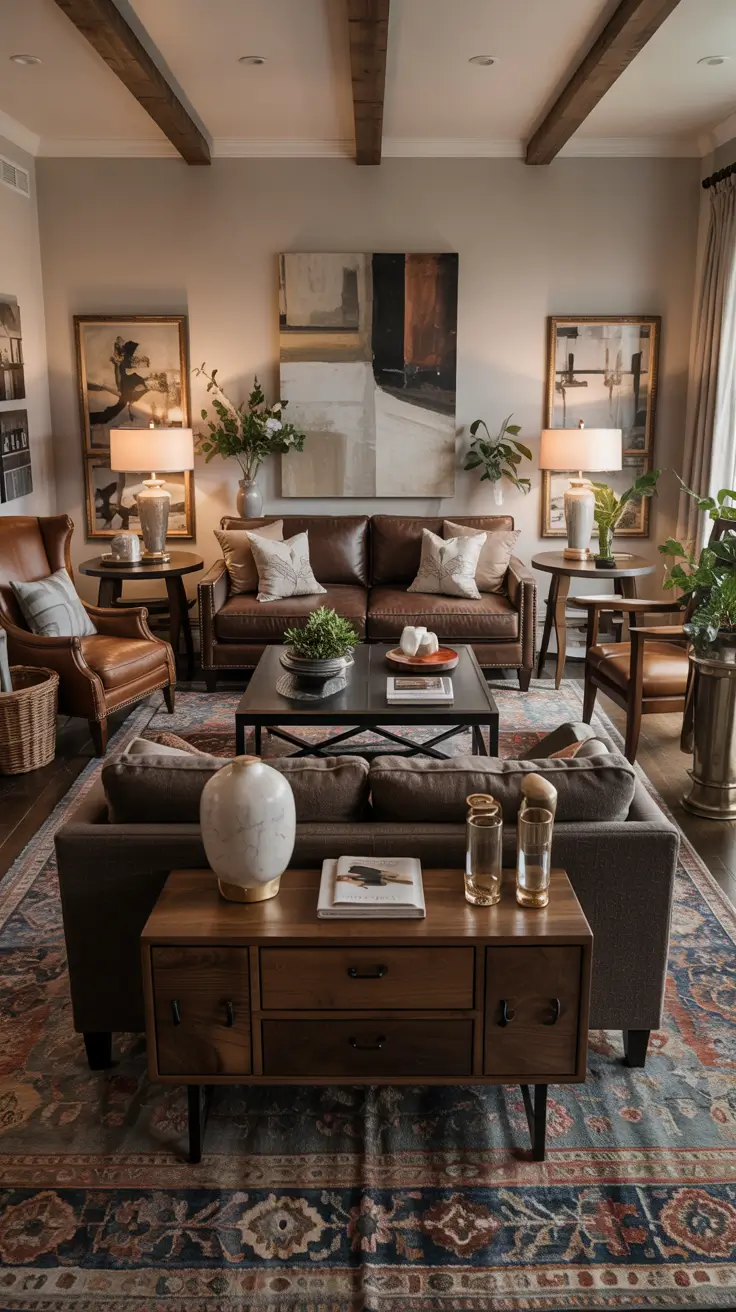
In practical terms, I usually begin with a brown sofa, leather chair, or dark walnut media unit and then build a layered palette around it. Brown combines well with cream, white, black, olive, rust, and muted blue, giving me many options for decor and supporting furniture. If the room needs a more traditional feel, I lean into wooden tables, classic lamps, and tailored upholstery, but if I want a fresher look, I pair brown with cleaner shapes and lighter textiles. A leather piece is often especially useful because it introduces texture and develops character with time. I also like bringing in a rug with subtle pattern to break up the solid tones and keep the arrangement from looking too dense. This approach creates a room that feels both established and adaptable.
From my perspective, brown furniture works best when I avoid making everything too dark or too heavy. I usually balance it with lighter walls, reflective surfaces, or airy curtains so the room keeps enough visual movement. Many professional designers point out that darker wood and leather need contrast to show their richness properly, and I think that is exactly right. I have seen brown rooms become far more refined simply by adding a pale rug, a white lamp shade, or a softer chair fabric nearby. That is why I do not see brown as old-fashioned at all – I see it as a stable base that can support many layout ideas and styling directions. For readers interested in timeless living room furniture placement, brown remains one of the safest and most rewarding foundations.
What I would add to deepen this section is a stronger focus on layering within the same warm family. I would suggest including camel, taupe, walnut, and softer brown accents so the palette feels developed instead of one-note. A room based on brown furniture often benefits from one unexpected material, such as stone, glass, or matte black metal, to create contrast without losing warmth. I would also add a note about lighting, because warm bulbs and shaded lamps can make brown finishes look significantly richer in the evening. In my experience, the missing piece in many brown interiors is a sense of lift, which can come from taller drapery, vertical shelving, or a large mirror. Once those elements are in place, the arrangement feels complete and much more dynamic.
15. Purple Living Room Furniture Decor Ideas For A Sophisticated Accent
Purple is not the most common choice in living room furniture decor, which is exactly why I think it can be so effective when used with intention. In 2026, I see purple working less as a dominating wall-to-wall theme and more as a refined accent that adds depth and individuality. It can feel moody, elegant, creative, or softly romantic depending on the exact tone and the surrounding finishes. I usually recommend purple for readers who want their living room furniture design to feel more expressive without becoming visually overwhelming. Deeper plum shades can create richness, while dusty lavender or muted mauve can soften a room with subtle color. In my view, purple has real potential when it is paired with disciplined styling and a thoughtful arrangement.
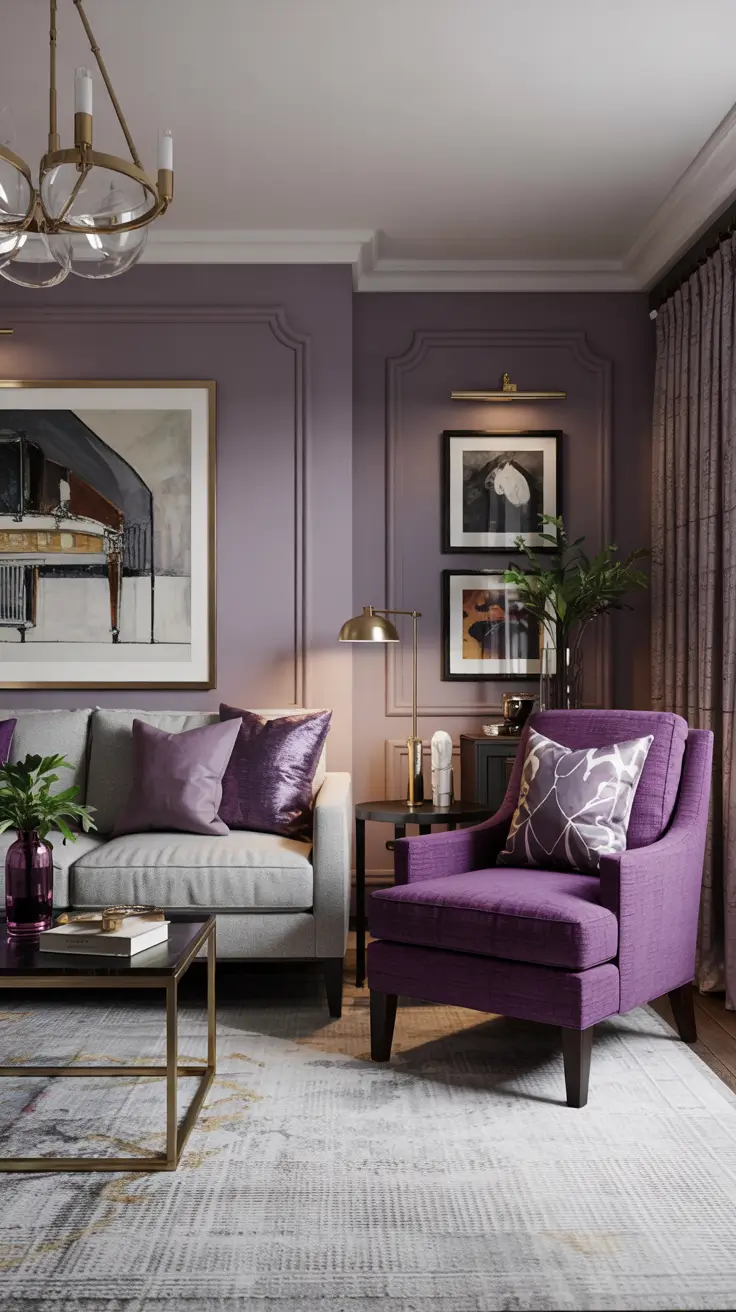
When I work purple into a room, I usually start with one feature piece such as an accent chair, ottoman, or sofa pillow grouping before deciding whether the color deserves a larger role. Purple looks especially strong alongside brown wood, black accents, white upholstery, and brass or bronze details. I also like using it in velvet or textured woven fabric, because those materials bring out the depth of the color and make it feel more luxurious. A purple accent chair can instantly energize a neutral living room furniture layout, especially when the room already includes soft grays, creams, or dark wood. I often repeat the tone in artwork, a decorative vase, or a patterned rug so the color feels intentional rather than isolated. This gives the room sophistication while keeping the overall decor easy to live with.
I have found that purple works best when it is treated as a supporting character rather than the only idea in the room. Too much saturation can quickly feel theatrical, so I prefer controlled placement and a strong neutral base. Advice from respected interior media often reinforces the value of using bold color as an accent rather than an all-over treatment, and I think purple benefits from that discipline more than most shades. In my own experience, one well-placed purple element can bring more personality than several louder decor choices combined. It is especially useful in rooms that already feel complete structurally but still need a distinct visual identity. For readers looking for living room furniture inspiration beyond the usual palette, purple offers a polished and memorable option.
To expand this section properly, I would add a little more direction on tone selection and room mood. Cooler purple tones can feel contemporary and calm, while warmer plum and wine tones can create a more dramatic, cocooning effect. I would also include one grounding neutral in every purple room, such as white, taupe, black, or walnut, to prevent the color from floating without context. A metallic accent, especially aged brass, is another detail I think strengthens this palette and makes the room feel finished. I would also pay attention to natural light, because purple shifts noticeably depending on whether the room is bright or shadowed. With those choices in place, purple becomes less risky and much easier to use in a sophisticated way.
16. Farmhouse Living Room Furniture Ideas With Comfort And Character
When I create farmhouse-inspired spaces, I focus first on comfort, proportion, and visual softness. This style works especially well for people who want living room furniture ideas cozy enough for daily life but still structured enough to feel intentional. A farmhouse room usually depends on a balanced layout, gentle contrast, and pieces that feel grounded rather than overly polished. I often recommend this direction when someone wants warm living room furniture inspiration that does not feel formal or stiff. In 2026, farmhouse looks more refined than before, with cleaner lines and less themed decor. That update makes it much easier to use farmhouse as part of a modern living room furniture arrangement without making the room feel dated.
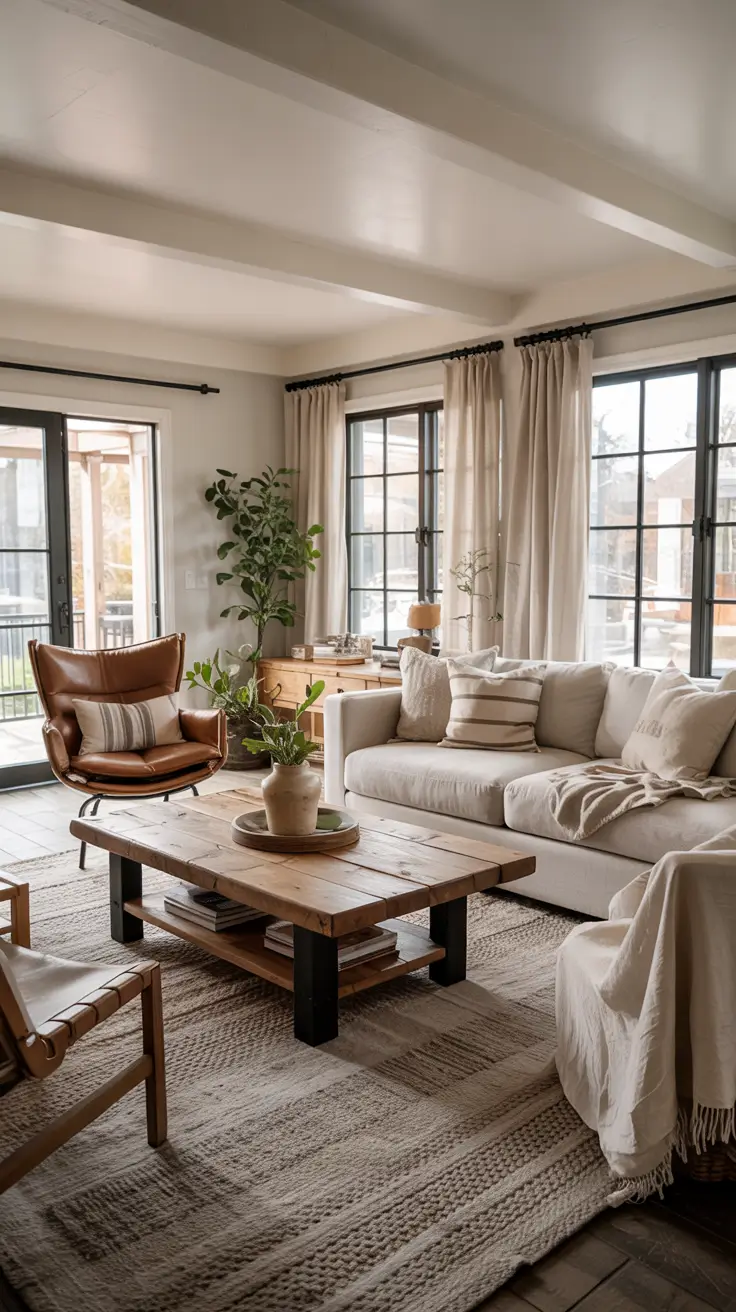
I usually begin with a comfortable upholstered sofa in white, brown, or soft oatmeal, then layer in wooden side tables, a coffee table with visible grain, and accent chairs that add shape without crowding the room. Leather details work beautifully here, especially in a warm brown chair or ottoman, because they bring depth and make the room feel lived in. I also like to include a large area rug, open shelving, simple table lamps, and a few black metal accents to keep the palette from becoming too soft. These choices support both the living room furniture layout and the emotional tone of the room. When I arrange the furniture, I make sure traffic can move easily around the main seating area. Farmhouse arrangement ideas succeed when every piece feels useful, relaxed, and visually connected.
From my perspective, the best farmhouse rooms avoid too many decorative clichés and instead rely on authentic texture and good furniture scale. I have found that the room feels strongest when the larger pieces stay simple and the personality comes from layered textiles, natural wood, and a few collected accessories. Better Homes and Gardens has often highlighted the value of mixing comfort with restraint in farmhouse interiors, and I agree with that approach because it keeps the room fresh rather than overly themed. I also think this is one of the easiest styles for people learning how to arrange furniture in a way that feels welcoming. The softness of the materials helps hide small imperfections in the layout. That flexibility makes farmhouse one of the most forgiving and practical options for everyday living.
If I wanted to make this section more complete in a real home, I would add woven storage, linen curtains, and one larger statement piece such as a reclaimed wood console or oversized mirror. I would also pay attention to placement near windows so the room gets as much natural light as possible. A farmhouse room benefits from breathing space, so I would avoid adding too many small decorative objects. I would rather include one extra floor lamp, a textured throw, and a sturdy bench if the room has enough square footage. Those additions strengthen the function of the space without interrupting the calm arrangement. In my experience, that is what gives farmhouse living room furniture modern relevance in 2026.
17. Rustic Living Room Furniture Design Ideas For A Natural Feel
Rustic design appeals to me when I want a room to feel rooted, tactile, and connected to natural materials. It is one of the strongest living room furniture design directions for people who prefer visible texture, grounded colors, and a sense of quiet stability. A rustic room does not need to look rough or heavy if the proportions are handled well. In fact, I think the most successful versions in 2026 feel edited, warm, and surprisingly sophisticated. The key is to use fewer but stronger pieces that create a clear sense of structure. That approach supports smart living room furniture arrangement ideas while keeping the space comfortable and highly usable.
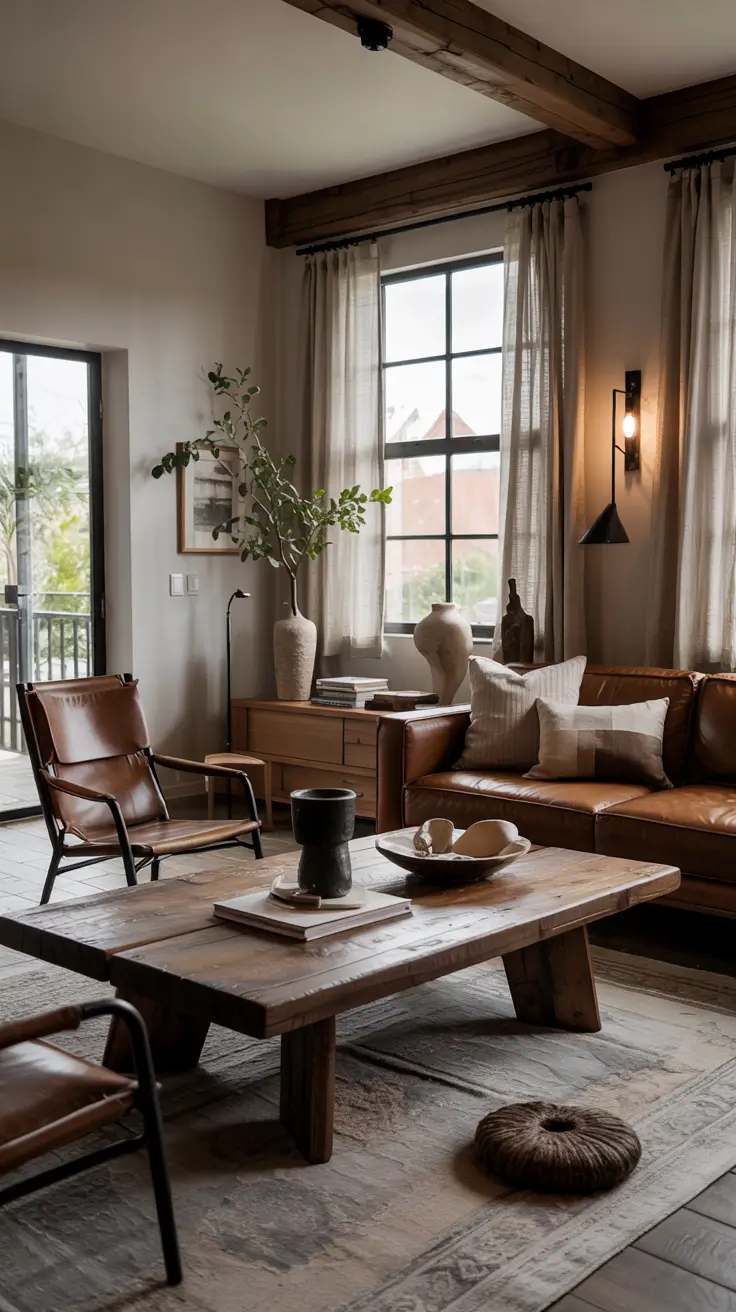
I usually build a rustic room around a wooden sofa table, a substantial coffee table, deep seating, and accent pieces in dark wood, walnut, or weathered oak. Wooden sofa set designs modern enough for current homes can still work within rustic interiors if the upholstery feels soft and the frames are not too bulky. I often mix in leather chairs, a low storage cabinet, stone or ceramic accessories, and layered textiles in brown, cream, and muted earth tones. Black lighting or hardware can give the room definition and prevent the palette from looking flat. The furniture placement matters a lot here because heavy-looking pieces need enough open space around them. When I plan the layout, I try to keep the center visually open so the room feels grounded rather than crowded.
I personally like rustic interiors best when they show honest materials instead of decorative imitation. Real wood variation, subtle imperfections, and natural finishes give the room more credibility and a more relaxed atmosphere. House Beautiful and other design publications often emphasize the emotional warmth of natural materials, and I think that advice is especially useful in rustic spaces where texture does most of the design work. I have also noticed that rustic rooms become more timeless when the accessories stay restrained and the main furniture carries the personality. That is why I prefer a few meaningful pieces over many small accents. In my experience, rustic living room furniture decor works best when it feels calm, layered, and naturally collected over time.
To strengthen this kind of room, I would add one larger woven rug, textured curtains, and a tall floor lamp that softens the visual weight of the wood furniture. I would also consider adding one lighter upholstered piece to stop the room from becoming too dark or visually dense. Rustic spaces benefit from contrast, so I often use white or soft beige walls to support the deeper furniture tones. If the room allows it, I would include a sideboard or console that adds storage without breaking the visual rhythm. I would also make sure the arrangement supports conversation and not just television viewing. That small shift often makes rustic layout ideas feel much more intentional.
18. Mid Century Modern Living Room Furniture Ideas That Stay Stylish
Mid century modern remains one of the most reliable choices when I want a room to feel clean, stylish, and easy to live with. It continues to shape living room furniture modern trends because it combines elegance with practical scale and simple forms. I find that this style suits both small and medium spaces particularly well because the furniture usually has lighter visual weight and more visible leg space. That makes the room feel open while still offering enough seating and storage. Mid century modern also works beautifully for people who want strong layout ideas without too much decorative layering. In 2026, it still feels current because its balance of form and function remains highly relevant.
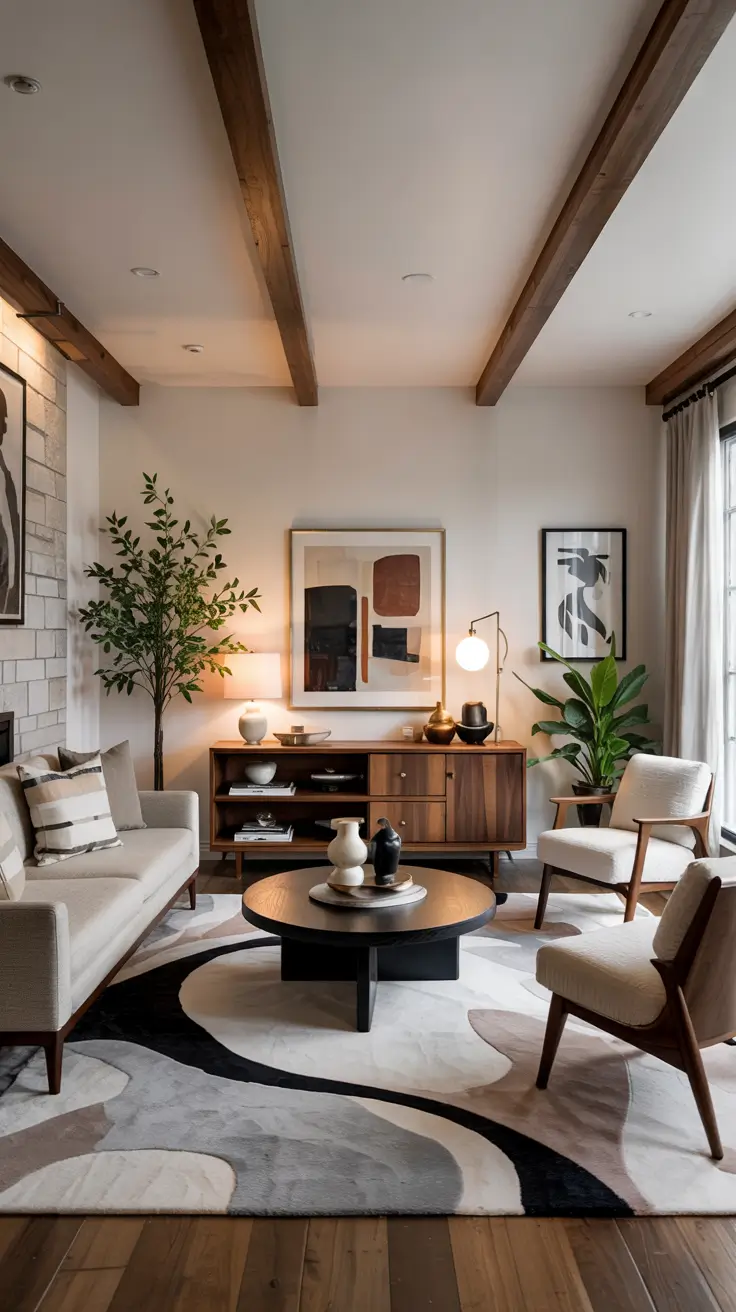
When I design in this style, I usually start with a tailored sofa, slim wooden side tables, a low-profile media console, and one or two sculptural accent chairs. Walnut tones, black details, and white or warm neutral upholstery usually create the clearest foundation. I often add a round or rectangular coffee table with simple geometry, along with lighting that has clean lines and a subtle retro influence. Mismatched seating can work especially well here, as long as the shapes relate and the materials stay cohesive. I also pay close attention to living room furniture placement because mid century rooms depend on spacing and visual rhythm. The arrangement should feel open enough to move through easily but close enough to support conversation.
From my experience, mid century modern works best when the room is not overloaded with accent pieces. I think many people make the mistake of adding too much decor, which weakens the clarity that makes this style appealing in the first place. Architectural Digest has often noted the importance of thoughtful editing in modern interiors, and I believe that is especially true here. I prefer to let the furniture silhouettes, wood tones, and lighting do most of the visual work. That creates a room that looks polished without feeling stiff. It is also one of the best styles for people who want living room furniture layout ideas that remain stylish over many years.
If I were refining this room further, I would add one abstract rug, a floor lamp with a clean profile, and a compact storage piece if the space needed more function. I would also make sure there is a mix of hard and soft surfaces so the room does not feel too sharp. A few well-chosen textiles can make a big difference in helping mid century rooms feel more cozy and approachable. I would avoid overfilling shelves or using too many small decorative items because they interrupt the calm structure. Instead, I would add one larger piece of wall art and a plant to soften the geometry. That keeps the room practical, balanced, and visually consistent.
19. Traditional Living Room Furniture Layout Ideas With Updated Elegance
Traditional living rooms still have a strong place in 2026, especially when they are updated with better spacing and simpler styling. I think this direction is ideal for people who appreciate symmetry, comfort, and a sense of refinement but do not want the room to feel too formal. A traditional layout often gives the clearest answer to how to arrange seating in a way that supports conversation and visual balance. It works especially well in homes with defined architectural features, larger windows, or a central fireplace. When I plan this kind of room, I focus on order, proportion, and softness rather than heavy decoration. That is what allows traditional living room furniture arrangement to feel elegant and current at the same time.
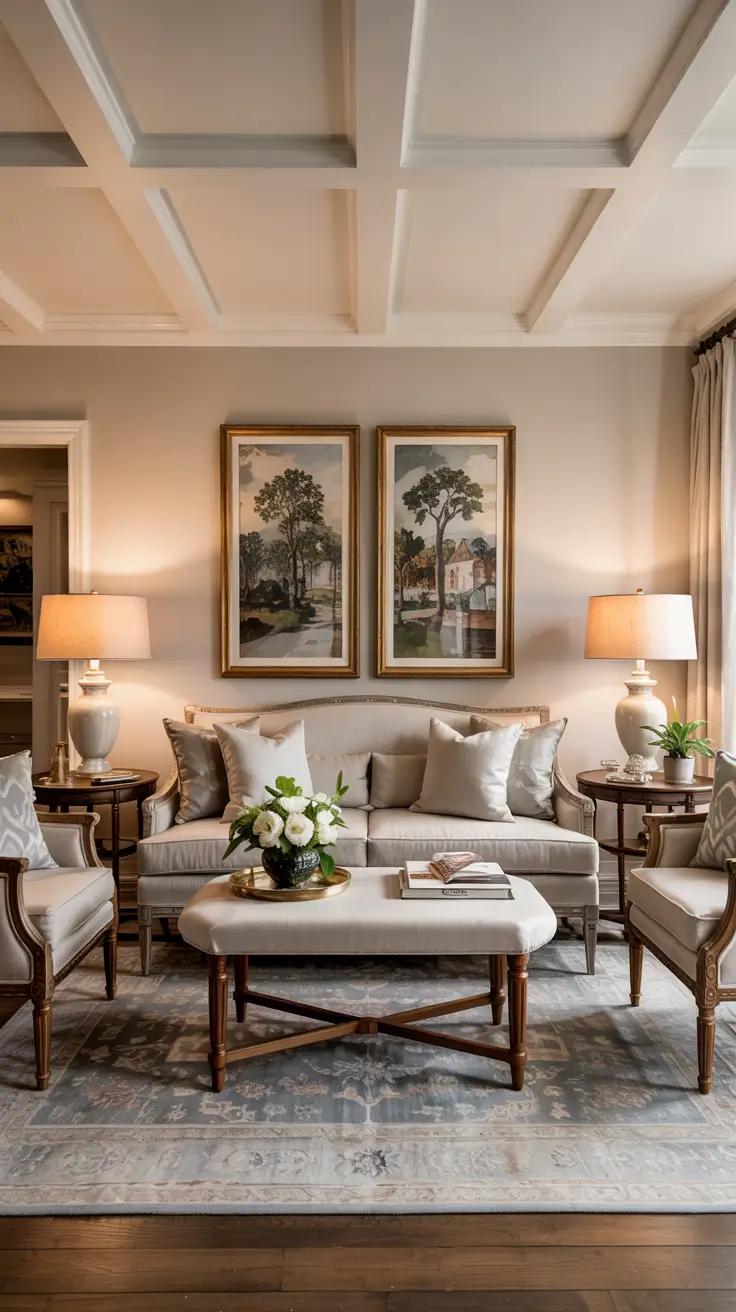
I usually begin with a classic sofa, matching or complementary armchairs, a central coffee table, and side tables that anchor the seating group. Wooden pieces in walnut, dark brown, or medium wood tones give the room depth, while upholstered furniture in white, cream, taupe, or muted color keeps it approachable. I often recommend layering in a rug, lamps, framed art, and one cabinet or console to support storage and visual weight. Traditional rooms can also benefit from leather accents if they are used with restraint. Placement is especially important because symmetry only works when the furniture dimensions are right for the room. I always check that the arrangement feels balanced from multiple angles, not only from the main entry point.
I have found that updated traditional interiors feel strongest when they keep the structure of the style but remove excess ornament. Instead of relying on many decorative details, I prefer to use strong shapes, quality materials, and a few carefully chosen accessories. Southern Living and similar publications often show how traditional rooms become more relevant when they mix classic furniture with lighter styling, and I think that is an excellent principle. I also like this style because it naturally supports arrangement tips that make the room feel orderly and comfortable. For many people, that sense of calm organization matters more than following a trend. In my view, traditional design becomes most beautiful when it feels lived in rather than staged.
To improve this type of room, I would add one modern element such as a cleaner-lined lamp, a simplified rug pattern, or a less formal accent chair. That contrast helps the room feel updated without losing its identity. I would also consider whether the room needs more texture, since traditional spaces can sometimes feel too smooth if everything matches too closely. Linen curtains, a textured throw, or a slightly rustic side table can solve that problem. If the space is large, I might also include a reading corner to make the layout more dynamic. Those additions help traditional layout ideas feel more personal and adaptable.
20. Dark Wood Living Room Furniture Inspiration For Rich Layered Spaces
Dark wood furniture creates an immediate sense of depth and permanence, which is why I often use it when I want a room to feel rich and composed. This look can be especially effective in 2026 because many people want interiors that feel grounded and substantial rather than disposable. The challenge is making dark wood feel layered and inviting instead of heavy. I approach that by combining strong furniture forms with lighter fabrics, thoughtful spacing, and enough contrast to keep the room open. When handled well, dark wood can support some of the most striking living room furniture inspiration available today. It also works across several styles, including traditional, rustic, coastal, and even modern rooms.
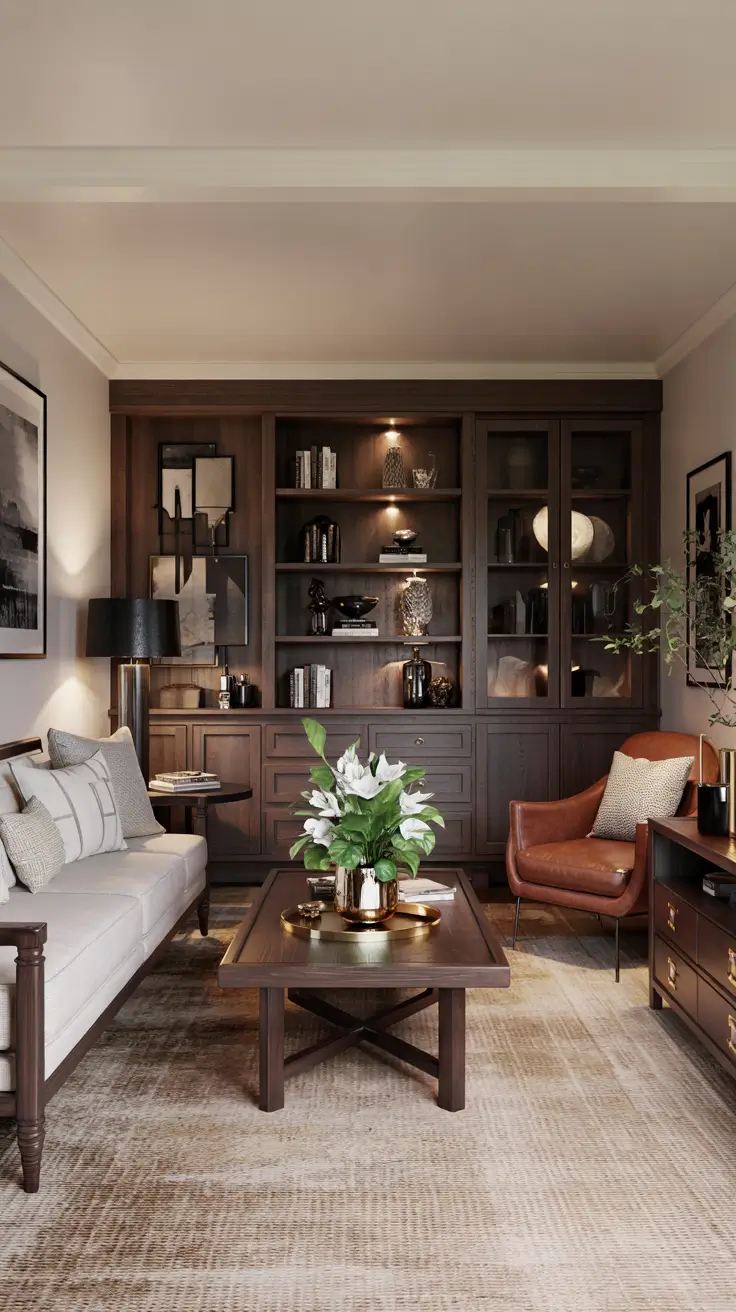
I usually start with one or two anchor pieces in dark wood, such as a media console, coffee table, bookcase, or sideboard, then build around them with upholstery in white, cream, soft gray, or warm beige. Walnut, espresso, and deeper brown finishes work especially well when paired with rugs, lamps, and seating that break up the visual density. I often include black accents as well, but only in small amounts so the palette stays layered rather than overly dark. A leather chair, a wooden side table, and a large rug can help create a balanced arrangement that feels grounded and comfortable. The placement of each dark wood piece matters because too many heavy forms in one zone can make the room feel compressed. I prefer to spread visual weight evenly and allow negative space to do part of the work.
In my experience, dark wood rooms become most successful when light is treated as part of the furniture plan. I always think about window exposure, lamp height, and reflective surfaces because they help the deeper finishes feel elegant instead of flat. Elle Decor has frequently shown that darker interiors need contrast and texture to stay dynamic, and I strongly agree with that principle. I have also noticed that dark wood looks more current when paired with simpler silhouettes rather than ornate ones. That combination gives the room maturity without making it feel old-fashioned. For readers looking for layout ideas, this is a useful lesson because furniture tone affects how spacious a room appears.
To make this type of room more complete, I would add lighter textiles, one metallic or ceramic accent, and possibly a mirror to reflect both light and surrounding materials. I would also watch the wall color carefully, since the wrong background can make dark wood feel too severe. In many cases, a soft warm neutral wall supports the furniture better than stark white. If the room feels too formal, I would introduce a cozy element such as a textured throw, a soft ottoman, or a gently curved chair. Those details help the arrangement feel more livable and less rigid. In my view, dark wood works best when richness is balanced by softness and breathing space.
21. Walnut Living Room Furniture Design Ideas For A Refined Finish
When I want a living room to feel polished without becoming cold, I often start with walnut furniture. Walnut brings depth, warmth, and a naturally rich grain that instantly gives the room a more refined identity. In 2026, I see this finish working especially well in interiors that balance living room furniture modern choices with timeless shapes. It helps create a room that feels elevated but still livable, which is important when the space is used every day. I find that walnut works beautifully in both large open layouts and more compact rooms because it adds presence without looking heavy when paired with the right tones.
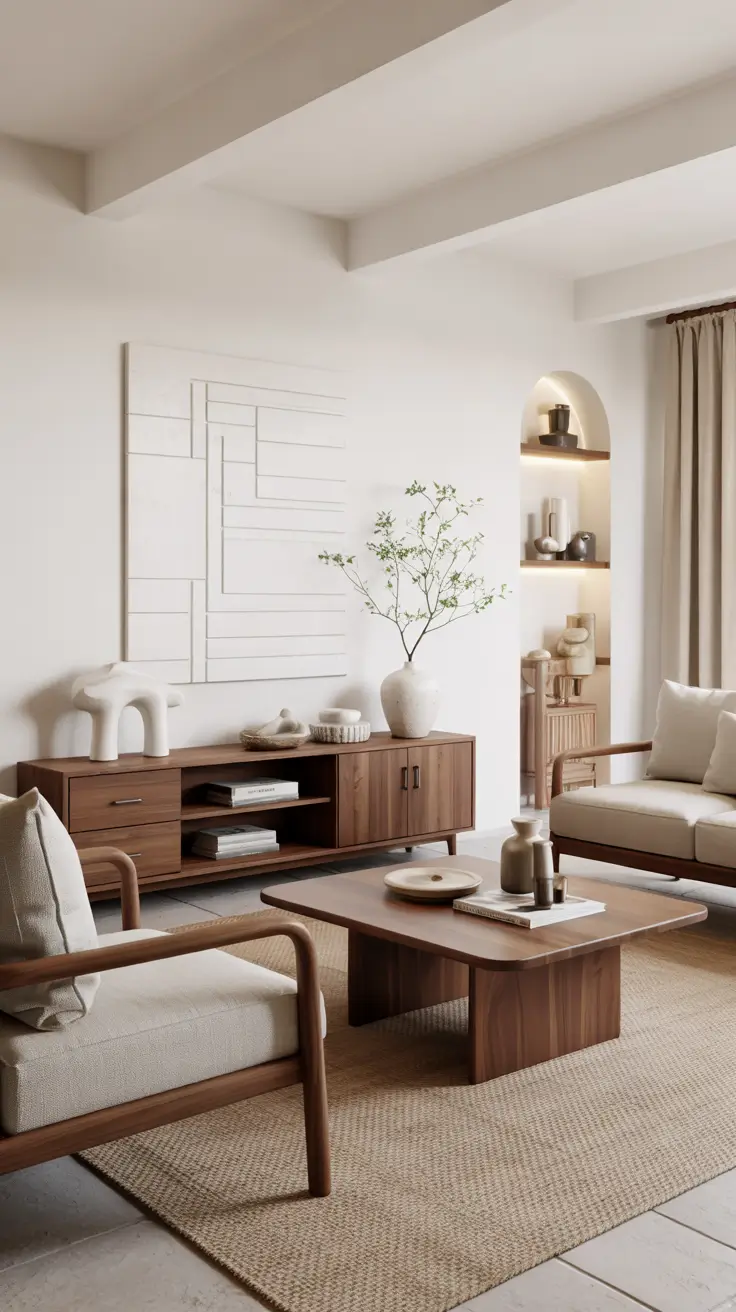
I usually recommend beginning with one or two anchor pieces, such as a walnut media console, a coffee table, or a wooden sofa set designs modern option with clean lines. These pieces establish structure and help guide the rest of the living room furniture placement in a calm and organized way. I like pairing walnut with soft upholstery in white, brown, or muted beige because the contrast keeps the room balanced. If the room needs more texture, I add linen curtains, a woven rug, and a ceramic lamp to soften the polished wood. This combination makes the furniture feel intentional rather than overly formal.
From my experience, walnut is one of the easiest dark woods to work with because it already looks complete and does not need excessive styling. Designers and editors at well-known interior publications often emphasize the value of natural materials in creating lasting interiors, and I agree with that approach because walnut ages gracefully. I also think it supports a more thoughtful living room furniture design since every added piece has to justify its place. In practice, I notice that walnut encourages restraint, and that usually leads to better decisions about scale, spacing, and decor. For readers who want a room that feels mature and calm, this is one of the strongest directions to consider.
To make this section even stronger in a real room, I would add brushed metal details, layered lighting, and a few lighter textural elements to keep the finish from dominating the space. A floor lamp with a fabric shade, a textured throw, and a low arrangement of books and ceramics can make the room feel more personal. I would also pay attention to wall color, because walnut looks especially good against warm white, soft greige, or muted taupe. If the room has limited natural light, I would avoid too many additional dark surfaces so the furniture remains the focal point. This is how I keep walnut living room furniture inspiration feeling refined rather than overly serious.
22. Coastal Living Room Furniture Ideas For Light Relaxed Interiors
When I think about coastal living room furniture ideas for 2026, I do not think about theme decor or obvious beach references. I think about light, airiness, soft contrast, and furniture that makes the room feel relaxed from the moment you enter. A coastal direction works especially well for readers who want living room furniture ideas cozy enough for everyday life but still fresh and uncluttered. I find that this style depends less on decoration and more on the feeling created by color, spacing, and natural textures. It is one of the best choices for interiors that need to feel open and calming.
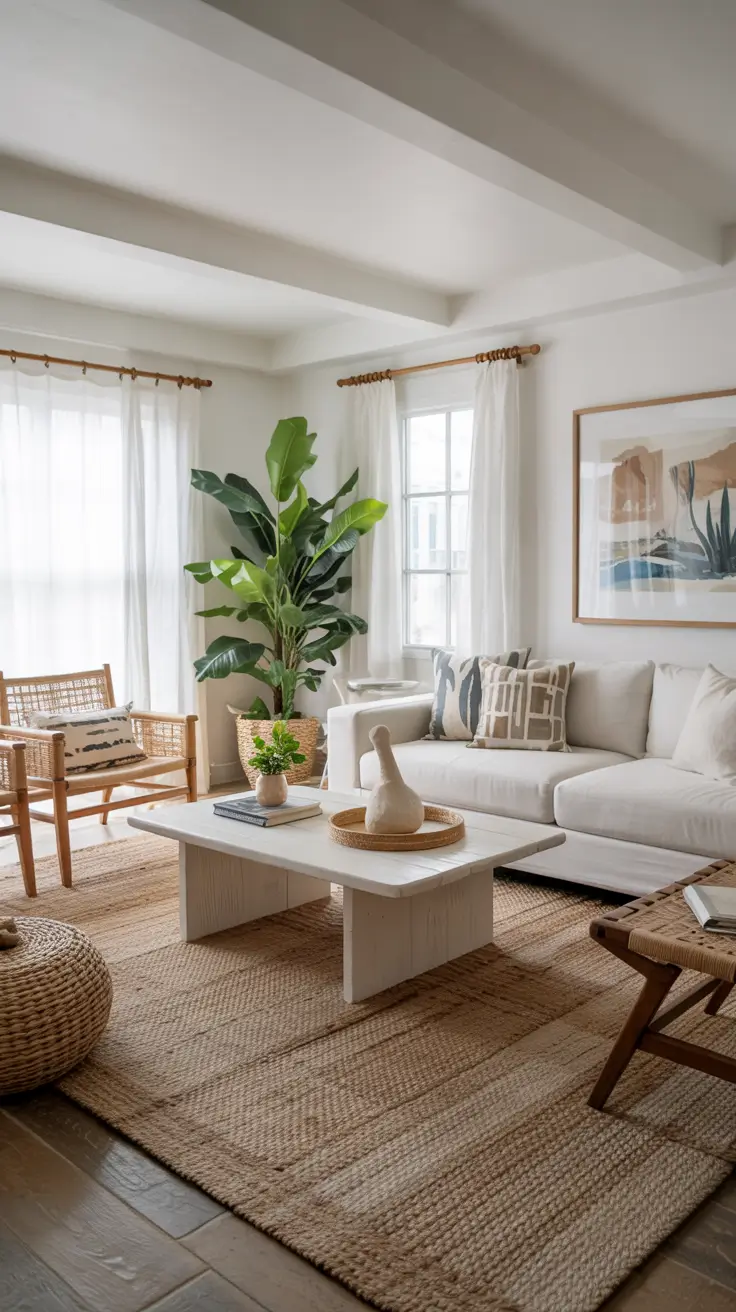
I usually build this look with a comfortable sofa in white or warm ivory, a pale wood coffee table, and accent chairs in light woven or slipcovered finishes. The living room furniture arrangement should feel open, with enough walking space to support an easy layout instead of a crowded one. I like to add a jute or wool rug, soft blue or sandy neutral cushions, and simple curtains that let light move through the room. This helps the living room furniture decor support the mood without becoming too literal. In many cases, less furniture works better here because the openness is part of the design.
Personally, I think coastal interiors succeed when they feel edited and natural rather than styled for effect. I often look to advice from respected design media that recommend layering tactile materials instead of relying on novelty accents, and I find that approach especially useful in this kind of room. A relaxed interior still needs structure, so I pay attention to proportions and keep the seating grouped in a way that supports conversation. I also like how this style adapts to different homes, from apartments to larger houses, because it is based on atmosphere more than architecture. For many readers, it offers dependable living room furniture inspiration that remains relevant beyond one season.
What I would still add to complete this section is a clearer finishing layer through art, lighting, and subtle contrast. A coastal room benefits from a few darker or more grounded notes, such as a weathered wood side table, a bronze lamp base, or soft brown accents that keep the palette from feeling too pale. I would also include storage furniture with simple lines so the room stays tidy and visually calm. If the room allows, a bench, ottoman, or extra chair can improve flexibility without breaking the relaxed mood. That is how I keep coastal living room furniture modern, useful, and easy to live with.
23. Living Room Furniture Arrangement Tips For Sectionals Sofas And Chairs
One of the most common questions I see is how to make sectionals, sofas, and chairs work together without the room feeling crowded or awkward. Good living room furniture arrangement starts with understanding how people move through the room and where conversation naturally happens. In 2026, I think the best arrangement ideas are less about strict symmetry and more about creating a practical zone that feels balanced from every angle. I always begin by identifying the focal point, which may be a sofa, a window, a fireplace, or a media wall. Once that is clear, the rest of the seating can be positioned with more confidence.
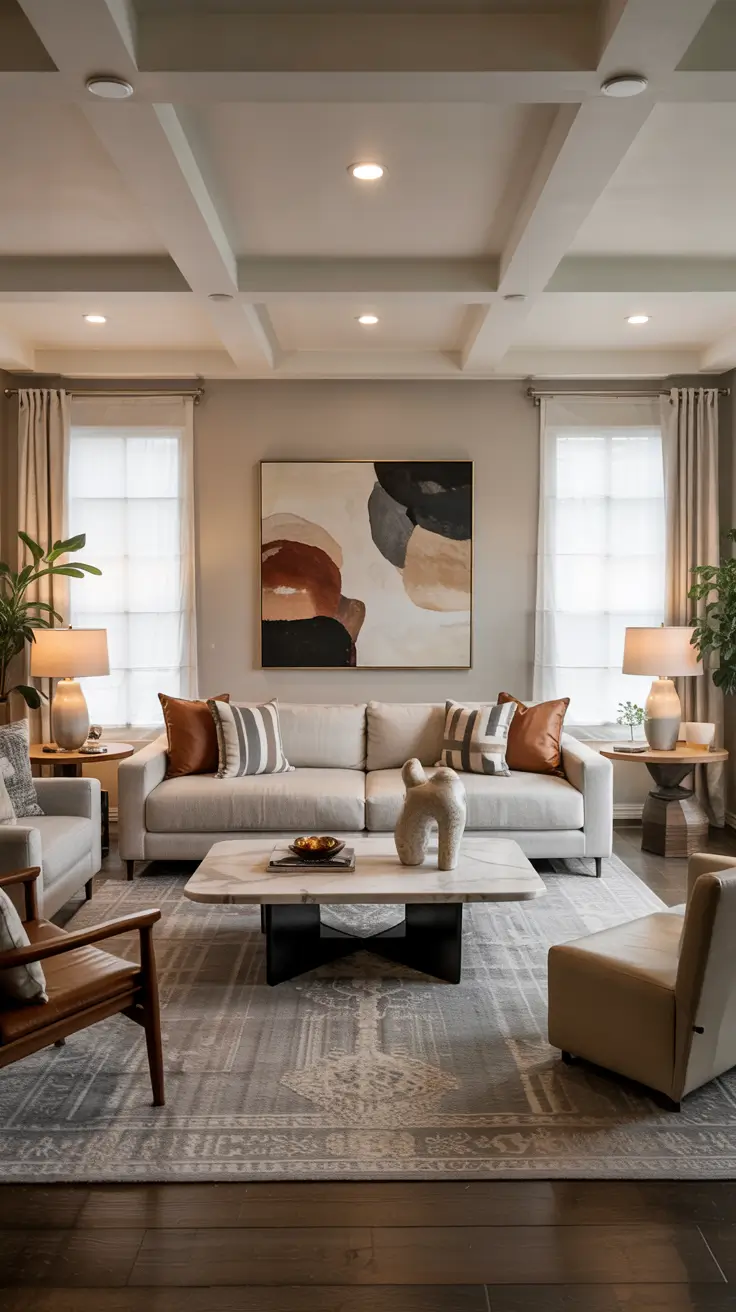
For sectionals, I usually recommend giving the main piece enough space to define the seating area without pushing every other item to the edges. A sectional works best when paired with one or two lighter chairs that visually open the arrangement and make the layout feel more flexible. With standard sofas, I often place chairs opposite or slightly angled to encourage conversation and improve the living room furniture layout. The coffee table should be close enough to use comfortably but not so close that movement becomes difficult. I also pay close attention to side tables, lamps, and rugs because they help each seat feel connected to the full arrangement.
In my experience, the strongest living room furniture arrangement ideas come from solving problems before adding more pieces. If a room already has a sectional, I do not try to fill every empty corner because that usually weakens the layout. I prefer to leave breathing room and let each seat have a clear purpose. Many professional designers recommend starting with function before decoration, and I agree because a beautiful room stops working the moment circulation becomes awkward. When I plan a room well, even mismatched seating can look intentional and comfortable.
To strengthen this type of section, I would add a few specific details that improve usability and visual flow. An area rug large enough to connect all major seating pieces is often the missing element in a weak arrangement. I would also add layered lighting so that each zone feels usable in the evening, especially when the sectional is deep or dark. If the room includes black, brown, or leather seating, I would soften it with textured textiles and lighter accents to avoid a heavy effect. These arrangement tips make it much easier to arrange a room that feels natural rather than forced.
24. Living Room Furniture Layout Ideas Centered Around A Statement Sofa
A statement sofa can completely shape a room, and I think that is why it remains one of the strongest living room furniture layout ideas for 2026. When the sofa has a distinctive form, color, or material, it naturally becomes the visual center of the interior. This approach works well for readers who want a clear design direction without adding too many competing features. I often use this strategy in rooms that need a stronger identity because one well-chosen sofa can guide the entire layout. It is especially useful in modern interiors where fewer pieces need to do more visual work.
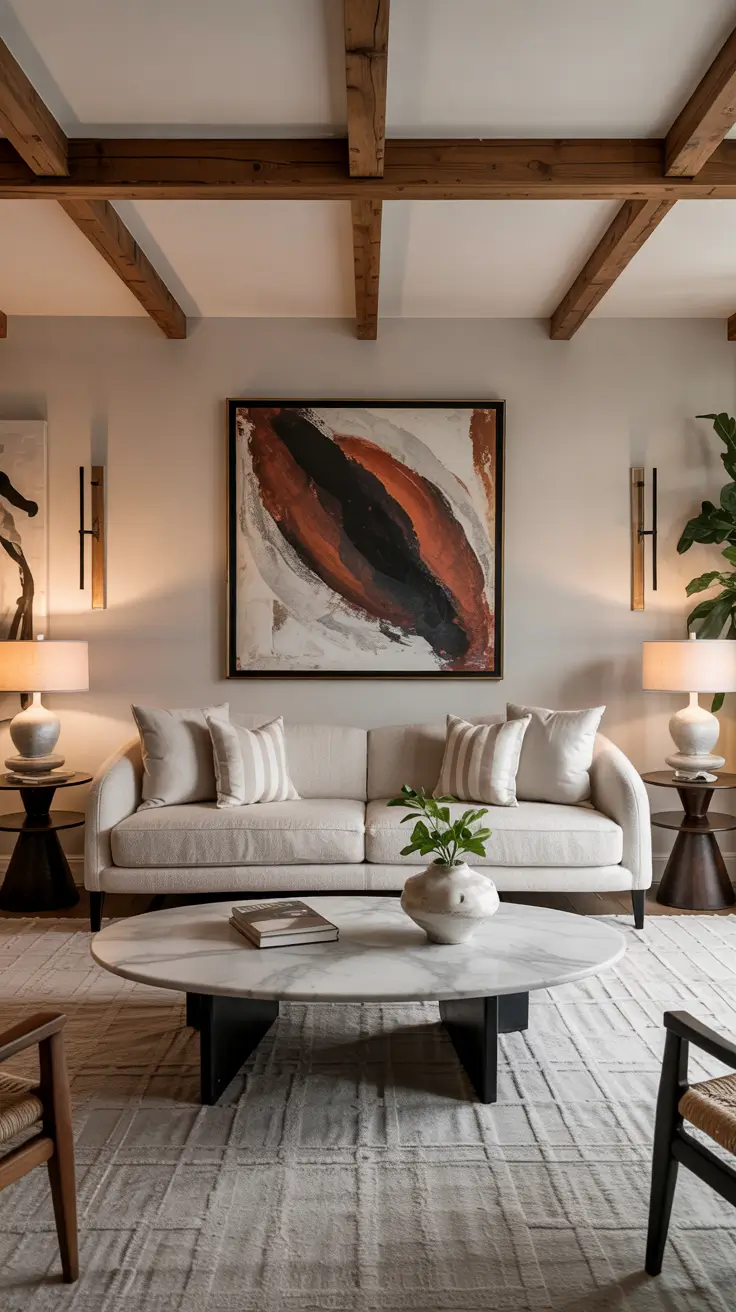
When I center a layout around a statement sofa, I keep the surrounding furniture more supportive and less dominant. A sculptural white sofa, a curved brown design, or a leather piece with strong lines can set the tone for everything else in the room. I usually pair it with a quieter coffee table, restrained side tables, and lighting that complements rather than competes. The living room furniture placement should frame the sofa, not distract from it, so I often use chairs, a rug, and art to reinforce its position. This makes the room feel cohesive and ensures the layout has a clear point of focus.
I like this approach because it reduces guesswork and makes decisions easier as the room develops. Once the sofa is chosen, I can evaluate every other item by asking whether it supports the main piece or weakens it. I have found that this method works equally well in mid century modern rooms, traditional spaces, and more minimal interiors because the principle is simple and adaptable. Editors and designers often talk about the importance of a strong anchor piece, and I think that advice remains valid because it helps prevent a scattered result. In my own work, rooms feel more resolved when one major furniture piece is allowed to lead the composition.
What I would add here is a reminder that a statement sofa needs enough physical and visual space around it. I would avoid pushing it into a setting crowded with too many accent pieces, especially in smaller layouts. A well-sized rug, balanced lighting, and a thoughtful mix of textures will help the sofa stand out without isolating it. I would also consider the wall behind it, because paint color, art scale, and even curtain fabric can change how strong the statement feels. This is one of the most practical layout ideas for readers who want a stylish room with a clear structure.
25. How To Use Living Room Furniture Decor To Create A Cozy 2026 Look
A cozy living room in 2026 is not just about softness – it is about making the furniture and decor feel connected, layered, and easy to enjoy. When I work on a room that needs warmth, I focus on the relationship between larger furniture pieces and the smaller elements around them. Living room furniture decor should support comfort, but it should also improve the overall arrangement and visual rhythm of the space. I find that cozy interiors are most successful when they feel calm and intentional instead of cluttered. This is why I treat decor as part of the furniture plan rather than something added at the end.
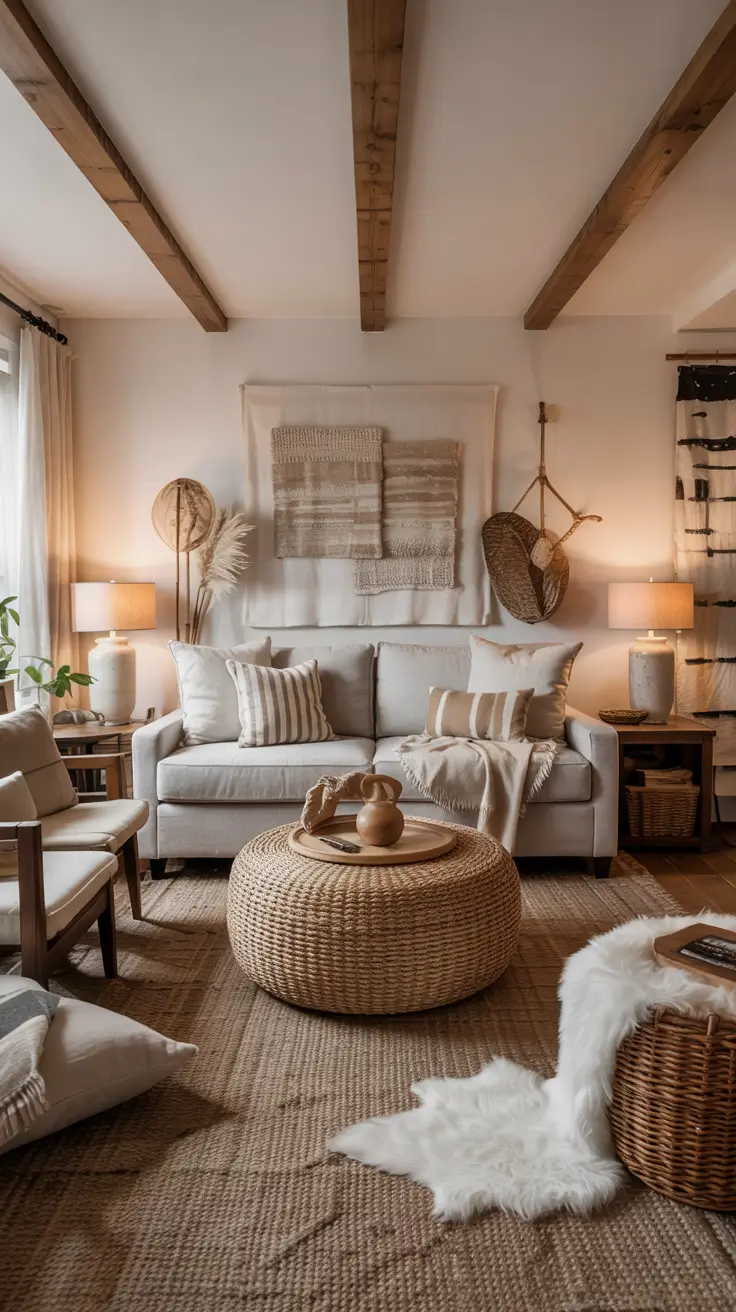
I usually start with a dependable base, such as a comfortable sofa, one or two upholstered chairs, and a substantial rug that helps define the seating zone. From there, I layer throws, cushions, warm wood accents, soft lighting, and a few personal decorative objects to strengthen the mood. If the room includes rustic, farmhouse, or dark wood furniture, I balance it with lighter fabrics and softer textures so the result feels inviting. In more modern rooms, I use decor to reduce visual sharpness and bring in comfort through woven materials, bouclé, linen, and natural wood. This is one of the easiest ways to improve living room furniture ideas cozy readers can actually use at home.
I personally believe that cozy rooms feel better when they include contrast and restraint at the same time. A room does not become warmer simply because it has more objects, and I often remove a few accessories before the space starts to feel right. Design experts frequently emphasize layered lighting as a key part of comfort, and I completely agree because overhead light alone rarely creates the atmosphere people want. I also think scent, softness underfoot, and seating depth affect how cozy a room feels, even if those details are less obvious at first glance. When all of these elements work together, the room becomes more than attractive – it becomes genuinely comfortable.
To finish this idea properly, I would add a stronger emphasis on seasonal flexibility and practical comfort. A cozy room should still function well during daily routines, so I would include side tables within reach, storage for blankets or books, and lighting at different heights. I would also suggest using a focused palette with white, brown, walnut, black, or muted purple accents to keep the room warm without losing clarity. Artwork, curtains, and textured ceramics can complete the room if they support the same calm direction. This is how I turn furniture decor into a complete and useful 2026 living room furniture design strategy.
26. Modern Wooden Sofa Set Designs For A Stylish Living Room Upgrade
When I design around modern wooden sofa set designs, I focus first on structure, proportion, and the feeling the room should create from the moment someone walks in. Wooden seating instantly adds permanence, which is especially helpful when I want a living room furniture modern look that still feels warm and lived in. In 2026, I see more interiors using clean silhouettes with visible frames in walnut, oak, or dark wood because they bring character without unnecessary heaviness. This approach works well in both open-plan homes and smaller rooms because the exposed base keeps the furniture visually lighter than many oversized upholstered pieces. It is one of the easiest living room furniture ideas for creating a balanced mix of comfort and design clarity.
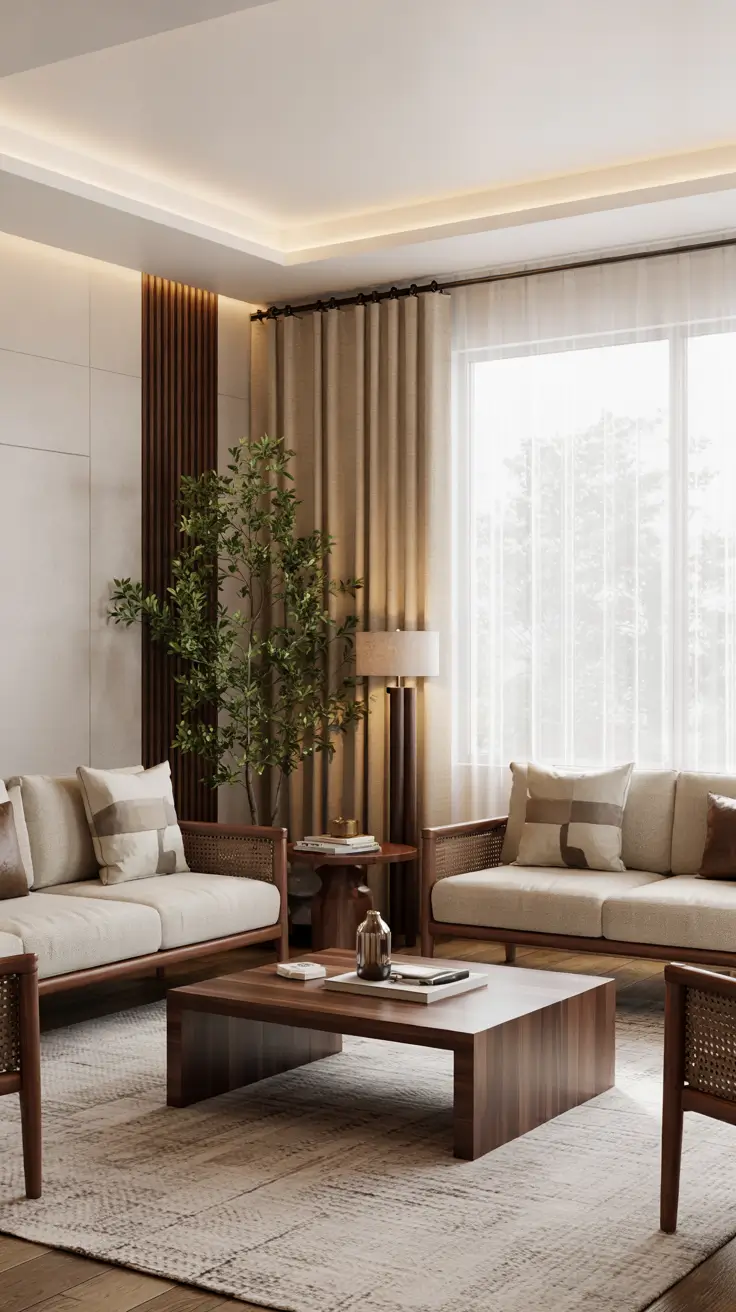
I usually build this type of arrangement around a main wooden sofa set with thick seat cushions, supportive back pillows, and a finish that complements the floor rather than competing with it. A walnut frame gives the room a refined tone, while lighter wood can lean coastal or Mid century modern depending on the shape of the legs and arms. I often pair the main sofa with one or two accent chairs, a rectangular coffee table, and a textured rug so the room feels layered instead of flat. Linen, boucle, or cotton upholstery softens the firmness of the wood and helps the room feel cozy, especially if the palette includes brown, white, cream, or muted black accents. This kind of living room furniture decor makes it easier to create a room that feels timeless while still matching 2026 preferences.
From my perspective, the success of wooden seating depends on keeping the rest of the room disciplined and intentional. I have found that wooden sofa sets look strongest when the surrounding pieces do not try too hard to compete with them through too many curves, prints, or finishes. Advice often shared by design editors in publications like Architectural Digest and House Beautiful supports the same idea – strong anchor pieces work best when texture, light, and scale are carefully balanced. I agree with that completely because a good wooden sofa set already brings enough visual detail through grain, tone, and craftsmanship. When I want a room to feel modern without becoming cold, this is one of my favorite directions.
To complete this section, I would add a large area rug with a subtle woven pattern, layered lighting, and one storage piece that keeps the room functional. A low media console, a sideboard, or built-in shelving helps the wooden furniture feel integrated instead of isolated. I would also include a few soft elements such as curtains, throw pillows, and one oversized plant to keep the room from feeling too rigid. These additions support better living room furniture arrangement and make the design feel complete from every angle. In my experience, the room starts to feel truly finished only when the hard lines of the wood are balanced with softness and light.
27. Living Room Furniture Placement Ideas For Better Conversation Zones
When I think about living room furniture placement, I always begin with conversation before decoration. A beautiful room can still feel awkward if the seating is too far apart, if chairs face the wrong direction, or if movement through the room constantly interrupts how people sit together. In 2026, one of the strongest living room furniture layout ideas is the return of clearly defined conversation zones, even in casual family rooms. I use this method to make the space feel more intimate, more usable, and more welcoming without adding extra furniture. It is one of the most practical arrangement tips for anyone trying to improve how the room functions day to day.
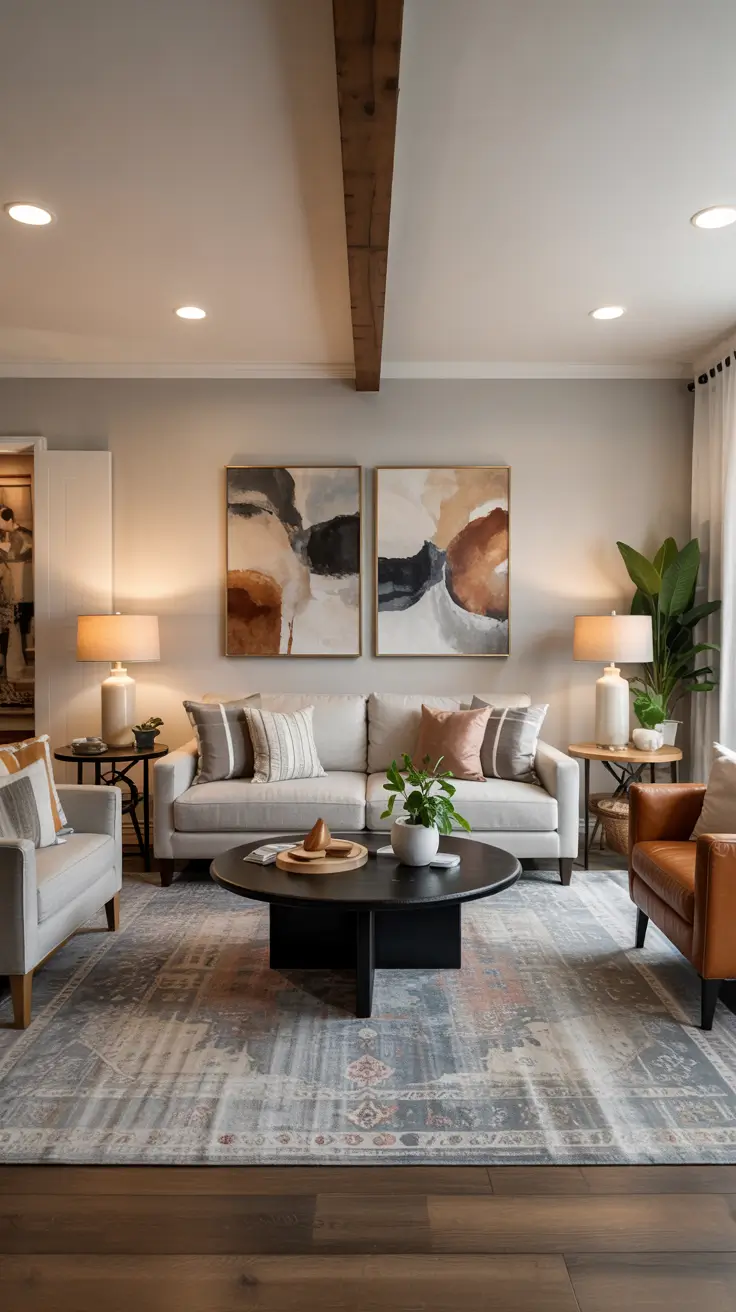
I usually position the main sofa as the anchor and then place chairs or a loveseat at an angle or directly across from it, depending on the room shape. A central coffee table helps keep the grouping tight, while side tables and lamps support each seat so the arrangement feels intentional and complete. In larger rooms, I sometimes use a bench, ottoman, or pair of accent chairs to create a secondary layer of seating without breaking the main layout. The distance between seats matters just as much as the furniture itself because it determines whether the room feels social or disconnected. A good living room furniture arrangement should allow people to talk comfortably without raising their voices or twisting their bodies unnaturally.
I have learned that the most effective layouts often feel simple rather than dramatic. Better Homes and Gardens and other well-known design media often emphasize traffic flow and furniture spacing, and I think that advice remains essential no matter the style. I always try to leave enough room for movement around the seating group while keeping the center close enough for real interaction. When I walk into a room and immediately feel where the conversation should happen, I know the placement is working. That kind of clarity often matters more than any single decorative object in the room.
What I would add here is a clear focal point that supports the seating zone without overpowering it. That focal point might be a fireplace, a media unit, a large piece of art, or even a wall of shelves, depending on the architecture. I would also add layered lighting so the conversation area feels usable in the evening, not only during the day. A rug large enough to connect all the front legs of the seating pieces is also important because it visually unifies the zone. In my experience, these additions make the layout feel deliberate and help the room function far better in everyday life.
28. Layering Living Room Furniture Modern Pieces With Vintage Character
One of the most interesting living room furniture ideas for 2026 is combining modern forms with pieces that carry visible age, texture, or history. I like this direction because it makes a room feel more personal and less staged. A purely modern room can sometimes look too controlled, while a layered mix feels collected and believable. This approach works especially well when I want living room furniture inspiration that feels original without becoming chaotic. It also creates a richer visual story through contrast in shape, material, and finish.
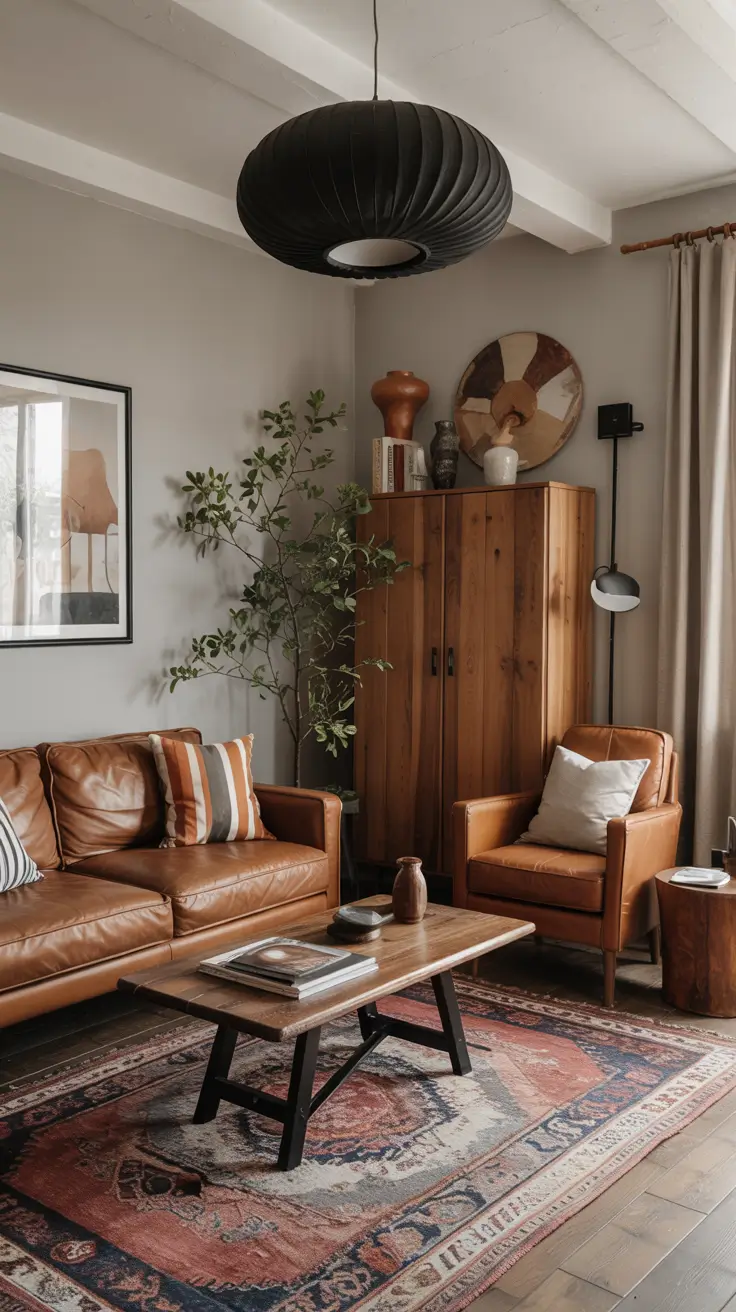
I often begin with a streamlined sofa in a neutral fabric and then introduce vintage character through a wooden cabinet, a leather armchair, a carved side table, or a worn rug. The contrast between smooth modern lines and older surfaces creates depth that new furniture alone rarely achieves. Mismatched pieces work best when they share something in common, such as tone, scale, or silhouette, so I pay close attention to those links. A black floor lamp, a brown vintage trunk, or a traditional side chair can all feel perfectly placed next to a modern sofa if the balance is right. This is one of the strongest living room furniture arrangement ideas for people who want a space that feels curated rather than purchased all at once.
From my experience, texture is what truly makes this mix successful. Designers frequently talk about contrast as a key ingredient in good interiors, and I believe that layered contrast is especially important when combining modern and vintage pieces. I rely on wood grain, aged leather, metal patina, natural textiles, and visible craftsmanship to keep the room from feeling too flat or uniform. When I mix these elements carefully, the room gains warmth and complexity without losing comfort or order. I find that even one older piece can shift the entire mood of a modern room in the right direction.
To finish this type of space, I would add a few grounding elements that help the contrasts feel connected. Window treatments, a generous rug, and wall art with subtle color links can make mismatched furniture feel intentionally composed. I would also include one or two decorative objects with sculptural shape so the room reflects current design language while still respecting the older pieces. Good placement is essential here because each item needs breathing room to be appreciated. In my opinion, layering only works when every piece has a reason to be there.
29. Living Room Furniture Inspiration For Mixing Texture Shape And Color
When a room feels memorable, it is often because texture, shape, and color have been mixed with confidence instead of being kept overly safe. I see this as one of the strongest living room furniture design directions for 2026 because it allows a space to feel modern and expressive at the same time. Rather than relying on one trend, I prefer to create depth through contrast – curved lines against straight edges, matte finishes against polished surfaces, and soft fabrics against solid woods. This makes the room feel layered and inviting even when the color palette stays restrained. It is a useful strategy for anyone looking for living room furniture inspiration that feels elevated but still livable.
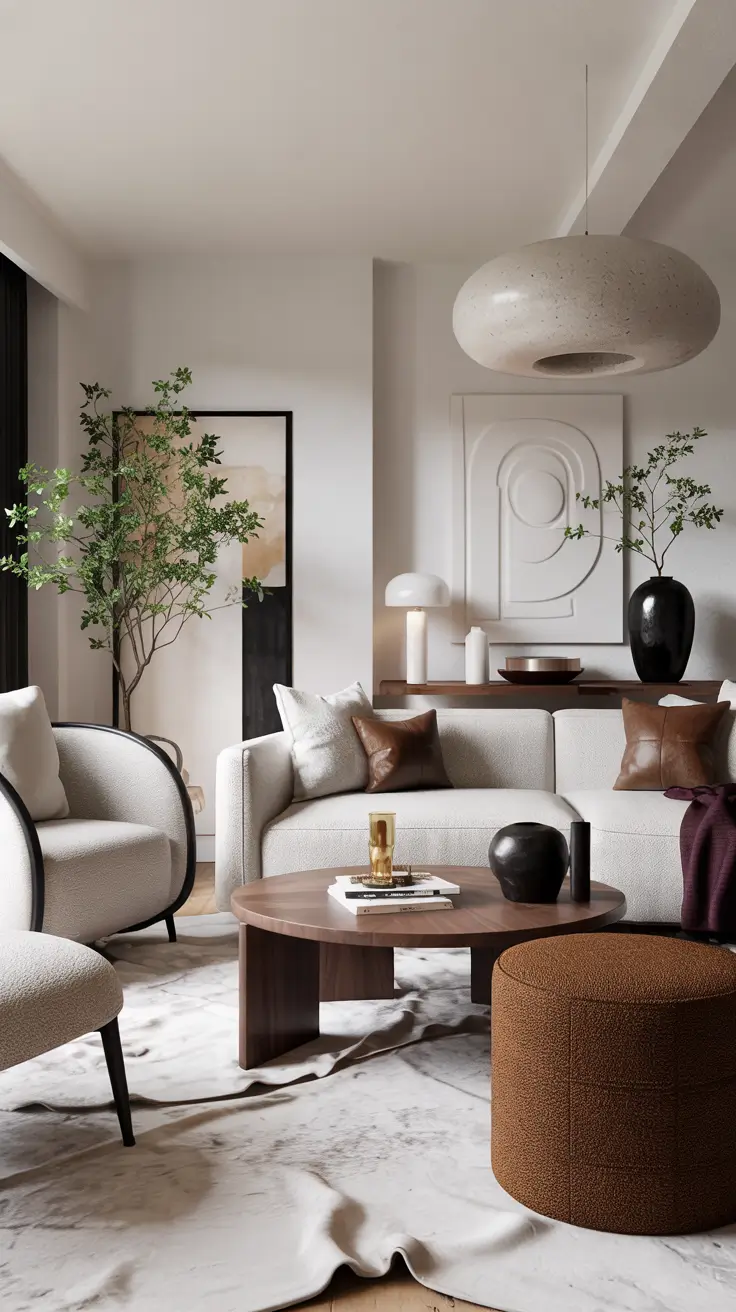
I usually start with a consistent base palette, often including white, brown, black, or warm neutrals, and then build visual interest with materials and silhouettes. A curved chair next to a rectangular sofa, a boucle ottoman near a leather chair, or a walnut table beside a plaster lamp creates subtle tension that keeps the eye moving. Purple can be introduced carefully through art, cushions, or one upholstered accent if the room needs personality without becoming too theme-driven. I also like using rustic wood, soft woven rugs, and a mix of matte ceramics and glass to build layered living room furniture decor. These choices help the room feel complete without depending on excessive ornament.
In my work, I have noticed that people often focus on color first, even though shape and texture usually do more to define the mood of a room. Design guidance from outlets like Elle Decor often highlights the importance of tactile contrast, and I think that advice is especially relevant now as rooms become more personal and comfort-driven. I agree with that view because even a neutral space can feel rich when the materials and forms are varied with care. A well-shaped room has rhythm, and a well-textured room has depth. When both are present, the design becomes far more compelling.
What I would add to this section is a stronger attention to scale and repetition. If a room has too many competing shapes or too many unrelated materials, the result can feel busy instead of layered. I like to repeat one finish, one color note, or one line quality across several pieces so the room stays visually coherent. Good living room furniture layout supports this by giving each strong element enough space to be seen. In my opinion, the best rooms are not the most decorated ones, but the ones where contrast is controlled and repeated with purpose.
30. The Best Living Room Furniture Ideas 2026 For A Functional Beautiful Home
The best living room furniture ideas in 2026 are the ones that solve real needs while still making the room feel attractive and current. I do not believe function and beauty should be separated, especially in a room used for relaxing, gathering, reading, and everyday living. A successful living room furniture layout should support movement, comfort, storage, and atmosphere all at once. This is why I focus on pieces that can do more than one job and on layouts that reflect how the room is actually used. A beautiful home feels even better when the arrangement supports daily habits naturally.
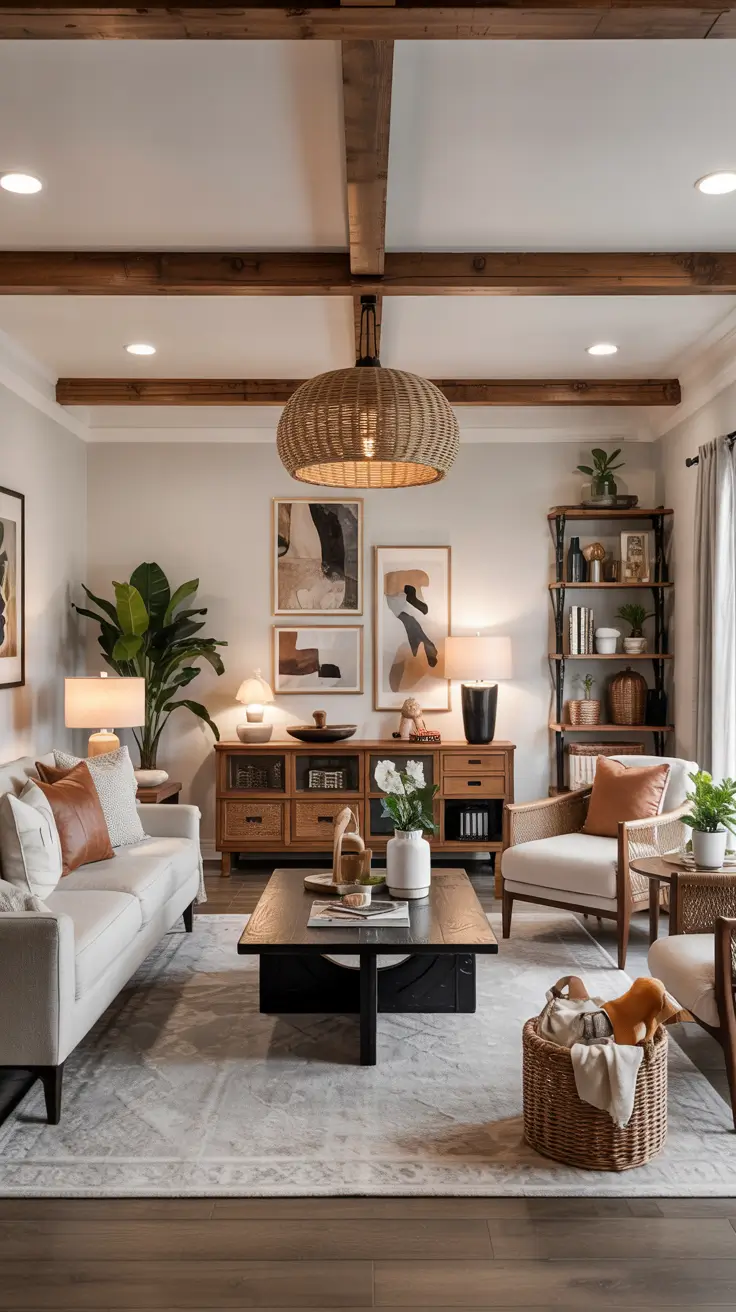
I usually recommend starting with the essential pieces first – a comfortable sofa, a well-scaled coffee table, supportive accent seating, and practical side tables. After that, I add storage or display elements such as shelving, a media unit, or a console depending on the room size and architecture. In a farmhouse or coastal room, I may use lighter woods and relaxed fabrics, while a traditional or Mid century modern room might call for darker finishes, cleaner lines, or a stronger sense of symmetry. The layout ideas should reflect lifestyle, not only style preference, because even the most attractive room will disappoint if the seating is uncomfortable or the placement feels inconvenient. Practical living room furniture placement is what allows the design to stay useful over time.
I have found that homeowners are happiest with rooms that feel flexible rather than overly fixed. That usually means leaving enough open space to move easily, choosing pieces with durable surfaces, and avoiding furniture that looks good but cannot support real use. Well-known interior publications often return to the same core principles – scale, comfort, natural light, and flexibility – and I think those principles remain relevant no matter what new trend appears. I follow them because they lead to rooms that stay satisfying long after the first styling phase. A functional beautiful home is rarely accidental.
To make this kind of room feel complete, I would add finishing layers that support comfort and identity without disrupting the layout. That might include table lamps, curtains, books, a few meaningful decorative objects, and textiles that bring softness to the arrangement. I would also look at what is missing from daily use – perhaps hidden storage, a second reading chair, or better lighting near the sofa. These details are often what turn a good room into a dependable and welcoming one. In my experience, the most successful living room furniture arrangement is the one that quietly supports real life while still looking composed.