Canopy beds are no longer limited to traditional romantic bedrooms or formal master suites. In 2026, canopy bed ideas are becoming more versatile, and I see more homeowners searching for canopy bed ideas for adults, canopy bed ideas aesthetic rooms, and canopy bed ideas modern layouts that feel current without losing comfort. How do you make a canopy bed feel fresh instead of old-fashioned, and how do you adapt it to a small room, a boho bedroom, or a luxury bedroom master romantic setup? In this article, I break down practical ways to style different canopy bed looks so they feel useful, balanced, and easy to live with. I also cover details like curtains, lighting, materials, and layout choices that can turn a simple bedroom into something dreamy, cozy, and visually complete.
1. Canopy Bed Ideas 2026 That Make Bedrooms Feel Dreamy And Current
When I think about canopy bed ideas 2026, I focus on designs that feel open, light, and relevant to how bedrooms are used now. A modern canopy bed works best when it adds structure to the room without making the space feel heavy or crowded. I look for clean silhouettes, breathable fabrics, and finishes that connect with the rest of the bedroom instead of dominating it. This approach helps the bed become a visual anchor while still keeping the room soft and livable. It is especially effective in spaces that need both comfort and a more elevated look. I find that the dreamy effect comes from balance, not from adding too many dramatic details.
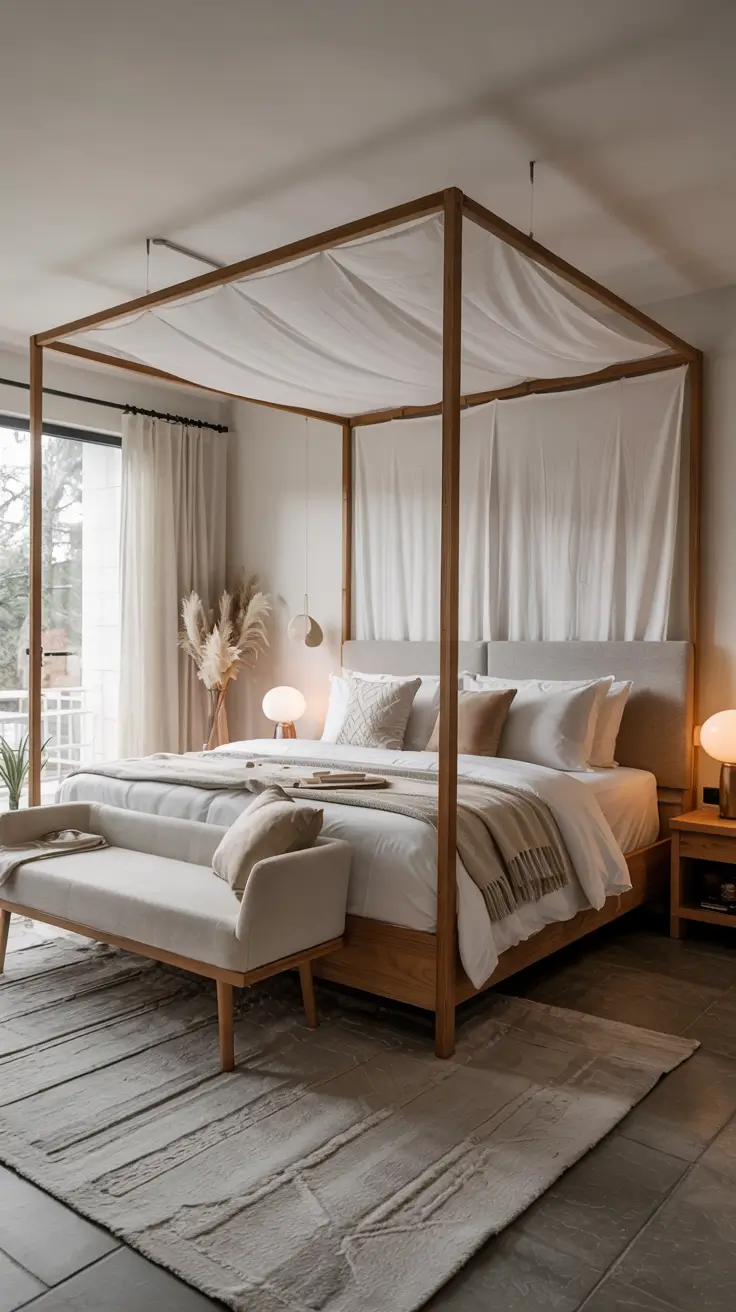
I usually start with the frame itself because it defines the mood of the entire room. Slim wood or metal frames, low-profile nightstands, layered bedding, and a textured area rug help the canopy feel modern rather than overly ornate. I like to include one upholstered bench, warm bedside lighting, and full-length curtains in the room so the bed feels integrated into a complete bedroom design. Neutral bedding in white, soft beige, taupe, or dusty gray keeps the look current and easy to update seasonally. I also find that ceiling height matters, so I prefer proportions that complement the room rather than stretching the frame too aggressively. A few thoughtful accents, like a ceramic lamp or a soft linen throw, are usually enough.
From my perspective, the most successful canopy bed rooms in 2026 are the ones that mix romance with restraint. I often notice that popular interior advice from established design media leans toward layered texture, natural materials, and fewer unnecessary accessories, and I agree with that direction. In my experience, a canopy bed feels more timeless when the room around it is edited carefully. I prefer to let the bed create the statement while the rest of the pieces support it quietly. That makes the room feel dreamy in a mature and practical way. It also leaves more room to refresh the space later without redoing everything.
To complete this type of bedroom, I would add one strong element of contrast so the design does not feel too flat. That could be a darker accent wall, a vintage-inspired pendant, or a sculptural chair in the corner. I also think window treatments and bedding should not be treated as afterthoughts because they shape the softness of the room. If the space has enough floor area, I would include a bench or a small reading seat to make the layout feel intentional. I find that these supporting pieces make the canopy bed feel like part of a full design story. Without them, the room can look unfinished even if the bed itself is beautiful. This final layer is what turns a trend into a room that actually works.
2. Canopy Bed Ideas For Adults With A Sophisticated And Cozy Feel
When I design canopy bed ideas for adults, I aim for a space that feels restful, polished, and easy to enjoy every day. Adult bedrooms usually benefit from a calmer palette and better proportion, so I avoid anything that feels too thematic or juvenile. A sophisticated and cozy canopy bed room should have presence, but it should also support sleep, reading, and quiet routines. I think this style works best when the furniture feels grounded and the textiles bring in softness. That combination creates a bedroom that feels personal without becoming cluttered. In many cases, the simplest layouts are the most effective.
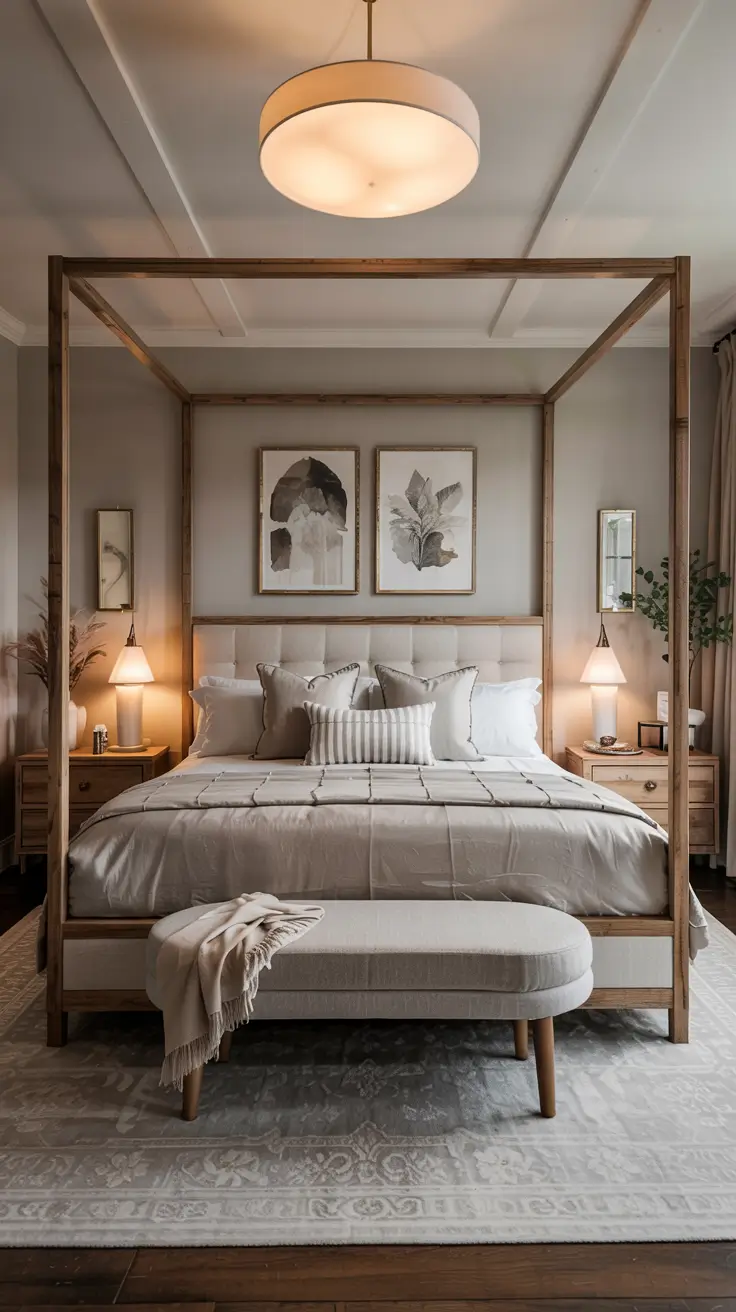
I like to build this kind of room around a queen or king canopy bed with substantial bedding and understated furnishings. Upholstered headboards, wood nightstands, soft drapery, layered throws, and tailored pillows all help create a more adult atmosphere. I often add warm-toned lamps, one large rug under the bed, and a dresser with clean lines to keep the room feeling finished and functional. For color, I usually prefer creamy white, oatmeal, warm brown, muted charcoal, or soft green because these tones feel relaxing and refined. If the frame is metal, I like matte black or antique brass finishes because they add depth without looking flashy. Every piece should contribute to comfort and visual balance.
Personally, I think adults often get the best results when they resist the urge to overdecorate a canopy bed. I have found that a room feels more luxurious when the materials are thoughtful, even if the styling stays simple. That is why I pay close attention to linen quality, bedside lighting, and the scale of the furniture around the bed. In my view, sophistication comes from consistency, not from filling the room with statement pieces. A canopy bed already introduces height and form, so I prefer to let that structure do a lot of the visual work. The cozy part comes from softness, warmth, and restraint.
What I would still add here is a stronger layer of personal function so the room supports adult routines more completely. I like the idea of including a small bench, a lounge chair, or a narrow writing desk if the room allows it. These additions help the bedroom feel like a private retreat rather than just a place for sleep. I would also consider adding dimmable lighting and better storage pieces so the room stays calm and organized. In my experience, that practical layer is what makes cozy adult bedrooms last. The design should look beautiful, but it also needs to support real daily use. That is where this style becomes genuinely successful.
3. Canopy Bed Ideas Aesthetic Looks That Feel Soft, Airy, And Stylish
When I work on canopy bed ideas aesthetic rooms, I think about softness, flow, and visual lightness first. The room should feel airy, but it should still have enough structure to avoid looking empty or too delicate. I usually connect this style with natural light, pale colors, layered fabric, and a calm overall composition. The goal is not just to make the bed pretty, but to create an environment that feels cohesive from every angle. In 2026, this kind of bedroom still feels current because it combines comfort with a clean visual identity. It can work in both larger rooms and smaller ones if the styling is disciplined.
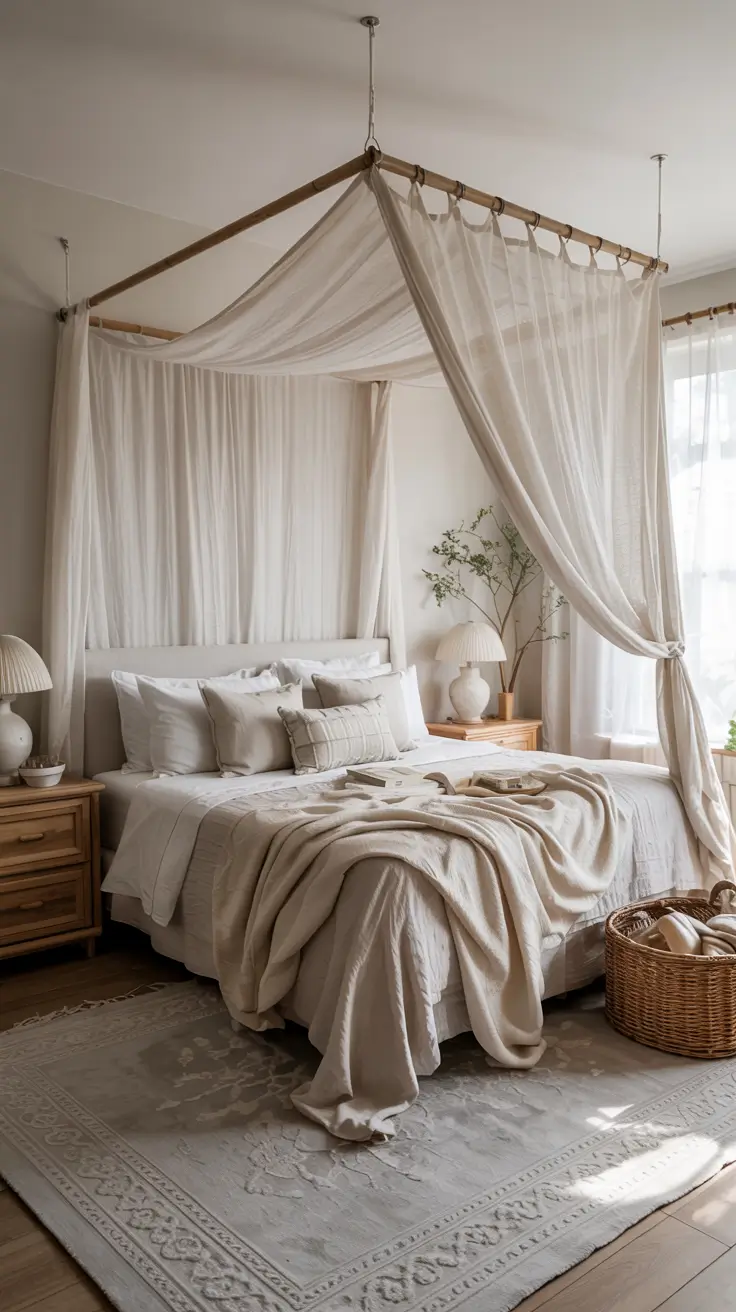
For furniture and decor, I tend to choose a slim canopy frame, soft bedding, sheer curtains, a light wood nightstand, and a textured rug that adds depth without visual heaviness. I often include soft white, blush, warm beige, sand, pale gray, or muted sage because these tones help the room feel bright and calm. Decorative accents should stay minimal, so I prefer a round mirror, delicate lamps, one bench, and a few ceramics instead of too many small objects. If I want the room to feel dreamy, I add layered linens and lightweight drapery that move softly with natural light. This approach creates an Aesthetic cozy mood without making the room feel overly styled. It also keeps the canopy bed as the clear focal point.
From my point of view, the best aesthetic rooms are the ones that still feel usable and emotionally warm. I do not like spaces that look good in photos but feel cold in real life. That is why I always look for a mix of softness and practicality, especially in bedrooms where people want both comfort and beauty. I have noticed that when the palette is quiet and the textures are varied, the room feels much more complete. Even a very simple canopy bed can look special when the surrounding materials are chosen carefully. In my experience, subtle styling usually lasts longer than trend-driven decoration.
To make this look even stronger, I would add one grounding detail so the room does not become too pale or visually flat. That could be a darker wood tone, a black lamp base, or a woven accent piece that adds contrast. I also think the bedding should include multiple layers with slightly different textures so the room feels rich instead of one-dimensional. If there is space, I would include a soft accent chair or a compact vanity stool to finish the composition. Those additions help the airy style feel complete and intentional. They also make the room more practical without disturbing the softness. That balance is what keeps an aesthetic bedroom from feeling incomplete.
4. Canopy Bed Ideas With Curtains For Privacy, Texture, And Romance
Canopy bed ideas with curtains can completely change the mood of a bedroom when they are done with the right fabric and proportion. I see curtains as one of the easiest ways to add softness, privacy, and a gentle romantic quality to the bed area. They can make a large room feel more intimate, and they can also give a standard canopy frame much more visual presence. I think this works especially well for people who want a bedroom that feels layered and comforting at the end of the day. In 2026, the most attractive versions are less formal and more relaxed in the way they drape. That makes the room feel current rather than overly traditional.
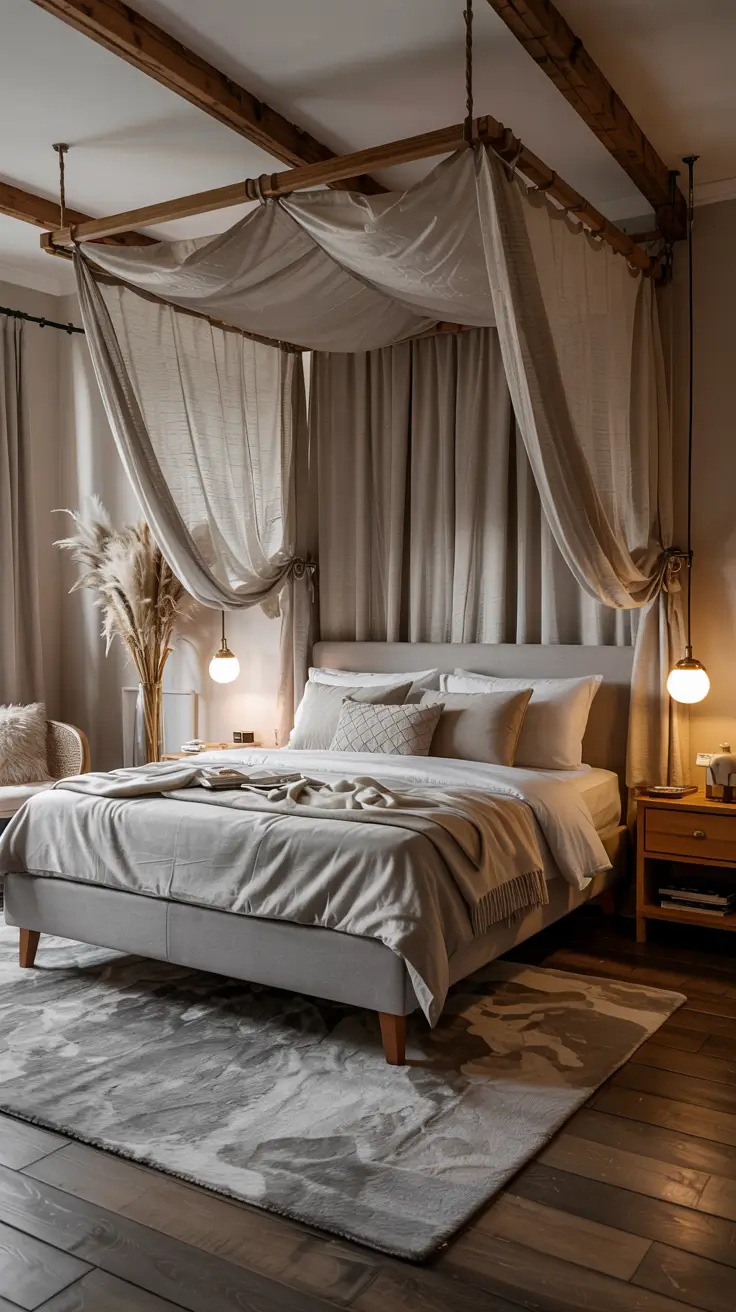
I usually choose curtain fabrics based on the mood I want to create and how much light I want to keep in the room. Sheer white panels feel airy and soft, while linen-blend curtains add more texture and a grounded look. I also consider the canopy frame finish, the bedding color, the rug, the bench, and the bedside lighting because curtains should feel integrated with the rest of the room. For a romantic room, I prefer soft neutral curtains with layered bedding, rounded lamps, and a plush rug underfoot. For a more dramatic direction, I might use deeper tones with a black frame, darker textiles, and richer wall color. The key is to let the curtains enhance the room instead of making it feel visually crowded.
Personally, I think curtains are one of the most effective ways to make a canopy bed feel more personal. I like how they soften the vertical lines of the frame and add movement to the room. In some bedrooms, they also create a sense of retreat that is hard to achieve with furniture alone. I have found that even simple panels can make the bed feel more luxurious when the fabric has a nice texture and hangs properly. This is one of those design choices that can look very romantic without being impractical. It can also suit many styles, from modern to princess-inspired to more understated adult spaces.
What I would add to this section is a stronger note about function and installation. Curtain length, fullness, and how the panels are tied back all affect how polished the bed will look. I also think it is important to consider dust, cleaning, and how the curtains interact with nearby windows or lamps. In my experience, the most successful canopy curtains are the ones that feel intentional from both a design and maintenance perspective. They should frame the bed beautifully, but they should also work well in daily life. That practical thinking keeps the romance from becoming inconvenient. It also makes the room easier to enjoy over time.
5. Canopy Bed Ideas Boho Spaces With Relaxed Layers And Natural Warmth
Canopy bed ideas boho bedrooms feel especially inviting when the room is built around texture, warmth, and a slightly relaxed composition. I think a boho bedroom works best when it feels collected and comfortable instead of overly styled or random. A canopy bed naturally suits this look because it adds height and softness while giving the room a strong central feature. In 2026, I see boho spaces leaning toward more refined natural materials rather than overly busy patterns or excessive decoration. That shift makes the room feel calmer and easier to live with. It also helps the design age better over time.
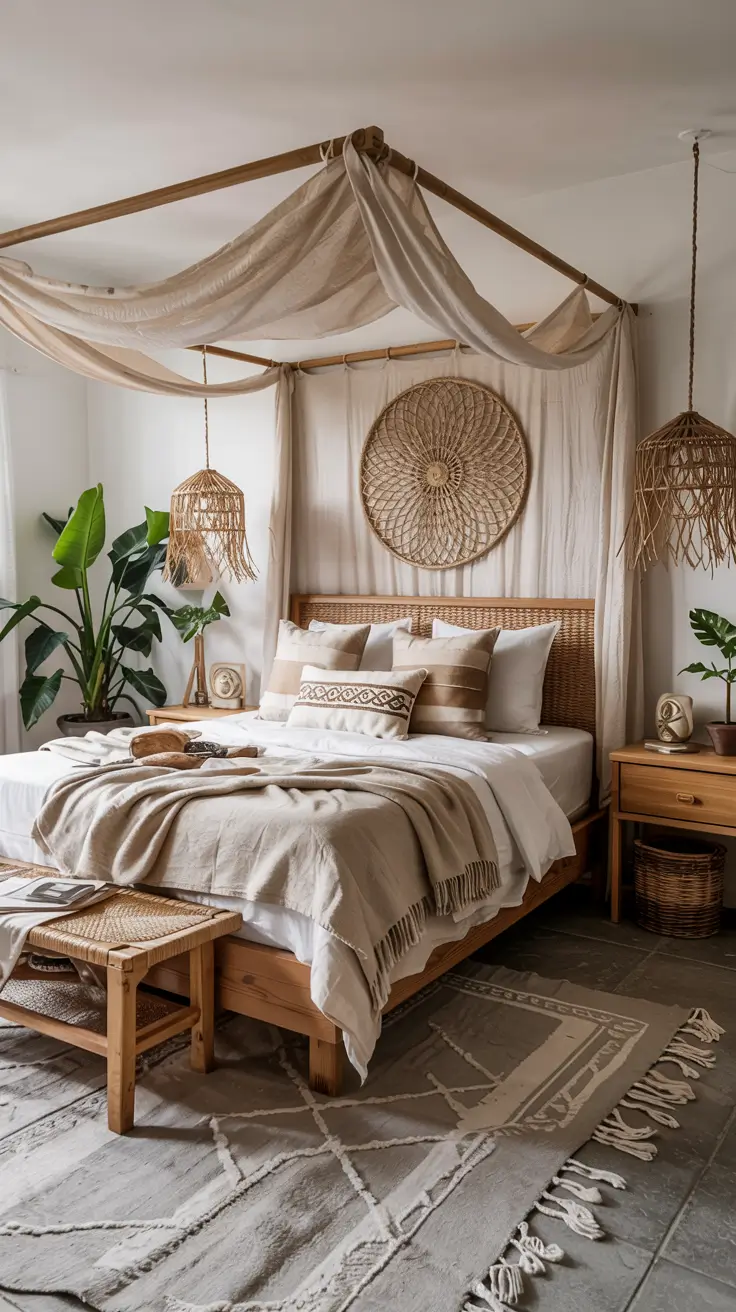
When I create a boho bedroom around a canopy bed, I usually start with a wood frame or a simple metal frame softened by textiles. I like to add layered linen bedding, a woven rug, cane or wood nightstands, a bench, and curtains or draped fabric that bring in movement. Decorative pieces such as rattan lighting, ceramic vases, textured throws, and a few plants help the room feel lived-in without overwhelming it. For color, I often lean toward sand, cream, terracotta, olive, muted rust, and soft white because these tones feel warm and natural. If I want a more Adults diy boho direction, I would include handmade details like a fabric panel, a simple DIY canopy treatment, or vintage wood furniture. These elements make the space feel relaxed while still looking intentional.
From my perspective, boho bedrooms are most successful when every layer has a purpose. I do not like when the style becomes a mix of unrelated accessories with no visual rhythm. I prefer fewer, richer textures and materials that feel tactile and grounded. That approach creates a cozy, dreamy room without making it messy. I also think the canopy bed helps organize the look because it gives all the softer details something to gather around. In my experience, it is easier to make a boho room feel sophisticated when the bed frame itself stays relatively simple.
To finish this kind of room, I would add one more element that introduces structure. That could be a darker accent pillow set, a substantial bench, or a patterned rug with stronger contrast. I also think wall art should be chosen carefully so the room does not lose its calm atmosphere. A boho bedroom still needs visual editing, especially if the bed already includes draped fabric and layered textiles. I would also pay attention to lighting, because warm ambient light helps natural materials look richer at night. That missing layer often makes the whole room feel more complete. Without it, the space can look flat after sunset.
6. Canopy Bed Ideas Modern Designs With Clean Lines And Minimal Drama
When I think about modern canopy styling, I usually start with structure rather than ornament. The most successful version of this look uses a slim frame, balanced proportions, and a layout that allows the bed to feel architectural without overwhelming the room. This is one of the easiest ways to approach canopy bed ideas modern because the frame itself becomes the statement, while the rest of the room stays visually calm. I find that black, matte metal, pale oak, or soft white finishes work especially well in a modern bedroom because they create definition without too much visual weight. In 2026, this direction feels especially relevant because many bedrooms are moving toward simpler silhouettes and fewer decorative distractions. A clean canopy frame can bring elegance to the room while still supporting a relaxed, everyday atmosphere.
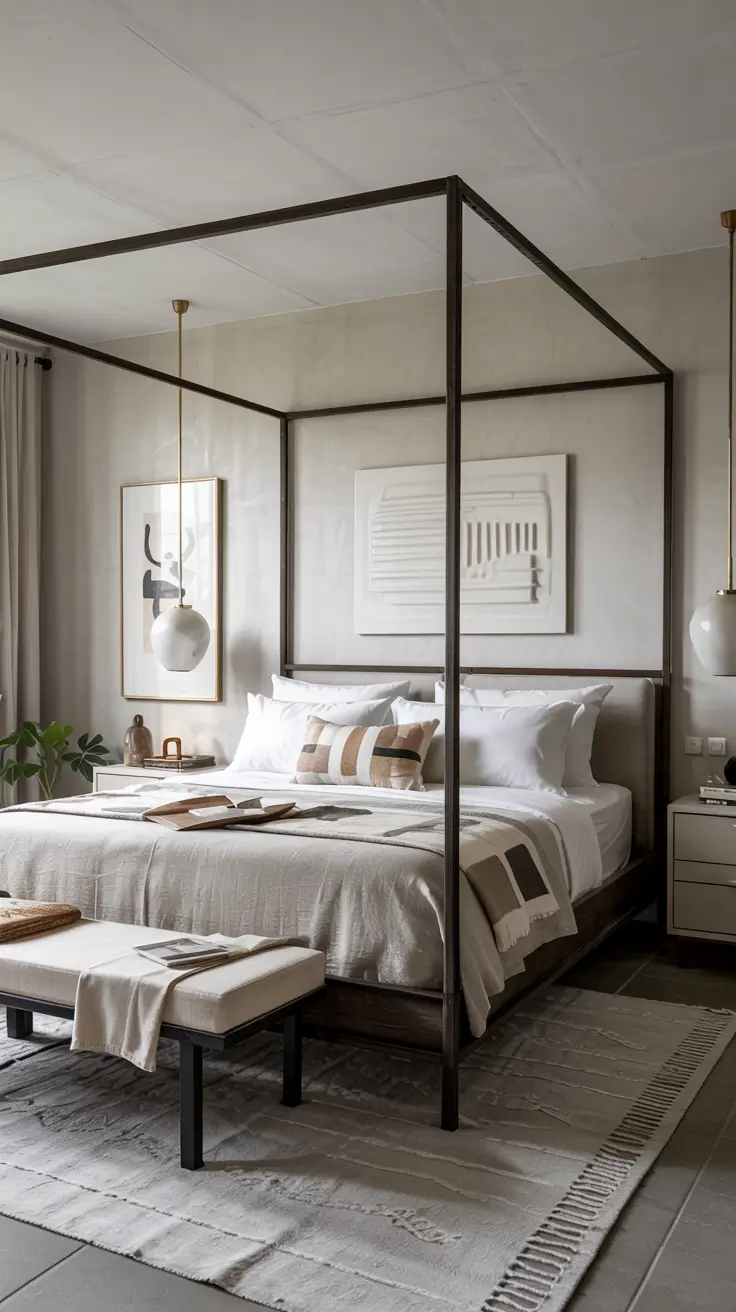
I would build this kind of room around a platform canopy bed with straight edges, crisp bedding, and a restrained color palette. A low bench at the foot of the bed, a pair of simple nightstands, and sculptural table lamps help reinforce the modern rhythm of the room without making it feel cold. I like adding a textured area rug under the bed because it softens the geometry and keeps the space comfortable. Floor-length curtains in a plain weave, even if they are placed only at the windows and not on the frame, help the lines of the room feel taller and more cohesive. A large piece of minimalist wall art or a softly plastered accent wall can give the bed more presence without creating clutter. This approach is especially useful for homeowners who want canopy bed ideas for adults that feel mature, polished, and easy to live with.
From my perspective, the success of this design comes from restraint. I have noticed that modern canopy bedrooms feel most beautiful when each piece has enough breathing room around it. Designers featured in major interiors publications often emphasize the importance of layering texture when a room has a simple palette, and I agree with that completely. In a room like this, linen bedding, boucle upholstery, brushed metal details, and warm wood tones do a lot of the work that extra decor would otherwise try to do. I would rather invest in a few excellent pieces than fill the room with accents that dilute the clean composition. That is what helps the space feel modern, intentional, and timeless rather than temporary.
To complete this section, I would add one carefully chosen organic element such as a tall branch arrangement, a ceramic vase, or a quiet indoor tree in a corner. I would also make sure the lighting is layered, because a modern canopy room can look flat if it relies only on one ceiling fixture. Wall sconces, bedside lamps, and soft ambient lighting help the room feel more dimensional at night. If the ceiling is high, I would consider a subtle pendant with a simple form to visually connect the vertical lines of the canopy to the rest of the room. I also think storage matters here, so an integrated dresser or a sleek wardrobe with minimal hardware would support the calm visual language. These additions keep the room functional while preserving the clean, minimal mood.
7. Canopy Bed Ideas With Lights For A Soft And Magical Evening Glow
One of the most inviting ways to style a canopy bed is by using lighting to create atmosphere after sunset. I see canopy bed ideas with lights as a design choice that can instantly make a bedroom feel more intimate, restful, and memorable without requiring a full renovation. The key is to keep the lighting soft and warm so the bed feels like a gentle focal point rather than a theatrical display. In 2026, this look works especially well in bedrooms that blend cozy comfort with a slightly dreamy mood. It can lean romantic, playful, or serene depending on the materials and colors around it. I find that the most effective versions use lighting to support the architecture of the bed instead of competing with it.
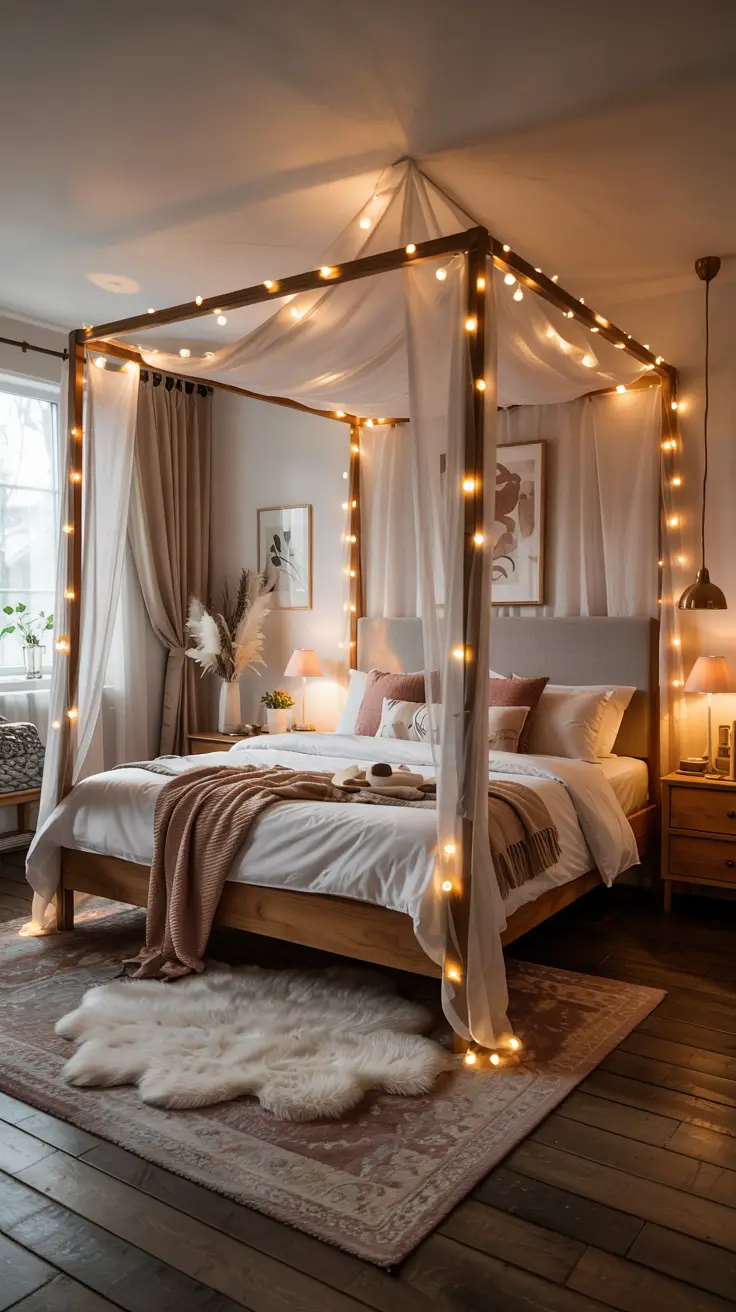
I would usually begin with warm white string lights or micro fairy lights wrapped lightly around the canopy frame or tucked through sheer fabric panels. If the room needs a more elevated finish, I prefer integrated LED strips hidden along the inner canopy rails, because they produce a cleaner glow with less visual clutter. Bedding in ivory, blush, taupe, or soft gray helps reflect the light beautifully and enhances the Aesthetic cozy feeling many readers are looking for. I also like adding a plush rug, a small upholstered bench, and curtains with soft movement so the room feels layered from every angle. A nearby floor lamp or a dimmable bedside sconce can support the main glow without making the room too bright. This is one of the best ways to interpret canopy bed ideas aesthetic and canopy bed ideas with lights in a way that feels modern and comfortable.
Personally, I think lighting around a canopy bed should feel effortless, not overly styled. I have found that when the glow is too strong or the cords are too visible, the design loses its softness and starts to feel less refined. Many interior designers recommend warm lighting in the bedroom because it supports a calmer atmosphere, and that advice fits perfectly here. I also like this approach for romantic spaces because it creates a quiet sense of enclosure without closing the room off visually. In dark romantic bedrooms, a glowing canopy can feel especially striking when paired with deep wall tones, velvet cushions, and soft layered textiles. The effect is beautiful because the light creates contrast and warmth at the same time.
What I would add here depends on the room style, but I usually think this section benefits from one more tactile layer. A sheer canopy drape, a lightly quilted coverlet, or a textured throw can make the lit bed feel more complete and photo-ready. I would also include dimmer controls whenever possible, because flexibility matters more than brightness in a bedroom. If the room is small, I would keep surrounding furniture visually light so the illuminated canopy stays elegant rather than crowded. For a more refined finish, I would repeat the warm tone of the lights in brass hardware, wood furniture, or soft cream decor. These details help the glow feel integrated into the whole room instead of limited to the bed alone.
8. Canopy Bed Ideas Small Room Layouts That Add Charm Without Bulk
A canopy bed in a small bedroom can work surprisingly well when the proportions are handled carefully. I often see people assume that a canopy automatically belongs only in large rooms, but in practice, a light and well-scaled frame can actually help define the bed zone without making the room feel cramped. This makes canopy bed ideas small room especially useful for anyone who wants character and vertical interest in a compact space. The trick is to choose a design that feels open, airy, and visually disciplined. I usually prefer narrow profiles, open frames, and a layout with clear walking paths on both sides whenever possible. When done well, the canopy adds charm and height while preserving the sense of space.
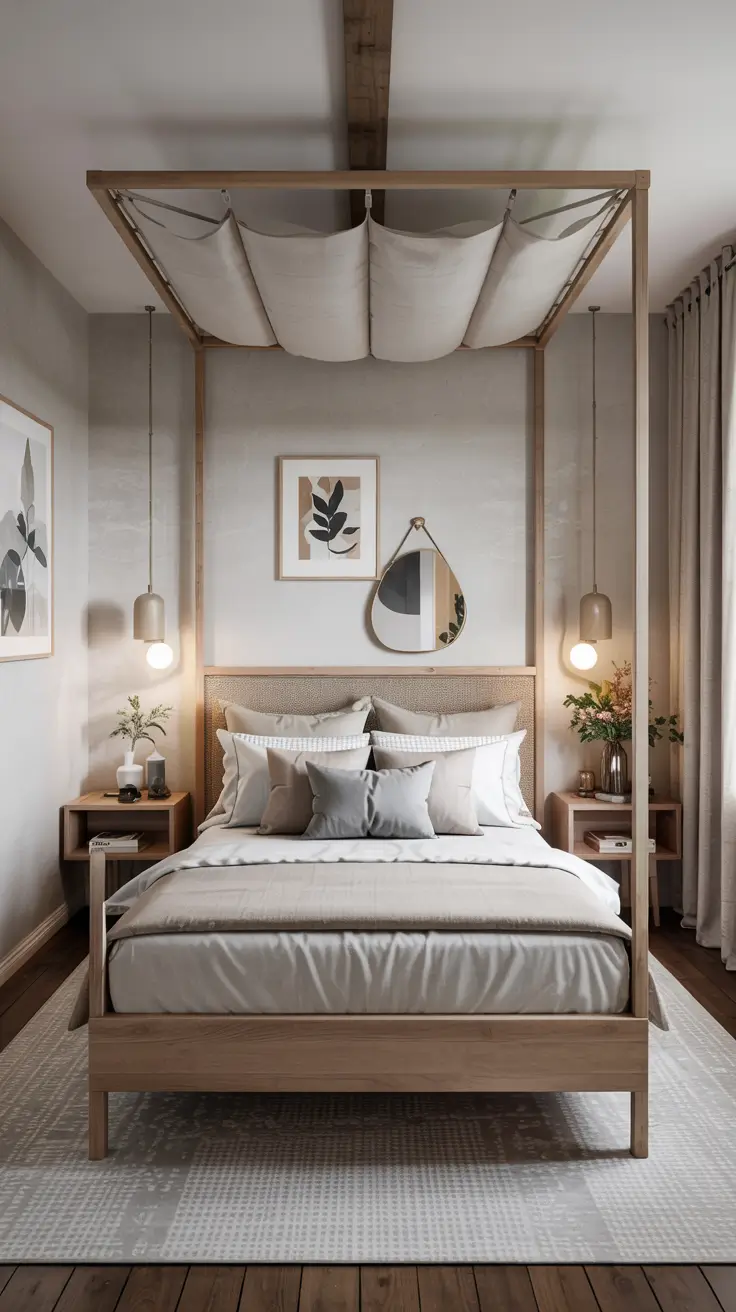
In a smaller room, I would choose a twin, full, or queen canopy bed with a slender metal or light wood frame rather than a heavy carved design. Furniture should stay simple and proportional, so I lean toward floating nightstands, wall-mounted sconces, and low-profile storage pieces that reduce visual crowding. Mirrors can also help, especially when placed to reflect light and make the room feel deeper. If the room has an awkward shape, corner placement can sometimes help the canopy feel intentional, which makes corner layouts an interesting option in compact bedrooms. I also think soft, light-colored bedding and minimal patterns are important because they allow the frame to remain visible and keep the room from feeling dense. This is one of the most practical ways to explore canopy bed ideas without frame alternatives too, because sometimes a partial or ceiling-mounted canopy effect can work better than a full structure.
From my experience, the biggest mistake in a small canopy room is adding too many competing decorative elements. I prefer to let the bed be the focal point and keep everything else edited and functional. Editors at well-known interiors magazines often recommend using vertical space in small bedrooms, and I find that a canopy frame does exactly that when it is chosen thoughtfully. It draws the eye upward, which can make the ceiling feel taller and the room feel more designed. I also like using one strong textile, such as a beautiful duvet or tailored curtains, rather than many layered accents that take up visual space. That approach keeps the room both stylish and breathable.
To strengthen this section, I would add specific attention to under-bed storage and lighting placement. In a small room, practical details matter just as much as style, and hidden storage can make the bed feel far more functional. I would also suggest keeping the wall color either light and tonal or deep and uniform, depending on the mood, because sharp contrast can sometimes make a small room feel more fragmented. A narrow bench is not always necessary here, so I would prioritize a compact rug and one thoughtful decorative piece instead. If the room belongs to an adult, I would keep the palette sophisticated so the design feels intentional rather than overly youthful. These choices help small canopy bedrooms feel charming, polished, and genuinely comfortable to use every day.
9. Canopy Bed Ideas Diy Projects For A Personalized Bedroom Update
A DIY canopy can be one of the most personal and creative ways to transform a bedroom. I like this direction because it allows the design to respond to the room itself, rather than forcing the room to adapt to a ready-made piece. Canopy bed ideas diy are especially appealing for anyone who wants a custom look, a softer budget approach, or a project that feels more hands-on and expressive. In 2026, I see more people combining simple materials with thoughtful styling to create bedrooms that feel individual and lived in. A DIY canopy can look refined, boho, romantic, or minimal depending on the structure and textiles you choose. When planned carefully, even a simple project can give the bed a strong visual identity.
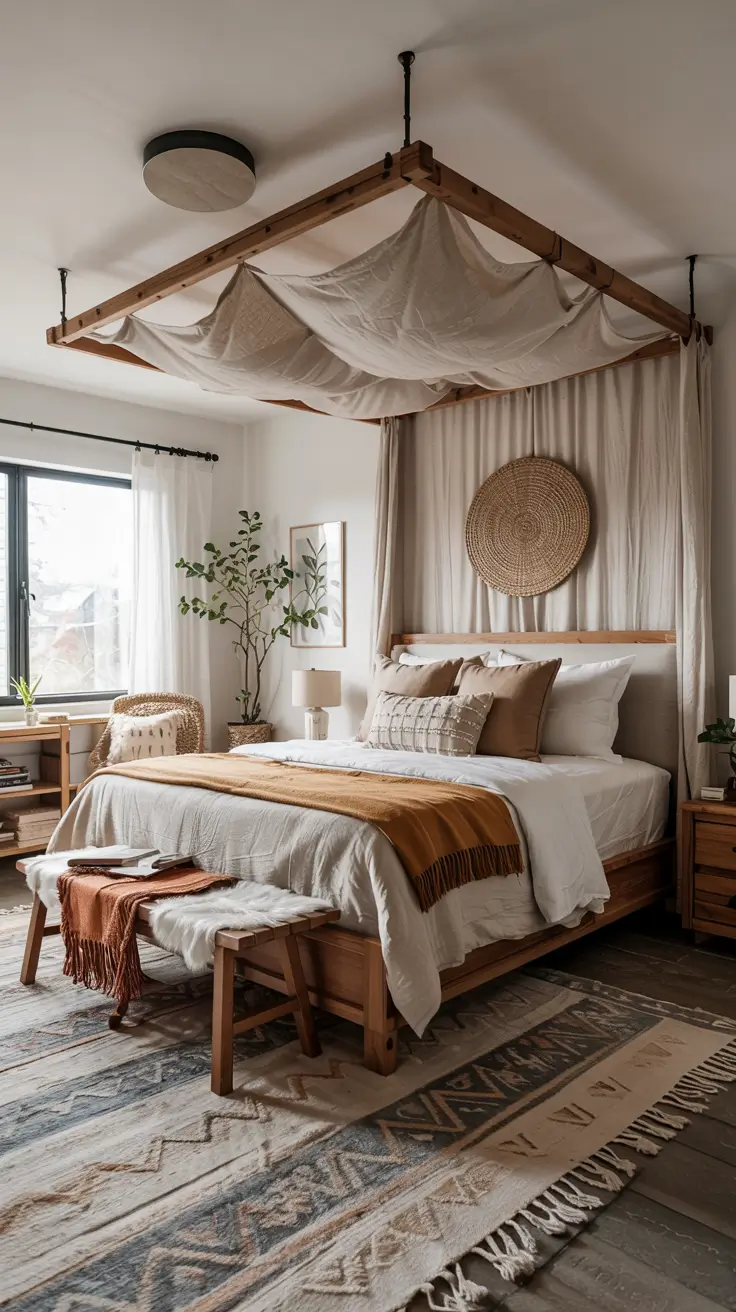
I would approach this type of design with either a ceiling-mounted rod system, a suspended wooden frame, or a partial canopy attached to the wall or ceiling above the headboard. For adults diy bedroom styling, I think natural linen, cotton voile, soft wood tones, and matte black hardware create a balanced and elevated result. If someone wants a more relaxed look, adults diy boho styling works beautifully with layered neutrals, woven textures, hanging lanterns, and a softly rumpled bed. I also like using a strong headboard, because it anchors the composition and makes the canopy feel intentional rather than improvised. A vintage stool, a textured rug, and bedside lighting with warm tones can make the whole setup feel finished. These details are what turn a simple DIY idea into a complete design concept.
My own view is that DIY works best when the design remains realistic and disciplined. I would always advise measuring ceiling height, bed width, and fabric length before choosing any structure, because proportion matters more than complexity. Many designers stress that custom details should still serve the function of the room, and I think that principle is essential in a DIY bedroom. The canopy should never make it harder to clean, move around, or access the bed comfortably. I have also found that fewer materials often create a more elegant result, especially in bedrooms meant for adults. A restrained DIY approach usually looks more thoughtful and lasting than one with too many decorative layers.
To make this section even stronger, I would add guidance on finishing details and maintenance. For example, fabric should be easy to remove and clean, especially in bedrooms where dust can build up quickly. I would also mention the importance of secure mounting hardware, because safety is part of good design and should never be treated as an afterthought. If the room already has strong architectural features, I would keep the DIY canopy simple so it complements rather than competes with the space. For a wood-based canopy, I would choose finishes that relate to other furniture in the room so the result feels cohesive. These additions help DIY canopy ideas feel polished, practical, and well considered.
10. Canopy Bed Ideas Girls Room Styles That Feel Sweet, Playful, And Pretty
A canopy bed can bring a wonderful sense of charm and imagination to a girls room when the design stays balanced and age-appropriate. I see canopy bed ideas girls room as an opportunity to create a space that feels playful and expressive while still being comfortable enough for daily routines, reading, rest, and storage. The best versions combine softness with structure, so the room feels designed rather than overly themed. In 2026, I notice a shift toward more layered and versatile looks, where sweet details are paired with practical furniture and palettes that can grow over time. This can include princess influences, pink accents, dreamy draping, or floral details, but the room still needs a clear layout and usable surfaces. That balance is what gives the design lasting appeal.
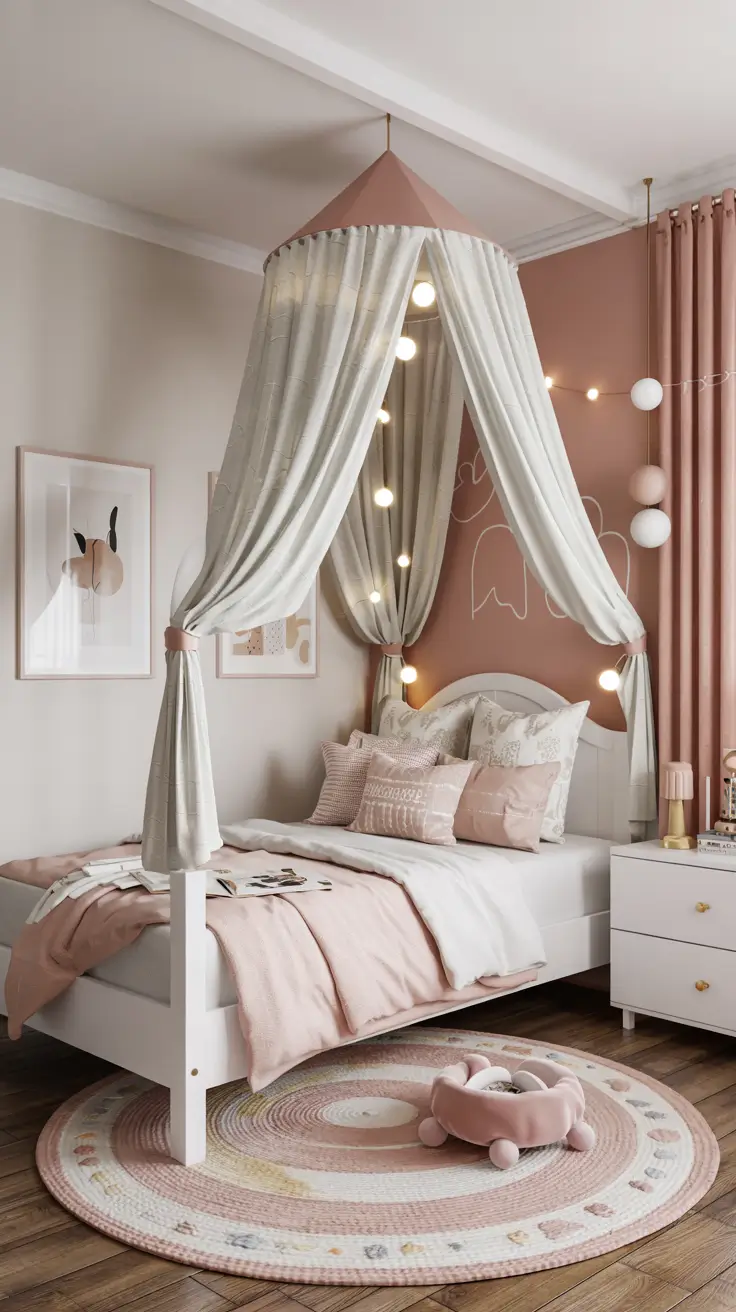
I would often start with a white or soft wood canopy bed and build the room with gentle color accents such as blush, cream, sage, lavender, or pale blue. A twin canopy works especially well in many girls rooms because it leaves space for a desk, book storage, or a reading chair while still making the bed feel special. If the look leans princess or dreamy, I would use sheer canopy fabric, delicate string lights, and layered bedding with a mix of textures rather than too many loud prints. For a more playful style, I might add scalloped details, framed art, a round rug, and small decorative pillows in coordinated colors. I also think storage is essential, so baskets, under-bed drawers, and a compact dresser help the room stay practical and easy to maintain. This is where canopy bed ideas aesthetic can become especially effective, because pretty styling works best when it is supported by order and function.
In my opinion, the prettiest girls rooms are the ones that do not rely on novelty alone. I like spaces that feel sweet and inviting but still grounded enough to age gracefully over a few years. Design editors often recommend creating children’s rooms with flexible foundations, and I agree because it makes updates much easier later. A beautiful bed frame, timeless curtains, good lighting, and quality bedding will always matter more than short-lived decorative trends. I also find that one or two signature details, such as a pink canopy drape or a charming bedside lamp, are usually enough to create personality. That keeps the room from feeling overcrowded while still preserving its playful mood.
What I would add to this type of room depends on the age of the child, but I almost always think a reading corner is worth including if space allows. A small upholstered chair, a shelf for books, and warm bedside lighting can make the room feel more complete and more useful beyond sleeping. I would also consider the wall treatment carefully, because subtle wallpaper, painted paneling, or a soft mural can support the canopy beautifully without overpowering it. If the room is shared or compact, I would keep the palette light and the furniture simple so the bed remains the main feature. For a more romantic take, I would introduce soft florals and layered whites rather than adding too many bright accents. These additions help the room stay sweet, practical, and visually cohesive.
11. Canopy Bed Ideas Without Frame Solutions For Light And Effortless Styling
I find that canopy bed ideas without frame work especially well when I want a bedroom to feel softer and less visually heavy. Instead of relying on a full structural bed frame, I use ceiling-mounted fabric, a wall-mounted rod, or a simple suspended ring to create a floating canopy effect. This approach is useful in apartments, guest rooms, and smaller homes where a large bed structure can make the room feel crowded. It also fits well with canopy bed ideas aesthetic because the effect is airy, relaxed, and easy to personalize. In 2026, I see more bedrooms using this lighter styling because it feels calm, flexible, and less formal than a traditional four-poster design. It is one of the easiest ways to bring dreamy character into a room without changing every piece of furniture.
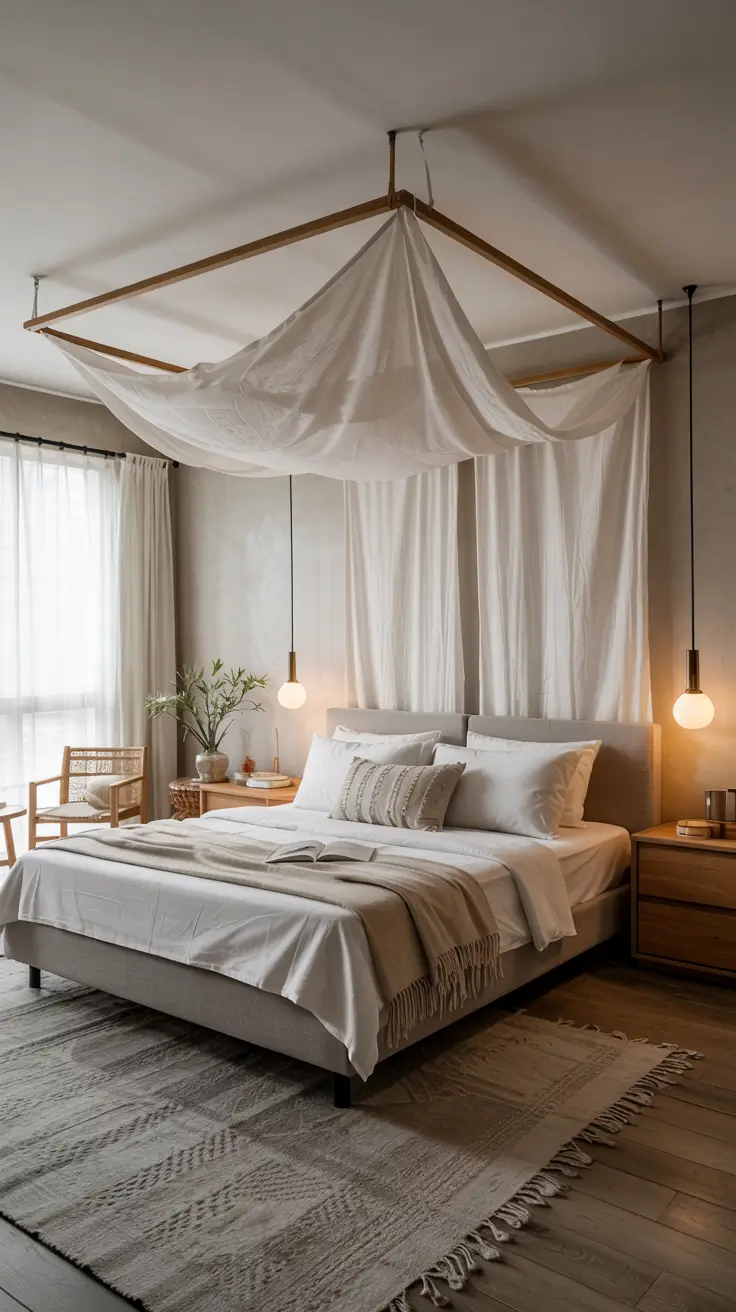
When I design this kind of room, I usually start with a low-profile bed, soft linen bedding, and one dominant neutral color to keep the space quiet and cohesive. I like to add gauzy white or ivory panels because they filter light beautifully and bring movement into the space without blocking the room visually. A slim bedside table, a textured area rug, and warm wall lighting help ground the bed so the canopy does not feel disconnected from the rest of the layout. I often include wood, ceramic, and woven accents because natural materials make the room feel intentional rather than improvised. For canopy bed ideas small room layouts, I prefer pieces with clean lines and open bases because they preserve as much visible floor space as possible. Even a very simple room can feel complete when the canopy is balanced by soft textiles and a few tactile details.
In my experience, this is one of the most practical ways to achieve a romantic look without investing in a large statement bed. I have noticed that designers often recommend layering softness instead of adding bulk, and that advice makes a real difference in this type of setup. Publications such as Architectural Digest regularly highlight the value of texture, restraint, and light control in creating bedrooms that feel luxurious rather than cluttered. I agree with that approach because the charm of a frameless canopy comes from atmosphere, not from visual excess. When I work with this idea, I focus on how the room feels at different times of day, especially in morning light and evening lamp light. That is what turns a simple canopy into something memorable.
If I felt this section needed one more element, I would add a clearer emphasis on ceiling placement and proportion. I always make sure the canopy starts high enough to lengthen the room visually and falls in a way that frames the bed without swallowing it. In rooms with lower ceilings, I keep the fabric closer to the wall or headboard so the effect stays clean and controlled. I also think a bench, a small stool, or one upholstered accent chair can help finish the room and make the canopy look more integrated. This is particularly important when the bed is the main focal point and the rest of the furniture is minimal. A few carefully placed finishing pieces can make a frameless canopy feel thoughtfully designed rather than temporary.
12. Aesthetic Cozy Canopy Bed Ideas For Relaxed And Inviting Bedrooms
When I think about aesthetic cozy bedrooms, I think less about trends and more about atmosphere, comfort, and emotional warmth. A canopy bed works beautifully in this context because it naturally creates a sense of enclosure and softness around the sleeping area. This is where canopy bed ideas aesthetic become especially effective, since the goal is not only to decorate but to shape how the room feels. I like these spaces to feel gentle, layered, and a little dreamy without becoming overly sweet or crowded. In 2026, I see this style leaning toward muted tones, curved forms, plush textures, and lighting that feels low and restful. The result is a bedroom that invites slowing down and spending real time in the space.
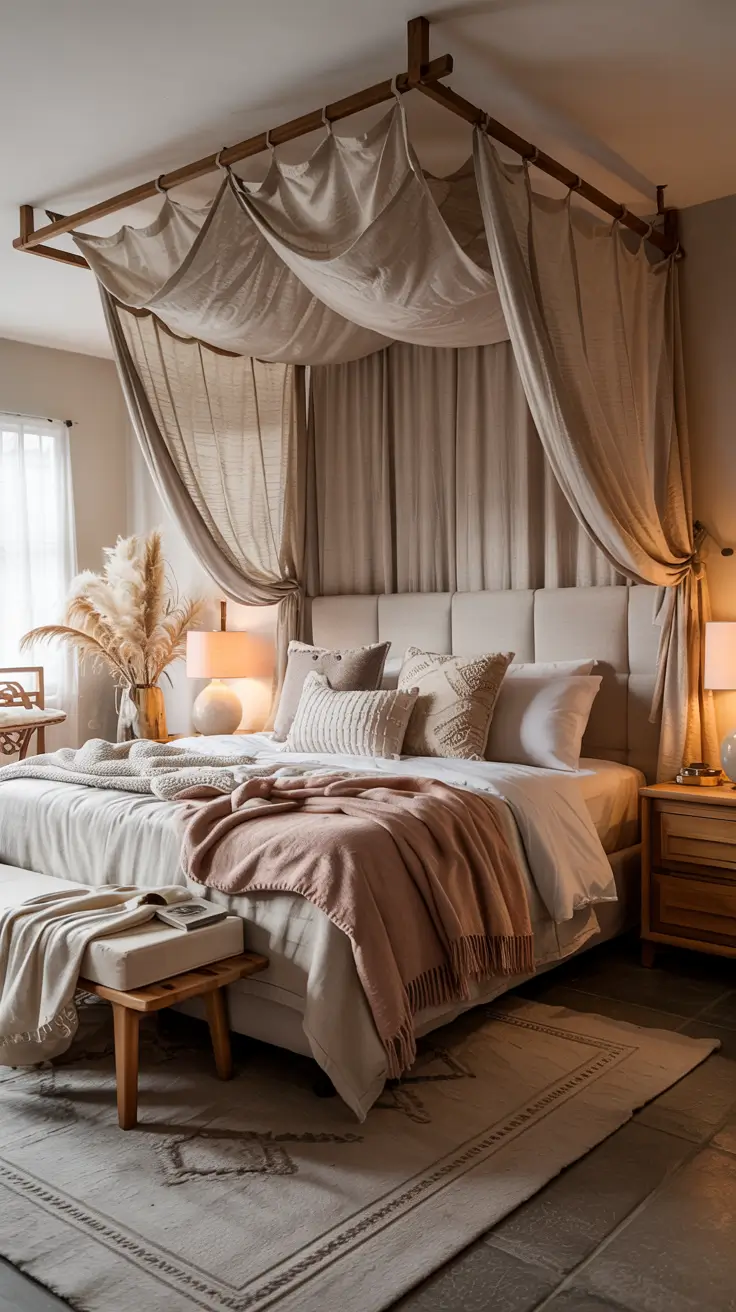
I usually build this look with soft bedding in cream, sand, blush, or dusty taupe, then add a canopy in linen or cotton voile that has enough weight to drape naturally. A padded headboard, knit throw, oversized pillows, and a rug with subtle texture all help create that cozy aesthetic without making the room feel overdone. I also like to include warm wood nightstands, a ceramic lamp, and one or two personal decor pieces so the bedroom feels lived in rather than staged. Canopy bed ideas with curtains fit perfectly here because fabric panels help define the bed and make the room feel more intimate. If I want the space to feel especially inviting, I add soft wall sconces or a small pendant with a warm glow instead of relying only on overhead light. This layered lighting is what gives cozy bedrooms their depth.
From my perspective, the success of this look depends on editing as much as styling. I have learned that a cozy room needs visual quiet, not just more blankets and accessories. House Beautiful and other interiors-focused publications often emphasize layered texture, soft lighting, and a restrained palette in restful bedroom design, and I think that guidance is especially useful here. I personally avoid mixing too many accent colors because it weakens the calm feeling that a canopy bed can create so easily. Instead, I let the fabric, upholstery, and bedding do most of the visual work. That usually makes the room feel more timeless and more personal at once.
What I would still add to this section is a stronger note about scent, window treatment, and sound softness, because those details complete the cozy experience. I often recommend fuller curtains, even in a small room, when the fabric is light enough to keep the space open. They make the bedroom feel quieter and more finished, especially when paired with a canopy. A boucle bench, a small upholstered stool, or a soft ottoman can also add comfort near the bed without interrupting the overall palette. If the room has hard flooring, I think a generous rug is almost essential because it visually anchors the bed and softens the acoustics. Those final layers are what turn a pretty room into a truly inviting one.
13. Luxury Bedroom Master Romantic Canopy Bed Ideas With Hotel Style Elegance
I see luxury romantic canopy bedrooms as spaces that balance softness with structure. The most successful ones do not rely on ornate decoration alone, but on proportion, material quality, and a sense of order. In a master bedroom, a canopy bed can create the same visual authority that luxury hotels achieve with tall headboards, symmetrical furniture placement, and layered textiles. This makes it one of the strongest choices for people who want a private space that feels elevated and restful at the same time. I think this style works especially well when the room already has generous scale, natural light, or architectural details that deserve emphasis. A romantic master bedroom should feel refined, not fragile, and a canopy helps establish that tone immediately.
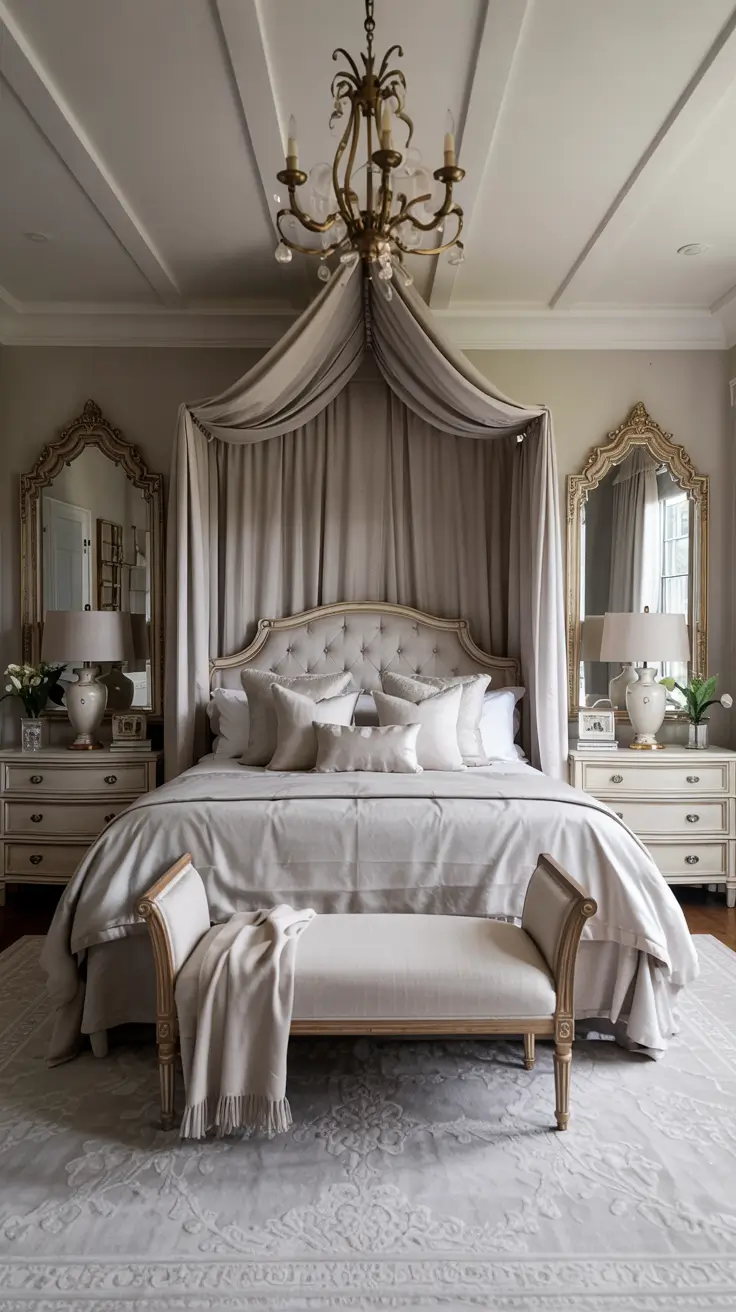
When I design around this idea, I usually begin with a queen or king bed with a substantial upholstered headboard and a canopy frame in metal, wood, or a painted finish that suits the room. I like long drapery panels, crisp sheets, a quilted coverlet, and layered accent pillows because they create that polished hotel look without feeling impersonal. Matching bedside tables, balanced lamps, a bench at the foot of the bed, and a large rug beneath the bed all contribute to the sense of structure that luxury rooms need. I also find that mirrored details, brushed brass accents, or a statement chandelier can add elegance when used with restraint. For a romantic effect, I prefer soft neutrals, warm whites, dusty mauves, or muted taupes instead of overly dramatic red or purple themes. This keeps the room sophisticated while still feeling intimate.
Personally, I think hotel-inspired bedrooms work best when every piece feels intentional and there is enough breathing room around the bed. I often return to design advice from respected magazines such as Elle Decor, which regularly shows that luxury comes from composition, material depth, and consistency more than from excess decoration. That principle matters even more in romantic bedrooms because too many decorative gestures can make the space feel artificial. I would rather use one beautiful canopy, excellent bedding, and elegant lighting than fill the room with unnecessary accessories. In my experience, romance in interiors is more believable when it is subtle and tactile. That is what gives the room lasting appeal.
If I wanted to strengthen this type of room even further, I would add better window treatments and one more seating element. Full-height drapery in a substantial fabric helps the canopy bed feel connected to the room rather than floating separately from it. I also think a lounge chair, chaise, or compact loveseat can be very effective in larger master bedrooms because it extends the luxurious mood beyond the bed itself. For lighting, I would never stop at a central fixture alone. A combination of bedside lamps, sconces, and soft ambient light gives the room depth and makes the canopy more visually dramatic at night. These additions help the space feel truly complete instead of simply well furnished.
14. Black Canopy Bed Ideas That Bring Bold Contrast And Modern Depth
Black canopy bed ideas can transform a bedroom in a way that feels graphic, grounded, and distinctly modern. I like this direction when I want the bed to act as a strong architectural feature instead of blending quietly into the background. A black canopy frame introduces contrast immediately, which helps define the room and gives even simple interiors more visual structure. This is one of my favorite ways to approach canopy bed ideas modern because black lines naturally sharpen the composition of the room. At the same time, the look can feel warm and inviting if the darker frame is balanced with softer materials and lighter surfaces. In 2026, I expect this contrast-driven style to remain popular because it suits both minimalist bedrooms and more layered, moody interiors.
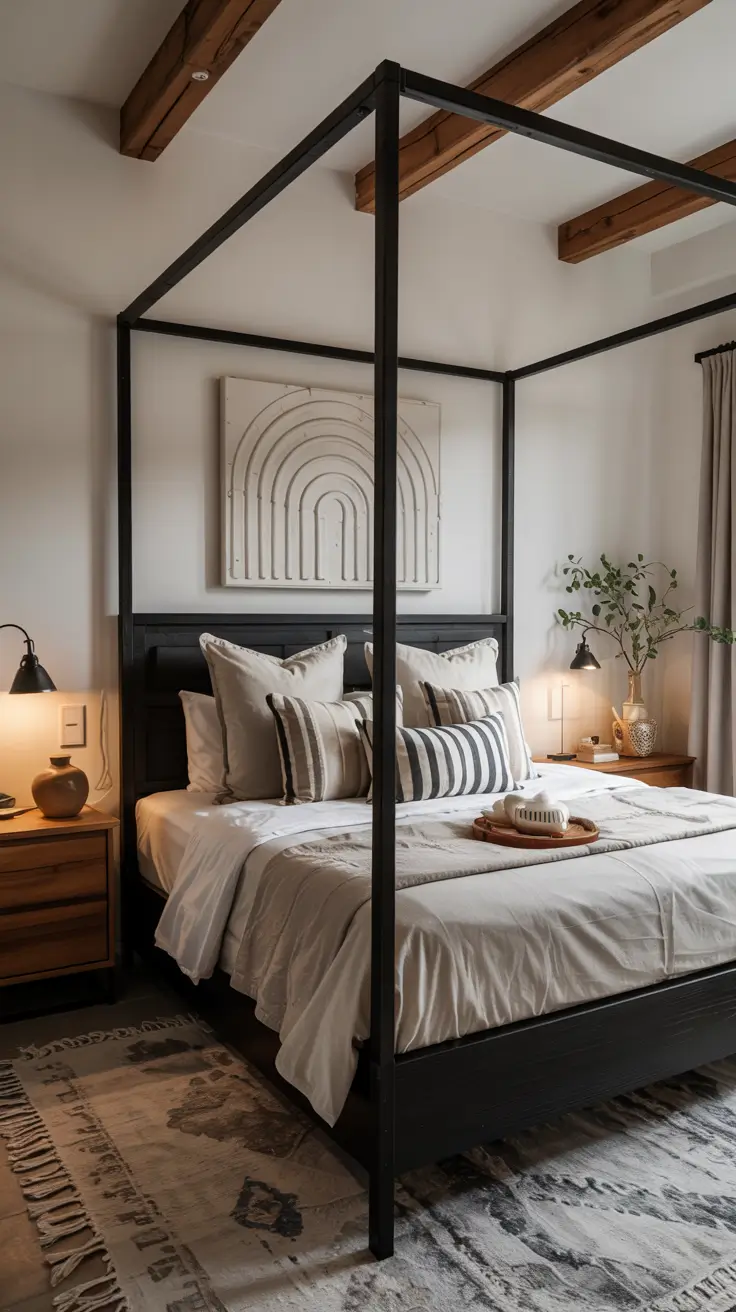
I usually pair a black canopy bed with white, cream, oatmeal, clay, or muted olive tones so the space feels balanced rather than harsh. Upholstered bedding, a textured throw, and curtains with a natural drape help soften the strong geometry of the frame. I also like adding wood nightstands, matte ceramic decor, smoked glass lamps, and a rug with visible texture because these elements keep the room from feeling flat. In more dramatic versions, I can see this working beautifully in dark romantic bedrooms with charcoal walls, bronze accents, and warm lighting. For a cleaner modern look, I prefer pale walls, crisp bedding, and only a few carefully chosen decorative elements. The black frame then becomes the main visual statement without competing with the rest of the room.
From my point of view, black works best in bedrooms when it is repeated thoughtfully rather than used only once. I often echo it through lighting, picture frames, drawer hardware, or a bench base so the canopy feels connected to the space. Interior publications such as Domino and Architectural Digest frequently show that darker accents are most successful when they create rhythm across the room, and I have found that to be true in real spaces as well. A black canopy bed can feel severe if everything else is too cold or too sparse. I prefer to temper that effect with upholstery, layered textiles, and warmer finishes. That mix creates depth instead of visual stiffness.
What I would add here is a stronger emphasis on wall color and flooring, because they influence the success of a black canopy more than people expect. If the walls are too stark and the floor is too dark, the room can lose balance quickly. I usually recommend either medium warmth underfoot, such as oak or walnut tones, or enough pale texture in rugs and textiles to lighten the composition. I also think this style benefits from thoughtful artwork because the boldness of the bed deserves equally intentional visual support nearby. Even one oversized artwork piece or a symmetrical pair above the nightstands can complete the room. Those finishing moves help black canopy bed ideas feel polished rather than heavy.
15. Adults Diy Bedroom Canopy Bed Ideas That Look Custom And Expensive
I think adults diy bedroom canopy ideas are most successful when they feel intentional and architectural rather than obviously improvised. A DIY canopy can still look refined if the materials are chosen carefully and the installation is simple, neat, and proportionate to the room. This makes it a smart option for adults diy boho spaces, modern rentals, and anyone who wants visual impact without buying an entirely new bed. I often recommend this path when someone wants a custom feeling bedroom but prefers to spend more on bedding, lighting, or storage instead of a large furniture investment. In 2026, I see more people mixing practical DIY solutions with polished finishes so the result feels personal but still elevated. That balance is exactly what makes these canopy ideas relevant and useful.
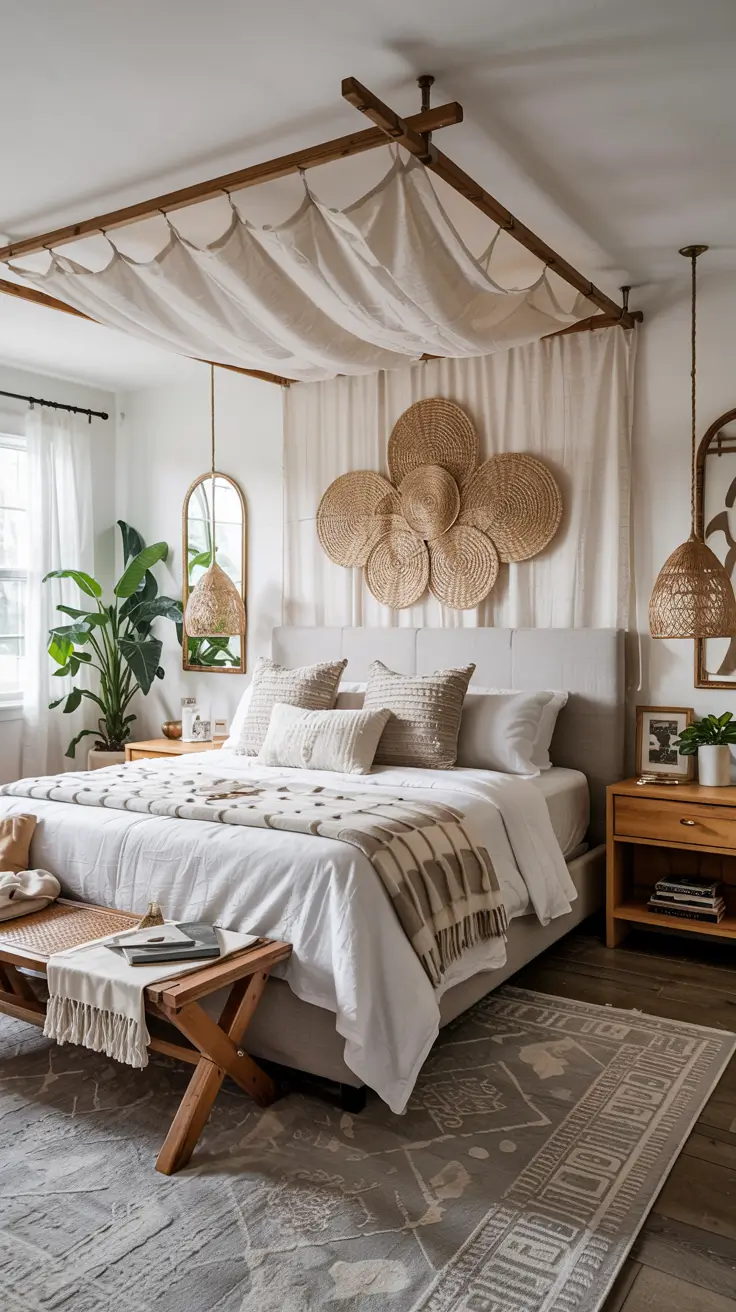
When I create a DIY canopy for adults, I usually start with the easiest clean-looking options such as ceiling tracks, curtain rods, wood dowels, or a suspended frame above the bed. For a boho bedroom version, I like soft neutral fabric, warm wood, woven accents, and relaxed bedding that does not feel too formal. For a more tailored look, I use straighter fabric panels, fewer decorative accessories, and a palette built around beige, black, white, or soft earth tones. Canopy bed ideas diy also work well when paired with practical furniture like floating nightstands, underbed storage, and compact lighting, especially in smaller rooms. If I want the design to look more expensive, I focus on longer fabric lengths, better curtain fullness, and cleaner mounting hardware. Those details matter far more than people think.
In my experience, the difference between a stylish DIY bedroom and a temporary-looking one comes down to finish quality and restraint. I have seen many designers recommend choosing one strong idea and executing it well, and I completely agree with that advice for DIY canopy projects. Better Homes and Gardens and similar home media often stress the value of simple upgrades that improve atmosphere without overwhelming the room, and that principle fits perfectly here. I would rather install one well-proportioned canopy with quality fabric than add too many handmade elements competing for attention. Adults usually want the room to feel calm, useful, and mature, even when it has a creative or boho edge. A polished DIY canopy can absolutely deliver that.
If I were adding one more thing to this section, I would focus on what completes the custom look around the bed. I think DIY canopy rooms benefit from at least one element that feels tailored, such as custom-looking drapes, a coordinated bench cushion, or wall-mounted reading sconces. I also recommend thinking about the headboard, because a simple upholstered or wood headboard can make the canopy feel more intentional immediately. For adults diy bedroom layouts, I try to avoid clutter around the bed so the canopy remains the clear focal point. A well-scaled rug, one plant, and consistent metal or wood finishes can do a lot to unify the space. Those supporting details help the room feel designed, not just decorated.
16. Gothic Canopy Bed Ideas With Dark Mood, Texture, And Dramatic Character
I think a gothic canopy bed works best when the room feels layered rather than flat. The most effective version of this look combines deep color, strong vertical lines, and soft texture so the space feels dramatic without turning cold. I would use charcoal, black, espresso wood, and muted plum to create a moody base that still looks refined in 2026. This is one of my favorite canopy bed ideas for adults because it can feel bold and mature without looking theatrical. It also fits beautifully into dark romantic bedrooms when the balance between shadow and softness is handled well.
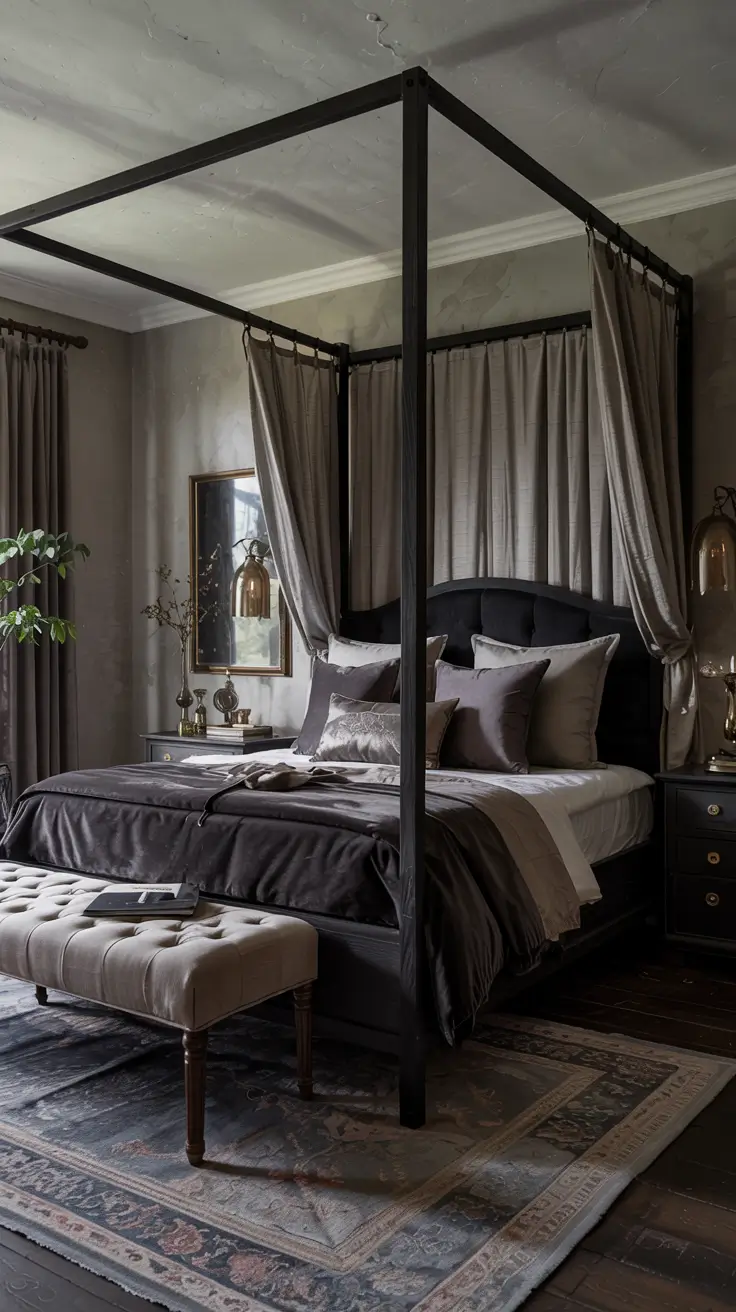
For the bed itself, I would choose a black or dark wood frame with a clean silhouette instead of anything too ornate. Velvet drapes, washed linen panels, or sheer smoky curtains can soften the frame and introduce canopy bed ideas with curtains in a way that still feels elegant. I like pairing the bed with a tufted bench, antique brass sconces, a low dresser in stained wood, and a large area rug with a faded vintage pattern. A matte black nightstand or dark marble side table adds weight and structure to the layout. To keep the room useful and not overly heavy, I would bring in warm bulbs, textured bedding, and one upholstered chair that invites the eye to rest.
In my experience, the biggest mistake in gothic bedrooms is relying only on dark paint and dark furniture. I have found that texture matters more than color alone, because velvet, boucle, linen, wood grain, and metal finishes keep the room visually alive. Designers featured in well-known shelter publications often point out that moody rooms need contrast, and I completely agree with that approach. I would always add cream, faded rose, or soft taupe somewhere in the bedding or rug to prevent the room from feeling flat. That small contrast makes the dramatic character feel intentional rather than oppressive.
If I were finishing this section in a real bedroom, I would add one oversized mirror, longer curtain drops, and a subtle wall treatment behind the bed. I also think this style benefits from better ceiling attention, such as a dark pendant, a wrought-iron fixture, or a softly aged chandelier. A gothic canopy room can also use scent and tactile detail, so I would include candles, a heavier throw, and a padded headboard if the frame allows it. These additions make the room feel complete instead of styled only around the bed. The final result feels romantic, grounded, and surprisingly livable.
17. Boho Bedroom Canopy Bed Ideas With Rattan, Linen, And Organic Layers
When I create a boho canopy bedroom, I focus first on ease and softness. This style works when the room feels collected over time, with natural materials and relaxed shapes that never seem too polished. I see this as one of the strongest canopy bed ideas boho options because it allows warmth, texture, and personality to come together in a natural way. It also suits people who want canopy bed ideas aesthetic without making the room feel formal or fragile. A boho bedroom with a canopy usually feels calm, breathable, and personal from the first glance.
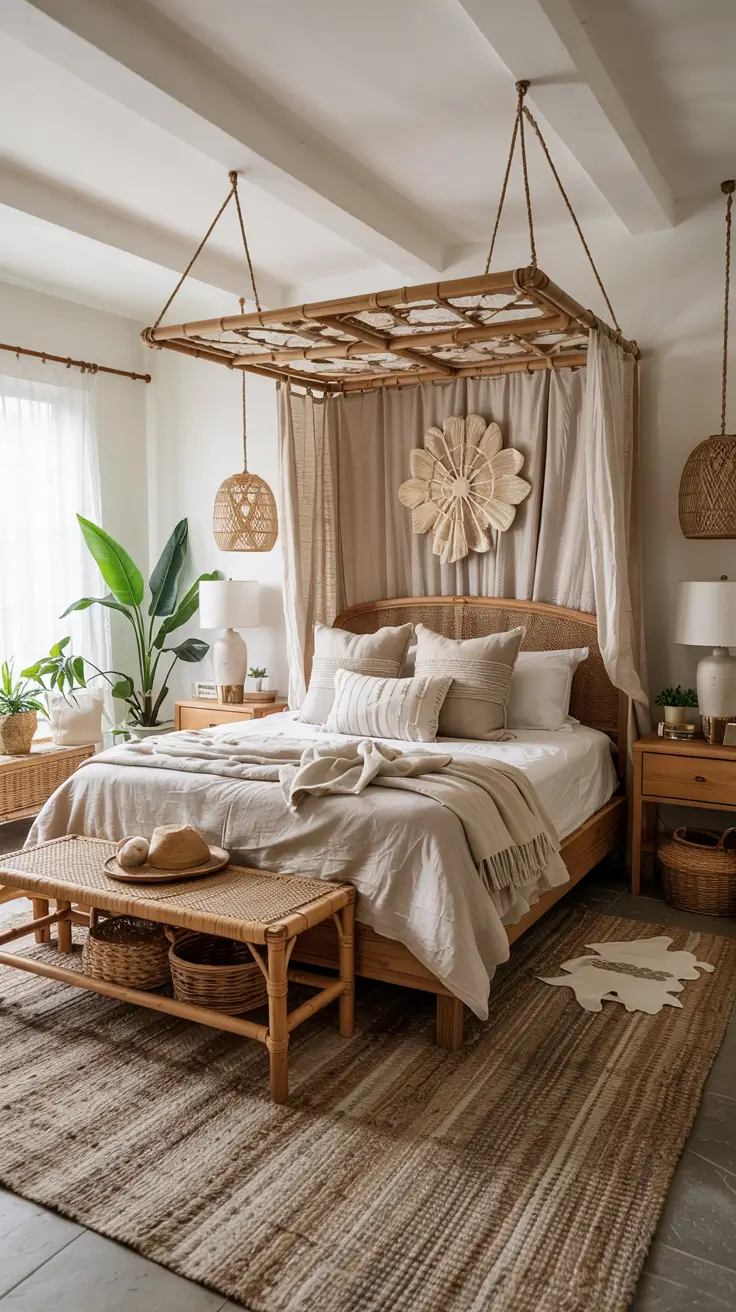
I would start with a light wood or rattan canopy bed and dress it with loose linen panels or airy gauze. This is also where canopy bed ideas diy can work beautifully, because a simple wood structure or ceiling-mounted canopy can look charming when the materials are honest and well chosen. Around the bed, I would include a woven bench, handmade ceramic lamps, layered neutral bedding, and a jute or wool rug with subtle pattern. One vintage nightstand mixed with one simpler modern table keeps the room from feeling too staged. I also like adding baskets, an olive tree or trailing plant, and a warm-toned wall hanging for that relaxed organic layering.
I personally think boho rooms succeed when every object has breathing space. I do not try to fill every corner, because that can quickly turn cozy into cluttered. Many designers and editors in interior media emphasize the value of natural texture and imperfection in relaxed spaces, and I find that advice especially useful here. I prefer linen that wrinkles slightly, wood that shows its grain, and decor that looks handmade rather than too glossy. That combination gives the room its lived-in charm and makes the canopy bed feel like part of a larger story.
To complete this kind of room, I would add more variation in tone rather than more furniture. A caramel throw, soft sand curtains, muted terracotta cushions, and a touch of black in lighting or hardware can help anchor all the lighter materials. I would also pay attention to the wall behind the bed, because plaster texture, a limewash finish, or framed textile art can deepen the atmosphere. If the room has enough height, I would let the canopy fabric fall almost to the floor to create a dreamy silhouette. That extra softness is what turns a simple boho room into one that truly feels immersive.
18. Princess Canopy Bed Ideas With Soft Fabrics And Elegant Whimsical Detail
A princess canopy bed does not have to feel overly sweet or childish to be successful. I prefer versions that lean into softness, light, and graceful detail while still keeping the room practical and balanced. This makes it a versatile choice for canopy bed ideas girls room, but it can also be adapted for teens or even adults who want a dreamy and polished bedroom. In 2026, I think the most appealing princess-inspired rooms mix classic elegance with lighter, simpler styling. The result feels whimsical, but not overloaded.
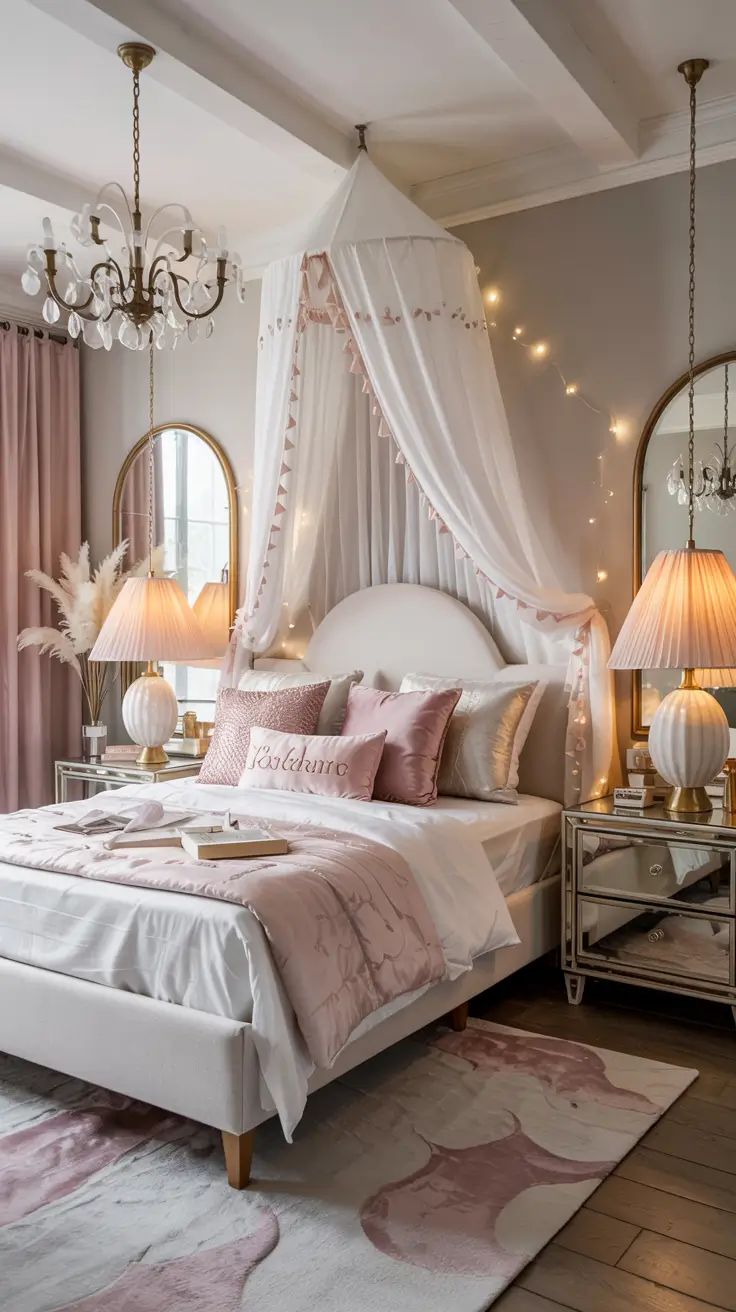
I would use a white, ivory, or pale blush frame with flowing sheer fabric that catches light beautifully. For a more graceful look, I would include a curved headboard, upholstered bench, pleated bedside lamps, and layered bedding in soft white, pink, and champagne tones. This style works especially well with canopy bed ideas with lights, because tiny warm fairy lights or hidden LED glow can make the drapery feel magical without looking harsh. A mirrored nightstand, delicate chandelier, and one floral or ribbon-inspired accent can reinforce the mood in a subtle way. If the room is for a smaller child or tween, I would still keep the furniture functional and scaled correctly so the beauty does not get in the way of everyday use.
I have noticed that the best princess bedrooms always include restraint. When every surface is embellished, the room loses elegance and starts to feel visually tired. I prefer to let the soft fabrics do most of the work, with only a few decorative details that feel intentional. Advice from well-known design magazines often returns to the idea of balance in romantic rooms, and I think that principle is essential here. A princess look becomes much more timeless when it is built through proportion, texture, and light instead of novelty decor.
If I were refining this room, I would add one larger grounding element so it does not float too much visually. That could be a soft patterned rug, a painted dresser with some weight, or fuller curtains at the window to frame the bed more effectively. I would also think carefully about storage, because whimsical rooms still need order to stay beautiful. Decorative boxes, a pretty bookcase, or an upholstered storage bench can help the room remain calm and usable. Those finishing details allow the dreamy mood to last beyond the first impression.
19. Romantic Canopy Bed Ideas For A Bedroom That Feels Warm And Intimate
To me, a romantic canopy bedroom should feel warm, inviting, and personal rather than overly styled. I want the room to encourage rest, softness, and a quiet sense of intimacy that works in everyday life. This is why romantic designs remain some of the most enduring canopy bed ideas for adults, especially in master bedrooms where atmosphere matters as much as layout. I also find that this look blends well with luxury bedroom master romantic concepts when the materials feel rich but not flashy. The goal is not excess, but emotional comfort.
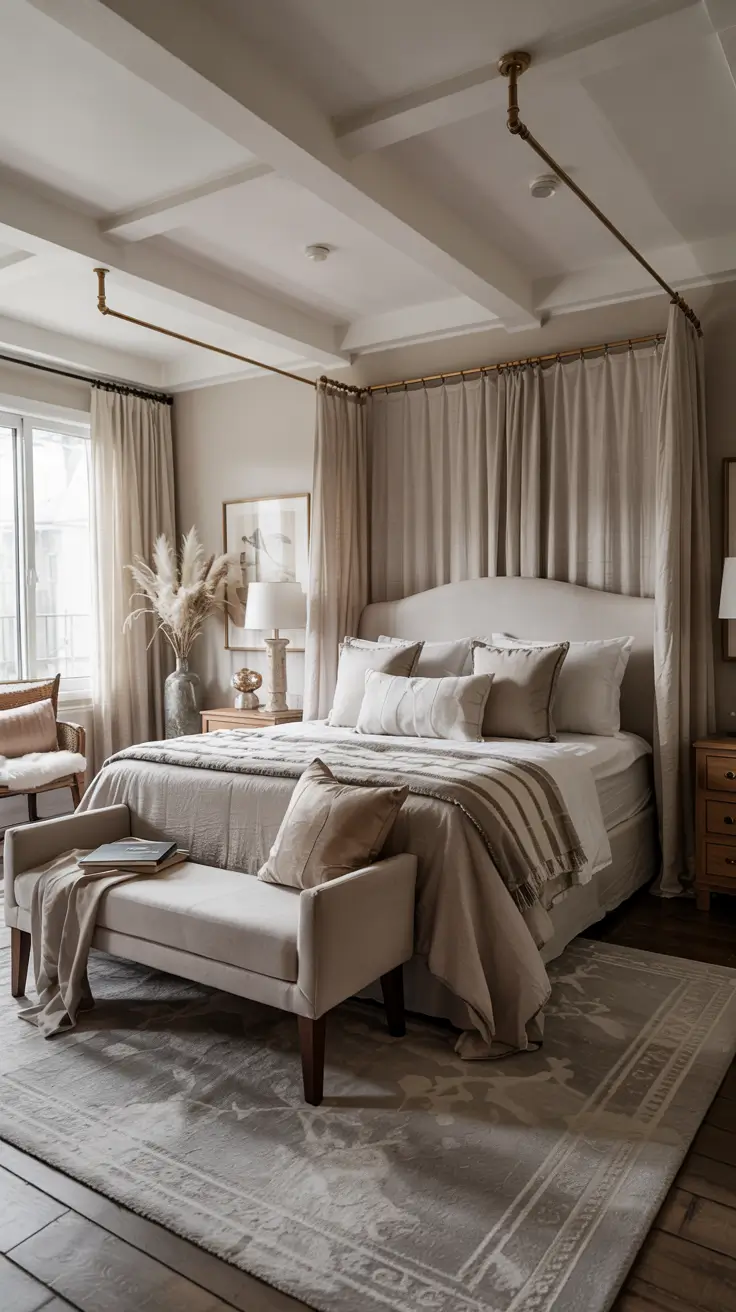
I would start with a queen or king canopy bed in wood, soft black metal, or upholstered form depending on the room’s scale. Then I would layer in a padded bench, warm neutral bedding, textured curtains, dimmable bedside lighting, and a rug that extends generously beyond the bed frame. If I wanted the room to feel especially cozy, I would use warm taupe, creamy white, dusty rose, and muted brown to build a soft palette. A pair of matching lamps creates rhythm, while a small reading chair or chaise adds usefulness and elegance. I think romantic rooms also benefit from tactile variety, so I would mix cotton, linen, velvet, and brushed wood for depth.
In my own design approach, I think intimacy comes more from restraint than from decoration. A room becomes romantic when everything feels calm, soft, and deliberate. I often look to advice from trusted interior editors who recommend layered lighting and meaningful texture, because that approach always improves the emotional quality of a bedroom. I agree with that completely, especially for canopy beds, which already make a strong visual statement. The supporting pieces should therefore feel quiet, warm, and cohesive.
To strengthen this style even more, I would add better light control and one more personal feature. Blackout drapery behind sheer curtains, a small tray for books and candles, or framed art with softer tones can deepen the sense of retreat. I would also consider a fabric canopy treatment that is fuller at the head of the bed and lighter along the sides, because that creates a more intimate visual envelope. If the room feels too open, I would add a folding screen, tall plant, or upholstered accent chair to shape the space gently. These details help the room feel complete and emotionally rich.
20. Twin Canopy Bed Ideas That Turn Smaller Beds Into Statement Pieces
I think twin canopy beds are often underestimated. They can look incredibly stylish while also solving practical needs in smaller bedrooms, guest rooms, and shared spaces. This is one of the most useful directions for canopy bed ideas small room because the vertical shape adds presence without requiring a larger footprint. It also works well for canopy bed ideas girls room and for flexible spaces that need to feel special without becoming crowded. A twin bed can absolutely become the focal point when the proportions are handled well.
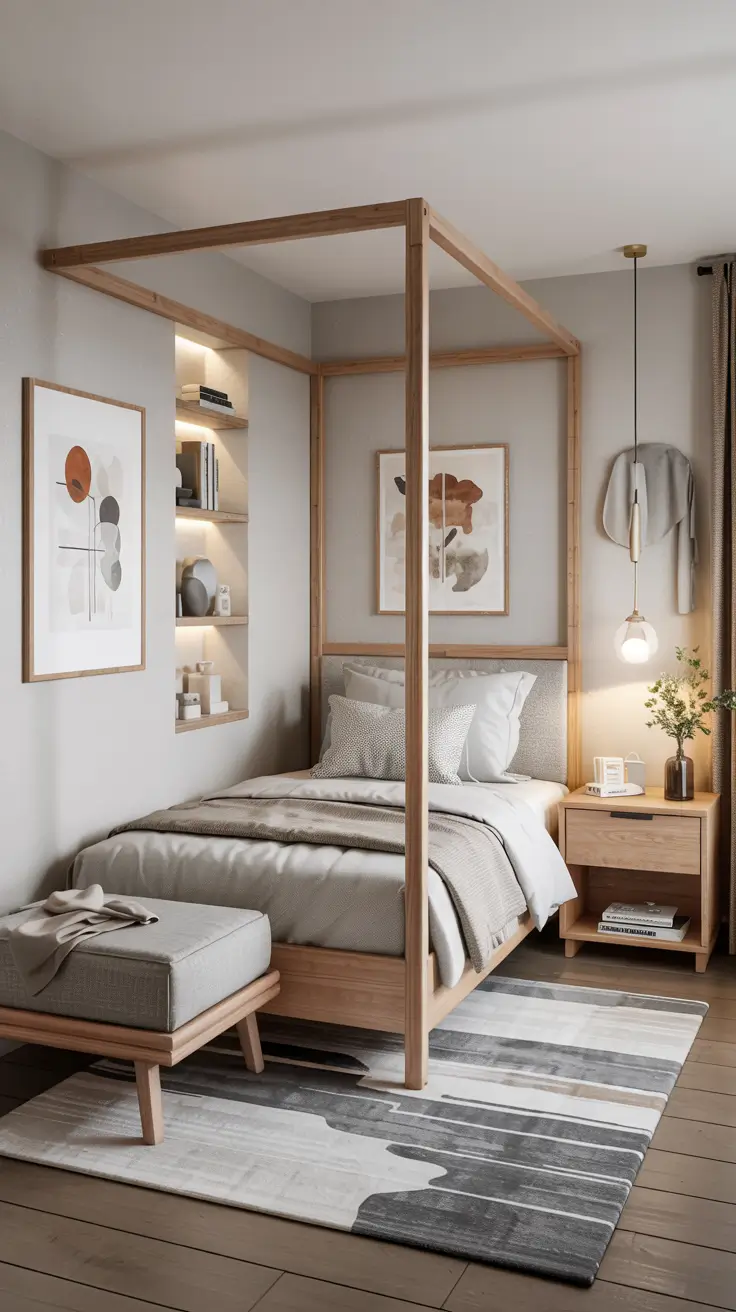
I would choose a slimmer canopy frame with clean posts and enough open space around it so the room still breathes. In a small room, I prefer lighter finishes such as white, pale wood, or soft metal unless I am intentionally creating contrast. For styling, I would include one compact nightstand, a storage bench or drawer base, crisp bedding, and a single area rug that visually anchors the bed. If I wanted to explore canopy bed ideas without frame, I might use ceiling-mounted fabric above a twin bed to create a similar look without the extra structure. That option is especially smart in tighter rooms or corner layouts where every inch matters.
From my perspective, the success of a twin canopy setup depends on scale more than style. If the side tables are too bulky or the drapery is too heavy, the bed quickly overwhelms the room. I always try to keep the canopy treatment lighter and the furniture more streamlined so the bedroom remains functional. Many small-space experts in design media stress the importance of vertical thinking, and I find that idea very relevant here. A twin canopy uses height to create impact, which is exactly what a compact room often needs.
To improve this kind of room further, I would add more hidden storage and one thoughtful decorative layer. Under-bed drawers, wall-mounted shelves, or a narrow dresser can support daily use without cluttering the floor. I would also consider adding canopy bed ideas with lights in a subtle way, such as a small wall sconce, warm string lighting, or a pendant that gives the bed more presence at night. A soft window treatment and one piece of art above a nearby dresser can make the whole room feel more intentional. With those additions, a twin canopy bed stops feeling secondary and starts feeling memorable.
21. Corner Canopy Bed Ideas For Making Awkward Layouts Feel Intentional
I find that a corner canopy bed can completely change the feeling of an awkward bedroom layout when the placement is handled with purpose. Instead of treating the corner as a compromise, I prefer to make it the visual anchor of the room and let the canopy structure define that zone. This works especially well in small room layouts, guest bedrooms, and compact apartments where the bed needs to coexist with storage and circulation. A corner setup can also make canopy bed ideas small room feel more thoughtful because it frees more open floor area in the center. In 2026, I see more bedrooms using this strategy to create a cozy and architectural look at the same time. The result feels softer, calmer, and more organized than a bed floating awkwardly against a flat wall.
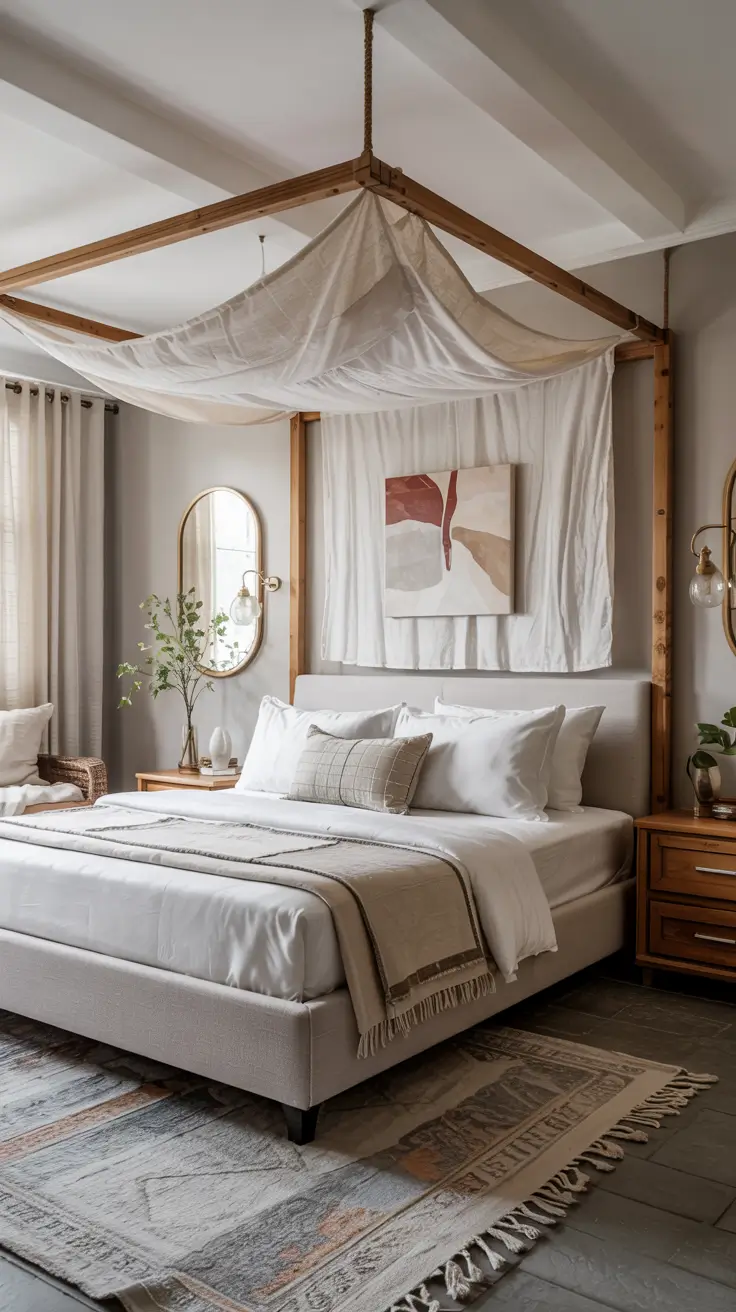
When I build this kind of look, I pay attention to every supporting piece around the bed. I like a slim nightstand on the open side, layered curtains or a fabric panel behind the headboard, and a rug that extends beyond the bed frame to visually widen the room. A corner canopy often benefits from wall sconces instead of bulky table lamps, because they preserve surface space and make the area feel cleaner. I also think a bench, one accent chair, or a narrow dresser should only be added if the scale stays light and balanced. The canopy itself can be metal, wood, or even a softer diy version depending on the room, but the frame should not overpower the corner. That balance is what keeps the design useful rather than crowded.
From my perspective, this is one of the most underrated canopy bed ideas for adults because it solves a layout issue and adds character at the same time. I often return to the idea that good bedroom design should guide the eye and calm the mind, and a corner canopy does both when it is styled with restraint. Designers and shelter publications in the US often emphasize that bedrooms feel better when furniture placement supports easy movement, and I strongly agree with that principle here. In my experience, the mistake is adding too many decorative layers before the layout is actually working. Once the bed is placed correctly, even simple bedding and one or two textiles can make the whole room feel finished. I think this is especially effective for aesthetic cozy interiors that need structure without losing softness.
To complete this section, I would add one more strong vertical element so the corner feels fully integrated into the room. That could be a tall plant, a narrow wall-mounted shelf, a pair of drapes, or a soft pendant light that visually connects the canopy to the rest of the space. I would also make sure the bedding color palette stays limited, because corners can start to feel heavy if too many tones compete. A light upholstered headboard, creamy bedding, and one darker accent usually work better than too many layers of print. I would also keep under-bed storage discreet if it is needed, so the room still feels calm. For me, the finishing detail is always lighting, because without good lighting the corner can read as cramped instead of intentional. Warm light is what gives this layout its final dreamy and useful quality.
22. King Canopy Bed Ideas That Create A Grand And Balanced Focal Point
I think a king canopy bed works best when the entire room is designed to support its scale rather than compete with it. Because a king bed naturally dominates the bedroom, the canopy should create a grand focal point while still feeling calm and balanced. This is one of the strongest canopy bed ideas modern for larger bedrooms, especially when the room has high ceilings, generous wall space, or a master suite layout. In 2026, I notice more bedrooms using cleaner canopy lines with less visual weight, which helps the room feel current instead of overly formal. A king canopy can still feel romantic and luxurious, but it needs enough negative space around it to breathe. That is what makes the room feel elegant rather than oversized.
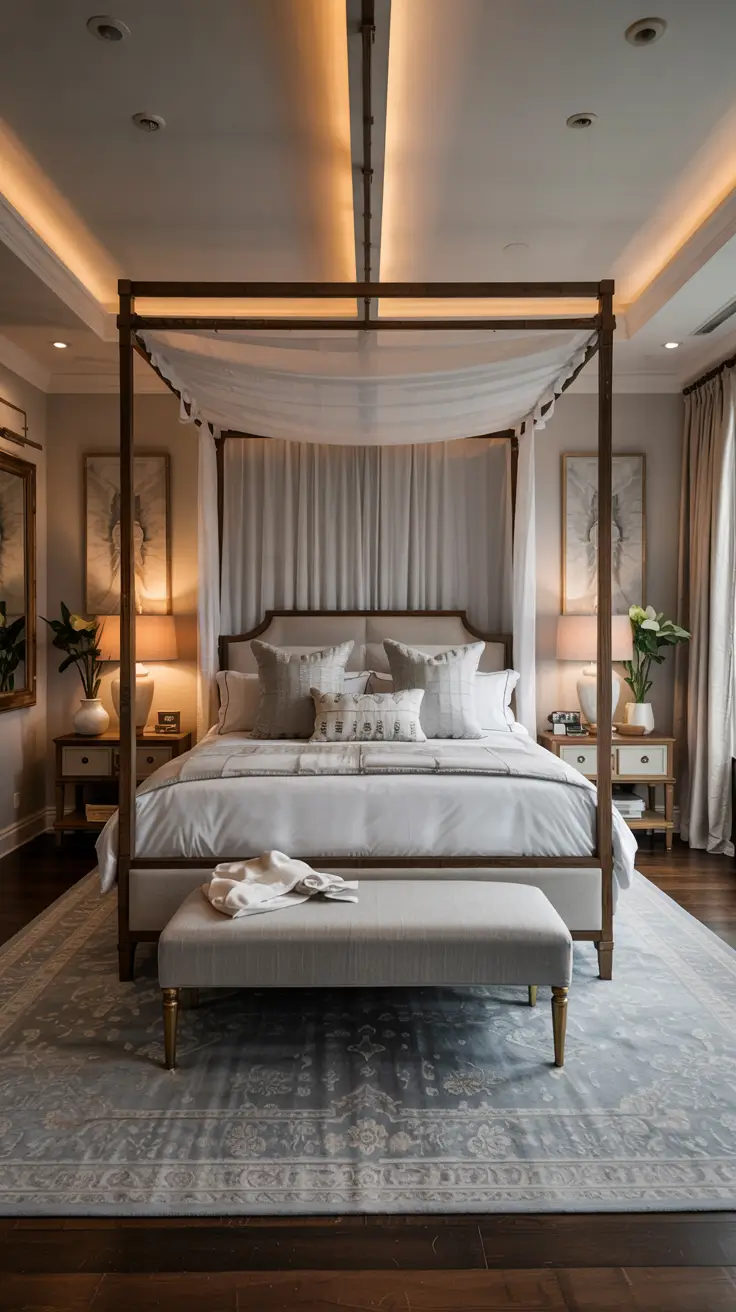
When I style a king canopy bedroom, I usually start with proportions first. I like substantial nightstands on both sides, matching lamps or sconces, and a larger area rug that extends far enough beyond the bed so the scale feels intentional from every angle. A bench at the foot of the bed often helps visually ground the frame, and I think long drapery panels can make the height feel softer and more refined if the room needs that touch. Bedding should feel layered but not overfilled, so I prefer a tailored duvet, supportive pillows, and a textured throw rather than too many decorative cushions. If the canopy frame is dark or black, I like balancing it with warmer wood tones, upholstery, or lighter walls. That mix keeps luxury bedroom master romantic style from feeling too sharp or too staged.
Personally, I think this is one of the most timeless ways to use a canopy bed when the bedroom has enough scale to support it. I have always felt that large bedrooms can look surprisingly empty without one strong central element, and a king canopy solves that problem beautifully. Many respected interior publications in the US repeatedly point out that symmetry can bring calm to bedrooms, and I find that especially true with king bed layouts. Even when I am not aiming for a formal room, I still use symmetry in the main furniture placement because it gives the space a grounded feeling. The best part is that the style can shift easily from modern to romantic depending on fabric, lighting, and finish. That flexibility is why I think king canopy beds remain relevant in 2026.
What I would add here is a clear supporting layer behind the bed so the canopy feels rooted within the architecture. That could be a painted accent wall, large-scale wall molding, wood paneling, or a soft textured wallpaper that frames the headboard area. I would also make sure the lighting plan includes more than bedside lamps, because a large bedroom needs layered illumination to feel complete at night. A central pendant or flush mount, warm accent lighting, and soft bedside light together make the room feel richer and more livable. I would avoid undersized art and tiny accessories, because they disappear against a king canopy and make the room feel disconnected. In my view, scale is everything in this kind of design. Once the scale is right, the room starts to feel balanced, expensive, and comfortable all at once.
23. Pink Canopy Bed Ideas For A Soft, Feminine, And Dreamy Look
I love pink canopy bedrooms when the color is used with restraint and depth instead of turning the room into something overly sweet. A soft pink canopy bed can create a dreamy atmosphere that still feels mature, especially when the rest of the bedroom includes grounded neutrals, warm wood, or gentle metallic accents. This is one of the most versatile canopy bed ideas aesthetic because the mood can shift from princess-inspired to calm adult elegance depending on tone and texture. In 2026, I see dusty pink, muted rose, blush clay, and pale mauve working especially well in bedrooms that want softness without losing sophistication. These shades make a room feel inviting and light while still offering personality. I think this approach works beautifully in girls room concepts, romantic guest spaces, and adult bedrooms that want a tender but polished mood.
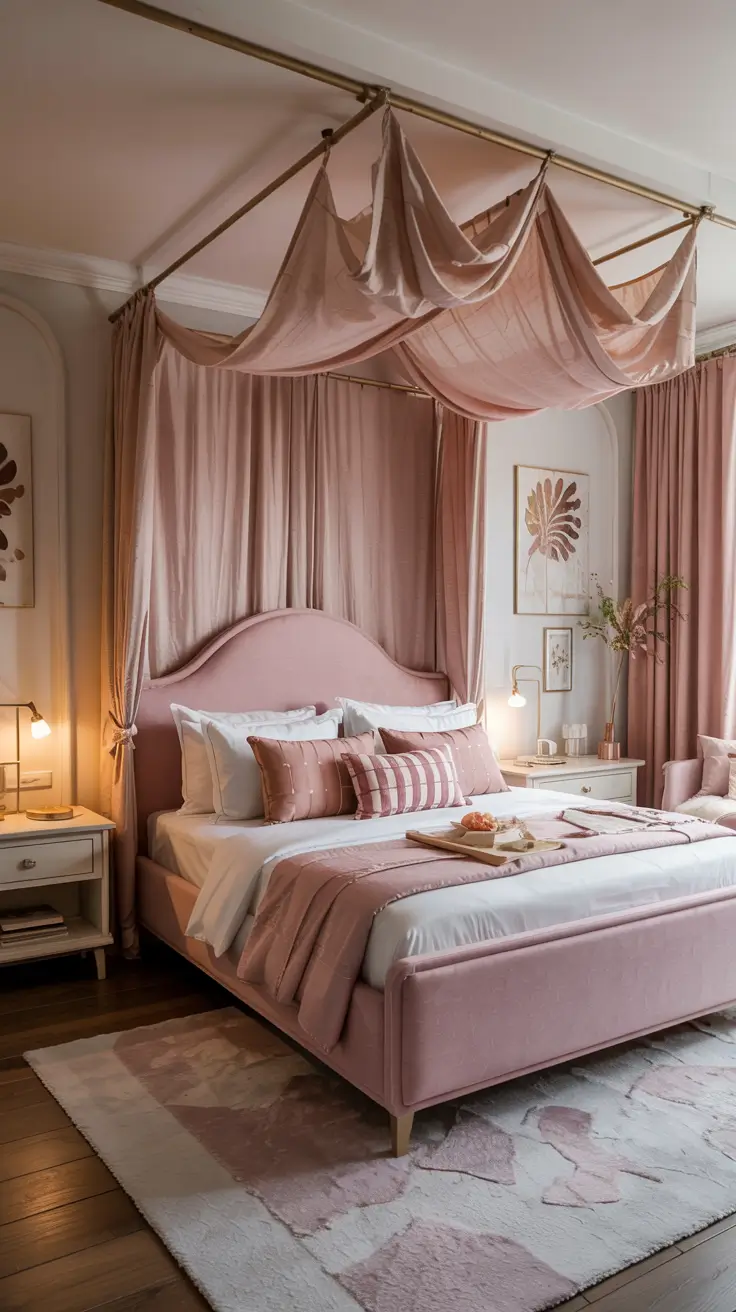
When I style this look, I usually begin with the exact shade of pink and then build the furniture around it. I like pairing pink textiles with cream bedding, light oak or painted white furniture, and one or two contrast notes such as black hardware, bronze lighting, or a darker throw pillow. A canopy with curtains can work especially well here, because the draped fabric adds movement and supports that dreamy feeling without needing excessive decor. I also think a soft rug, upholstered bench, curved nightstands, and layered lamps are useful in this kind of room because they prevent the palette from feeling flat. If I want the result to lean more modern, I keep the canopy frame simple and the bedding more tailored. If I want it to feel more romantic, I add fuller textiles, a vintage-inspired mirror, and softer lighting.
From my own experience, pink works best in bedrooms when it is treated as a design color rather than as a theme. That is the difference between a space that feels elevated and one that feels too narrow in style. I often think of advice seen in respected design media, where editors recommend balancing romantic colors with structure, contrast, and texture, and I completely agree with that approach. In practice, I rarely use pink alone. I combine it with white, wood, matte black, or warm neutrals so the room stays layered and visually complete. That is what makes pink canopy bed ideas feel appropriate for adults as well as for younger spaces. To me, the most successful pink bedrooms are calm, collected, and slightly dreamy without becoming overly decorative.
What I would still add to this room is a little contrast, because soft palettes need something to keep them from floating away visually. That contrast can come from a darker side table, a smoked glass lamp, aged brass details, or a darker upholstered chair placed across from the bed. I would also pay attention to wall finish, because plain white walls can sometimes make pink look less intentional. A warm neutral paint, a subtle wallpaper, or a panel detail often gives the room more depth. I would avoid adding too many novelty accents, because they can weaken the elegant side of the design. For me, the missing piece in many pink bedrooms is mature styling discipline. Once that is added, the room feels feminine, dreamy, and refined rather than temporary.
24. Half Canopy Bed Ideas For A Fresh Twist On Traditional Bed Styling
I think half canopy beds are one of the most interesting directions in bedroom design right now because they offer the drama of a canopy without the full visual enclosure. A half canopy usually frames only part of the bed, often from the headboard area, which gives the design a fresher and more architectural look. This makes it ideal for people who like traditional canopy styling but want something lighter, more modern, or easier to fit into contemporary interiors. I especially like this option for lower ceilings, transitional bedrooms, and spaces that want a strong focal point without too much visual weight. In 2026, this style feels very relevant because it blends classic romance with streamlined design thinking. The result can be cozy, romantic, or even slightly sculptural depending on the frame and styling.
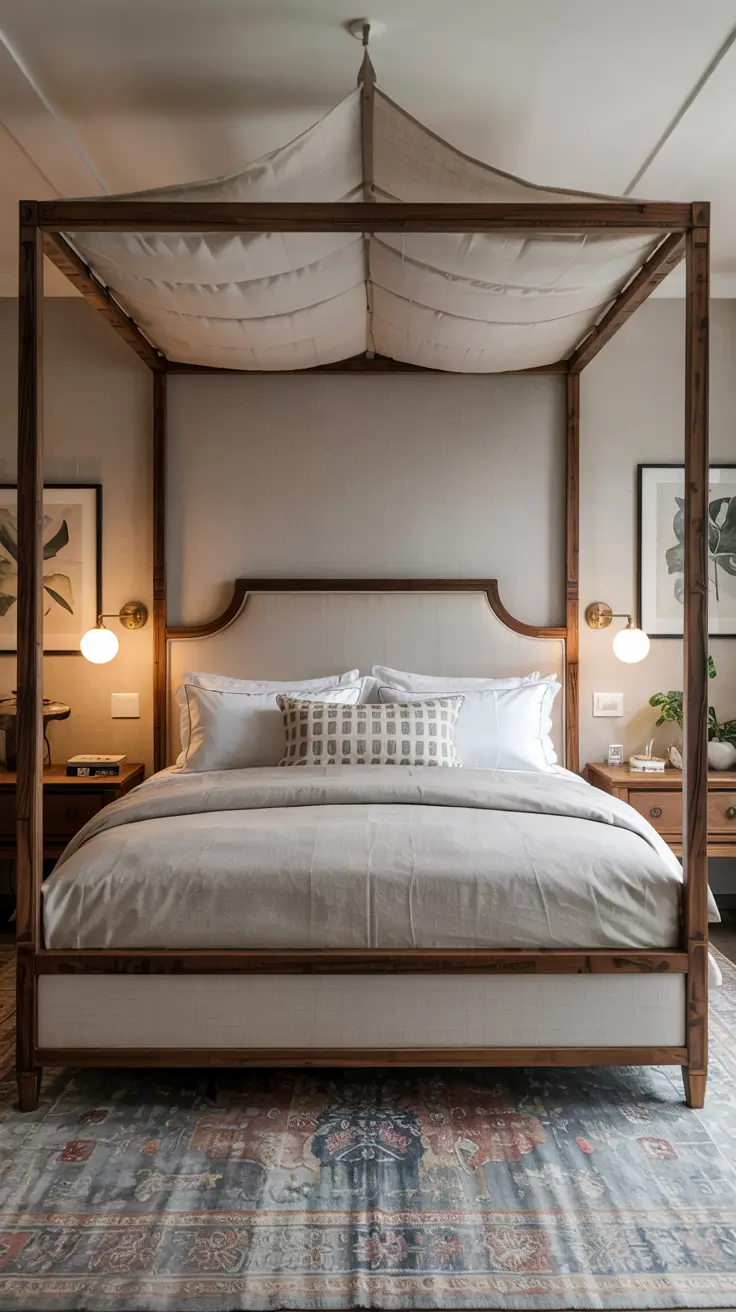
When I work with a half canopy bed, I focus on the upper portion of the room very carefully. Because the frame usually draws attention upward and toward the headboard, I want the wall treatment, bedding, and lighting to support that emphasis. I like using a beautiful upholstered headboard, tailored bedding, and a pendant or pair of sconces that reinforce the vertical shape. A half canopy often looks especially good in wood, black metal, or painted finishes that tie into other furniture in the room. I also think this is a smart place to use one statement textile, such as linen drapery, a textured throw, or a subtle patterned pillow, instead of layering too many decorative elements. The structure itself already does a lot of the visual work.
Personally, I see half canopy beds as a very useful bridge between classic and modern bedroom design. They can feel romantic without becoming heavy, and they can feel modern without losing warmth. I have found that this type of canopy appeals to people who want something distinctive but still easy to live with every day. That balance matters to me because a bedroom should feel personal and restful first, not only visually impressive. In many professionally styled interiors, one strong design gesture is often more successful than ten smaller decorative ones, and I think a half canopy proves that point well. It brings identity to the room while still leaving space for calm.
To strengthen this section, I would add one feature that anchors the headboard wall more intentionally. That could be panel molding, a painted arch, textured plaster, wallpaper, or even a large piece of art placed carefully within the frame’s visual range. I would also consider adding a rug with enough scale to support the bed, because a visually interesting upper structure needs a grounded base below. If the room is missing softness, I would add linen curtains or a lightly padded bench to balance the sharper frame lines. I would avoid cluttering the bedside surfaces, because a half canopy already creates a focal effect and needs room around it. For me, the missing ingredient in many half canopy rooms is thoughtful restraint. When that restraint is present, the bed feels fresh, elegant, and very current.
25. Wood, White, And Queen Canopy Bed Ideas For Timeless 2026 Bedroom Style
I think the combination of wood, white, and a queen canopy bed creates one of the most timeless bedroom formulas for 2026. It has enough warmth to feel inviting, enough brightness to feel fresh, and enough structure to feel styled without becoming trend-driven. A queen canopy also tends to be easier to place than a king, which makes it especially practical for average-sized primary bedrooms, guest rooms, and even more refined apartment spaces. I like this direction because it can support canopy bed ideas aesthetic, canopy bed ideas for adults, and canopy bed ideas boho depending on the exact textures and materials used. White keeps the look clean, while wood prevents it from feeling flat or cold. That balance is what gives the room lasting appeal.
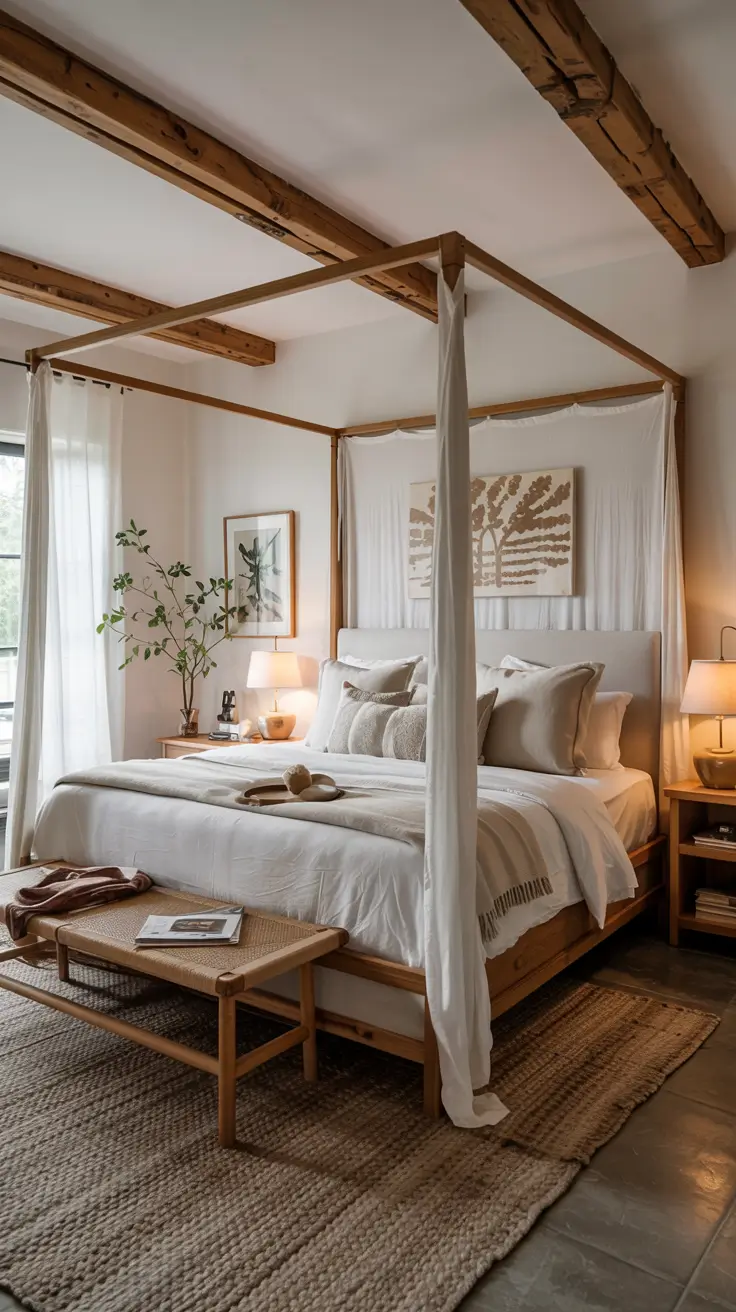
When I style this kind of bedroom, I usually begin with the wood tone because it sets the emotional temperature of the room. Light oak feels airy and modern, walnut feels richer and more grounded, and weathered wood can lean slightly boho or relaxed depending on the finish. I then layer in white through bedding, curtains, lampshades, or painted furniture so the room feels open and calm. A queen canopy works well with medium-scale nightstands, a bench or stool at the foot of the bed, and a rug that brings softness underfoot. I also think this is one of the best setups for canopy bed ideas with lights, because subtle string lighting, small pendants, or warm bedside sconces can enhance the white and wood palette beautifully. The room feels polished without trying too hard.
From my point of view, this is one of the safest and smartest canopy directions for people who want style that lasts beyond one season. I often recommend wood and white bedrooms because they are easy to refresh with small changes in textiles, art, and accent colors. That flexibility matters in a bedroom, since most people do not want to redesign the whole space every year. Design professionals often point out that natural materials help rooms feel more relaxed and authentic, and I think wood proves that every time. Even in a more romantic or dreamy bedroom, wood adds honesty and visual stability. For me, that is what keeps the room from feeling too staged.
What I would add here depends on the mood the room still needs. If it feels too plain, I would bring in texture through a woven rug, linen curtains, a boucle chair, or a quilted coverlet. If it feels too bright, I would introduce one grounding note such as black hardware, a darker wood finish, or muted taupe accessories. I would also make sure the lighting is warm rather than stark, because cool light can flatten the white palette and weaken the inviting effect. A plant, ceramic decor, or one piece of wall art can also help the room feel more complete without disturbing the clean look. In my experience, this style succeeds when every material feels intentional. That is what turns a simple palette into a timeless bedroom.