Tiny kitchens can feel surprisingly calm, efficient, and stylish when every inch has a clear purpose. Have you ever wondered how to fit storage, prep space, seating, and personality into one compact room without making it feel crowded? In this article, I walk through practical tiny kitchens ideas 2026 that balance layout, storage, and everyday comfort. I focus on choices that make small rooms work harder, from pantry cabinet ideas small spaces tiny kitchens to dining area ideas for tiny kitchens that do not overwhelm the floor plan. I also look at ideas for tiny kitchens that suit small houses, studio apartments, and one room apartment ideas space saving tiny kitchens. My goal is to show how a tiny kitchen can feel organized, modern, and pleasant to use every day.
1. Tiny Kitchens Ideas 2026 For Smart Layouts And Everyday Style
When I plan tiny kitchens ideas 2026, I start with the layout because good flow matters more in a small room than almost anywhere else in the home. I look at how the sink, cooktop, and refrigerator relate to one another so the kitchen feels easy to move through instead of cramped. In compact homes, a smart Layout can make a very small footprint feel far more generous than its measurements suggest. I often recommend a simple palette, a restrained mix of finishes, and lighting that keeps corners bright. This helps the room feel open while still leaving space for personality. In my experience, the most successful tiny kitchens combine visual quiet with hardworking details.
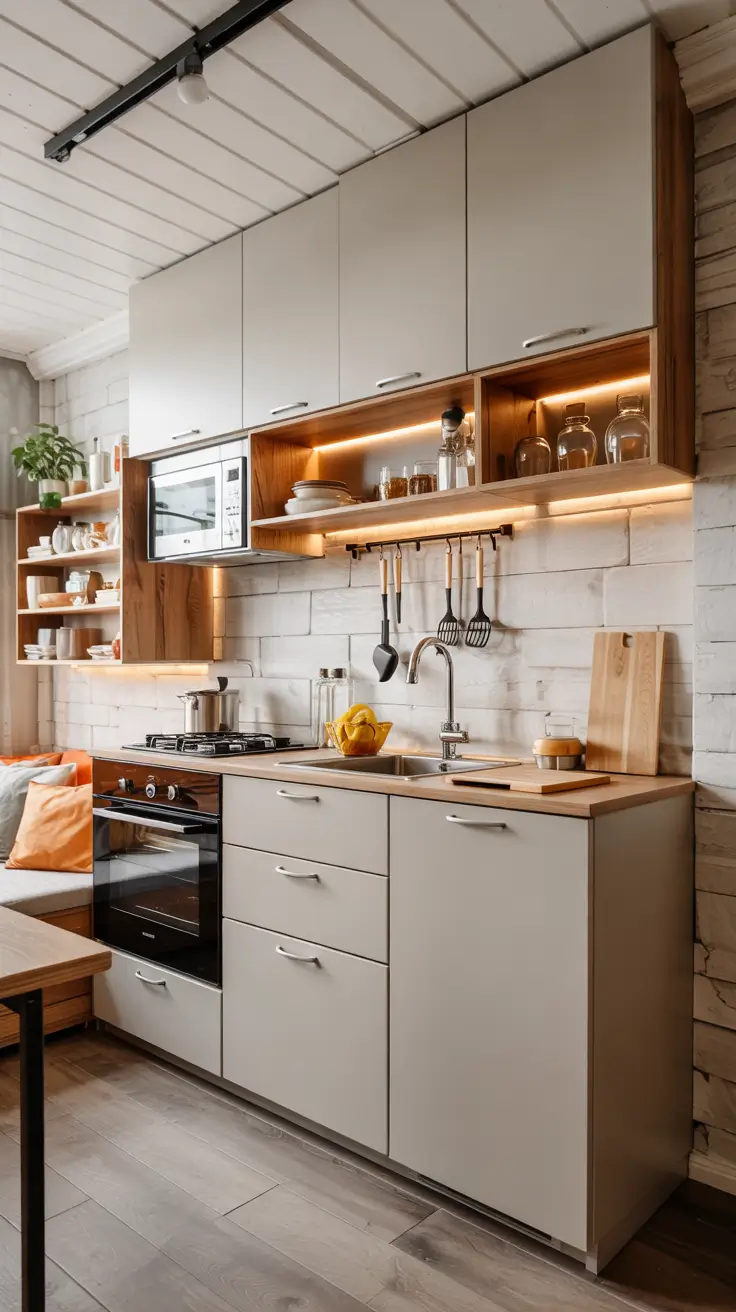
I like to anchor the room with cabinets that reach upward, because vertical storage is one of the best strategies for layout small spaces. Slim upper cabinets, narrow pull-outs, and shallow shelves let the kitchen hold daily essentials without stealing valuable walking room. If the room is in one of the growing number of small apartments space saving projects, I often include a compact table, a fold-down counter, or a bench with hidden storage. These pieces support dining area ideas for tiny kitchens without forcing a full dining room setup into the plan. I also pay close attention to appliances, choosing compact or integrated models that keep the lines clean. Even details like a single-bowl sink or a two-burner cooktop can make the room feel more balanced and usable.
I have noticed that the best tiny kitchens rarely rely on one dramatic feature to solve every problem. Instead, they succeed because many small decisions work together, from cabinet depth to handle choice to where the coffee maker lives. Interior designers often emphasize visual continuity in small spaces, and I agree with that approach because uninterrupted surfaces make the room feel calmer. I personally like using one dominant material for cabinets and another for the countertop so the room stays interesting without becoming busy. This is especially useful in small houses where the kitchen may be visible from the living area. A thoughtful kitchen does not need to feel spare or cold – it just needs discipline in what is included.
To make this kind of kitchen even more complete, I would add layered lighting and one flexible work surface that can shift between prep, serving, and dining. Under-cabinet lighting is especially helpful because it brightens the work zone without taking up any physical space. I would also include one or two open shelves only if they are used carefully, since too much open storage can quickly create visual clutter. In a budget small apartments setup, I think durable finishes matter just as much as style because the kitchen needs to work hard every day. A small runner, a simple Roman shade, or a few natural wood accents can soften the room and make it feel lived in. When these finishing touches are chosen carefully, the kitchen feels practical and personal at the same time.
2. Pantry Cabinet Ideas Small Spaces Tiny Kitchens For Better Hidden Storage
When I work on pantry cabinet ideas small spaces tiny kitchens, I focus on creating hidden order rather than just adding more shelves. In a small kitchen, a pantry cabinet has to do more than hold dry goods – it has to reduce clutter, improve visibility, and support the daily rhythm of cooking. I usually begin by deciding whether the space needs a tall slim pantry, a pull-out pantry beside the refrigerator, or a built-in cabinet that blends into the wall. Each option can work well, but the best choice depends on how much floor space is available and how often the kitchen is used. In very compact homes, concealed storage makes the whole room feel calmer. That is why I think pantry design is one of the most useful starting points in ideas for tiny kitchens.
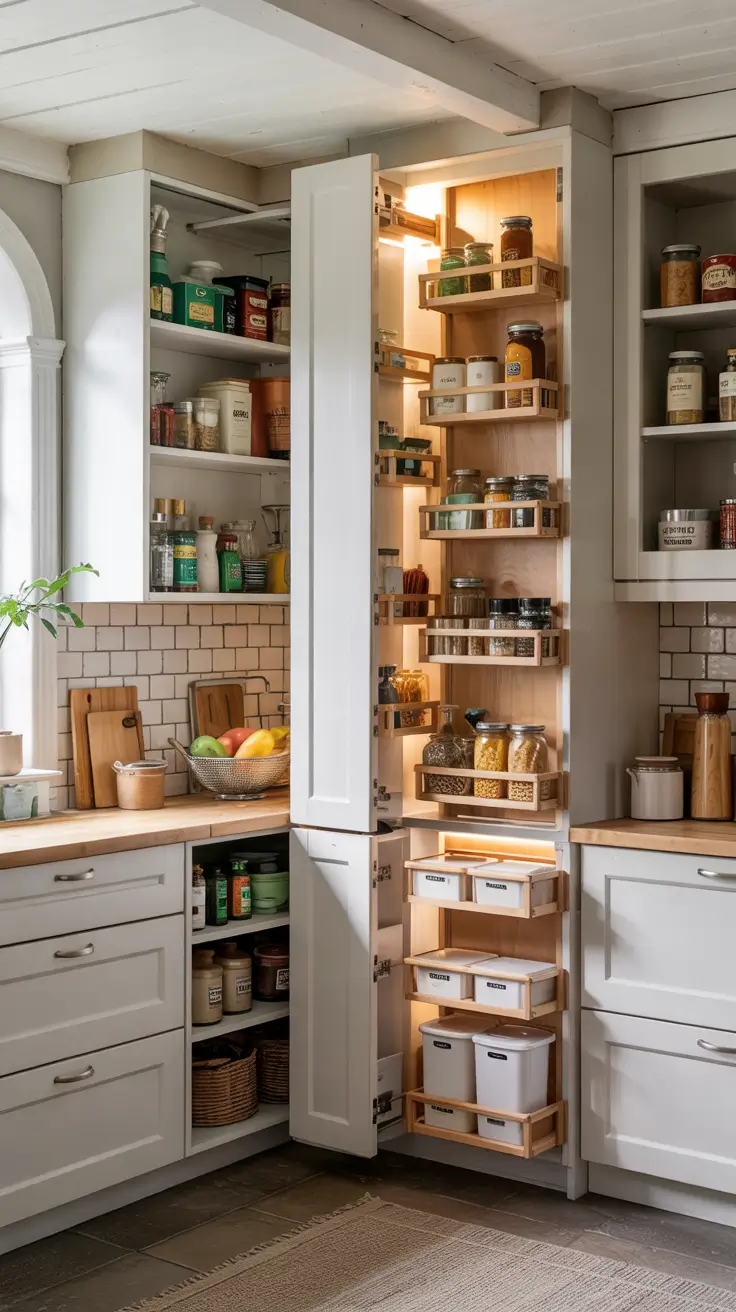
Inside the pantry, I prefer adjustable shelves, pull-out trays, and door storage because they help every inch work harder. Clear bins, stackable containers, and labeled jars support food storage ideas for small spaces tiny kitchens while keeping ingredients easy to find. I also like including a lower drawer for heavier items such as potatoes, canned goods, or small appliances that are not used every day. If the kitchen belongs to a studio or apartment layout apartment plan, I often suggest matching the pantry fronts to the rest of the cabinetry so the storage disappears visually. This keeps the kitchen from looking chopped up by too many materials or too many cabinet styles. A good pantry cabinet should feel like a seamless part of the room, not an afterthought.
I find that hidden pantry storage can change how people feel in a small kitchen almost immediately. Once ingredients, snacks, and overflow supplies are gathered into one organized zone, the counters become easier to maintain and the room feels more spacious. Many kitchen editors in major home publications talk about the value of containment in small rooms, and I have seen that principle work again and again in real homes. I personally prefer pantry interiors that are simple and washable, because practicality matters in a hardworking space. In my experience, people use their storage better when it is visible and accessible rather than packed too tightly. A small pantry that is easy to keep organized is more useful than a larger one that becomes chaotic.
If I were refining this section further, I would add a clear zoning system inside the pantry so that breakfast items, baking supplies, snacks, and meal staples each have a dedicated place. I would also leave a little empty space on purpose, since overfilled storage stops working quickly. For small space pantry ideas tiny kitchens, I think a narrow vertical slot for trays, cutting boards, or folded step stools can also be very helpful. Soft-close hardware and interior lighting are worth considering because they make a compact pantry feel more polished and easier to use. If the kitchen is designed on a budget, even basic cabinets can perform well with inexpensive risers, bins, and shelf inserts. The real success comes from planning what the pantry needs to hold before deciding how it should look.
3. Clever Storage Ideas For Small Spaces Tiny Kitchens That Reduce Clutter Fast
When I think about clever storage ideas for small spaces tiny kitchens, I always look for solutions that remove friction from daily routines. A tiny kitchen becomes stressful when ordinary tasks require too much reaching, stacking, or moving things around just to get started. I prefer storage that shortens those steps, such as drawer dividers, pull-out corner systems, magnetic knife strips, and wall-mounted rails for utensils. These ideas do not just save space – they make the kitchen feel easier to live with. In many compact homes, the difference between clutter and calm comes down to whether every object has a reliable place. That is why smart storage is one of the most valuable investments in tiny kitchens ideas 2026.
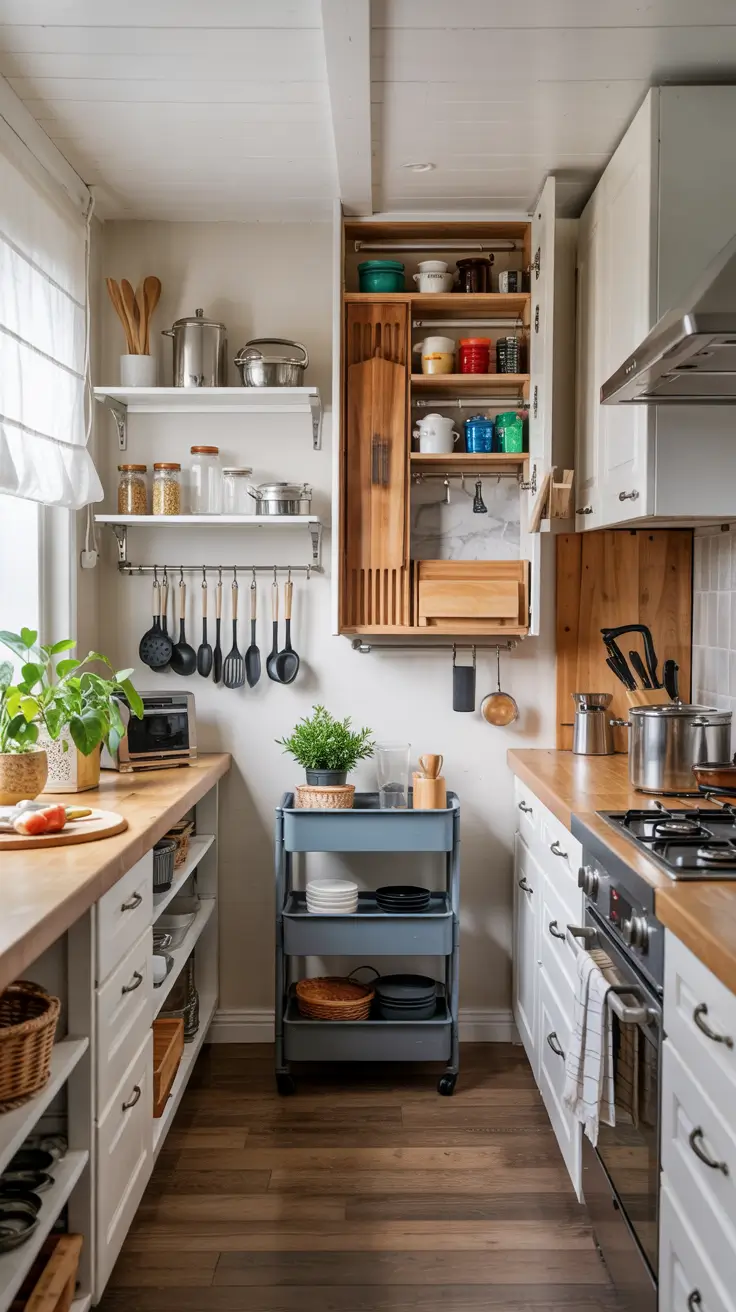
I often combine closed storage with a few targeted open elements so the room stays functional without looking overloaded. A rail near the cooktop can hold the most-used tools, while drawers can store less attractive items that should stay out of sight. I also like toe-kick drawers, narrow pull-outs between cabinets, and upper shelves above door frames when the floor area is limited. For cutting board storage ideas for tiny house kitchens, I usually suggest a vertical divider inside a base cabinet or a slim slot near the prep zone. This keeps boards accessible without taking over the countertop. If the room belongs to one of the many apartments space saving projects, storage has to serve multiple roles, so benches, carts, and islands on casters can be especially helpful.
I have learned that the fastest way to reduce clutter is not always to buy more containers. Often, the better answer is to store items closer to where they are actually used and to remove duplicates that do not earn their place. Designers who work with small kitchens often recommend editing possessions before redesigning storage, and I think that advice is extremely practical. I have seen compact kitchens improve simply by relocating everyday dishes near the dishwasher, spices near the range, and prep tools near the main work surface. Those shifts make the room more intuitive and help people keep it tidy without much effort. In a very small room, convenience is often what makes organization sustainable.
To strengthen this kind of kitchen, I would add one flexible storage element that can change with the household’s needs over time. A rolling cart, stackable shelf system, or removable pegboard can adapt as cooking habits change. In tiny rooms, I also think it is important to protect some visual breathing room, so I would avoid filling every wall with hooks or shelves. A few well-placed features work better than too many small additions competing for attention. If the kitchen is part of a budget minimalist plan, I would focus on the highest-impact improvements first, especially drawer organization and vertical cabinet inserts. Those choices can make a small kitchen feel significantly more controlled without requiring a major renovation.
4. Tiny House Interior Design Ideas Kitchens With A Clean And Functional Look
When I design around tiny house interior design ideas kitchens, I pay close attention to how the kitchen fits into the home as a whole. In a tiny house, the kitchen is rarely isolated, so it needs to feel connected to the living space while still functioning as a serious work zone. I usually aim for a clean and functional look built around simple cabinetry, compact proportions, and durable materials that do not feel heavy. Because tiny houses often rely on custom layouts, the kitchen can be shaped to suit the exact habits of the people living there. This makes it easier to create a room that looks elegant without wasting any space. I find that the most successful tiny house kitchens feel composed, bright, and highly intentional.
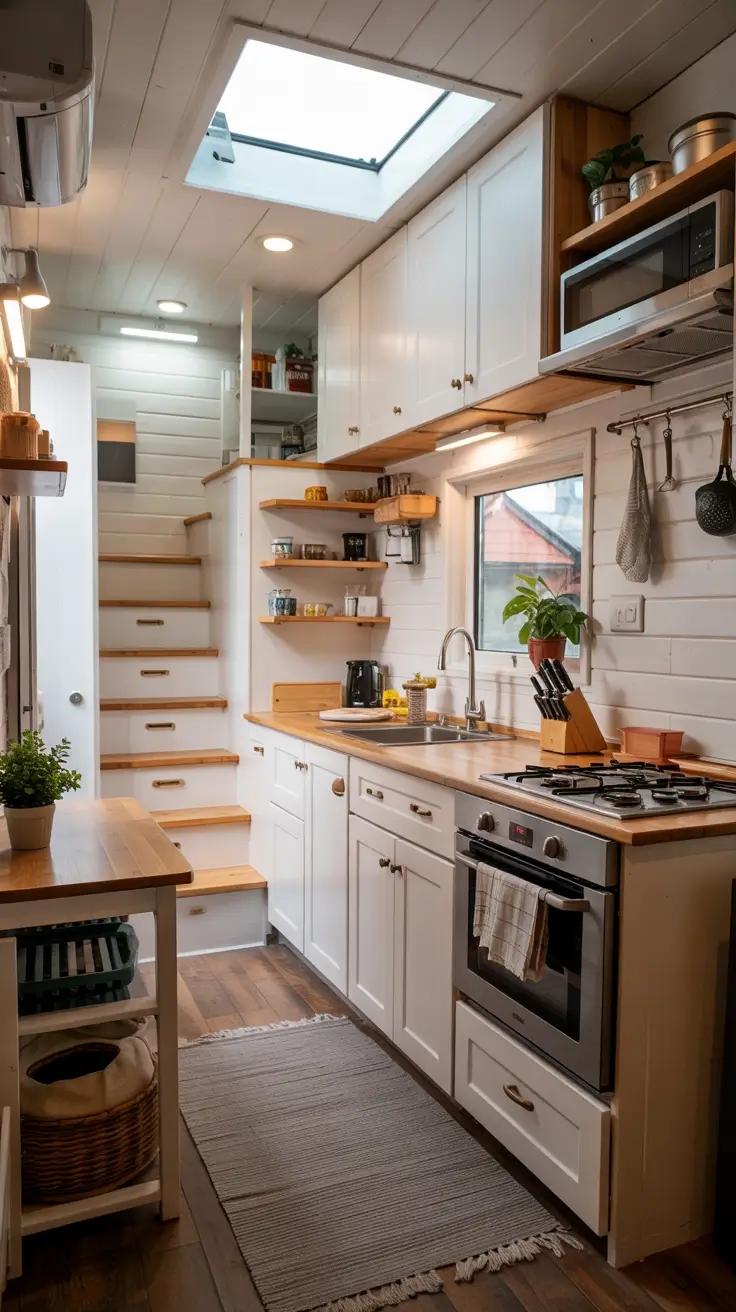
For the furniture and design details, I like to use cabinetry with flat fronts, open leg tables, and seating that can tuck away easily. A layout one wall plan often works especially well in a tiny house, because it leaves more flexibility for circulation and multipurpose living space. I may also include compact dining area ideas for tiny kitchens such as a narrow built-in banquette, a drop-leaf table, or a window counter with stools. If the home includes stairs nearby, I sometimes use the area under them for extra kitchen storage, which can be especially useful for small house floor plans. In some homes, even a compact washing machine can be integrated nearby if the cabinetry is planned carefully. These combinations help the kitchen feel fully equipped without losing the clean visual rhythm that tiny spaces need.
I personally think tiny house kitchens benefit from restraint more than almost any other type of kitchen. Rather than trying to imitate a full-size suburban kitchen, I prefer to make the most of what the tiny home can do exceptionally well. Editors and designers often note that small-space success depends on prioritizing function and reducing visual noise, and I have found that to be completely true. A calm cabinet finish, one warm wood tone, and simple lighting can make the room feel elegant even on a budget. I also think it is wise to choose fewer but better-looking everyday objects since many of them remain visible. In a tiny home, beauty and utility are closely connected because everything is always in view.
What I would add here is a stronger emphasis on hidden utility so the clean look holds up in daily life. Appliance garages, integrated trash storage, and concealed charging points can protect the minimalist appearance of the room. For layout floor plans in tiny houses, I also think ventilation and natural light deserve careful planning because they affect how spacious the kitchen feels. A slim window, a pale backsplash, or a reflective countertop can help brighten the whole interior. If the goal is a budget small result, simple cabinet boxes paired with thoughtful hardware and neat organization can still look refined. The cleanest kitchens are not empty – they are simply edited with purpose.
5. Food Storage Ideas For Small Spaces Tiny Kitchens That Keep Essentials Organized
When I approach food storage ideas for small spaces tiny kitchens, I start by thinking about frequency of use and shelf life. A compact kitchen works much better when everyday staples are easy to reach and backup items are stored in a secondary zone. I usually divide food into categories such as daily cooking ingredients, snacks, grains, baking supplies, and long-term pantry goods. This keeps the storage system logical and helps prevent overbuying, which is a common problem in small kitchens. In my experience, organization improves most when it reflects real habits instead of an idealized pantry image. A tiny kitchen does not need a huge amount of storage – it needs storage that supports what people actually cook and eat.
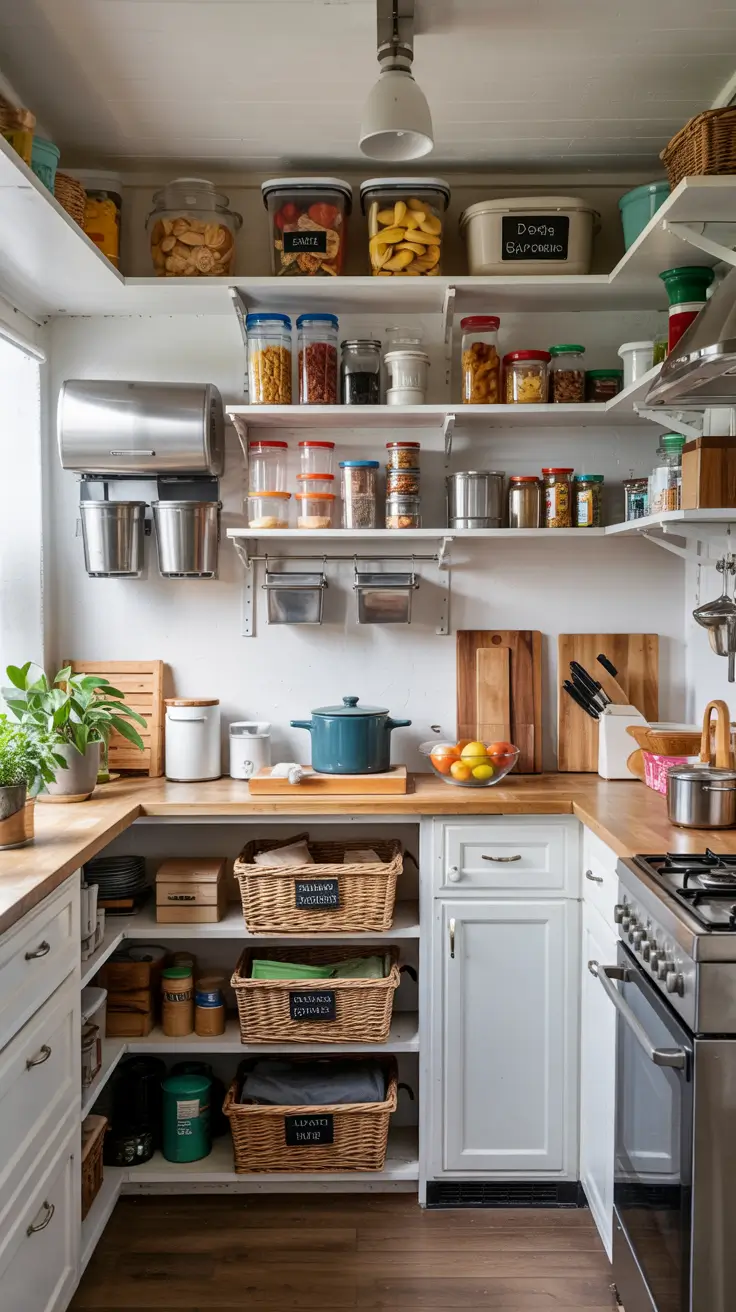
I like using stackable clear containers for dry goods because they reduce bulky packaging and make it easier to see what needs refilling. Shallow baskets, shelf risers, and narrow bins help make upper cabinets more usable without losing things at the back. For pantry cabinet ideas small spaces tiny kitchens, I often create a combination of closed shelves and labeled containers so the room stays neat while ingredients remain accessible. In a kitchen connected to a studio or one room apartment ideas space saving tiny kitchens plan, I also recommend using nearby furniture thoughtfully, such as a sideboard, bench, or freestanding cabinet for overflow items. These pieces can support food storage without making the kitchen itself feel overbuilt. Good storage should protect both function and visual calm.
I have found that food storage becomes easier to maintain when people leave some flexibility in the system. Not every bin needs a perfect label from day one, but categories should still be clear enough that restocking feels automatic. Many small-space experts encourage decanting selectively rather than obsessively, and I agree with that because convenience matters as much as appearance. I personally decant the items that are awkward to store, such as pasta, rice, oats, and flour, but I leave some products in their original packaging when that makes more sense. This balance keeps the kitchen practical rather than overly styled. In a hardworking tiny kitchen, systems should save time, not create extra chores.
To improve this section further, I would add a regular reset habit so the organization remains useful over time. Even a brief weekly review of expiration dates, low-stock items, and misplaced goods can keep a tiny pantry working smoothly. I would also create one dedicated zone for lunch supplies or quick breakfast items if the kitchen is used heavily on busy mornings. In very small homes, a lazy Susan, narrow drawer organizers, or an over-the-door rack can add valuable function without changing the room visually. If the style leans rustic, elegant, black and white, or even more playful like Toca boca inspiration for family spaces, the storage containers and cabinet finishes can reflect that look without sacrificing practicality. When essentials are organized well, the whole kitchen feels easier, cleaner, and more comfortable to use.
6. Dining Area Ideas For Tiny Kitchens That Feel Comfortable And Practical
When I design a dining corner in a tiny kitchen, I focus first on keeping movement easy and the seating visually light. A compact dining area works best when it supports daily use without interrupting cooking, cleaning, or storage access. I often recommend a slim round table, a wall-mounted drop leaf, or a narrow built-in banquette depending on the shape of the room. This approach makes dining area ideas for tiny kitchens feel more intentional and less like an afterthought. In very small homes, I find that a dining nook can also act as a prep zone, workspace, or social corner. That flexibility is what makes it valuable in a modern tiny kitchen.
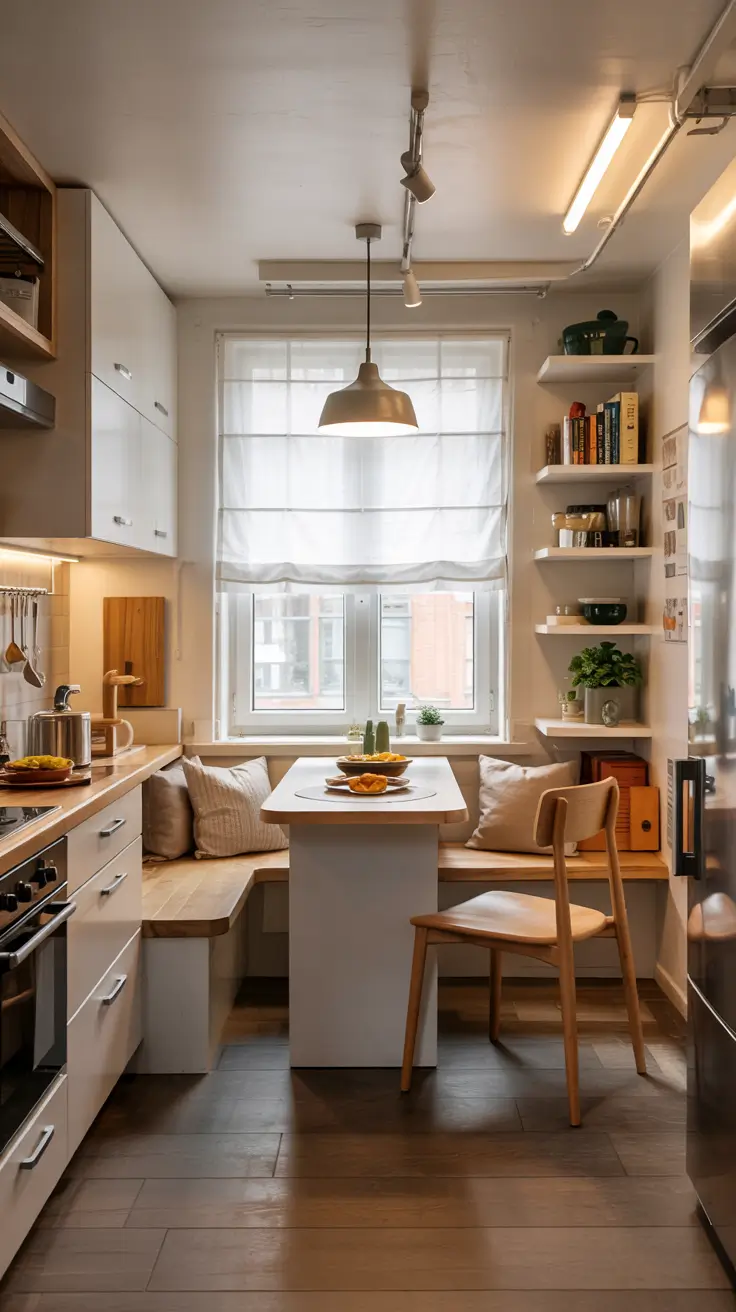
I usually pair a small table with armless chairs, a bench with hidden storage, or a corner seat that follows the wall line. Each piece needs to earn its place, so I avoid bulky legs, deep seats, and oversized backs that visually block the room. Good lighting matters just as much as furniture, and I often use a simple pendant or wall sconces to define the dining spot without taking floor space. Open shelving nearby can hold everyday dishes while also giving the area a lived-in, welcoming character. In layout small spaces, I like using a bench because it keeps circulation cleaner and often gives more seating than separate chairs. For a budget or a budget minimalist kitchen, even a basic wood ledge with two stools can work beautifully.
In my experience, the best small dining corners feel calm rather than overdesigned. House Beautiful and Better Homes & Gardens have often highlighted the value of built-in seating and multifunctional furniture in compact homes, and I agree with that approach because it solves several problems at once. I also find that soft textiles, a washable runner, and a modest centerpiece help the dining spot feel complete without cluttering it. When clients think they do not have room for seating, I usually show them that the issue is often furniture scale rather than lack of square footage. A well-sized eating area can make a tiny kitchen more livable and more personal. That is why I treat the dining zone as part of the kitchen plan, not a separate extra.
To make this section stronger, I would add one more practical layer – vertical storage near the dining area. A shallow shelf, rail, or peg strip beside the table can hold mugs, linens, and everyday basics without crowding cabinets. I also like adding a mirror if the space lacks daylight because it visually widens the area and helps the dining spot feel less compressed. If the room has an awkward layout apartment condition, I would map chair clearance very carefully before selecting the table size. This step prevents frustration in daily use and keeps the dining corner genuinely comfortable. In tiny kitchens, comfort always depends on exact proportions.
7. Cutting Board Storage Ideas For Tiny House Kitchens That Save Counter Space
In tiny house interior design ideas kitchens, counter space disappears quickly, so I always treat cutting board storage as a priority rather than a small accessory decision. Cutting boards are used constantly, yet they often end up leaning against the wall or taking over prep surfaces. I prefer to place them where they stay easy to grab but never compete with the working zone. This is why cutting board storage ideas for tiny house kitchens should be planned as part of the cabinetry and not left until the end. Even one narrow divider cabinet can change how the whole kitchen feels. In a small space, that kind of control makes everyday cooking much easier.
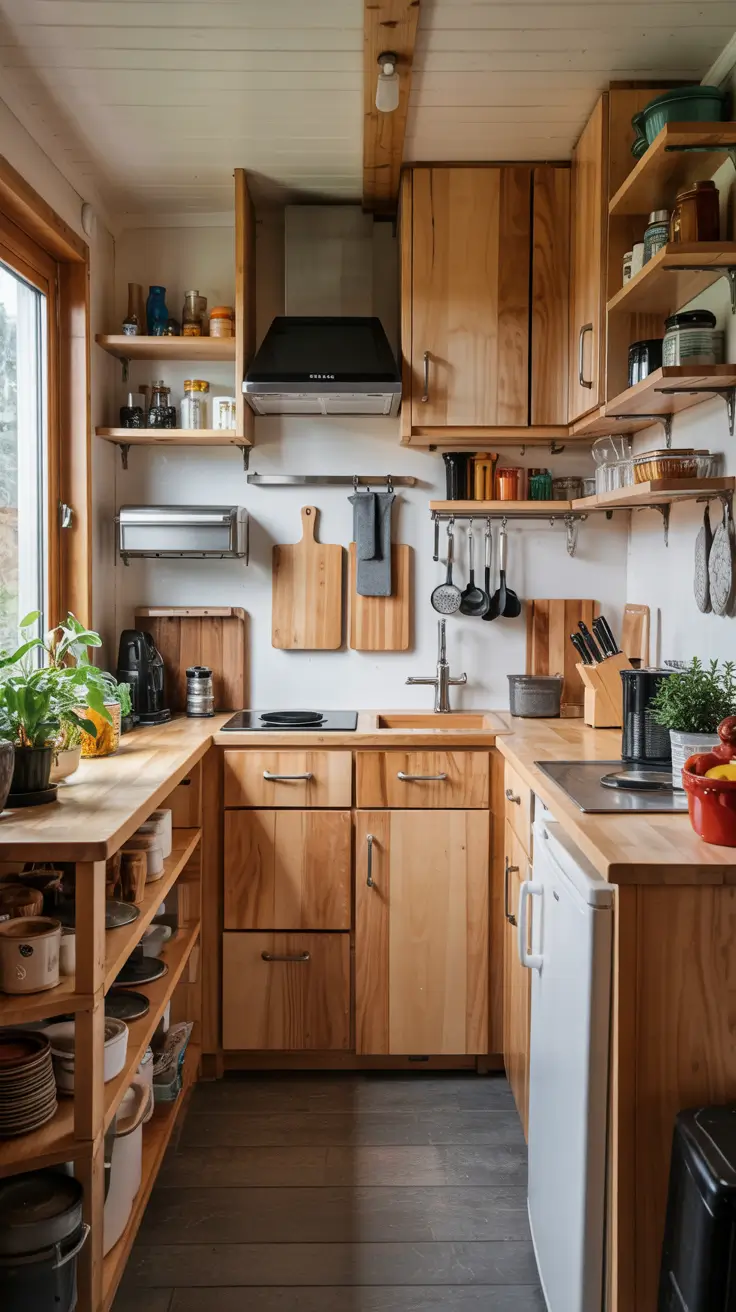
I often use vertical dividers inside a lower cabinet, a pull-out slot beside the oven, or a slim rack attached to the end panel of a cabinet run. These options keep boards upright, dry, and separated by size, which improves both hygiene and convenience. If the kitchen has a layout one wall arrangement, I like placing the boards close to the main prep surface so the movement from sink to counter feels natural. In a budget small apartments setup, a simple wall rail with hooks and a basket can also work well if it is kept neat. I usually recommend at least two types of boards – one larger for prep and one smaller for quick daily tasks. Storing them well helps the kitchen feel more professional and less chaotic.
I have noticed that people often underestimate how much visual clutter a few large boards can create in a tiny room. Good storage immediately makes the kitchen look calmer, which is important in one room apartment ideas space saving tiny kitchens where the kitchen may be visible from the main living area. I also agree with guidance often shared by design editors at Architectural Digest and The Spruce – small kitchens function better when frequently used tools have dedicated, repeatable storage. In practice, that means the right spot matters more than the decorative look of the storage itself. I would rather choose a plain built-in divider than a stylish basket that wastes room. Function first usually produces the cleaner result.
What I would add here is attention to moisture and material care. Cutting boards need airflow, especially if they are wood, so I avoid packing them into tight closed spaces while still damp. I also like adding a tray or wipe-clean base under vertical storage so crumbs and moisture are easy to remove. If the household uses boards for serving as well as prep, I would include one display-worthy piece and keep the rest tucked away. This makes the kitchen feel elegant without sacrificing practicality. In tiny kitchens, details like this help ordinary tools support the overall design.
8. Small Studio Apartment Ideas Maximize Space Tiny Kitchens With Multi Use Zones
When I work on small studio apartment ideas maximize space tiny kitchens, I always begin by dividing the room into clear zones without building physical barriers. A tiny kitchen in a studio has to support cooking while still relating well to the sleeping and living areas around it. I use changes in lighting, shelving, rugs, or furniture placement to create gentle boundaries that keep the apartment feeling open. This method is especially useful in apartments space saving ideas where every surface may serve more than one purpose. A small kitchen can become much more efficient when the prep zone, dining zone, and storage zone are visually organized. That sense of order makes the whole studio feel larger.
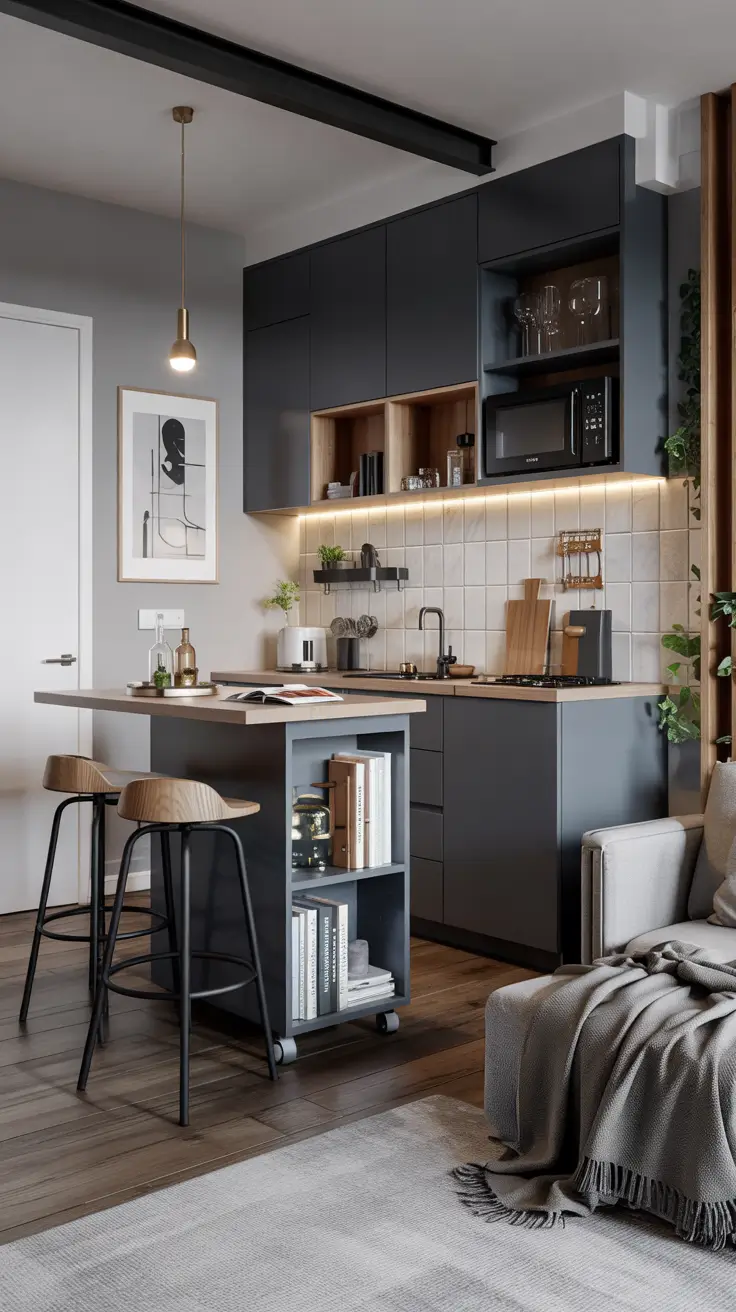
I usually recommend a narrow island on casters, a peninsula with stools, or a console-style table that can act as prep counter, dining table, and desk. Multifunctional pieces are essential in apartments space saving and one room apartment ideas space saving tiny kitchens because they reduce duplication. I also like to use tall cabinets, open upper shelves, and under-seat storage to extend capacity upward instead of outward. In a layout apartment plan, appliances need special attention, and I often choose slimmer dishwashers, smaller fridges, or a washing machine integrated under the counter where appropriate. Good zoning also depends on sightlines, so I keep the most visually busy storage behind closed doors whenever possible. That balance helps the kitchen feel integrated with the studio rather than exposed.
In my experience, studio kitchens work best when they feel like part of the furniture language of the home. If the rest of the apartment is soft and minimal, the kitchen should not suddenly become heavy or overly industrial. I often look to examples in Apartment Therapy and Domino, where small apartments are shown using cohesive materials and restrained palettes to connect kitchen and living spaces. I agree with that approach because it reduces visual noise and makes compact interiors easier to enjoy. Even simple repetition – such as matching wood tones or black metal accents – can create a stronger sense of unity. That unity is one of the most powerful tools in small-space design.
To improve this section further, I would add a stronger focus on concealed storage for daily essentials. In a studio, I want recycling, cleaning products, and small appliances hidden as much as possible because the kitchen is always part of the wider room. I also recommend planning one surface that can stay mostly clear throughout the day, even in a very compact setup. That empty visual space helps the apartment feel less crowded and more refined. If there is room, a folding stool or stackable seating option adds flexibility without permanent bulk. Small studio kitchens become easier to live with when every object has a clear role and place.
9. Cozy Decor Ideas For Tiny Cottage Kitchens With Warm Rustic Character
A tiny cottage kitchen should feel warm, grounded, and welcoming, but I never want coziness to become clutter. When I create cozy decor ideas for tiny cottage kitchens, I focus on texture, natural materials, and a restrained mix of rustic details. The aim is to make the room feel emotionally rich while still supporting daily use. This works especially well in small houses where the kitchen often carries much of the home’s character. I like using soft cream tones, muted greens, warm wood, and aged metal finishes to build that atmosphere. These choices bring depth without overwhelming the limited footprint.
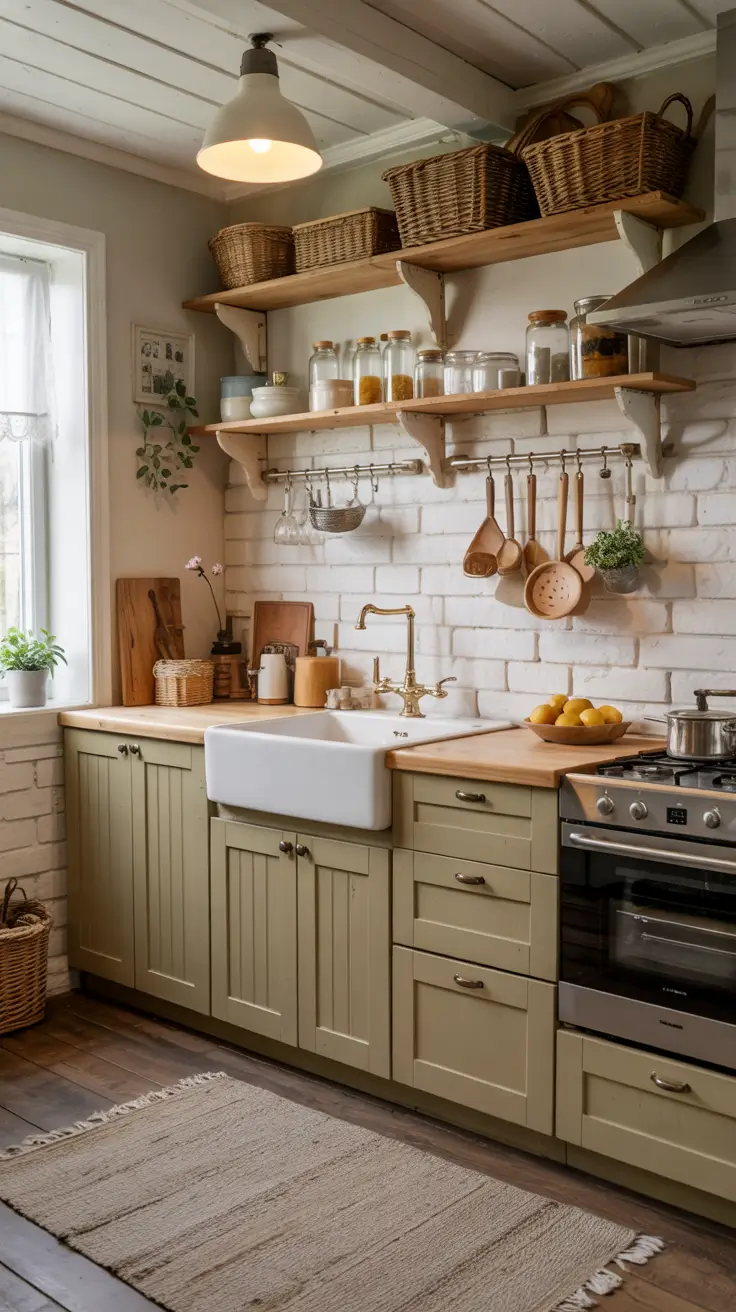
I usually start with practical pieces that also add charm – open wood shelves, a compact farmhouse-style sink, simple shaker cabinets, and a warm-toned backsplash. Textiles matter here too, and I often include a small patterned runner, café curtains, or seat cushions that soften the hard surfaces. For food storage ideas for small spaces tiny kitchens, I like glass jars, labeled canisters, and woven baskets because they are functional and visually consistent with cottage style. If the homeowner likes rustic character, I may add vintage-look hooks, a plate rack, or a small freestanding piece with visible grain and patina. Black and white accents can work beautifully in this style too, especially if they are used lightly in tile, hardware, or check textiles. The result should feel collected, not crowded.
Personally, I think cottage kitchens are strongest when they mix comfort with discipline. I have seen many small rustic kitchens become less usable because too many decorative objects are placed on every shelf and counter. Media outlets like Country Living and Better Homes & Gardens often show that warmth comes from layered materials, not from filling every empty spot, and I fully agree. In my own design thinking, I keep the most meaningful objects visible and let the rest stay tucked away. That approach preserves the soul of the room while protecting its function. A cozy kitchen should support real life, not just look charming in photos.
What I would add in this section is one strong sensory detail – lighting temperature. Warm white bulbs, shaded sconces, or a small pendant over the main work surface can completely change how rustic finishes read in the evening. I would also make room for one living element such as herbs, a small branch arrangement, or seasonal flowers. These touches make the cottage mood feel active and personal rather than staged. If the space is on a budget, even a few thoughtful swaps in textiles and hardware can change the character of the room. Tiny cottage kitchens often succeed through atmosphere as much as through layout.
10. Layout Ideas For Tiny Cottage Kitchens That Improve Flow In Small Houses
When I think about layout ideas for tiny cottage kitchens, I focus first on flow – how the body moves, turns, reaches, and works in a compact room. In small houses, a charming kitchen still fails if doors collide, appliances block drawers, or prep space is too far from the sink. I usually begin by identifying the most important daily path and then simplifying everything around it. This is true whether the kitchen is L-shape, galley, layout one wall, or one of the more irregular layout floor plans often found in older cottages. Good flow makes a small kitchen feel more generous than it really is. That is why I treat movement as the foundation of the design.
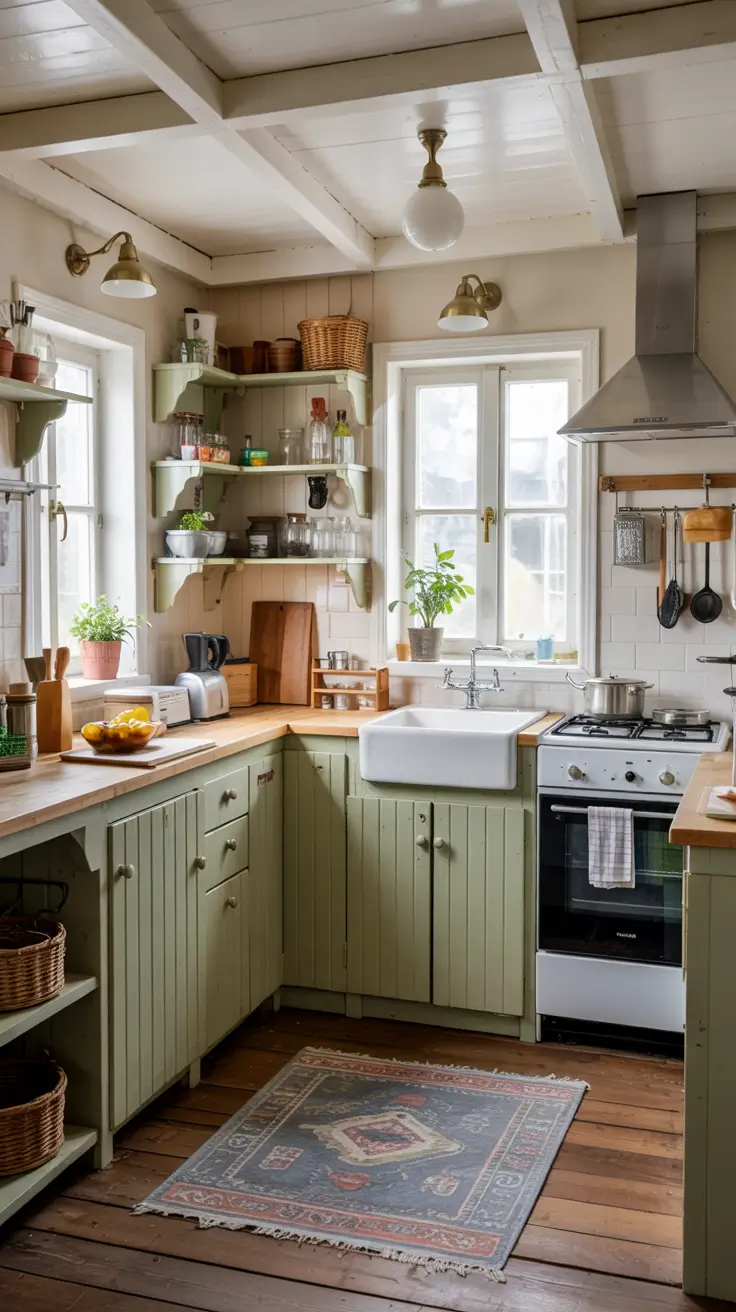
For furniture and fittings, I prefer compact appliances, shallower cabinetry where possible, and a clear sequence between fridge, sink, prep surface, and cooking area. If the room is long and narrow, a galley layout often works best because it creates efficiency with minimal wasted space. If the footprint is especially tight, a layout one wall plan can be very effective when paired with smart vertical storage and a nearby table or island for extra prep. I also pay close attention to door swings, stair placement, and awkward corners, especially in small houses where stairs or low ceilings may affect cabinet height. Small space pantry ideas tiny kitchens are often best solved with a tall narrow cabinet, pull-outs, or a pantry wall integrated near the entry. These moves help the kitchen function better without losing its cottage charm.
I have found that flow improves most when I remove one unnecessary element rather than adding more. Many tiny kitchens become easier to use after reducing oversized furniture, bulky islands, or decorative pieces that interrupt circulation. This is why I appreciate planning advice often shared in publications like House Beautiful, where clear pathways and furniture scale are treated as essential design tools in small interiors. I also believe elegant kitchens are usually the ones that feel easiest to use, not the ones with the most features. In my work, I would always choose better spacing over an extra cabinet if the cabinet makes movement harder. Practical comfort is what people remember in daily life.
To complete this section, I would add a careful note on measurement and testing. Before finalizing a tiny kitchen layout, I like marking cabinet depth, appliance doors, and walkway widths on the floor with tape. This simple step reveals problems early and helps avoid expensive mistakes. It is especially useful in a budget, a budget small, or a budget minimalist project where every choice needs to work the first time. I would also review window height, natural light direction, and upper cabinet placement before locking the plan. In very small kitchens, the success of the layout often comes down to a few inches used wisely.
11. One Room Apartment Ideas Space Saving Tiny Kitchens With Smart Furniture Choices
When I design a tiny kitchen for a one room apartment, I focus first on furniture that can perform more than one task without making the room feel overloaded. In my experience, this is one of the most effective one room apartment ideas space saving tiny kitchens can rely on because every inch has to justify itself. A narrow island on casters, a fold-down dining shelf, and shallow storage along one wall can make the kitchen feel organized instead of improvised. I also pay close attention to visual flow so the kitchen blends naturally with the rest of the apartment. This approach works especially well in layout apartment plans where the kitchen must feel connected to the living and sleeping space.
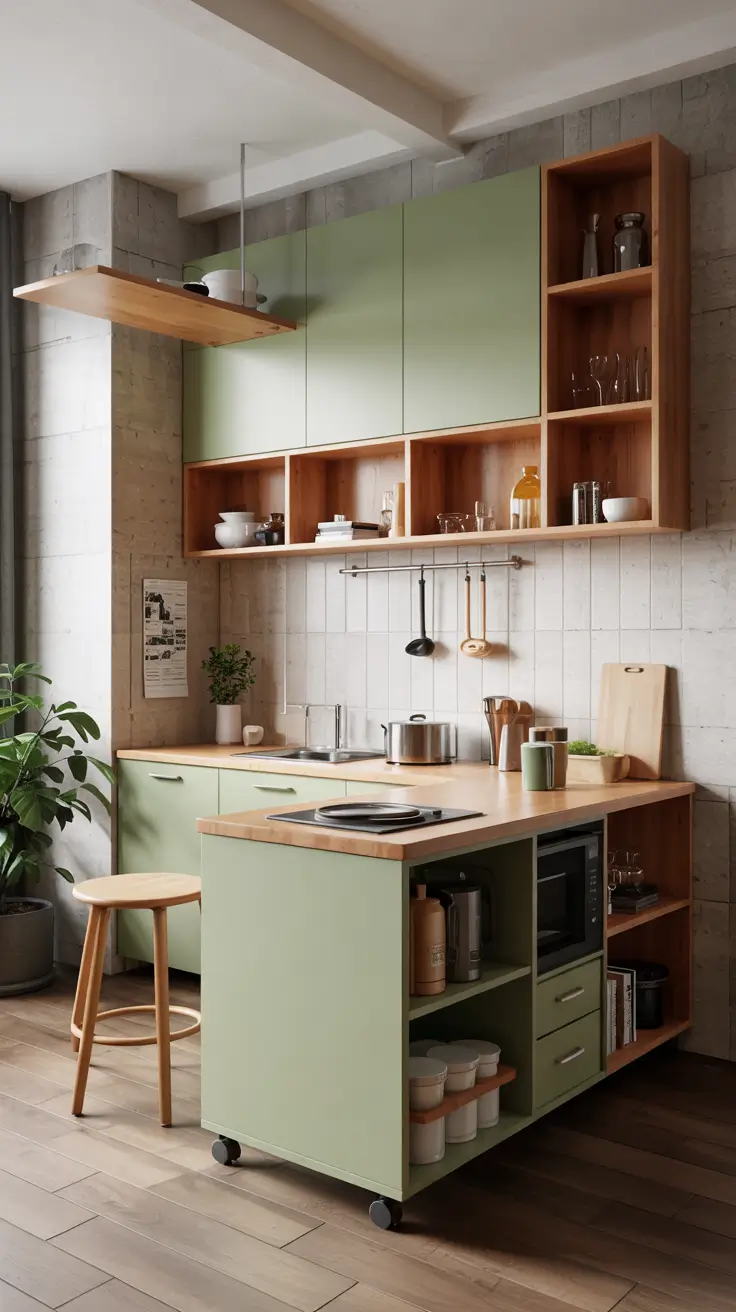
I usually include a compact dining table that can double as a prep surface, stackable stools, and upper cabinets that go close to the ceiling. In many small houses and studio apartments, a slim sofa table placed behind seating can also act as a casual eating surface near the kitchen zone. I like adding closed storage whenever possible because it reduces visual noise and helps the whole apartment feel calmer. A shallow pantry unit beside the refrigerator is often more useful than bulky lower cabinets that interrupt movement. These smart furniture decisions support apartments space saving ideas that help tiny kitchens stay flexible from morning to night.
From my perspective, the best tiny house interior design ideas kitchens use are the ones that respect daily habits rather than just trying to look compact. I have noticed that when the kitchen furniture adapts to real routines, the room becomes easier to maintain and far more enjoyable to use. Architectural Digest often highlights the value of multifunctional furniture in small homes, and I agree with that principle because it reduces clutter while increasing comfort. I personally prefer pieces with clean lines and warm finishes because they help the room feel intentional rather than temporary. In a one room apartment, that sense of intention matters just as much as storage.
I would add layered lighting to complete this section properly, because small kitchens in apartments often fail when they rely on a single overhead fixture. I recommend under-cabinet lighting, a small pendant above the dining surface, and warm ambient light that ties the kitchen to the rest of the room. I also think a movable cart or bench with hidden storage can improve daily function without adding permanent bulk. If the apartment includes a window, I would keep treatments minimal so natural light continues to support the open feeling. These additions make ideas for tiny kitchens more practical and more comfortable in everyday life.
12. Small Space Pantry Ideas Tiny Kitchens Can Use In Corners Walls And Under Stairs
In a compact kitchen, I believe pantry storage should be treated as a design feature rather than an afterthought. Small space pantry ideas tiny kitchens benefit from the most are often hidden in places people overlook, such as corner recesses, narrow wall gaps, and under stairs zones. I like to plan pantry placement around dead space first because that strategy protects the main cooking area from becoming overcrowded. Even a very narrow pull-out unit can hold dry goods, spices, oils, and snacks if the interior is organized correctly. This is one of the most useful pantry cabinet ideas small spaces tiny kitchens can adopt in both apartments and small houses.
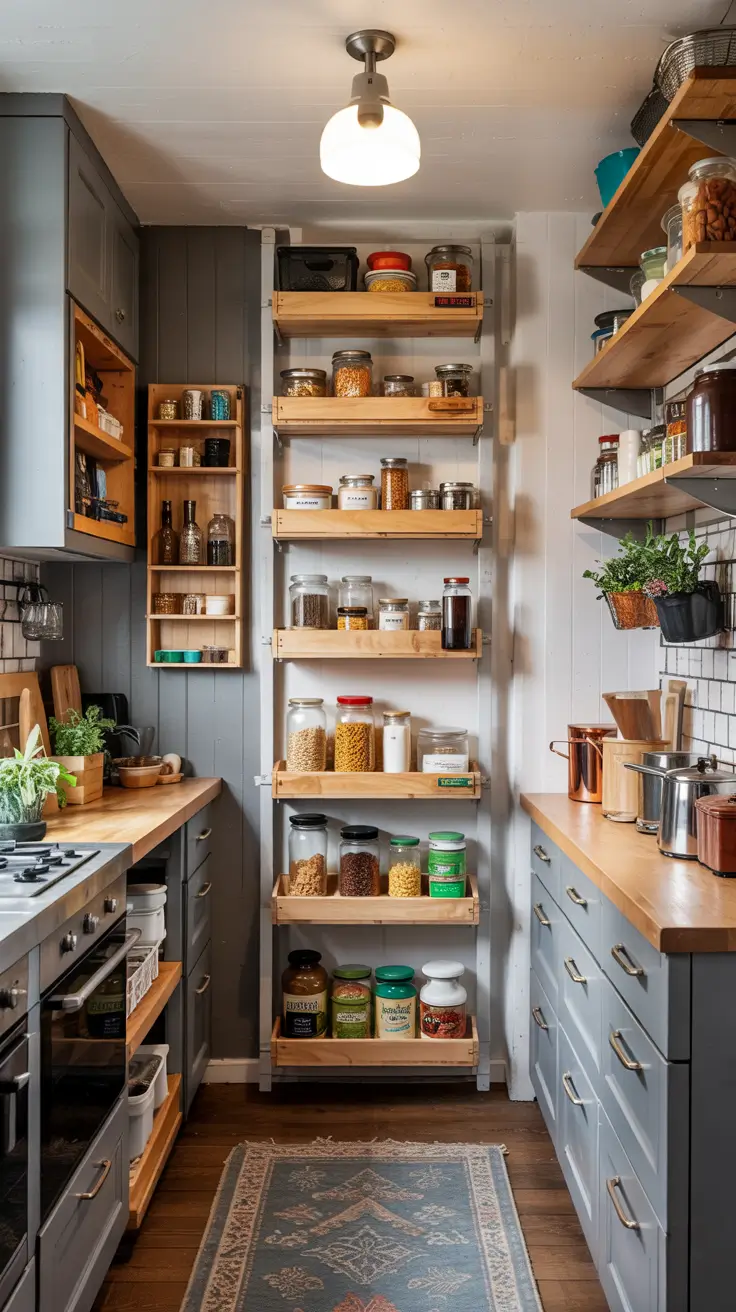
I usually recommend tall cabinets with adjustable shelves, corner shelving that uses vertical height well, and built-in drawers for food packets and jars. For food storage ideas for small spaces tiny kitchens need, I find that labeled bins and clear containers create a cleaner look while also making ingredients easier to access. If the home has stairs nearby, a custom under-stairs pantry can become a highly efficient extension of the kitchen. I also like adding slim door-mounted racks for wraps, cutting boards, and spices because they turn overlooked surfaces into active storage. These details make small space pantry ideas tiny kitchens can use feel thoughtful instead of makeshift.
In my view, pantry design works best when it supports how people actually shop and cook each week. I have found that many tiny kitchens feel chaotic not because they are too small, but because food storage has never been given a clear system. Better Homes and Gardens has often emphasized vertical organization and zoning in compact kitchens, and I think that advice is especially relevant here. I personally divide pantry storage into categories like breakfast items, dry staples, canned goods, and baking supplies so the space stays manageable. When that structure is in place, even a narrow pantry can feel surprisingly generous.
What I would add here is a stronger emphasis on ventilation, lighting, and material choices inside the pantry area. In very compact homes, closed storage can become dark and inconvenient if shelves are too deep or finishes are too heavy. I prefer pale interiors, motion-sensor lighting, and shelf depths that allow every item to remain visible. I would also include a few higher shelves for less-used appliances so the main kitchen cabinets remain free for daily essentials. That final layer of planning turns pantry cabinet ideas small spaces tiny kitchens need into a long-term solution rather than a temporary fix.
13. Layout Small Spaces Tiny Kitchens With One Wall Plans That Work Beautifully
When I work on layout small spaces tiny kitchens depend on, a one wall plan is often the clearest and most elegant solution. This format keeps all major kitchen functions along a single line, which makes movement simpler and helps the room feel more open. I find that layout one wall kitchens work beautifully in apartments, tiny cottages, and open-plan studio spaces where preserving floor area is essential. A well-designed one wall arrangement can still include cooking, prep, sink access, and useful storage without looking compressed. This is why layout ideas for tiny cottage kitchens and layout floor plans often return to this simple but effective structure.
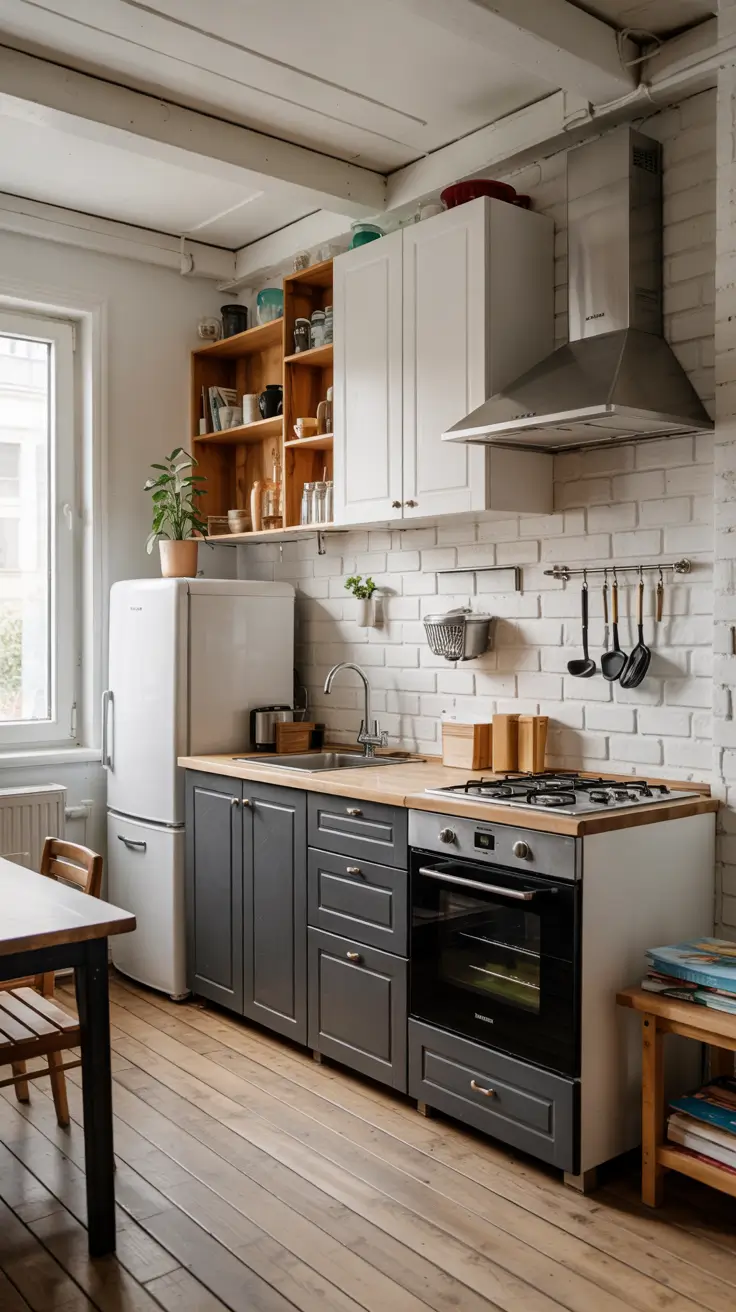
I usually place the refrigerator at one end, the sink near the center, and the cooktop with prep space beside it so the sequence feels natural. In very small kitchens, I like using integrated appliances, shallow upper cabinets, and open shelf accents to keep the wall from appearing too heavy. If the kitchen is part of a living area, I often repeat finishes from the surrounding room so the design feels unified. Black and white cabinetry can work especially well in this arrangement because it creates visual definition without requiring extra decoration. This layout also supports cutting board storage ideas for tiny house kitchens when slim vertical dividers are added near the prep zone.
From my experience, a beautiful one wall kitchen depends more on proportion than on size. I have seen compact kitchens look refined and highly functional when each cabinet width, shelf depth, and appliance choice is carefully balanced. House Beautiful has featured many small kitchens where consistent materials and streamlined layouts make the space feel larger, and I think that lesson applies strongly here. I personally avoid overcrowding the backsplash wall because visual simplicity helps the entire room breathe. When layout is handled well, even the smallest kitchen can feel calm, elegant, and easy to use.
I would complete this section by adding a note about how flooring and adjacent furniture affect the success of one wall plans. If the floor pattern is too busy or nearby furniture blocks movement, the kitchen can lose its visual clarity. I prefer continuous flooring across the full room because it stretches the eye and reinforces the open layout. I also recommend a narrow dining table or wall-mounted counter opposite the kitchen only if there is enough clearance to move comfortably. Those final choices are what make layout small spaces tiny kitchens need feel beautiful rather than simply compact.
14. A Budget Minimalist Tiny Kitchen Ideas 2026 For Apartments And Small Houses
I believe some of the strongest tiny kitchen designs come from restraint rather than spending. A budget minimalist approach works well in 2026 because it prioritizes clean shapes, durable materials, and only the elements that truly improve daily life. When I plan a budget small kitchen for apartments or small houses, I focus on practical upgrades like better lighting, open wall space, simple cabinet fronts, and affordable finishes that still feel intentional. This method fits a budget minimalist thinking that removes excess while keeping the room visually calm. It is one of the most reliable ideas for tiny kitchens when both function and cost matter equally.
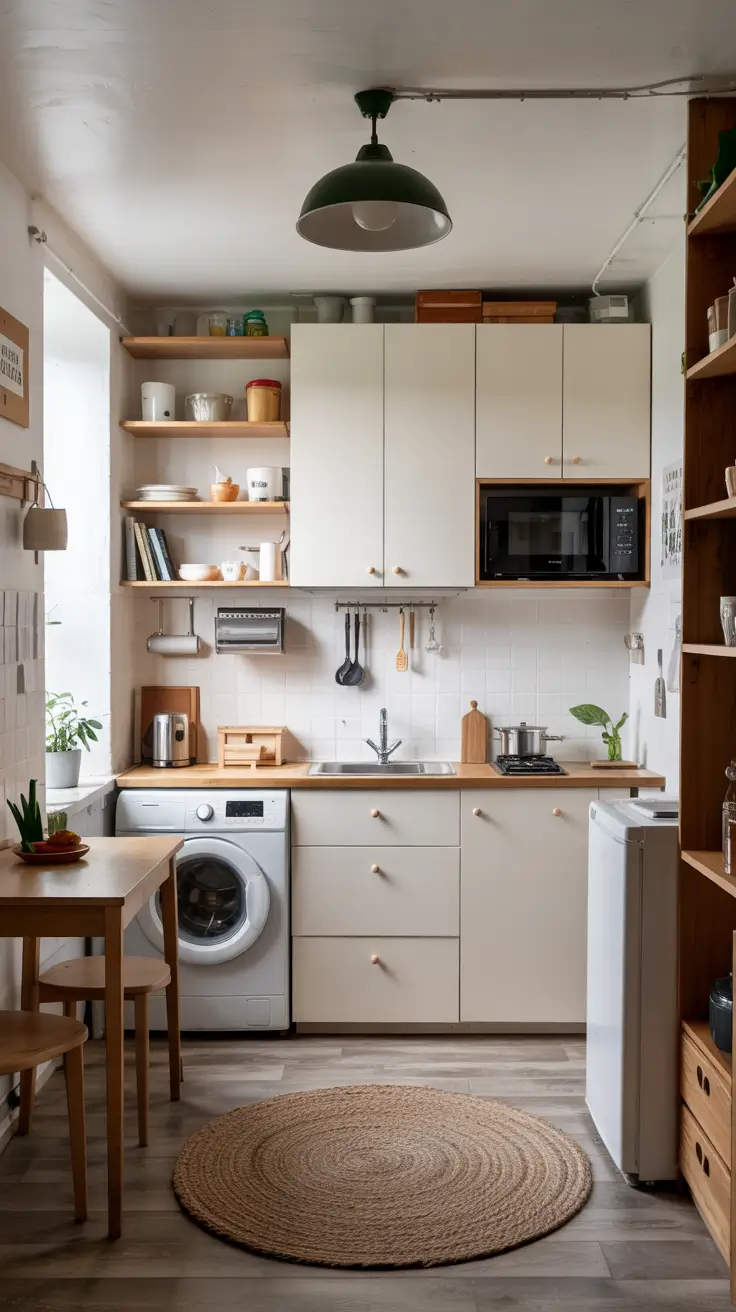
I usually choose flat-front cabinets, light wall colors, open shelving in limited areas, and a compact table with simple lines. In a budget small apartments setting, I often recommend one standout material, such as warm wood or matte tile, and let the rest of the room remain understated. This prevents the kitchen from feeling cluttered while still giving it character. I also like using a washing machine under the counter only when the apartment layout truly requires it and the cabinetry can conceal it neatly. For apartments space saving ideas, concealed utility functions often make the kitchen feel much more polished.
In my opinion, minimalism works best when it is warm and livable rather than severe. I have seen many small kitchens become more useful after removing decorative clutter, reducing upper cabinet bulk, and investing in a few well-made essentials instead of many small accessories. Real Simple frequently promotes decluttering and functional simplicity in compact homes, and I think that advice is especially useful in tiny kitchens. I personally prefer minimalist kitchens that still include texture through wood, ceramic, linen, or soft lighting so the room never feels cold. A budget design can still feel elegant when proportions and materials are chosen carefully.
What I would add here is a clearer strategy for seasonal flexibility and long-term maintenance. A minimalist tiny kitchen should include easy-clean finishes, durable surfaces, and enough closed storage to keep counters open over time. I also think renters and apartment owners benefit from removable upgrades like peel-and-stick backsplash panels, plug-in sconces, and freestanding pantry cabinets. These additions support a budget small apartments approach without creating unnecessary expense or complexity. In the end, the best a budget small kitchens are the ones that stay simple and useful every single day.
15. Very Small Tiny Kitchens Ideas 2026 With Super Efficient Storage And Shape Planning
When a kitchen is extremely compact, I start with shape planning before I think about decor. Very small tiny kitchens ideas 2026 should always be built around movement, reach, and the exact dimensions of appliances and cabinetry. I look closely at corners, walking paths, window placement, and the overall shape of the room because even a few centimeters can change how the kitchen functions. Super efficient storage only works when it follows the room’s real geometry instead of fighting it. This is especially important in layout small spaces homes where the kitchen may be narrow, angled, or built into an unusual corner.
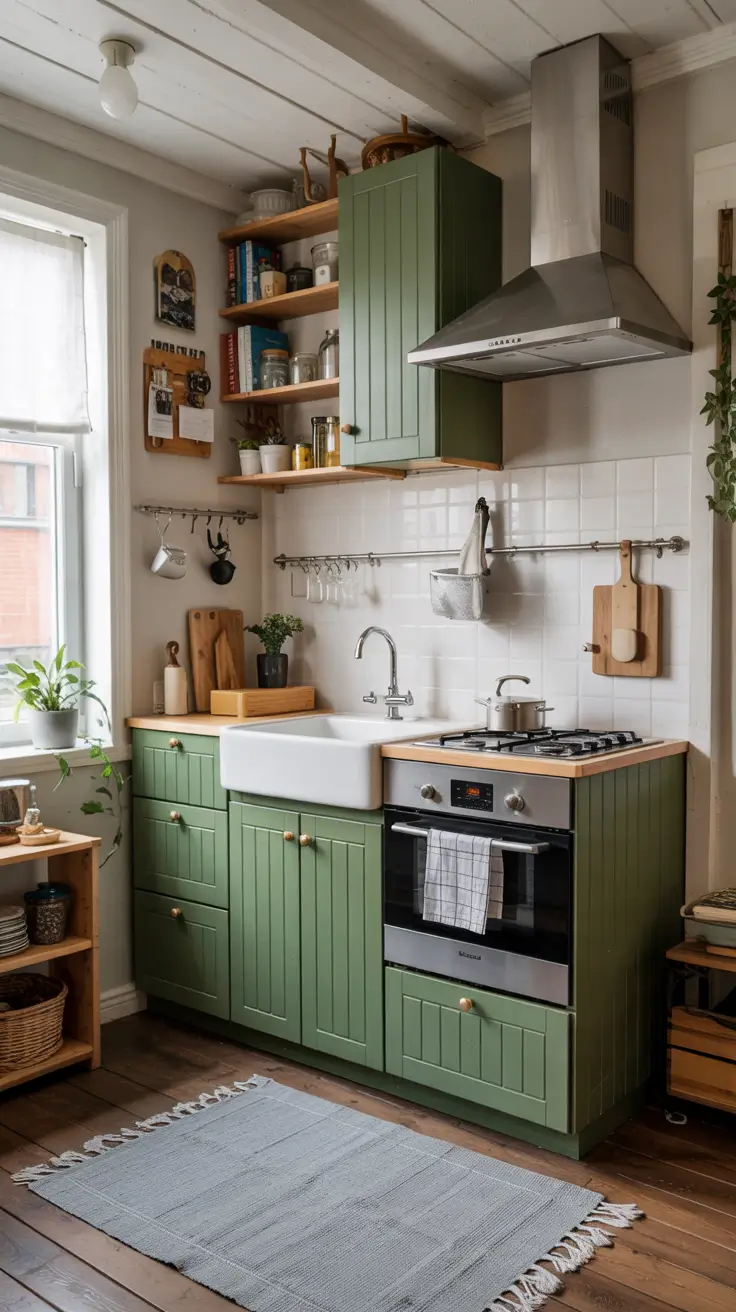
I often use toe-kick drawers, narrow pull-outs, magnetic wall storage, and vertical cabinet inserts to make the most of tight footprints. Cutting board storage ideas for tiny house kitchens can be especially helpful here because boards are often awkward to store unless a slim divider is built near the prep area. I also like corner shelves with soft curves, rounded table edges, and compact appliances that respect the room’s shape rather than dominate it. In rustic or elegant interiors alike, shape planning helps every element feel placed with purpose. When the kitchen is very small, storage must follow the architecture closely to succeed.
From my perspective, the smartest compact kitchens are the ones that remove friction from daily routines. I have worked with small layouts where relocating one cabinet, changing a door swing, or switching to shallower storage made the kitchen feel dramatically better. Dwell and other design-focused publications often show how custom planning transforms difficult small spaces, and I think that principle is essential here. I personally advise treating every storage layer as part of one system instead of adding random organizers over time. That discipline is what turns very small kitchens into spaces that feel efficient rather than cramped.
I would add a final note about balancing storage density with visual comfort. In tiny kitchens, it is possible to add so many organizers, rails, and shelves that the room starts to feel crowded even when it is technically efficient. I prefer leaving a little negative space on at least one wall or counter section so the eye can rest. If the room allows it, a single decorative detail such as a small lamp, a textured backsplash, or a natural wood stool can soften the efficiency and make the kitchen feel more human. That balance is what completes very small tiny kitchens ideas 2026 in a way that feels practical and lived-in.
16. Black And White Tiny Kitchens Ideas 2026 With Elegant Modern Contrast
I find that a black and white palette works especially well in tiny kitchens because it creates structure without making the room feel visually chaotic. In a compact space, contrast helps define cabinets, counters, backsplash lines, and storage zones in a very readable way. I usually prefer a soft white base on walls and upper cabinets, then introduce black through lower cabinetry, lighting, hardware, or bar stools to ground the room. This approach feels elegant, but it also supports ideas for tiny kitchens that need to look orderly every day. When I plan tiny house interior design ideas kitchens in this style, I pay close attention to reflections, finishes, and natural light so the darker accents do not shrink the room. A matte finish often gives the space a calmer look than high gloss, especially in small apartments space saving designs where visual balance matters.
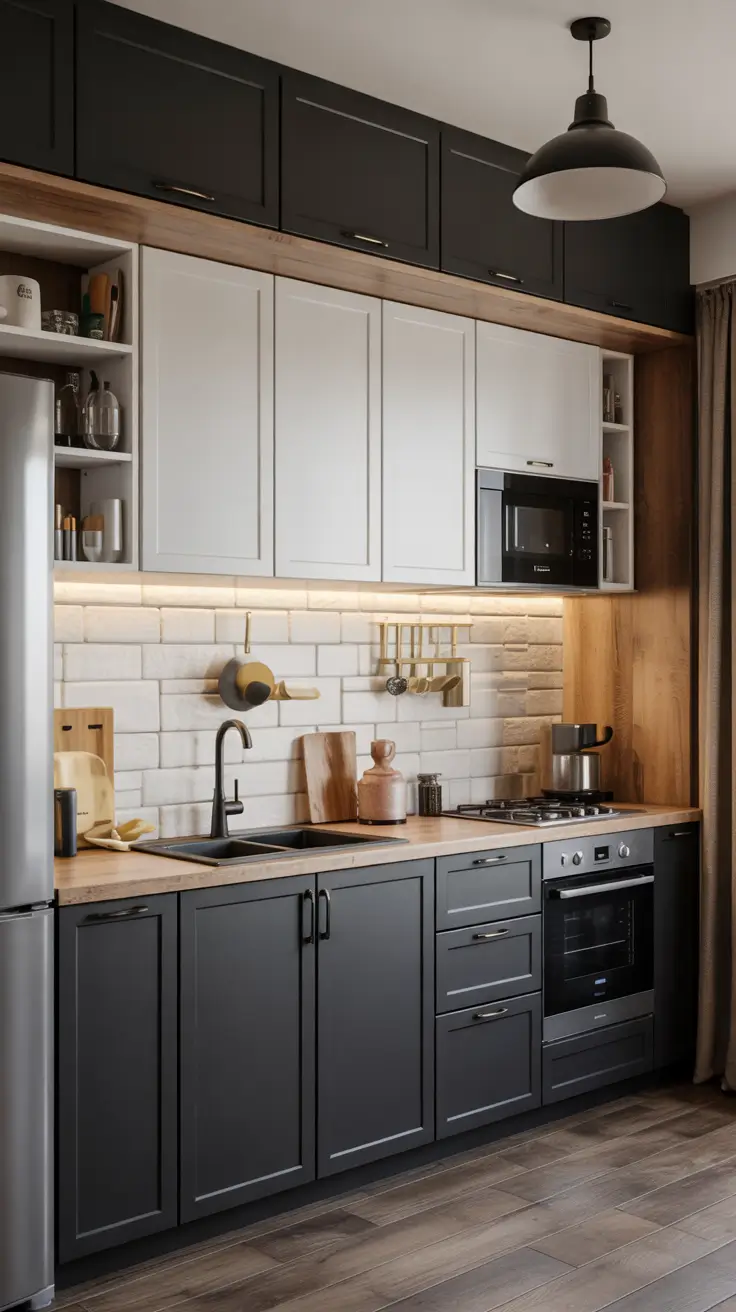
I would include flat panel cabinets, a slim quartz countertop, a black faucet, compact under-cabinet lighting, and simple open shelving that does not overwhelm the wall. In my experience, a narrow pantry cabinet can be one of the most valuable additions in this kind of layout because pantry cabinet ideas small spaces tiny kitchens work best when the storage goes vertical. I also like to use a white backsplash with a subtle texture, since it keeps the kitchen bright while adding enough detail to prevent the black and white scheme from feeling sterile. If the room allows it, a petite café table or a built-in ledge can support dining area ideas for tiny kitchens without interrupting movement. I often recommend integrated appliances or a counter-depth refrigerator because they preserve clean lines and make the floor plan easier to read. Even a small cutting board rack or drawer divider can support cutting board storage ideas for tiny house kitchens and prevent clutter from breaking the elegant look.
I personally think this style works best when the contrast is controlled rather than dramatic in every corner. Many designers in the US have long emphasized that small kitchens benefit from restraint, and I agree with that principle because every strong visual decision becomes more noticeable in a compact room. I have seen black and white tiny kitchens succeed when there is one focal moment, such as a statement pendant or a patterned floor, while the rest of the room remains quiet. That balance makes the design feel modern instead of overdesigned. For very small homes, I also find that black window frames or black shelf brackets can deliver the same effect as dark cabinets with less visual weight. The result is a super practical and elegant kitchen that still feels comfortable enough for daily use.
What I would add to complete this section is a note about warmth, because black and white kitchens need a few softer materials to feel livable. I would bring in oak cutting boards, linen towels, ceramic bowls, or a small runner with a muted pattern so the contrast does not feel too sharp. In my view, this is especially important for a budget minimalist design where the room depends on a small number of well-chosen details. A single plant, warm light bulbs, and a textured Roman shade can make the kitchen feel finished without crowding it. These additions help translate the visual contrast into a room that feels welcoming in real life. That is often the difference between a beautiful photo and a tiny kitchen that people genuinely enjoy using.
17. Rustic Indian Tiny Kitchens Ideas 2026 With Cozy Details And Practical Layout
I see rustic Indian tiny kitchens as a strong combination of warmth, practicality, and layered texture, which is especially useful in small houses where the kitchen must feel lived-in rather than overly polished. This style often works through earthy materials, compact organization, and a layout that supports cooking habits with intention. In tiny spaces, I like to interpret the look with wooden shelves, handmade tile, warm neutrals, brass accents, and rich spice-inspired tones rather than using too many decorative elements at once. That keeps the kitchen cozy while still functional. For cozy decor ideas for tiny cottage kitchens, this approach feels natural because it celebrates character and efficiency at the same time. It also connects well with layout ideas for tiny cottage kitchens that rely on wall storage and compact work zones.
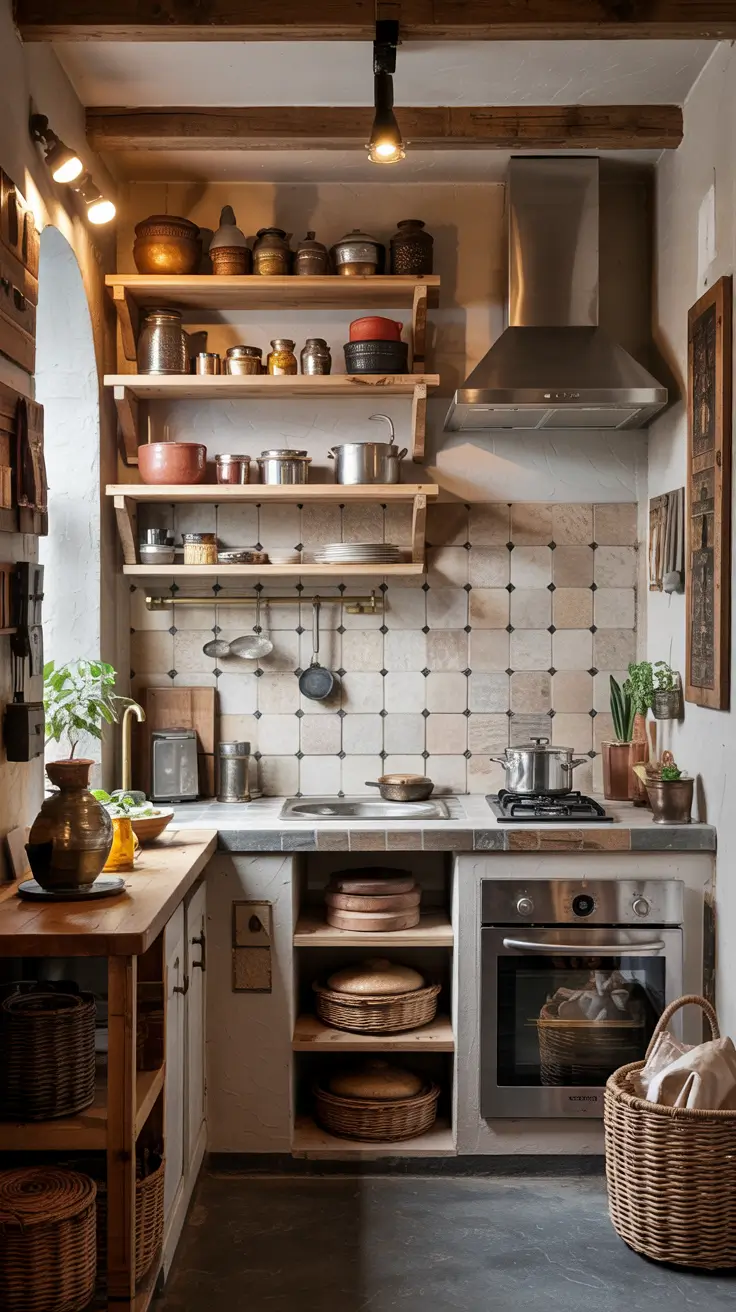
I would include lower cabinets in a muted earthy color, open shelving for everyday dishes, a narrow rail for utensils, and a practical prep area close to the cooktop. In my experience, food storage ideas for small spaces tiny kitchens are essential in this style because dry goods, spices, grains, and serving pieces all need dedicated homes. I like to use stackable canisters, labeled jars, shallow baskets, and slim pantry pull-outs so the kitchen remains organized without losing its handcrafted look. A small wooden table, folding stool, or built-in bench can also support dining area ideas for tiny kitchens when space is limited. If there is room near a corner or window, I often suggest a niche for tea supplies or daily cooking essentials so the counters stay usable. This creates clever storage ideas for small spaces tiny kitchens while preserving the warmth and personality that make the rustic look appealing.
I personally believe rustic kitchens succeed when they feel authentic to daily habits rather than themed. I would not overcrowd the room with carved décor or too many colors because tiny kitchens need visual breathing room. Instead, I prefer to reference Indian design through materials, cookware display, warm palette choices, and practical storage rhythm. I have noticed that this makes the space feel richer and more personal than simply copying a decorative style. It is also easier to maintain in one room apartment ideas space saving tiny kitchens, where the kitchen is visible from the living or sleeping area. When the textures are consistent and the storage is thoughtful, the kitchen feels both grounded and highly usable.
What I would add here is stronger planning around ventilation, lighting, and cleanable finishes, because those details matter in a compact kitchen that handles regular cooking. I would specify a good hood solution, washable wall paint, and durable counters so the cozy look remains practical over time. Under-shelf lighting would also help highlight the texture of tile and wood while improving visibility during prep work. If the budget allows, I would add a deep sink with a compact drying system to keep the counters clearer. These are the kinds of practical additions that turn a charming rustic kitchen into one that performs well every day. In my opinion, that balance is what makes this idea relevant for 2026 rather than purely decorative.
18. Tiny Kitchen Layout Apartment Solutions With Washing Machine Integration
I often work from the idea that a tiny kitchen in an apartment must solve more than one problem at once, and washing machine integration is one of the clearest examples of that challenge. In very compact homes, the kitchen sometimes becomes the most realistic place to house laundry, but the layout apartment solution has to be carefully planned so the room still functions comfortably. I prefer to treat the washing machine as part of the cabinetry rather than as a separate object, because a concealed or neatly aligned appliance keeps the kitchen visually calm. This is especially important in apartments space saving ideas where every exposed element competes for attention. A well-planned compact kitchen can support cooking, storage, and laundry without feeling temporary. For me, the success of this arrangement depends on proportion, cabinet continuity, and smart circulation.
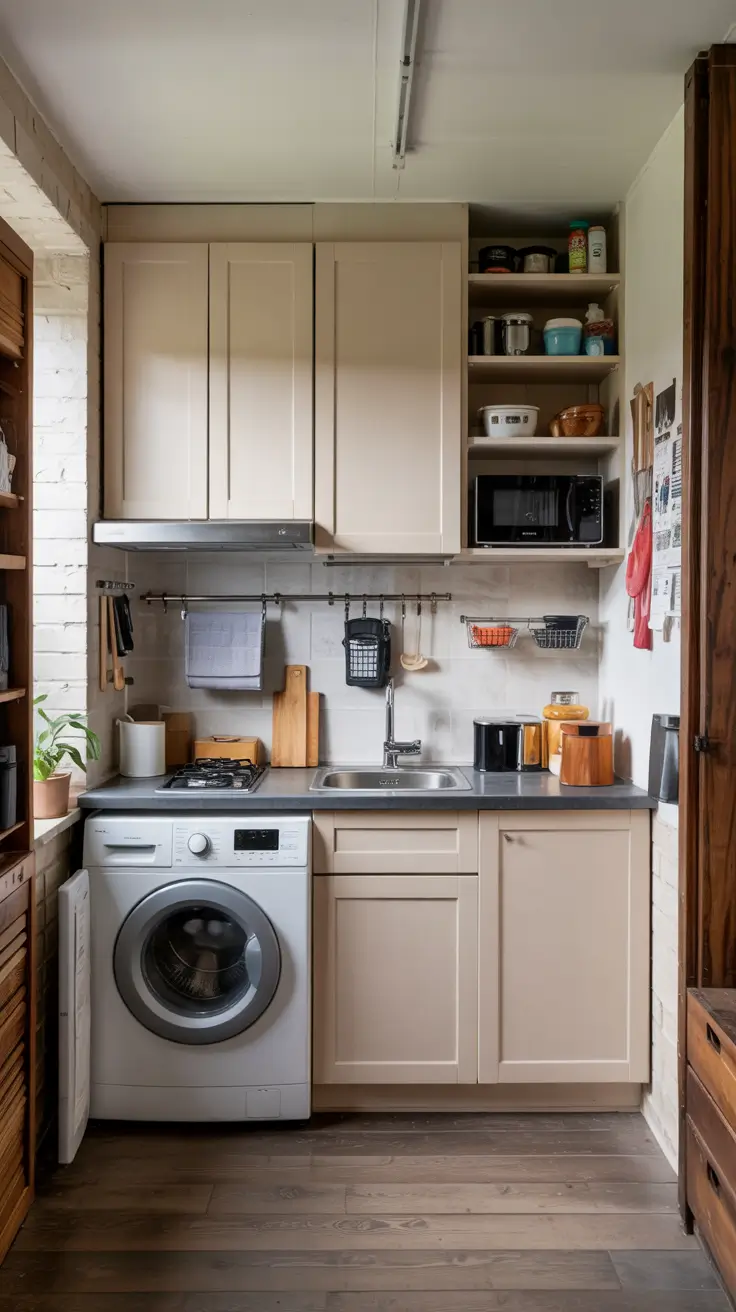
I would place the washing machine under the counter, ideally near the sink plumbing, and surround it with cabinetry that visually matches the rest of the kitchen. Above it, I would maintain uninterrupted countertop space so the surface still works for prep, small appliances, or folded laundry when needed. In many layout one wall or layout apartment kitchens, I also recommend tall storage at one end to handle pantry goods, cleaning products, and household items in a controlled way. This is where small space pantry ideas tiny kitchens and pantry cabinet ideas small spaces tiny kitchens become especially valuable, because the room needs to store both kitchen and utility essentials. I also like to add a pull-out hamper, slim shelf for detergents, and a drying rail or fold-down rack if the apartment lacks a separate laundry zone. When these elements are integrated well, the room feels intentional rather than compromised.
I personally think this solution works best when the visual language of the kitchen remains simple. If the machine is visible, I would minimize color clutter and keep surrounding materials quiet so the room still feels designed. I have seen successful examples in small studio apartment ideas maximize space tiny kitchens where all major elements line up cleanly and the countertop remains as continuous as possible. That continuity makes the whole room feel larger. I also find that residents appreciate this arrangement more when the storage plan is realistic from the start, because hidden clutter can quickly overwhelm a tiny multi-use room. In my experience, the best layout floor plans are the ones that accept real life instead of pretending the kitchen only has one role.
What I would add to strengthen this section is more attention to acoustic comfort and moisture control. I would suggest anti-vibration pads, well-fitted cabinetry panels, and good airflow so the washing machine does not dominate the room through noise or humidity. I would also make room for a small tray or shelf for laundry products, because that prevents them from spilling into food prep zones. If the apartment has very limited counter space, I might also include a cover panel or butcher block topper over the machine area for extra flexibility. These details are often missed, but they make a major difference in everyday use. In a budget small apartments setting, thoughtful planning matters more than expensive finishes.
19. Layout One Wall Tiny Kitchens For A Budget Small Apartments That Need Space Saving
I think a layout one wall kitchen is one of the smartest choices for a budget small apartment because it organizes every major function along a single line and leaves the rest of the room more open. This arrangement is especially effective in studio living, where the kitchen shares visual space with dining and lounging areas. When I design this kind of room, I focus on a sequence that supports movement logically, usually storage, sink, prep zone, cooktop, and then additional storage or a compact refrigerator. That order helps layout small spaces feel more usable even when the footprint is minimal. I also find that one-wall kitchens work very well for a budget minimalist look because the design is naturally simple and efficient. For one room apartment ideas space saving tiny kitchens, this format keeps the room flexible and easier to furnish.
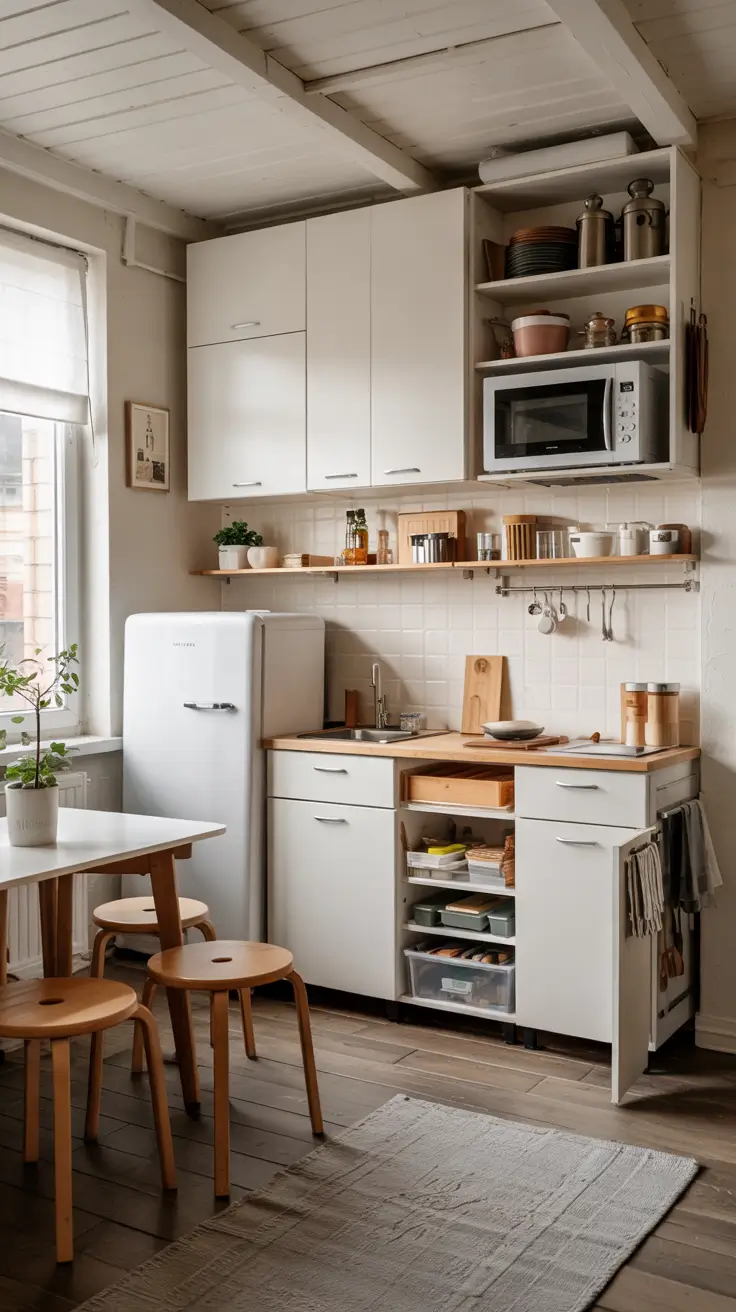
I would include upper cabinets that reach the ceiling, a narrow backsplash shelf, multi-use lower drawers, and a compact dining solution such as a drop-leaf table or wall-mounted ledge. In my experience, clever storage ideas for small spaces tiny kitchens make or break a one-wall layout because there is no corner cabinetry to absorb overflow. I usually recommend drawer organizers, toe-kick storage, magnetic wall rails, and slim pull-out pantry units to keep the line of cabinets working harder. This is also a great setup for cutting board storage ideas for tiny house kitchens, since vertical dividers inside a deep drawer or cabinet can keep prep tools accessible without taking over the counter. If the apartment needs even more flexibility, stackable stools or nesting chairs can support dining area ideas for tiny kitchens without creating bulk. A restrained palette and coordinated finishes help the entire wall feel integrated with the rest of the apartment.
I personally appreciate one-wall kitchens because they encourage discipline in both design and daily use. You cannot rely on excess cabinetry or oversized appliances, so every element has to justify its place. I have found that this often leads to better decisions, especially for a budget small setup where the goal is to spend carefully rather than fill the room. Many of the best small kitchens I have seen were not large or luxurious, but they were thoughtfully edited. That is why I often recommend this layout for apartments space saving and small houses alike. When the proportions are right, the room can feel surprisingly generous.
What I would add here is a stronger emphasis on lighting and zoning, because a one-wall kitchen can look flat if everything stays on the same visual plane. I would use under-cabinet lights, a focused pendant above the dining edge, and perhaps one contrasting finish on the lower cabinets to add depth. If the room is very small, I would also define the kitchen area with a washable runner or a slightly different wall tone nearby. These moves help the layout feel intentional without increasing cost too much. In my opinion, that is one of the best ways to make a budget minimalist kitchen feel complete. It proves that even a very small one-wall layout can have both function and style.
20. Layout Floor Plans For Tiny Kitchens Ideas 2026 Inspired By Toca Boca And Real Life Function
I find this concept interesting because it combines playful imagination with practical planning, and that can be surprisingly useful when thinking about tiny kitchen floor plans. Toca Boca-inspired interiors often emphasize clear zones, cheerful detail, and compact arrangements that are easy to understand visually. In real life, I would translate that idea into floor plans that feel intuitive, flexible, and a little more expressive than a standard minimal kitchen. That could mean rounded shapes, soft color blocking, accessible storage, and a layout floor plans approach that feels friendly without losing function. For tiny kitchens ideas 2026, I think this direction works best when the creative energy is balanced by smart measurements and daily practicality. It can be especially appealing in apartments, small houses, or family spaces where the kitchen should feel lively rather than strict.
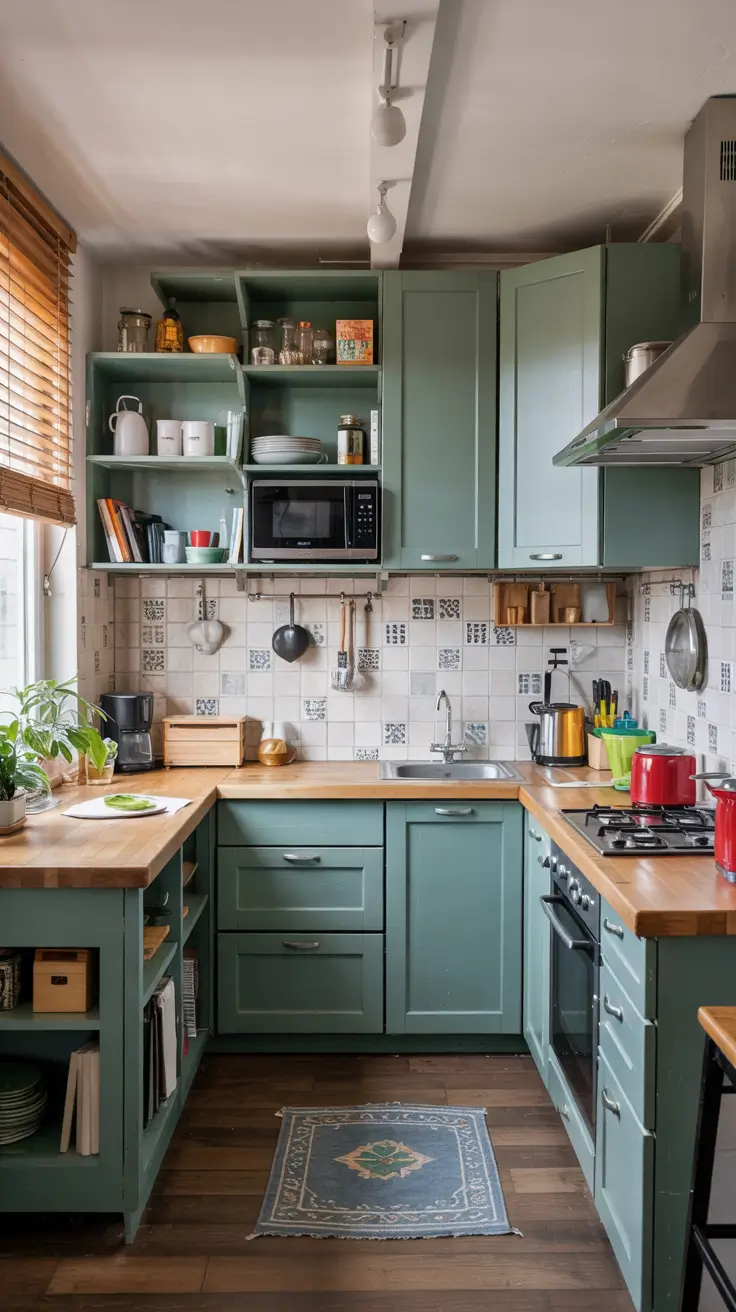
I would build this kind of kitchen around clear work zones, a compact dining corner, playful but durable finishes, and storage that is easy to use at a glance. Open cubbies, rounded shelf corners, pastel or black and white accents, and a simple shape language can all reference the playful side of the inspiration while keeping the room practical. In my experience, small studio apartment ideas maximize space tiny kitchens benefit from this clarity because the layout feels understandable and less stressful to navigate. I also see strong potential here for food storage ideas for small spaces tiny kitchens, especially if the design includes labeled bins, visible categories, and drawers sized for actual daily items. A compact table, breakfast ledge, or small banquette can also support dining area ideas for tiny kitchens in a way that feels cheerful but organized. The goal is not to imitate a game literally, but to borrow its sense of order, accessibility, and charm.
I personally think this style is most successful when the plan respects real movement and real storage needs. I would not force curved details or bright accents into every corner if they reduce useful surface area. Instead, I prefer to let the floor plan stay efficient and introduce the playful tone through color, hardware, seating, or a patterned backsplash. That keeps the room grounded in real life function. I have found that people respond well to tiny kitchens that feel optimistic and easy to use, especially when they are living in compact apartments space saving layouts. A little imagination can make a small kitchen feel less limiting and much more personal.
What I would add here is more guidance on how to keep the playful look from becoming cluttered. I would limit the palette, choose just one or two standout shapes, and make sure closed storage handles most of the visual load. I would also ensure that counters stay open enough for actual cooking, because good design still depends on usability. If the room includes children or frequent guests, durable finishes and rounded edges become even more important. These choices make the concept safer, calmer, and easier to maintain over time. In my view, that is how a creative inspiration becomes a realistic kitchen plan for 2026.