If you want your coffee corner to feel warm, practical, and current, the best coffee station ideas start with a clear balance between style and routine. I often see that a well-planned coffee station at home works best when the coffee station kitchen layout, coffee station aesthetic, and coffee station ideas countertop choices all support how people actually move through the room each morning.
Have you been wondering how to make coffee stations feel more custom, how to fit a setup into a small kitchen, or how to make a coffee station in kitchen areas look polished instead of cluttered? In this article, I break down ideas that help a coffee station home feel more useful, more attractive, and easier to maintain. I focus on layouts, furniture, appliances, storage, and decor details that make daily use smoother. I also share where built in solutions, hidden storage, and diy upgrades can make a real difference. My goal is to show how a beautiful setup can still feel relaxed, personal, and easy to live with.
1. Beautiful Coffee Station Ideas For A Stylish Home In 2026
I think the most successful coffee station design in 2026 feels intentional from the first glance, but never overly staged. When I plan a stylish setup, I start by looking at the room as a whole so the station feels connected to the kitchen counter, cabinetry, wall color, and flooring. I like to use layered textures such as wood, matte metal, ribbed glass, and soft ceramics because they make the space feel richer without adding clutter. A good arrangement also needs visual calm, so I prefer leaving some open breathing room around the machine and mugs. That simple decision makes coffee stations look more refined and easier to maintain every day.
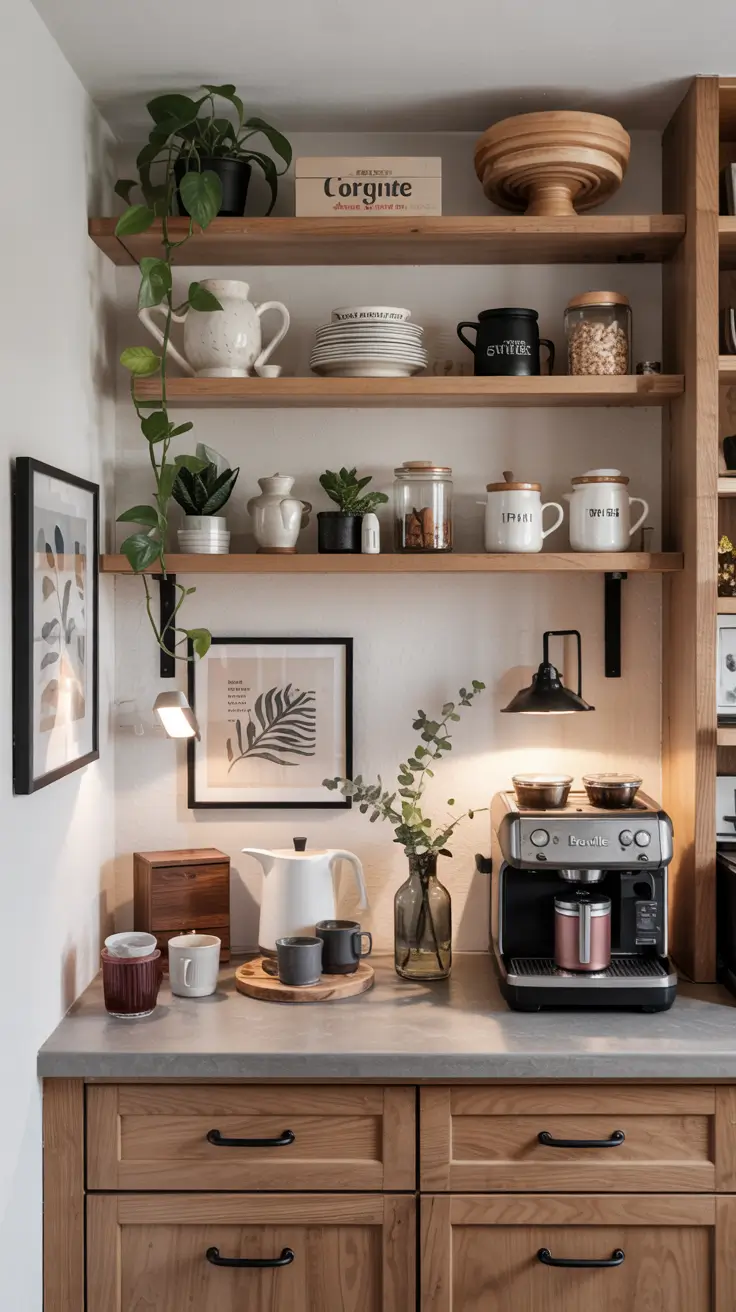
I usually recommend a strong anchor piece first, such as a console, compact cabinet, or section of kitchen countertops dedicated to coffee. Then I build the station with pieces that feel practical and decorative at the same time, including a tray, mug hooks, a small lamp, canisters, a machine, and a shelf for daily supplies. If the home already has a Breville or Keurig setup, I like to make that appliance part of the visual plan instead of hiding it awkwardly. I often add a framed print, a textured backsplash panel, or a small plant to soften the appliance-heavy look. That mix of function and decor gives the space a polished coffee station decor feel without making it look crowded.
From my experience, a stylish station always works better when it reflects the rhythm of the home instead of copying a showroom. I like warm neutrals for one home aesthetic, but I also think darker tones, stone surfaces, and brushed brass can create a more tailored hotel mood. If the house has a cleaner and quieter style, I prefer simple cups, one sculptural vase, and fewer visible accessories. If the interior is more layered, I do not mind stacked cookbooks, art, and hand-thrown mugs to create a more collected look. I find that the best aesthetic choices are the ones that still feel comfortable during busy mornings.
If I were finishing this section in a real home, I would make sure the station included one personal detail that makes it memorable. That could be a family pottery mug set, a vintage sugar bowl, a favorite weekend pour over brewer, or even a linen runner under the tray. I would also check the lighting because beautiful coffee station ideas often fall flat when the corner is poorly lit. A small wall sconce or warm lamp can completely change how the station feels in the early morning. That final layer helps the setup feel less like an appliance zone and more like a real part of the interior.
2. How To Create A Coffee Station At Home That Feels Cozy And Functional
When I create a coffee station at home, I always begin with comfort and convenience before I think about styling. A cozy setup should make the first few minutes of the morning feel easier, not more complicated. I usually choose a spot that is close to water access, near everyday mugs, and away from the main cooking zone so two people can use the kitchen comfortably at once. This is especially helpful in a small kitchen where circulation matters as much as storage. I find that even a modest corner can feel generous when the layout supports natural movement.
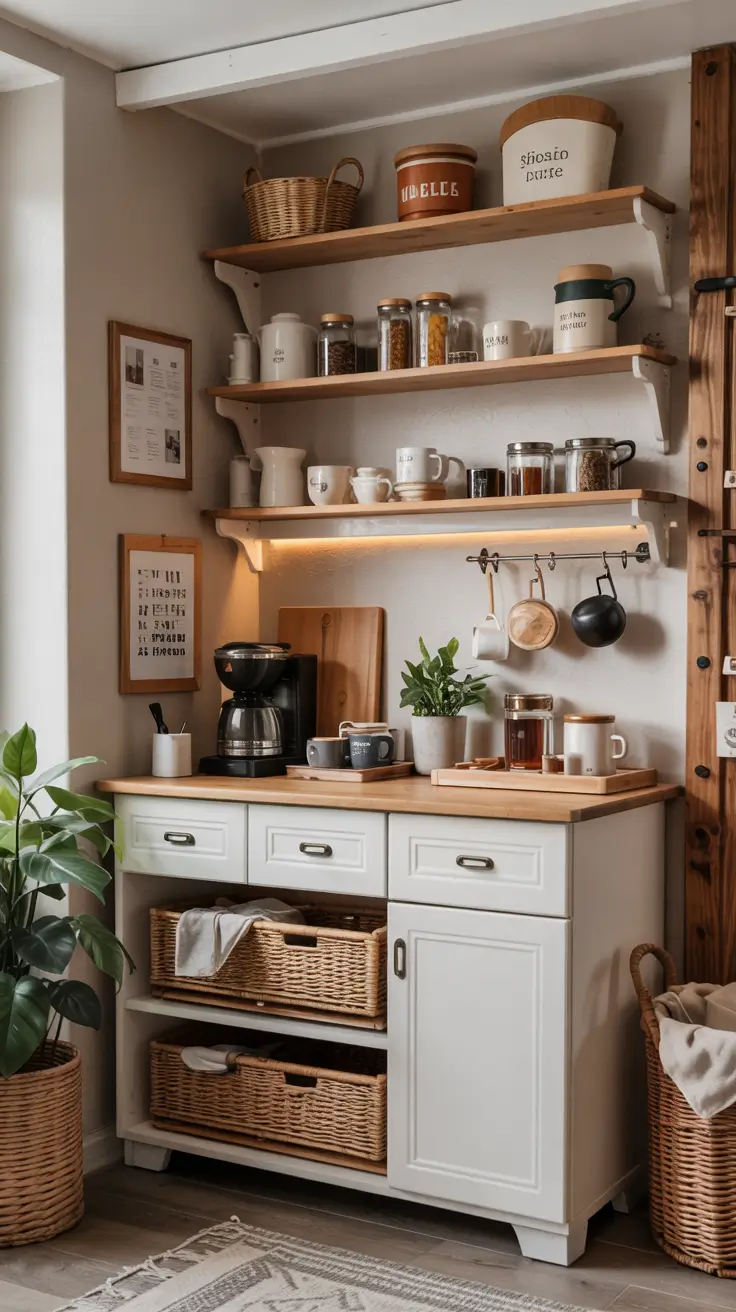
For furniture and accessories, I like to keep the most-used items within easy reach and store the rest with intention. I often include a compact cabinet or sideboard with drawers for pods, filters, spoons, tea and coffee supplies, and extra napkins. A tray helps define the machine area, while vertical storage gives space for syrups, mugs, and small jars without taking over the counter. If the setup is in a dorm, apartment, or one-wall kitchen, I think wall shelves and narrow carts are especially useful. They support coffee station ideas small spaces needs while still leaving the countertop free enough for daily prep.
I personally think coziness comes from the way a station supports small rituals. I like a soft under-cabinet light, a neutral mug set, a basket for snacks, and one tactile material such as wood or linen to make the area feel warmer. In my own layouts, I also try to avoid sharp visual contrast unless the room already has a bold design language. When everything from the mugs to the storage jars speaks the same visual language, the coffee station home feels calmer. That calm is what makes the space pleasant to return to every day.
If I wanted to improve a cozy station even more, I would add one feature that supports slower moments and not just rushed mornings. That could be a stool, a bench nearby, or a small open shelf for books and magazines if the corner allows it. I would also think about scent and sound, because even a tiny speaker and a jar of cinnamon sticks can make the experience feel more lived in. For homes where guests gather often, I would include a few extra cups and a dedicated serving board. Those details make the station feel complete, functional, and welcoming.
3. Coffee Station Kitchen Layouts That Make Daily Routines Easier
A good coffee station kitchen layout should make the morning flow feel obvious from the first step. I usually think in zones, with brewing, storage, prep, and cleanup all placed in a simple sequence. This matters even more in busy households where several people may need the kitchen at the same time. In my view, the best coffee station in kitchen layouts reduce crossing paths, unnecessary reaching, and counter clutter. When the route from machine to mug to milk to sink feels smooth, daily routines become much easier.
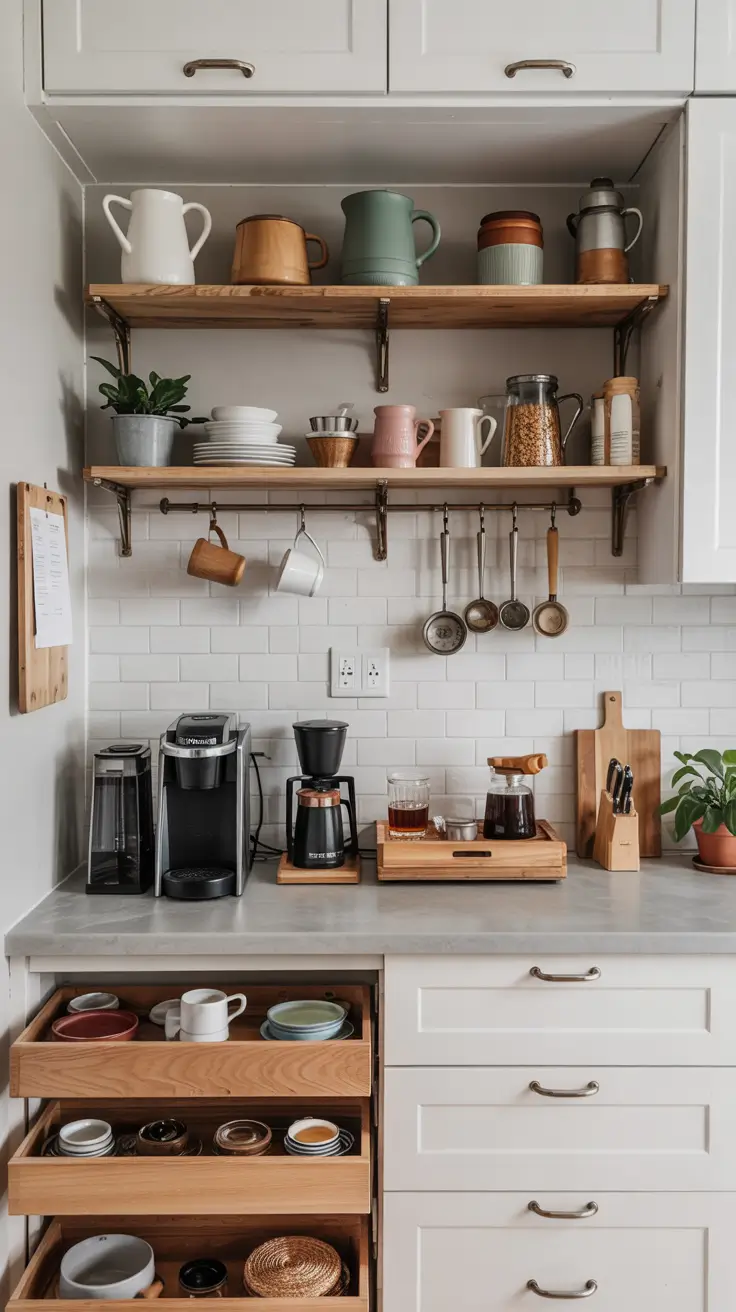
I often place the machine near an outlet and leave enough clear space beside it for tamping, pouring, or setting down cups. If the kitchen counter is limited, I like ideas countertop solutions that use risers, corner shelves, or tiered trays to increase function without widening the footprint. Built in niches also work beautifully when cabinetry is being updated, because they hide visual noise while keeping the station easy to access. In larger homes, I think a dedicated beverage cabinet can create an elegant transition between kitchen and dining zones. In tighter layouts, even a narrow counter at the end of a cabinet run can become a very efficient station.
I have found that routine becomes easier when the station supports different kinds of users, not just one coffee habit. Some people want a quick Keurig setup before work, while others prefer a slower pour over routine on weekends. Because of that, I like to separate fast-use items from specialty tools so the station can handle both without looking chaotic. I also recommend storing mugs close by instead of across the room, which sounds obvious but makes a real difference over time. Small planning decisions like that are what turn good design into genuinely useful design.
If I were refining the layout further, I would look at what is missing beyond the machine itself. A waste solution for pods or filters, a discreet towel hook, and a container for stirrers or spoons can make the area feel much more complete. I would also check whether the station needs a hidden charging point or better task lighting, especially if the corner is shaded by upper cabinets. In family homes, I like to leave a little extra landing space so children or guests can help themselves safely. Those adjustments make the station more adaptable and easier to live with every day.
4. Coffee Station Aesthetic Trends That Will Define Homes In 2026
The coffee station aesthetic I expect to define homes in 2026 is softer, warmer, and more integrated with the rest of the interior. I see fewer overly themed corners and more stations that feel like a natural extension of the room. In practice, that means warm woods, muted paint tones, stone-look surfaces, textured ceramics, and decor that feels collected instead of overly matched. I also notice that hidden storage is becoming more important because people want the station to look calm even when it holds many daily items. That balance between utility and restraint feels especially current.
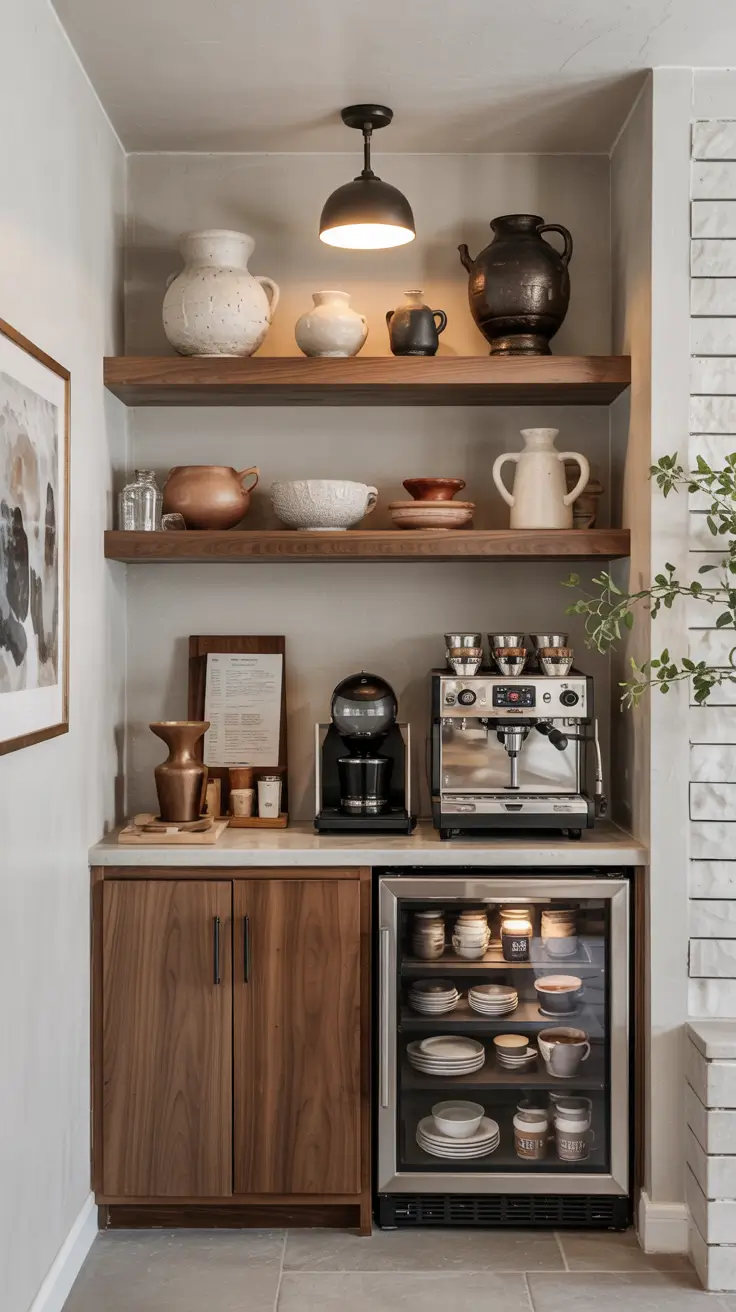
When I build around this kind of aesthetic, I focus on materials before accessories. I like oak or walnut shelves, plaster-like wall finishes, brushed metal hardware, and simple canisters that do not fight for attention. A built in alcove or hidden cabinet door can make the station feel tailored, while open shelves can display cups and jars in a more relaxed way. For homes that lean modern, I prefer clean forms and minimal decor, but for a softer home aesthetic I may add a linen cafe curtain, framed art, or a small lamp. These choices help the coffee station decor feel intentional without becoming overly decorative.
Personally, I think the most important trend is not one object but one attitude. The station should feel livable, and that means it should not be so perfect that nobody wants to use it. I like when a station includes something handmade, something practical, and something visually quiet, because that trio keeps the design grounded. Even in more expressive interiors, I think the coffee area benefits from a little discipline. Too many visible syrups, wires, or novelty items can quickly weaken an otherwise beautiful design.
If I were adding the missing layer here, I would think carefully about contrast and how the station reads from across the room. A trend-forward setup needs one strong visual anchor, whether that is a dark backsplash, a sculptural machine, or a row of repeated ceramic canisters. I would also make sure the station works in the evening, since many homes now use beverage areas beyond morning coffee. Adding tea and evening drink supplies in matching storage can extend the usefulness of the station without changing its look. That is the kind of quiet flexibility I believe will matter most in 2026.
5. Smart Coffee Station Ideas Countertop Setups For Busy Mornings
When mornings are busy, smart coffee station ideas countertop planning becomes more important than decorative styling alone. I think the most useful countertop setup is one where every object earns its place and supports speed, comfort, and cleanup. That is why I usually start by editing the area down to the essentials instead of filling it with too many accessories. On a kitchen counter, extra objects can make a small kitchen feel even tighter, especially during the morning rush. A cleaner setup helps people move faster and keeps the station from feeling stressful.
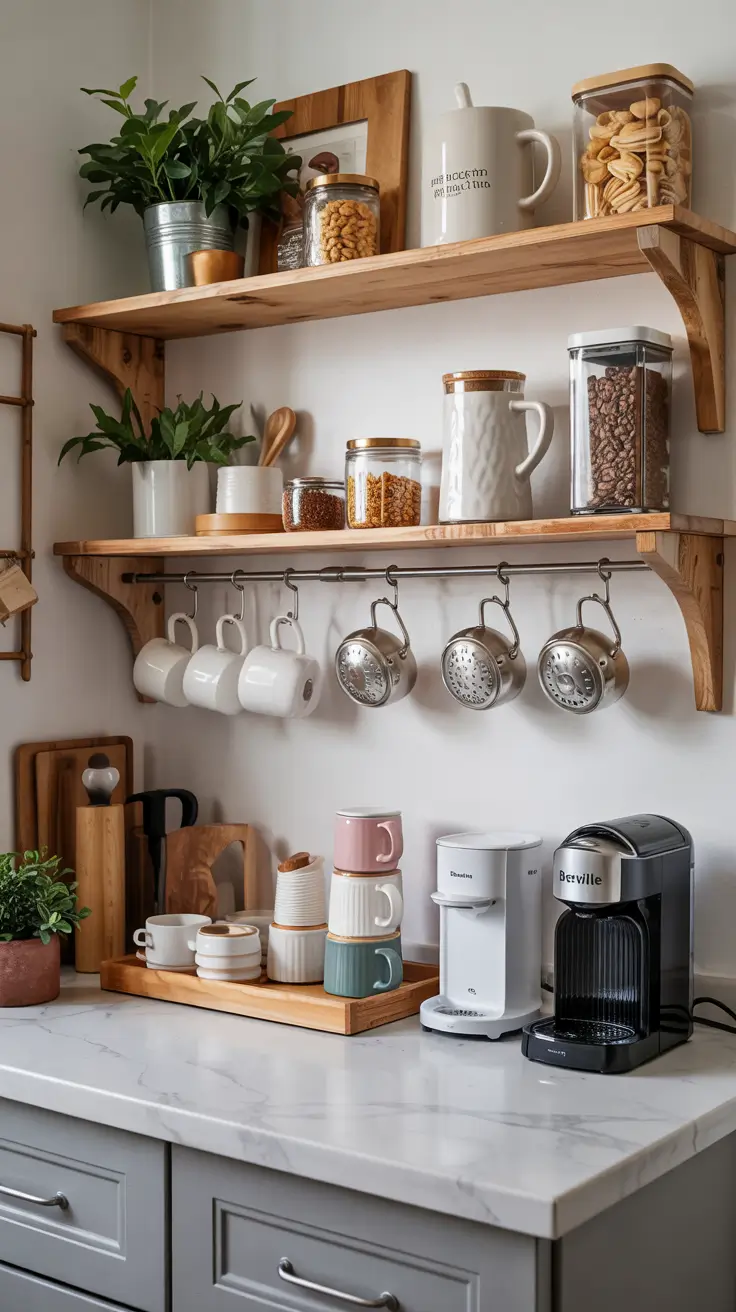
I recommend placing the machine, cups, sweeteners, and daily tools in one compact working zone, with secondary items stored above or below. If the surface is limited, I like a narrow tray, stackable mug shelf, or slim drawer unit to create order without using more width. Diy additions can also help, such as a custom mug rail under a shelf or a divider inside a nearby drawer for pods, spoons, and filters. For work-from-home households, I think a nearby snack jar or insulated carafe can make the station more useful beyond the first cup. These solutions work especially well for ideas small spaces needs because they keep the counter organized without looking stripped down.
In my experience, busy mornings improve when the setup supports habits automatically. I like to keep the favorite mugs closest, place the grinder where it does not block movement, and leave enough landing space for milk, a phone, or a breakfast plate. If the household uses a Breville machine for one person and a pod machine for another, I would still try to unify the area visually with matching trays or containers. That keeps the counter from looking random even when the routines are different. Good design can make speed feel calmer, which is exactly what a morning station should do.
If I wanted to complete this kind of setup, I would look closely at what still interrupts the routine. Often that missing piece is not another object but a better system for refilling beans, storing filters, or clearing used items quickly. I also think a countertop station benefits from one easy-clean surface detail, such as a wipeable tray or splash-resistant wall finish behind the machine. In homes that host often, I might add a second row of cups or a compact hotel-style service tray for guests. That way the station stays practical for everyday use but still feels prepared for company.
6. Small But Mighty Coffee Station Ideas Small Spaces Can Actually Use
When I design for a compact home, I treat the coffee area as a hardworking zone rather than a decorative afterthought. The best coffee station ideas small spaces can use often begin with one narrow wall, an unused corner, or a section of kitchen counter that already supports the morning routine. I look for ways to keep the setup visually light, because a small kitchen can feel crowded very quickly when appliances and accessories compete for attention. A slim console, a shallow cabinet, or a compact rolling cart can create structure without taking over the room. In my experience, the most successful coffee stations in tight layouts feel intentional, calm, and easy to maintain every day.
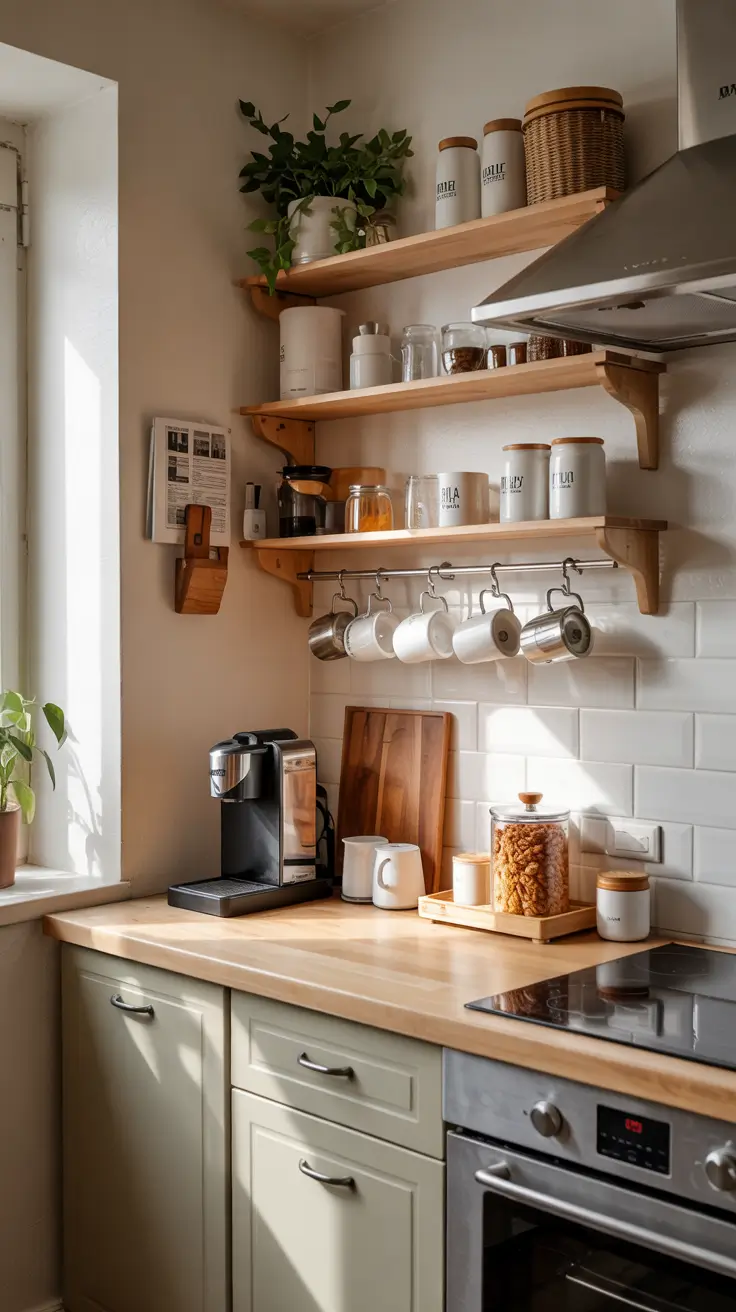
I usually start with a compact machine, a tray, a small stack of mugs, and vertical storage so the footprint stays controlled. If the goal is coffee station ideas countertop solutions, I prefer canisters that are uniform in height and finish because they reduce visual noise. A wall shelf above the station can hold cups, beans, and a small lamp while leaving the main surface free for daily use. I also like to add a narrow drawer or lidded basket for pods, filters, tea and sugar packets, because hidden storage makes even a simple arrangement feel more polished. For ideas small spaces can truly support, I focus on pieces that serve more than one purpose and keep cleanup easy.
I have found that compact coffee stations work best when I edit the styling as carefully as I edit the furniture. Too many mugs, signs, or gadgets can make a small coffee station home setup feel busy instead of inviting. I prefer one strong visual anchor, such as a warm wood tray or a small framed print, and then I let the practical pieces do the rest of the design work. That approach helps create a coffee station aesthetic that still feels relaxed rather than overdecorated. In my own planning process, I always ask whether each item earns its place by being useful, beautiful, or ideally both.
If I wanted to make this section even stronger in a real room, I would add better lighting and one more layer of vertical organization. Under-shelf hooks for mugs, a compact sconce, or a rechargeable lamp can make the station feel complete without expanding the footprint. I would also think carefully about how the station relates to nearby movement so cabinet doors and drawers can open without interruption. In very tight homes or a dorm layout, I believe foldable or stackable accessories are especially helpful because they keep the setup flexible. The final result should feel small but capable, which is exactly what a well-planned compact coffee zone should deliver.
7. Built In Coffee Station Design Ideas For A Seamless Custom Look
A built in coffee station works best when it feels like a natural extension of the cabinetry rather than a separate feature dropped into the room. I like this approach because it gives the entire coffee station kitchen layout a quieter and more architectural look. In 2026, I see more homeowners choosing built in solutions that blend storage, appliance housing, and preparation space into one cohesive wall. This style works especially well when the goal is a refined coffee station design that feels permanent and uncluttered. Even in a modest home, a built in niche can add structure and make the room feel more tailored.
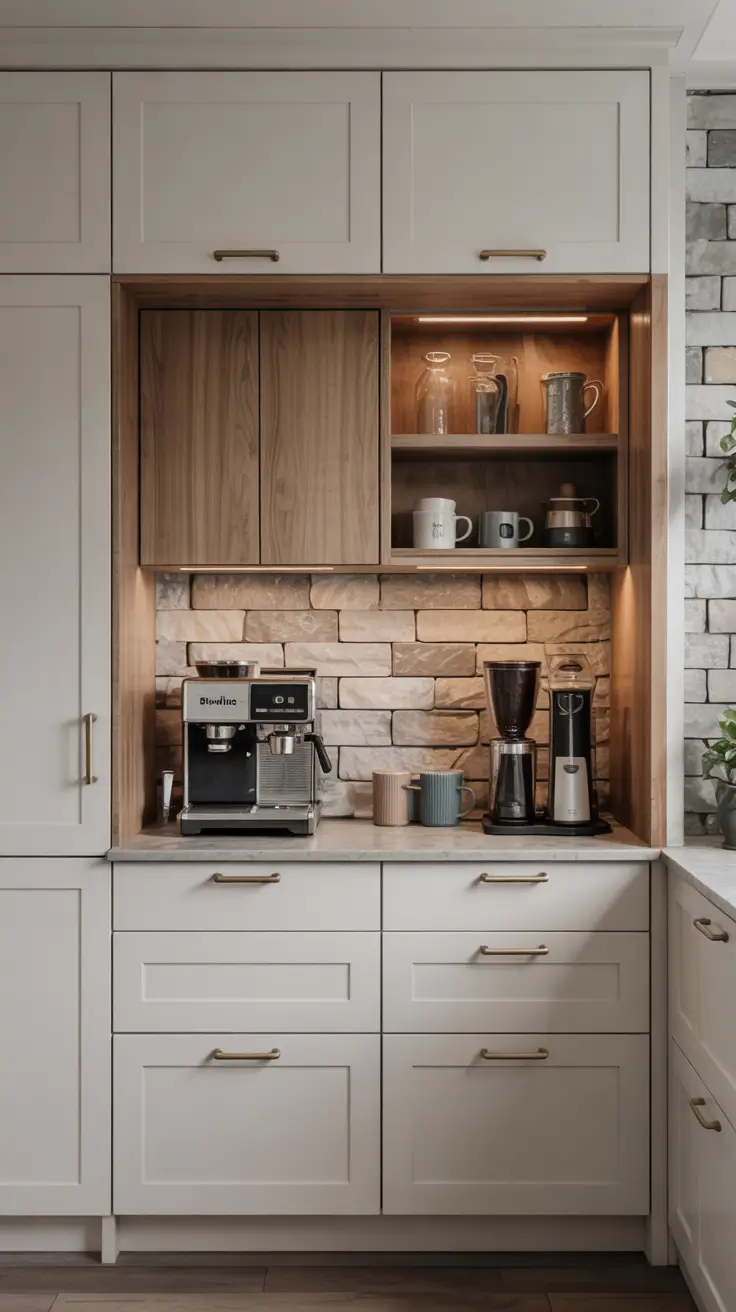
When I plan a built in setup, I usually include a dedicated appliance shelf, closed cabinetry above or below, and enough countertop depth for comfortable use. A Breville machine or a Keurig can both work in this format, but I always match the appliance size to the cabinet proportions so the composition stays balanced. I also like to include pull-out trays, drawer dividers, and a nearby outlet placement that keeps cords from becoming part of the visual field. If there is enough room, I add a small open shelf for mugs and one niche for jars with beans, sweeteners, or pour over tools. These details make the station practical while preserving the custom appearance people usually want from a built in feature.
What I personally like most about a built in coffee station is the sense of order it brings to the room. The station has a clear home, which means the rest of the kitchen counter can stay more open and flexible. I have noticed that when storage is built around the real routine of the household, the station looks better because it also works better. Designers often emphasize that a well-designed kitchen should support everyday habits, and I strongly agree with that principle when planning beverage zones. A built in coffee area succeeds when it makes the morning feel easier without asking for extra maintenance.
To complete this kind of setup, I would add material contrast and thoughtful lighting so the niche does not disappear into the cabinetry. A stone or tile back panel, warm wood interior, or soft integrated light can make the built in space feel special without being flashy. I would also make sure there is enough ventilation and clearance if the machine produces heat or steam inside a cabinet opening. In my view, the missing detail in many built in concepts is often the landing space for cups, spoons, and quick preparation. Once that surface is accounted for, the station becomes both seamless and genuinely comfortable to use.
8. Hidden Coffee Station Concepts That Keep Kitchen Countertops Clean
A hidden coffee station is one of the smartest choices when the main goal is to keep kitchen countertops clear and calm. I often recommend this idea to anyone who loves the ritual of making coffee but does not want appliances constantly visible. Pocket doors, appliance garages, bi-fold cabinet fronts, and tall pantry-style compartments can all create a concealed zone that opens when needed and disappears when not in use. This approach is especially useful in a small kitchen where every visible object adds weight to the room. In my experience, hidden coffee station concepts give the space a cleaner rhythm and make the whole kitchen feel more restful.
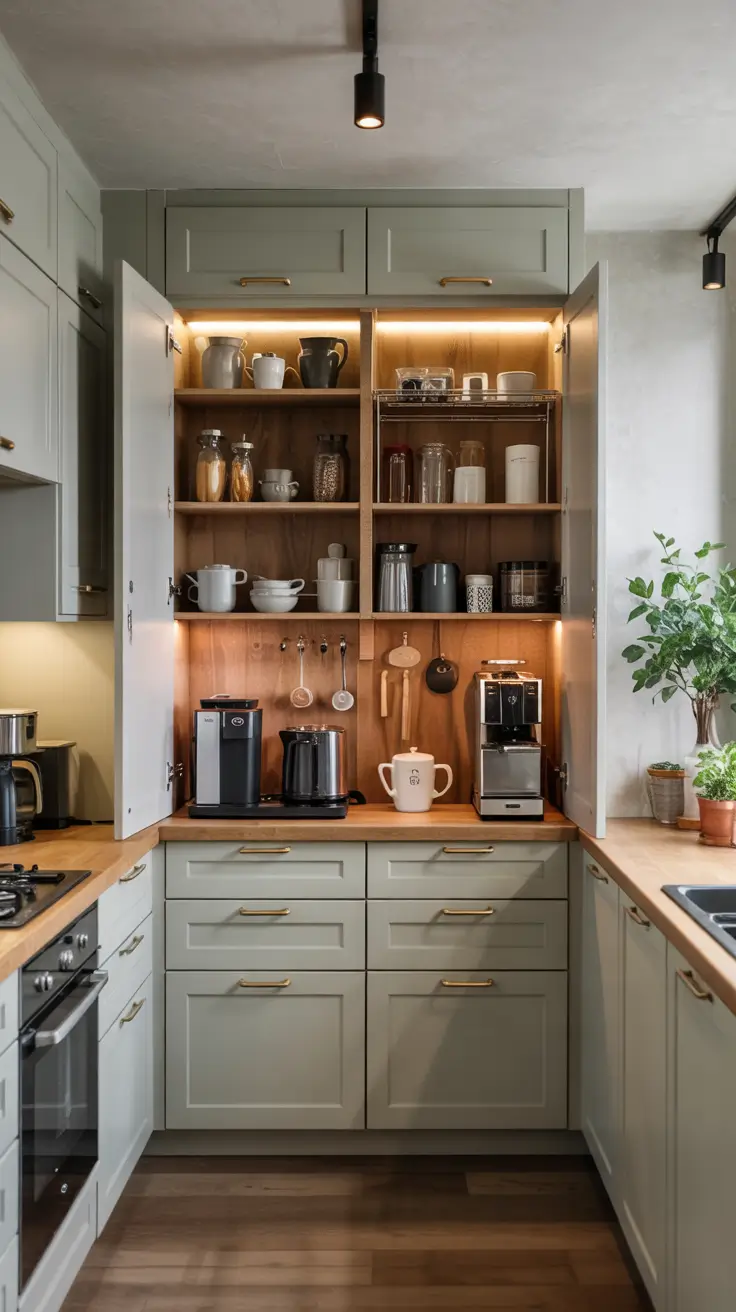
I usually design the inside of a hidden station with the same care I would give to an open display. There still needs to be enough countertop room for brewing, a place for mugs, and practical storage for pods, beans, filters, and spoons. If the setup includes a machine plus tea and coffee supplies, I like to separate the categories so the interior stays organized and easy to navigate. A pull-out shelf can help bring the machine forward during use, and interior lighting makes the station more comfortable in early morning hours. Even when the doors are closed, the hidden zone should feel complete and highly functional behind the scenes.
I personally think hidden stations work best for people who value visual quiet more than decorative display. Some readers may prefer to style their coffee corner openly, but I appreciate how a concealed solution protects the kitchen counter from constant buildup. It also encourages better habits because everything has a designated place and must be put back after use. I have seen that once clutter is contained, the rest of the room feels larger and more intentional. For me, the beauty of a hidden station is not only the clean exterior, but also the sense of control it creates in daily life.
If I were refining this kind of station further, I would add a moisture-resistant interior finish and very clear storage zones. Steam, drips, and scattered grounds can damage a poorly planned cabinet, so the surfaces inside need to be easy to wipe down. I would also include a small tray or mat under the machine so maintenance stays simple and the cabinet lasts longer. In a family kitchen, labels or dedicated containers can make the hidden system easier for everyone to use consistently. When all of those details come together, a hidden station becomes one of the most practical ideas countertop planning can include.
9. Coffee Station Decor Details That Instantly Elevate The Space
Coffee station decor has the power to turn a useful corner into a place that feels warm, finished, and connected to the rest of the home. I do not believe decor should overwhelm the setup, but I do think the right details can give the station a stronger identity. A coffee station aesthetic often depends on a few carefully chosen elements such as texture, tone, and repetition rather than on filling every surface. I like to think of decor here as visual editing that helps the practical pieces look more intentional. When the styling is right, even a simple coffee station in kitchen layout can feel elevated and memorable.
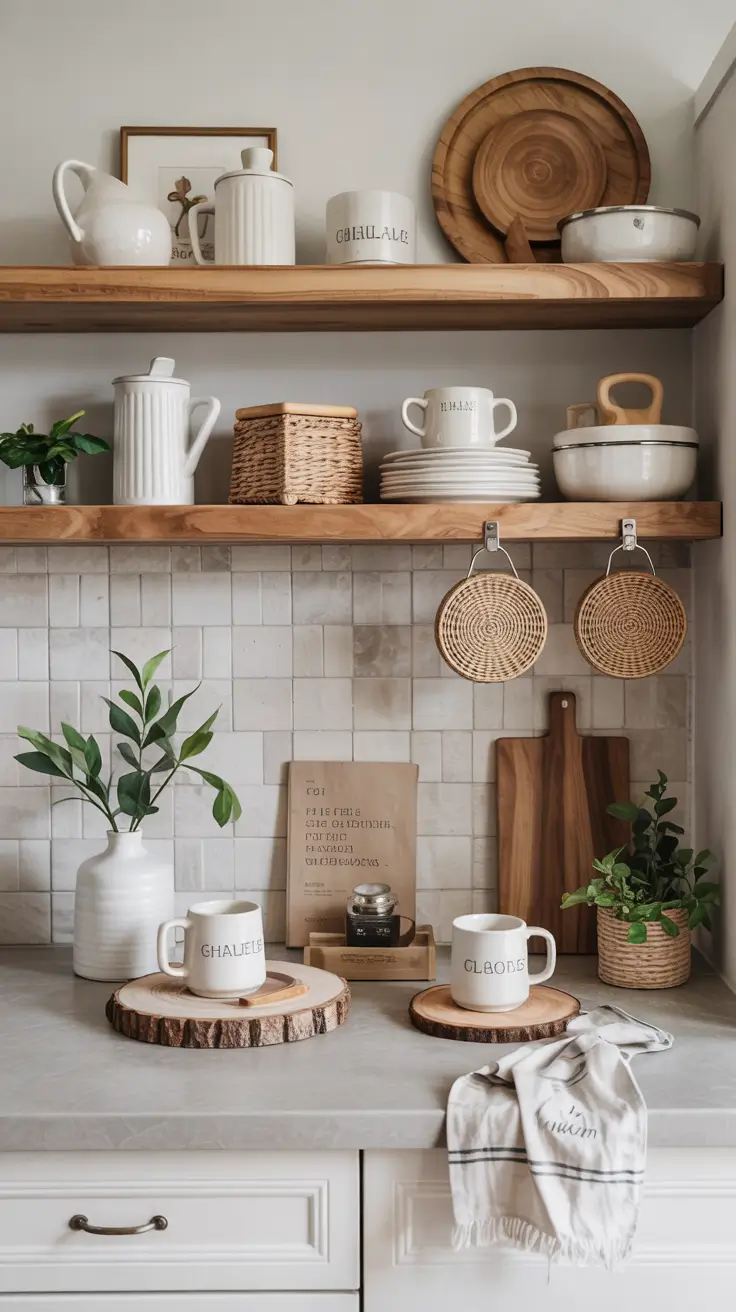
I usually begin with foundational items that already belong in the station, such as mugs, jars, trays, and a machine with a finish that complements the room. Then I layer in decor with restraint, perhaps a small framed print, a ceramic vase, a wood riser, or one plant that brings softness to the area. If the station sits on kitchen countertops, I try to keep the palette consistent so the arrangement feels integrated rather than scattered. Matching canisters, linen napkins, and a textured backsplash can all strengthen the coffee station decor without adding clutter. I find that the best styling choices are the ones that support both beauty and routine.
In my own work, I pay close attention to what kind of mood the station should create. A home aesthetic with light oak, creamy tones, and matte ceramics feels different from one built around dark stone, black metal, and moodier contrast. Neither is better, but I always choose decor that supports the architecture and the lifestyle of the space rather than chasing trends for their own sake. I also think a coffee station should look good from a distance, not just up close, because it becomes part of the room’s overall composition. That is why I favor a few strong pieces over many small distractions.
If I wanted to improve this section in a real interior, I would add one element of height and one element of softness. A narrow lamp, taller branch arrangement, or small shelf can lift the eye and help the station feel more complete vertically. Softness might come from a linen runner, a woven basket, or a warmer finish that prevents the zone from feeling too hard or mechanical. I would also make sure the decor leaves enough empty space for actual use, because styling should never interfere with brewing and cleanup. In my experience, the most successful coffee station decor feels easy, balanced, and quietly personal.
10. Diy Coffee Station Ideas For Affordable Style And Personal Charm
A DIY coffee station can be one of the most satisfying ways to create a useful feature without a large budget. I like this approach because it allows the station to reflect personal habits and style rather than looking overly standard. Simple furniture pieces like a secondhand cabinet, a narrow bookcase, or a compact sideboard can become an excellent coffee station with a few thoughtful adjustments. This kind of setup works especially well for anyone who wants affordable coffee station ideas that still feel polished and modern. In my experience, DIY projects succeed when the design stays focused on layout, storage, and ease of use before decoration begins.
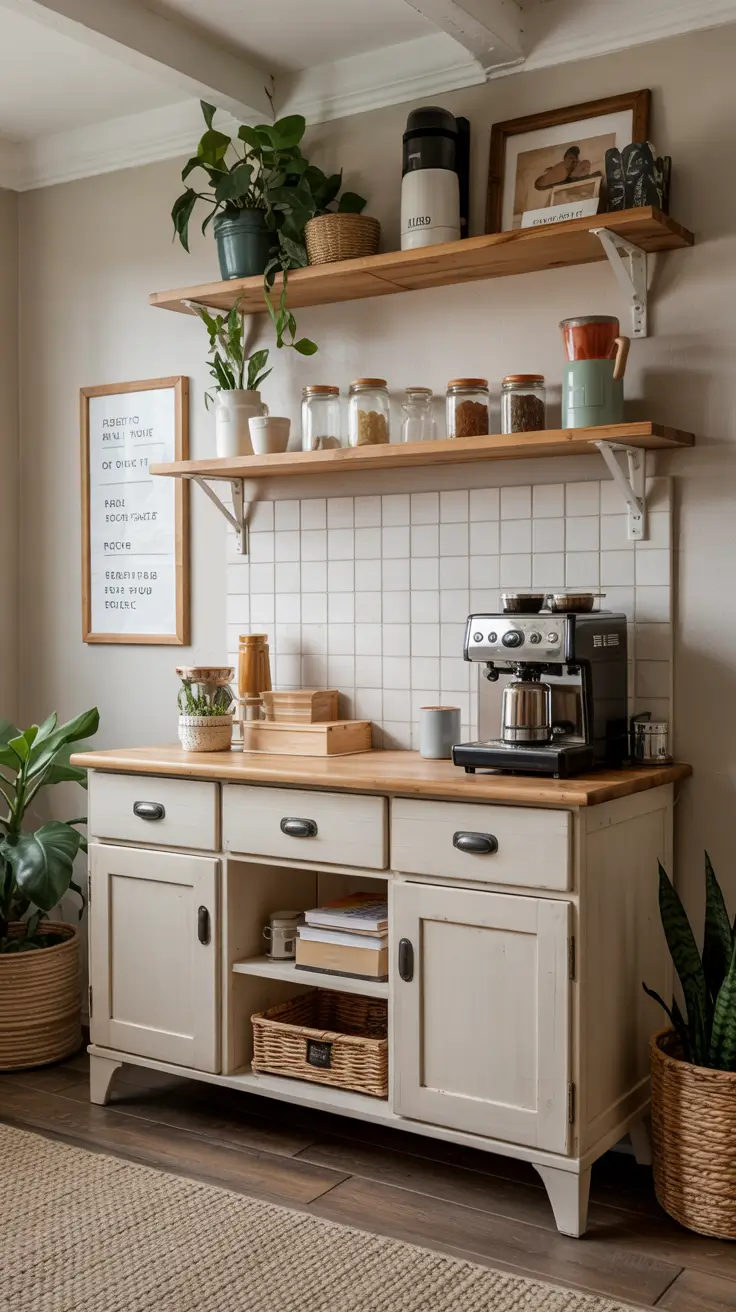
When I build or plan a DIY station, I first decide what must fit there every day. That usually means the machine, mugs, storage jars, a tray, and room for preparation on the countertop surface. I often suggest adding peel-and-stick backsplash material, new hardware, paint, or shelf risers to give an ordinary piece more character. A compact cart can work for a work corner, while a repurposed dresser or cabinet is often better for a coffee station at home that needs more concealed storage. For a more handcrafted look, I like mixing simple wood tones with clean containers and a few decor accents that make the setup feel finished.
What I enjoy most about DIY coffee station design is the flexibility it gives people with very different homes and routines. The same concept can be adapted for an apartment, a small kitchen, or even a tucked-away corner near a breakfast area. I have also seen DIY setups work well when someone wants a more casual, collected style rather than a built in result. Because the project is personal, I think it naturally creates more charm and often feels warmer than a perfectly uniform install. For me, a DIY station is successful when it looks intentional, functions smoothly, and reflects the personality of the home.
If I were adding the final layer to a DIY station, I would focus on finishing details that improve durability and daily comfort. I would make sure the surface is easy to clean, the shelves can support weight properly, and the storage containers actually fit the supplies used most often. Good cord management is also important because visible wires can make a handmade setup look unfinished very quickly. I would also add one signature feature, such as a painted back panel, a simple wall shelf, or a custom mug rail, to give the project stronger identity. Those additions help a DIY coffee station feel designed rather than improvised.
11. Coffee Station In Kitchen Corners That Turn Unused Areas Into Favorites
I often find that the most overlooked coffee station in kitchen layouts are the corners that collect random items but never serve a clear purpose. When I turn one of those spots into a dedicated coffee station kitchen area, the whole room starts to feel more intentional and easier to use. A corner setup works especially well in a small kitchen because it protects prep space while still giving the coffee routine a defined home. I like this approach for coffee station ideas small spaces because it uses awkward geometry in a practical way instead of fighting it. With the right lighting, a tidy counter, and a few vertical elements, a simple corner can become one of the most inviting coffee stations in the house.
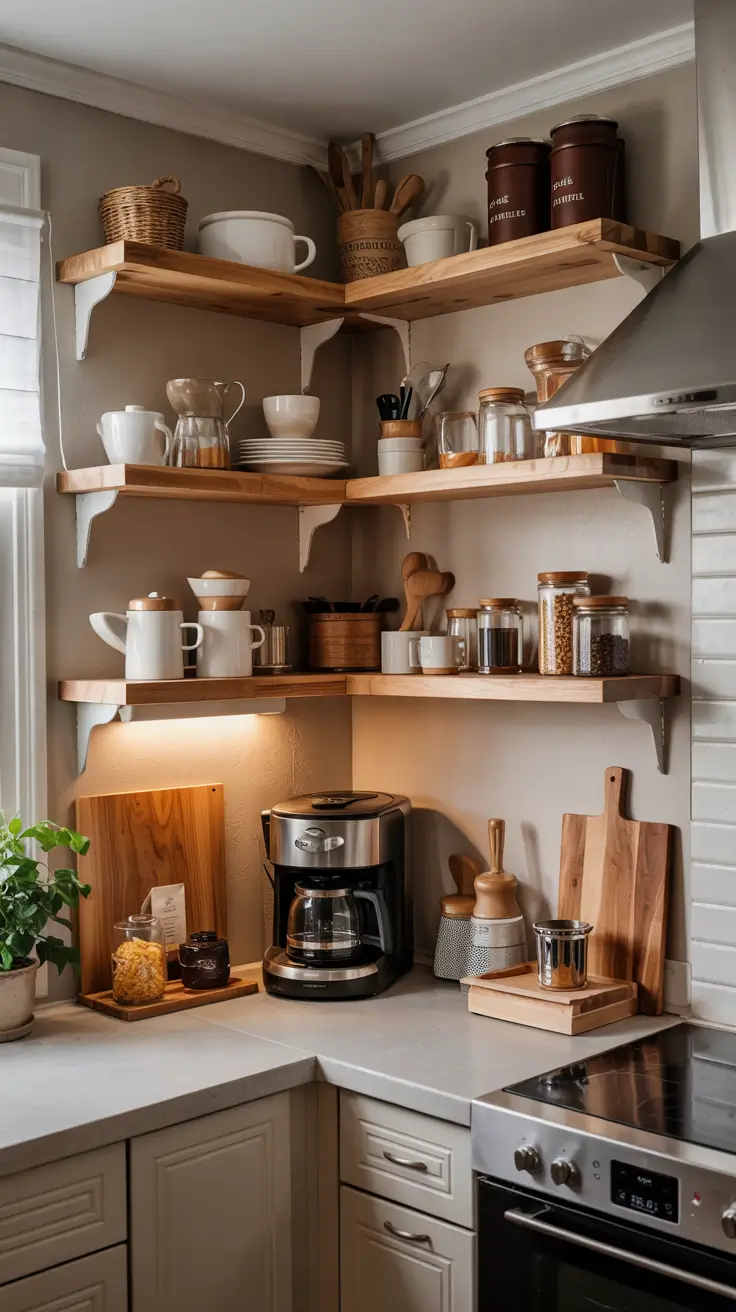
I usually begin with a compact cabinet or a narrow console that fits the exact depth of the corner without crowding the walkway. On top, I place the machine, a grinder if needed, a tray for cups, and a canister for beans or pods so the countertop stays visually organized. Above the base, I prefer one or two floating shelves for mugs, syrups, and a small framed print because vertical storage makes the station feel finished without taking more floor space. If the corner sits near kitchen countertops, I add a matching stone or wood surface so the coffee station design looks connected to the rest of the kitchen counter instead of added later. A slim lamp or under-shelf light is another detail I value because it gives the area warmth and helps the coffee station decor feel deliberate in both daylight and evening light.
From my perspective, the biggest strength of a corner coffee station at home is that it creates routine without demanding a full renovation. I like how it naturally separates the coffee moment from the main cooking zone, which makes mornings feel calmer and less crowded. In many homes, I have seen this solution work better than a long counter spread because everything stays in one compact visual frame. It also supports a cleaner home aesthetic, since mugs, spoons, and filters do not drift across the kitchen throughout the day. For anyone trying to build a stronger coffee station home setup, this is one of the most reliable places to start.
If I were refining this section further in a real room, I would add one hidden element to keep the corner from looking busy. A drawer for pods, tea bags, sugar, and napkins can make a major difference because daily accessories disappear when not in use. I would also include a small washable runner or a tray with raised edges to catch spills and protect the surface over time. When the corner is very tight, I think wall hooks under the shelf are worth adding for favorite cups so the main counter stays open. That final layer of hidden order is often what turns a useful corner into a favorite destination.
12. Best Coffee Station Home Aesthetic Ideas For Modern And Rustic Interiors
When I think about the best coffee station home aesthetic, I usually start by deciding whether the room leans modern, rustic, or somewhere in between. A strong coffee station aesthetic does not depend on expensive finishes, but it does depend on consistency in color, texture, and scale. In modern interiors, I see the best results from clean lines, soft neutrals, matte finishes, and only a few objects left visible on the counter. In rustic interiors, I prefer warmer woods, handmade ceramics, woven textures, and aged metal details that make the setup feel grounded and relaxed. Both styles can support beautiful coffee station ideas if the station relates to the room around it rather than acting like a separate display.
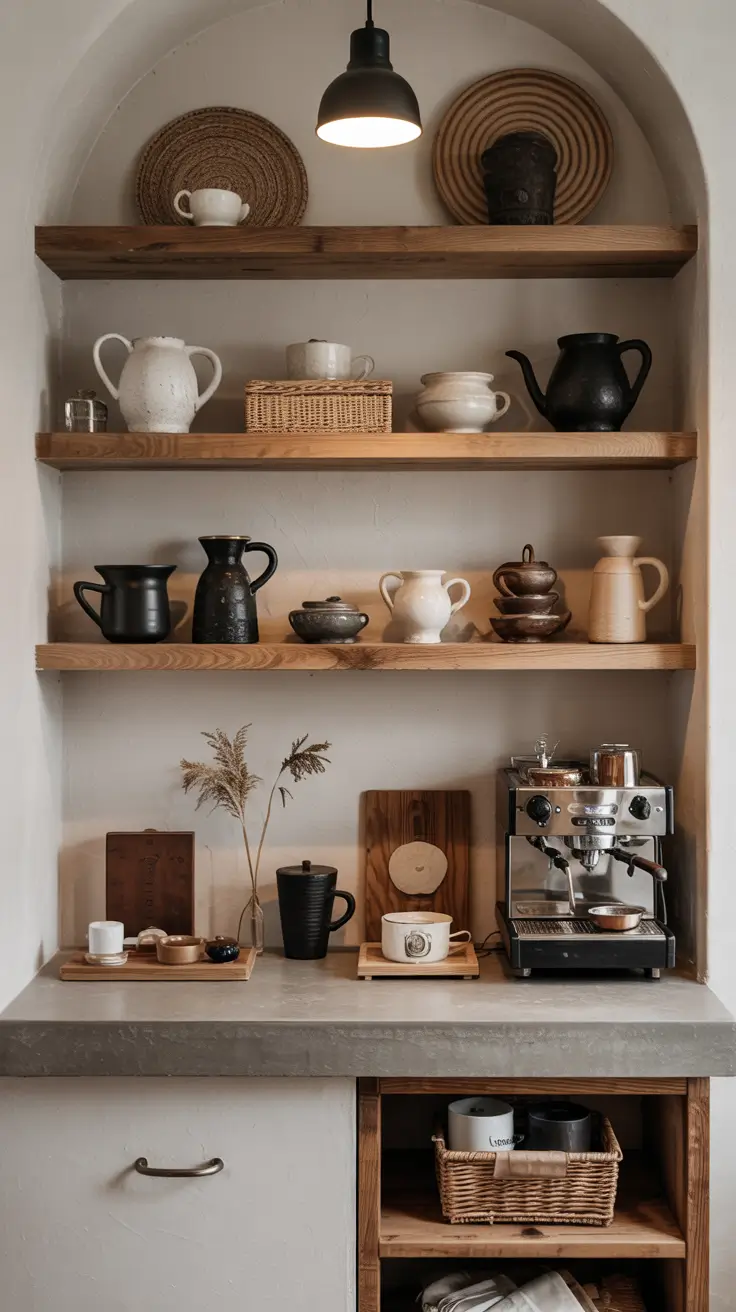
For a modern coffee station design, I usually choose flat-front cabinetry, a simple stone or quartz countertop, a black or stainless machine, and a limited palette of cream, sand, charcoal, or muted olive. I add only the items that support daily use, such as stacked cups, a milk frother, a small jar for spoons, and one sculptural container for beans, because restraint is part of the design. For a rustic version, I look for a wood hutch, open shelves, vintage-inspired sconces, linen towels, and textured mugs that soften the space and make it feel lived in. I also like mixing rustic decor with one polished appliance so the station feels current rather than themed. Whether the look is sleek or warm, I try to keep the coffee station decor cohesive with nearby dining chairs, cabinet hardware, backsplash materials, and wall art.
In my experience, the most successful coffee station home spaces are the ones that feel believable in everyday life. I do not want the area to look so styled that no one wants to use it, and I do not want it to look so practical that it disappears visually. That balance is where the best ideas countertop styling tends to happen, because function and atmosphere meet in one small zone. A ceramic lamp, a tray in natural wood, and a clean arrangement of mugs can do more for the room than too many decorative signs or filler accessories. I always remind myself that a calm setup usually looks more luxurious than an overcrowded one.
What I would still add here is a stronger conversation about material pairing, because materials shape the mood as much as objects do. In a modern setting, I would bring in ribbed glass, brushed metal, and smooth stone to keep the coffee station design crisp and quiet. In a rustic setting, I would add oak, walnut, antique brass, and a slightly imperfect handmade finish so the space gains depth. I also think scent matters more than people expect, so a subtle candle or nearby dried herbs can support the home aesthetic without making the station feel staged. Those missing sensory layers are often what make a coffee station memorable instead of simply attractive.
13. Breville And Keurig Coffee Stations That Blend Convenience With Design
When I design around Breville and Keurig machines, I pay close attention to proportion because these appliances often become the visual anchor of the entire coffee station. Breville usually supports a more elevated, barista-like look, while Keurig fits naturally into fast and efficient routines, but both can be integrated into a thoughtful coffee station design. I do not see convenience and style as opposites here, especially in 2026 when appliances are part of the visual language of the kitchen. A good setup makes the machine feel intentional instead of dominant, and that is especially important on kitchen countertops where every object competes for space. If the surrounding layout is edited well, both types of coffee stations can look polished and easy to live with.
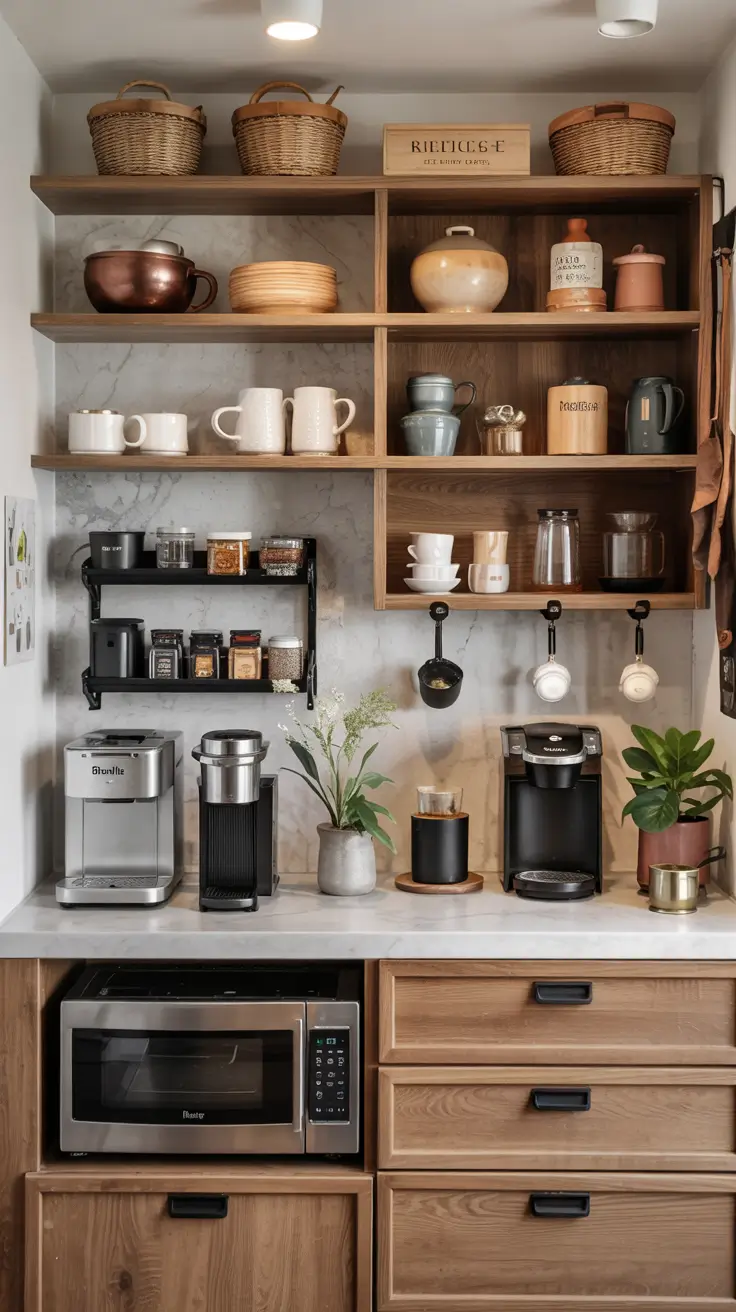
With a Breville setup, I usually leave enough counter width for the machine, grinder, tamp area, cups, and a small knock box or storage container so the routine flows naturally from left to right. With a Keurig setup, I focus on pod storage, mug access, water refilling, and waste control because speed is the main strength of that system. In both cases, I like using a tray or shallow platform under the machine because it visually contains the area and protects the counter from splashes. I also recommend placing nearby drawers or baskets for filters, pods, sweeteners, and cleaning tools so the station keeps a clean surface. When the machine sits in a dorm, hotel suite, work lounge, or even a church hospitality area, this organized framework helps the station feel welcoming rather than temporary.
I personally think appliance-led design works best when the surrounding pieces are quieter than the machine itself. If a Breville machine has a stainless finish, I tend to soften it with wood shelves, matte ceramic mugs, and a muted backsplash so the area does not feel cold. If I am styling a Keurig station, I often make the pod storage less visible so the setup looks calmer and less busy. This is where hidden storage becomes especially valuable, because it protects the visual rhythm of the coffee station kitchen while still serving everyday needs. I have found that even very practical setups can achieve a stronger coffee station aesthetic when the visual clutter is reduced by design instead of by constant cleanup.
What I would add to improve this type of station is a dedicated water and cleaning strategy, because machines stay more attractive when maintenance is planned into the layout. I would include a discreet spot for descaling supplies, spare filters, and a microfiber cloth so upkeep feels effortless instead of like a separate task. I would also consider a nearby drawer insert for pods or accessories that matches the cabinet interior, since that keeps everything accessible but hidden. If space allows, a mini shelf for syrups or flavored creamers can make the station feel more complete without overwhelming the main counter. That extra layer of planning helps convenience blend into design in a way that feels natural.
14. Pour Over Coffee Station Setups For A Calm And Intentional Morning Ritual
A pour over station creates a very different mood from a machine-based setup, and I think that difference is one of its greatest strengths. When I design a pour over area, I focus less on speed and more on clarity, rhythm, and visual calm because the ritual itself becomes part of the room. This style of coffee station at home works beautifully for people who want a slower morning experience and a more tactile connection to the process. It also fits well with minimalist or natural interiors because the tools are simple, sculptural, and easy to display. Among all coffee station ideas, this may be the one that most naturally turns daily use into a quiet design moment.
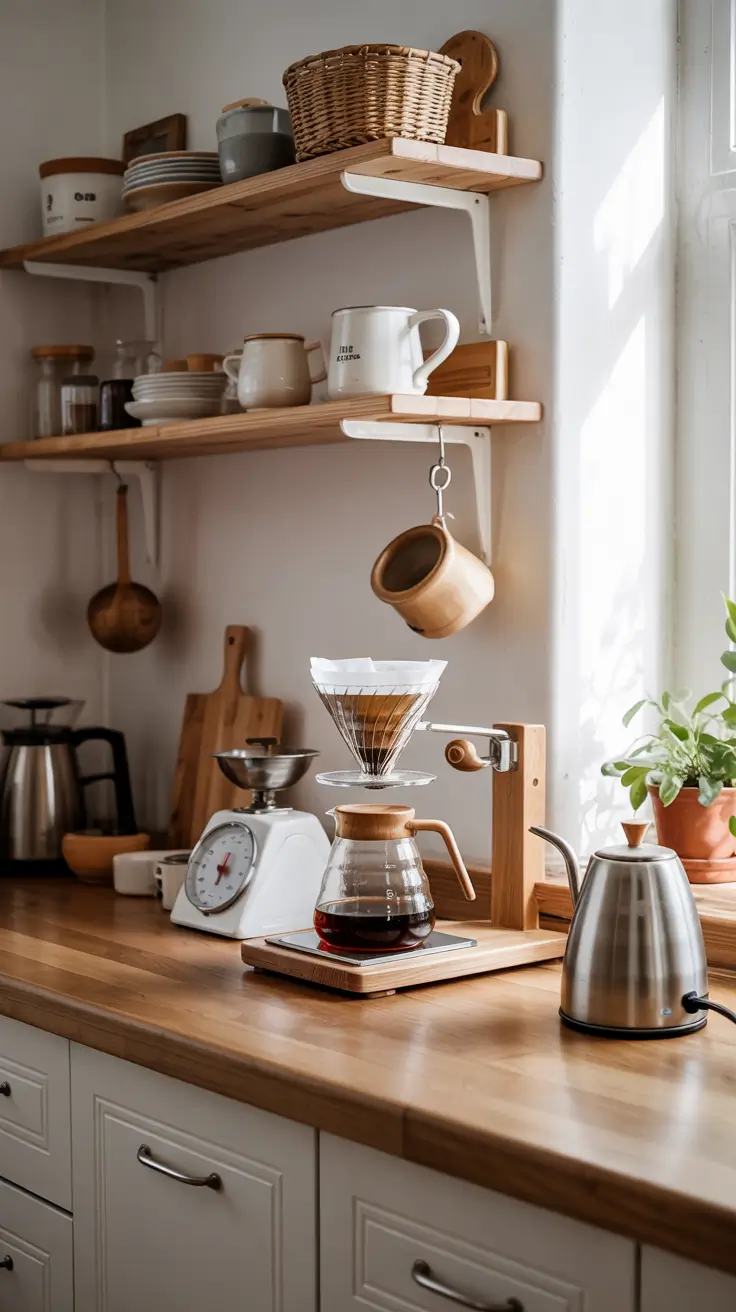
I usually start with a kettle, dripper, filters, a scale, a grinder, and a small group of mugs that feel good in the hand, then arrange them so each step moves logically across the surface. A wooden or stone countertop is especially effective here because it gives the setup a grounded quality and supports the visual warmth of the ritual. I like open shelving for jars of beans, stacked filters, and one or two ceramics, but I keep the shelf styling spare so the station remains calm. A small lamp, a linen towel, and a narrow tray for the tools are details I regularly include because they make the area feel complete without adding distraction. Even in a small kitchen, a pour over coffee station can feel generous if the objects are edited carefully and the counter remains mostly clear.
From my point of view, pour over design succeeds when the space encourages focus rather than performance. I do not need many accessories here, because too much decor weakens the simple beauty of the setup. What I value most is the sense that everything has a reason to be present, from the kettle placement to the mug selection to the texture of the surface. That intentional order supports a home aesthetic that feels calm, thoughtful, and deeply personal. For anyone who wants coffee station ideas countertop styling with more atmosphere and less noise, this is one of the most satisfying directions.
If I were expanding this section, I would add more about seating and nearby placement because the ritual often continues after brewing. A stool by a window, a bench near the kitchen counter, or even a slim shelf ledge can turn the station into a true pause point instead of a utility zone. I would also think about how natural light falls on the counter in the morning, since that can completely change how inviting the ritual feels. In some homes, I would introduce one small plant or a bowl for pastries to make the station feel even more welcoming without losing its restraint. Those subtle additions can help a pour over area feel like a complete experience rather than just a preparation spot.
15. Tea And Coffee Stations That Bring Everyone Together In One Spot
I like tea and coffee stations because they broaden the purpose of the setup and make the area more inclusive for different routines, ages, and preferences. A combined station feels especially useful in homes where one person prefers espresso, another wants tea, and guests appreciate options without needing to search the kitchen. In that sense, tea and coffee stations are often better gathering points than a coffee-only corner because they naturally invite more people to use the space. I also think they work well for family kitchens, holiday mornings, wedding preparation suites, church community rooms, and even relaxed hotel-style guest areas at home. When designed with care, this kind of station becomes less about one beverage and more about shared comfort.
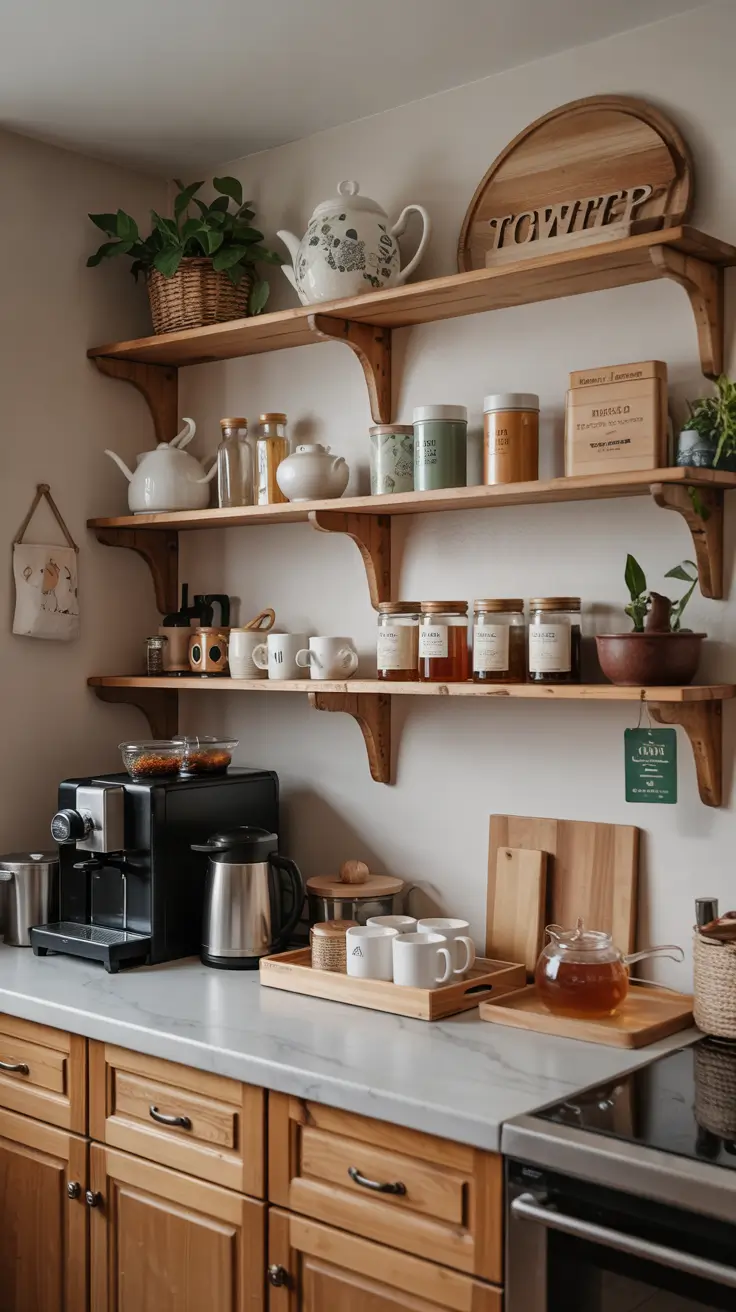
To make the setup work, I divide the station into simple zones so the arrangement stays clear instead of crowded. I usually keep the coffee machine and mugs on one side, then give tea its own area with an electric kettle, tea tins, honey, cups, and a small dish for spoons or lemon slices. Storage matters even more here, so I prefer drawers, baskets, or lidded containers that separate pods, tea bags, sugar, and stirrers without making the station look busy. If the layout allows it, I add a shelf for serving pieces and a lower cabinet for backup supplies so the counter remains useful and open. This zoning approach is one of my favorite coffee station ideas for homes that want both variety and order in the same footprint.
I have noticed that mixed beverage stations often create a softer and more social mood than highly specialized coffee setups. People tend to linger a little longer when the station supports different habits, and that changes how the room feels throughout the day. I also find that the decor can become richer here, because tea introduces opportunities for glass jars, textiles, warm woods, and softer color accents without taking away from the coffee station design. When I want a station to feel welcoming rather than purely efficient, this is the direction I usually prefer. It brings function, hospitality, and visual warmth into one balanced area.
What I would add here is a stronger layer of seasonal flexibility because shared stations often serve more than one occasion. I would make room for a cake stand, extra cups, or a simple tray that could support breakfast service, a wedding morning drink setup, or a quiet weekend gathering. I would also include a small labeled drawer or hidden organizer so guests can find tea and coffee additions easily without opening every cabinet. In a busier household, I think a dedicated waste area and easy-clean surface are essential so the station stays pleasant after repeated use. Those practical additions help the space stay beautiful while remaining ready for real life.
16. Dorm And Work Coffee Station Ideas For Compact Everyday Living
I think the best dorm and work coffee stations start with vertical thinking because compact everyday living rarely gives me a wide counter to spare. A slim cart, floating shelf, or narrow bookcase can hold a full coffee station home setup without taking over the room. In a shared apartment, studio, or dorm, I like to keep the palette light so the zone feels clean rather than busy. This kind of coffee station design works especially well when the work area and drink area need to coexist in one wall or corner. The goal is to create one efficient stop for morning focus, late study sessions, and simple cleanup.
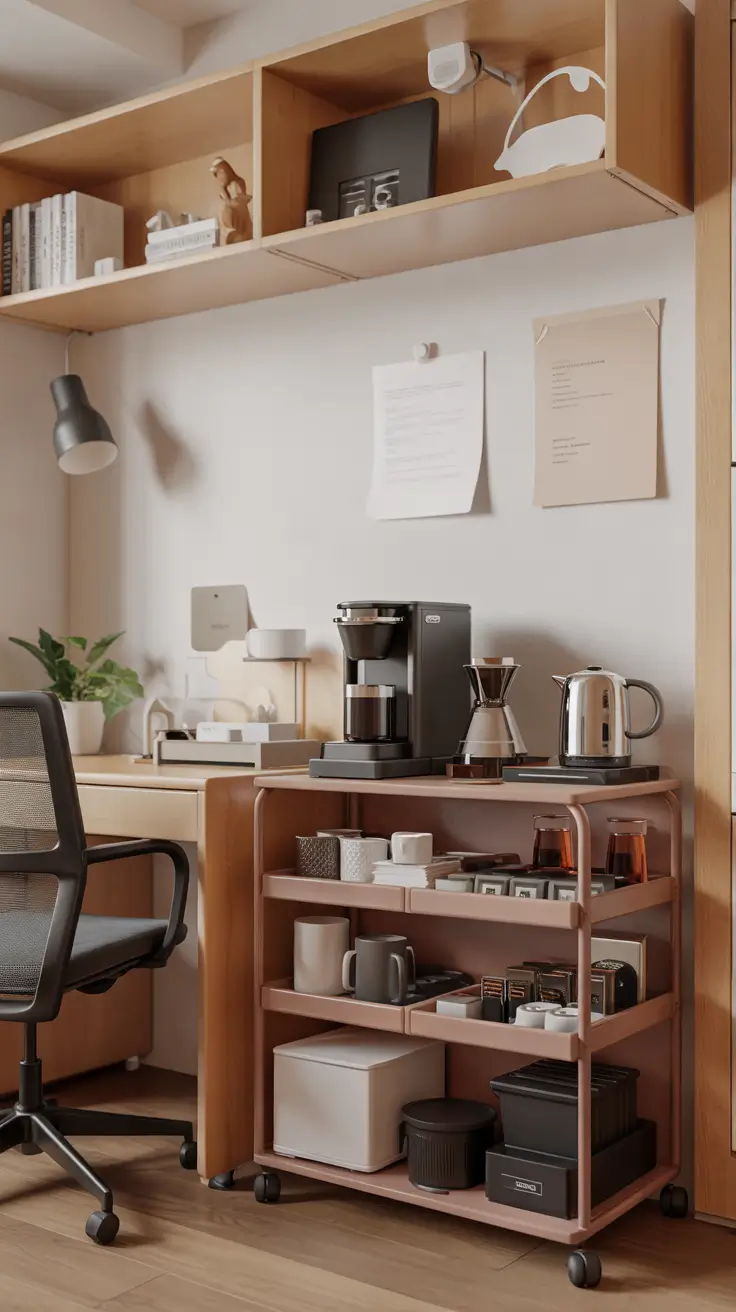
I usually include a compact brewer, stacked mugs, a small drawer tray for pods or filters, and one closed bin for sweeteners or tea and supplies. If the user prefers Keurig convenience, I place the machine closest to an outlet and keep cups directly above or beside it to shorten the routine. For a more manual setup, a small pour over kit paired with an electric kettle fits neatly on a tray and looks calmer in a room that already has books, screens, and cables. A lamp or clip light can help the station feel intentional when the workspace doubles as the coffee zone. I also like adding one small framed print or textured canister so the coffee station aesthetic feels warm without becoming decorative clutter.
From my experience, compact coffee station ideas small spaces work best when I edit the station down to what I truly use every day. I do not try to force a full cafe look into a dorm because too many pieces make the room feel smaller and harder to clean. I prefer one machine, one tray, one mug rack, and one easy storage solution under or above the surface. That balance keeps the work zone productive while still giving the room a comfortable home aesthetic. It also helps me separate the ritual of making coffee from the pressure of study or remote work, which makes the entire setup feel more supportive.
What I would add if this area still feels incomplete is a narrow peg rail, a small washable mat, and a lidded jar for extra supplies. These pieces solve the small messes that usually make a compact station feel untidy after a week of use. I would also check cable placement, because a hidden power strip and clipped cord line can instantly improve the look. In a dorm, I find that closed storage matters more than extra decor because the room already has many visible essentials. When every inch counts, the missing feature is usually not style but smarter containment.
17. Small Kitchen Coffee Station Ideas That Maximize Every Counter
In a small kitchen, I treat the coffee station as part of the main workflow rather than as a separate decorative corner. The best coffee station kitchen layouts use the existing kitchen counter in a way that keeps prep, brewing, and cleanup within one easy reach. I like to place the station near the sink or refrigerator, but not directly in the busiest prep zone, so the counter stays practical for daily cooking. This approach makes a coffee station in kitchen spaces feel natural instead of squeezed in as an afterthought. Even in a narrow room, a well planned station can make kitchen countertops feel more organized and more generous.
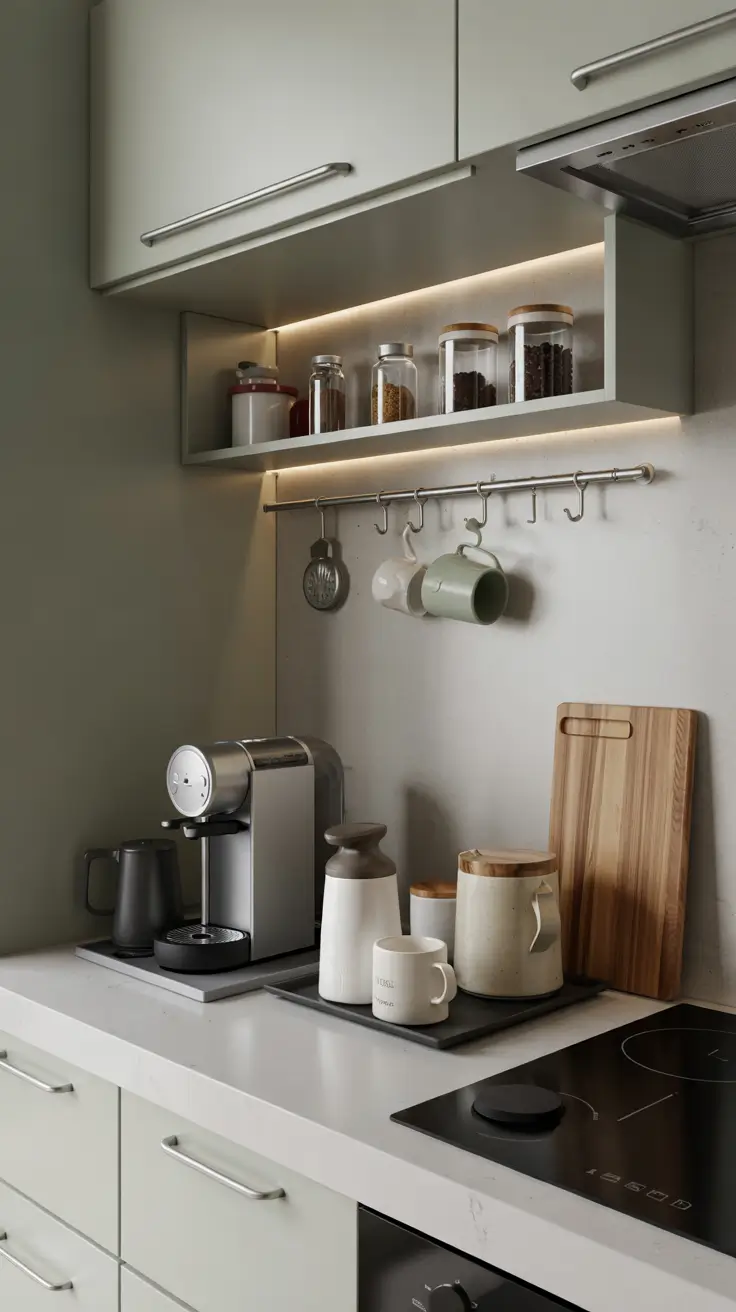
For furniture and accessories, I look for pieces that lift items up instead of spreading them across the counter. A two tier tray, a shallow riser, or a built in upper shelf can free the countertop while still keeping mugs, beans, and spoons visible. If I am styling a compact coffee bar, I often choose slim canisters, a narrow sugar bowl, and one tray that holds the machine, cups, and daily essentials as a single unit. This is one of my favorite coffee station ideas countertop strategies because it prevents small objects from drifting across the kitchen counter. I also like using the space under a cabinet for hooks or a hidden strip light that makes the station easier to use before sunrise.
I have found that the smallest kitchens benefit from restraint more than decoration. When I work with a small kitchen, I avoid oversized machines, deep baskets, and bulky signs because they eat up the very surface I need. I prefer to let one beautiful machine, one ceramic jar, and one wood or stone accessory define the style. That keeps the decor simple while still giving the area a clear coffee station aesthetic. In practice, the most successful small kitchen coffee station is the one that supports the morning routine without interrupting meal prep.
If this section feels like it needs something more, I would add one nearby drawer organizer or a cabinet insert so refill items stay close but out of sight. I also think many people forget about scale, and that is where good coffee station design can quietly transform a small room. A shorter mug stack, a narrower tray, and low profile containers often make the counter look twice as calm. If the station is beside a backsplash, I sometimes add one wipeable art print or one compact board to soften the hard surfaces. The missing detail is usually not another object, but a better proportion between what stays out and what stays stored.
18. Hotel Inspired Coffee Station Design For A Polished Guest Ready Look
A hotel inspired coffee station brings a polished and guest ready feeling into the home because the layout is clear, quiet, and easy to understand at first glance. I usually design this type of space with symmetry, clean surfaces, and a limited palette so it feels restful rather than overly styled. A sideboard, console, or built in niche works beautifully because it creates a dedicated zone that looks complete even when not in use. This is one of the most elegant coffee stations for a hallway alcove, guest room corner, or open dining wall. The overall effect should feel thoughtful, smooth, and a little elevated without losing everyday practicality.
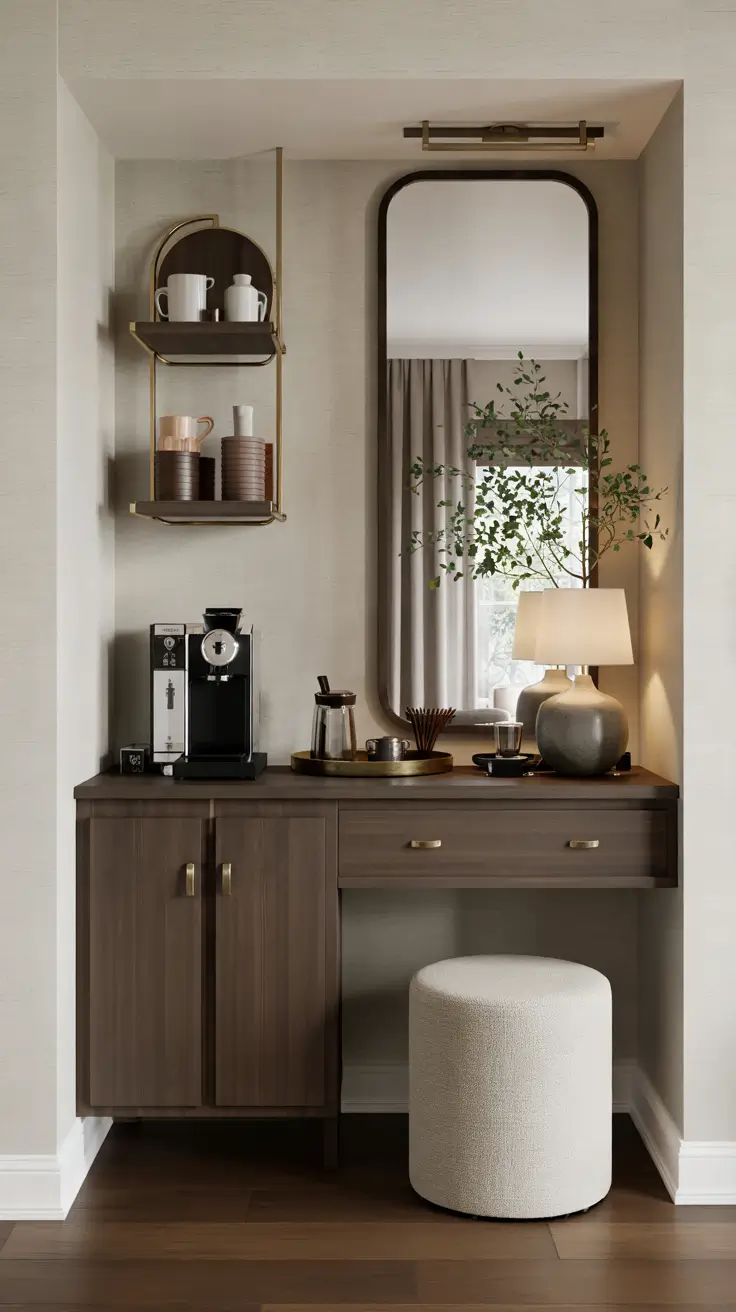
I like to include a quality machine, stacked cups, a lidded jar for coffee, a tray for stirrers, and a small water carafe so the setup feels self contained. If the look leans modern, I use glass, brushed metal, and darker wood tones to create a calm hotel mood. A small drawer for napkins, spoons, and tea and extras keeps the surface from looking busy while still supporting different drink preferences. I often add one understated lamp, a mirror, or a framed print because good decor helps the station feel intentional after sunset as well as in the morning. When the space allows, an upholstered stool or compact bench nearby makes the area feel even more welcoming.
Personally, I think this style works so well because it borrows the best part of hospitality design, which is clarity. I never want guests to ask where the cups are or whether the sugar belongs in another cabinet. A hotel style station answers those questions visually by keeping everything grouped and easy to read. I also find that this type of coffee station home setup ages well because the design depends more on order and material quality than on novelty. It is an especially strong choice for anyone who wants a refined home aesthetic without building a full bar.
To complete this look, I would add one discreet waste cup, a small linen or washable mat, and a clearly placed spoon rest. Those small functional details are what separate a pretty setup from one that actually feels polished in daily use. I would also think about scent and sound, because a quiet machine and fresh beans can do as much for the experience as visual styling. If the station sits in a guest room, I might add a small note card with drink options or simple instructions for a manual brewer. In my view, the missing layer in many hotel inspired setups is not more decor, but a smoother user experience.
19. Wedding And Church Coffee Stations With Warm Decor And Welcoming Flow
Wedding and church coffee stations need a different kind of planning because the goal is not only beauty but smooth movement for many people. I think the best layouts create a welcoming flow by separating brewing, cup pickup, add ins, and disposal so the area never feels congested. Warm decor matters here because soft colors, wood textures, and calm styling help the station feel generous and comforting. Whether the setup is for a fellowship hall, reception corner, or entry gathering space, I want the design to support conversation rather than interrupt it. In 2026, the most effective coffee stations for group settings feel simple, warm, and easy to navigate.
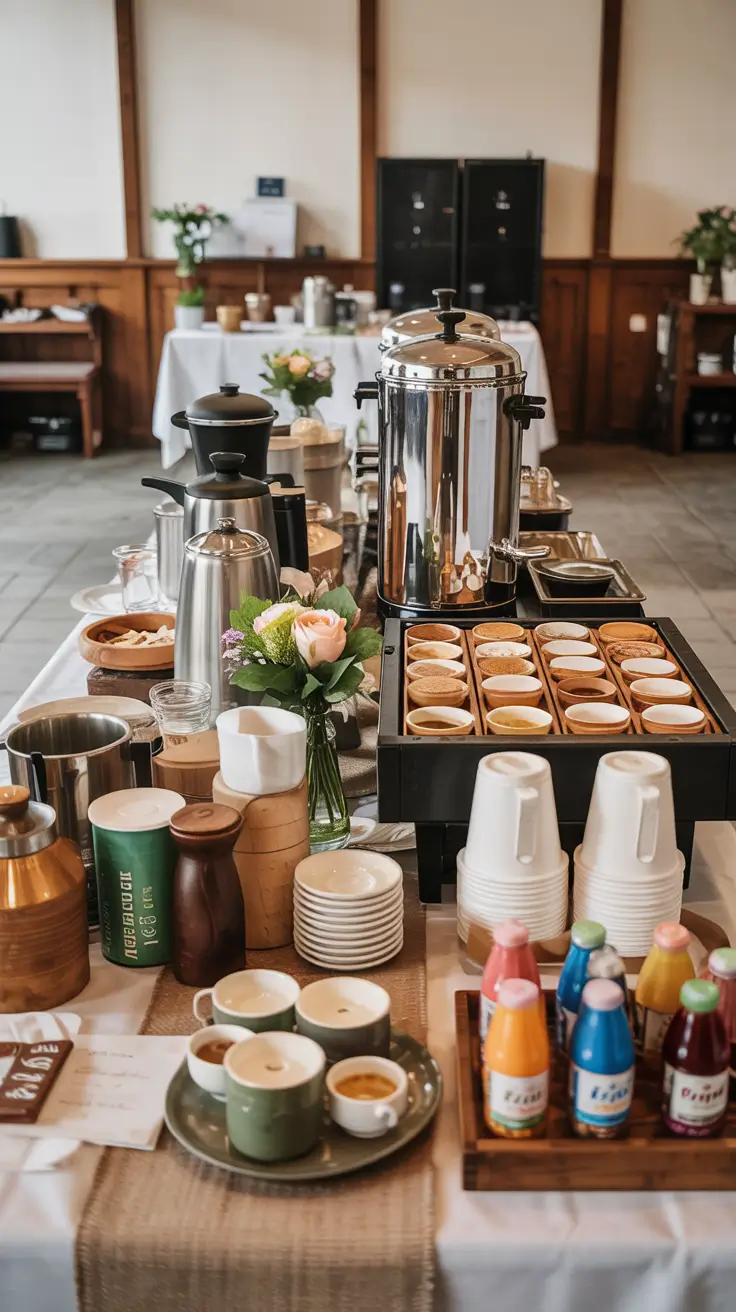
I usually choose long tables or paired counters with clear zones for regular coffee, decaf, tea and hot water, cups, lids, and condiments. For a wedding setting, I like linen runners, ceramic vessels, subtle florals, and warm metal accents that connect the station to the rest of the room without overwhelming it. For a church setting, I often lean toward durable trays, easy clean surfaces, and containers that can handle steady use after services or events. Large signage is not always necessary, but thoughtful placement of cups, spoons, and creamers is essential. A well arranged refreshment table should feel intuitive from the first step to the last.
In my experience, people remember how comfortable a shared station feels more than how elaborate it looks. I have seen simple setups work beautifully when the spacing is generous and the essentials are easy to reach. I also believe that warm decor should never block function, especially when many guests are moving through at once. One reason I like this style is that it can feel festive for a wedding and equally grounded for a church gathering with only a few material changes. The structure stays the same, while the mood shifts through textiles, vessels, and color.
If I were finishing this section, I would add one extra landing area for used stirrers, napkins, and quick cleanup because that is often what keeps the station looking fresh throughout an event. I would also make sure there is enough space between the sugar area and the cup area so the line keeps moving naturally. In larger rooms, I prefer two smaller stations over one oversized station because they distribute people more evenly. If children or older guests are present, I keep heights comfortable and avoid fragile decor near the edges. The missing feature in many event setups is thoughtful circulation, and that is what truly creates a welcoming flow.
20. Creative Coffee Stations For Kitchen Counter And Countertop Styling In 2026
Creative coffee stations for the kitchen counter in 2026 feel more layered and personal than the ultra minimal setups of the past few years. I am seeing a stronger mix of practical tools and styled surfaces, where the countertop works hard but still looks curated. This is where coffee station decor becomes important, because even a small counter can feel memorable when materials, color, and storage are chosen with intention. I like to think of this area as a working vignette that blends routine with personality. The best versions feel modern, calm, and expressive without sacrificing daily function.
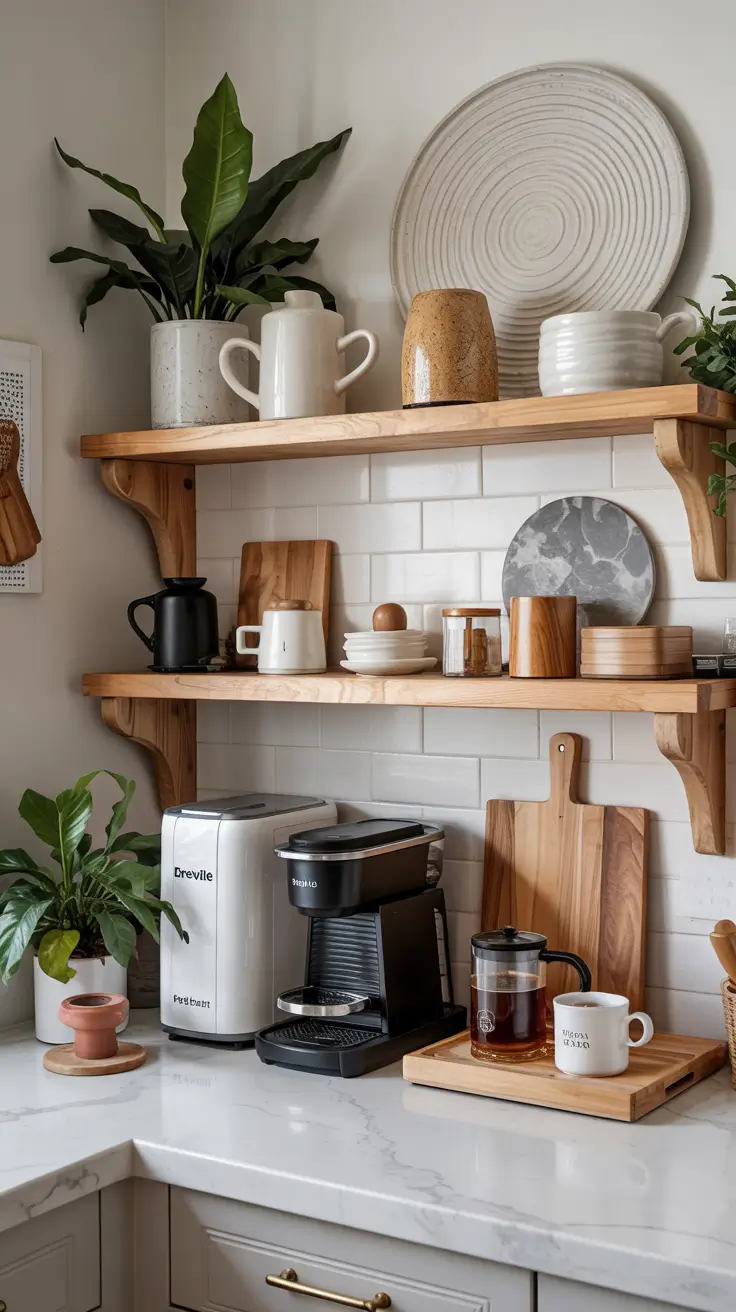
I often start with the machine and then build around it based on how the household actually drinks coffee. A Breville setup may need room for beans, tamping tools, and cups, while a Keurig station benefits from compact pod storage and quick access organization. If the space is narrow, I like diy risers, wall hooks, and slim baskets that create levels without overwhelming the countertop. For a more refined look, a hidden drawer, appliance garage, or cabinet pocket door can keep the station tidy between uses while still making the setup easy to access. A pour over corner with a kettle, dripper, scale, and textured tray can also become a beautiful focal point when styled with restraint.
Personally, I think the most successful ideas countertop styling comes from mixing one strong practical decision with one strong visual decision. That might mean choosing a sculptural lamp, a veined stone board, or a handmade mug set, then pairing it with storage that solves a real problem. I do not believe every coffee station needs to be elaborate, but I do think it should reflect the rhythm of the home. Some people need a hidden station that disappears after breakfast, while others want a visible counter setup that becomes part of the room design. When the styling follows the routine, the result feels natural rather than forced.
To complete a creative 2026 setup, I would add one finishing layer that connects the coffee zone to the rest of the kitchen. That could be repeating the same wood tone from nearby stools, bringing in the same metal finish as the faucet, or using ceramics that echo the backsplash color. I also like to leave a little negative space on the counter so the station breathes and looks more intentional. If everything feels crowded, I edit before I decorate. In my view, the missing ingredient in many creative setups is not more trend detail, but stronger visual discipline.